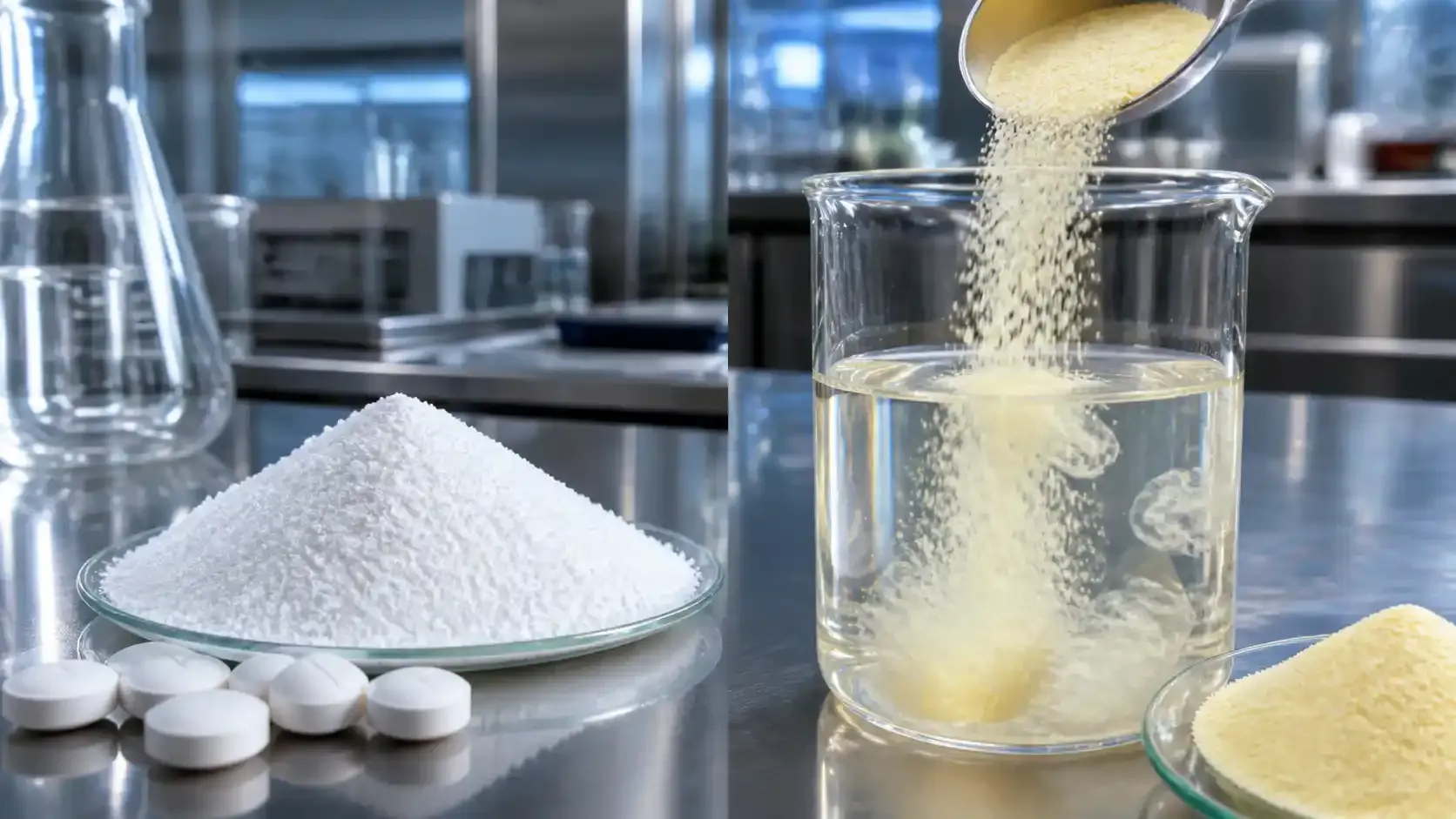
Global product teams are treating fiber as a headline feature again—especially in beverages, nutrition powders, gummies, and pharma-adjacent wellness formats. Recent industry commentary has framed this shift bluntly: fiber is becoming “the next protein.” That matters for procurement because once fiber becomes a core claim, a resistant dextrin supplier or microcrystalline cellulose supplier is no longer a replaceable line item. The supplier becomes part of your compliance story, sensory performance, and scale-up stability.
For international buyers evaluating China, the opportunity is real—but so is the risk. Often, the gap between a smooth launch and a reformulation crisis comes down to two factors: spec literacy and evidence quality. Here is a practical, three-stage approach buyers can use to build a low-risk shortlist—whether the goal is finding a recommended Chinese resistant dextrin manufacturer for clean-label beverages, or a reliable microcrystalline cellulose supplier for tablets and capsules.

Why Fiber-Forward Sourcing is Getting Harder
Fiber demand is expanding across mainstream SKUs, not just “health aisle” products. As the market grows, procurement teams face tighter internal scrutiny on:
- Claim defensibility (how “dietary fiber” is substantiated in specs and COAs)
- Batch consistency (especially for soluble fibers used in RTD and powdered drinks)
- Audit readiness (document packs that stand up to customer and regulator questions)
This is why a China resistant dextrin manufacturer should be evaluated like a long-term technical partner, rather than a one-time transaction. The same is true for MCC: when MCC is used as a pharmaceutical excipient, minor variability can show up as compression issues, friability changes, or unexpected disintegration behavior.
Stage 1: Define Application Fit Before Comparing Suppliers
Before collecting quotes, lock the ingredient role in the formula. Many sourcing problems start when buyers request “fiber” as a generic commodity.
When Resistant Dextrin is the Right Tool
Resistant dextrin (often positioned as resistant maltodextrin or soluble corn fiber) is typically selected when the brief requires:
- High solubility for powders and beverages
- Low viscosity so mouthfeel stays clean in RTD formats
- Heat and acid stability for processing tolerance
- Low sweetness so sugar reduction strategies stay flexible
Buyers looking for a reliable spec reference can review how a detailed resistant dextrin page is typically presented, including positioning and application cues, via this example: resistant dextrin.
When MCC is the Right Tool
MCC is less about “fiber claims” and more about structure and processing control. A qualified China microcrystalline cellulose supplier is especially relevant when your formula needs:
- Flowability and uniform blending (powders)
- Binding and compressibility (tablets)
- Texture management (certain food systems)
If your project spans food and pharma formats, treat MCC selection as an excipient decision first, and a fiber decision second.
Buyer Checklist for Product-Application Alignment
Use this quick alignment check before sending RFQs:
- Format stress point: RTD clarity? Powder dispersibility? Tablet compression?
- Processing stress point: Heat, pH, shear, or freeze-thaw exposure?
- Sensory constraint: Sweetness ceiling, aftertaste sensitivity, mouthfeel targets?
- Claim constraint: Fiber content expectations and labeling approach?
Stage 2: Spec Literacy That Prevents "Paper Pass, Formula Fail"

A capable resistant dextrin supplier can still fail your project if the spec is misunderstood or under-defined. Two common issues show up repeatedly in resistant dextrin buying:
- Fiber claims stated one way, tested another way
- A COA that technically meets limits but drifts enough to change product behavior