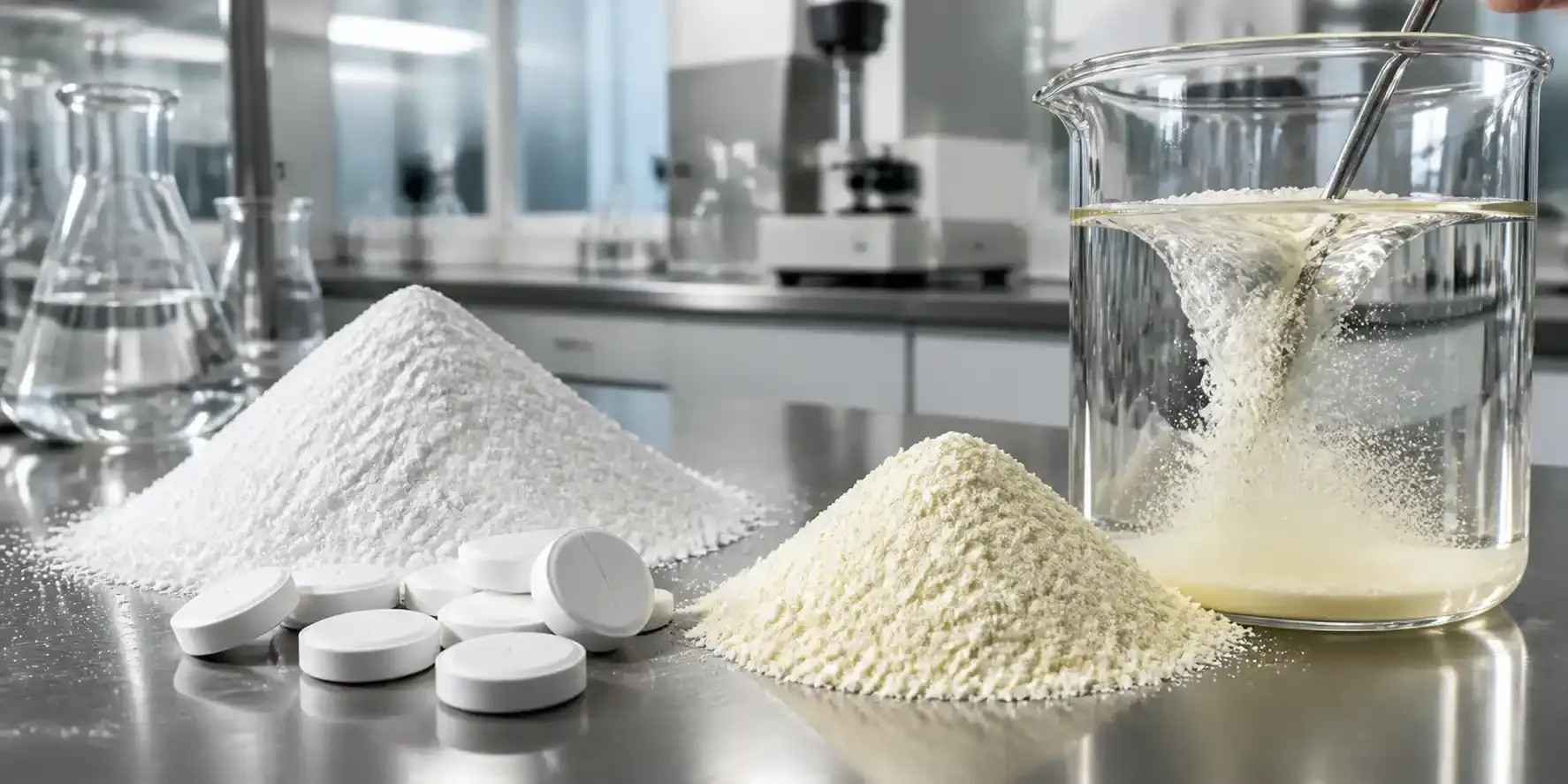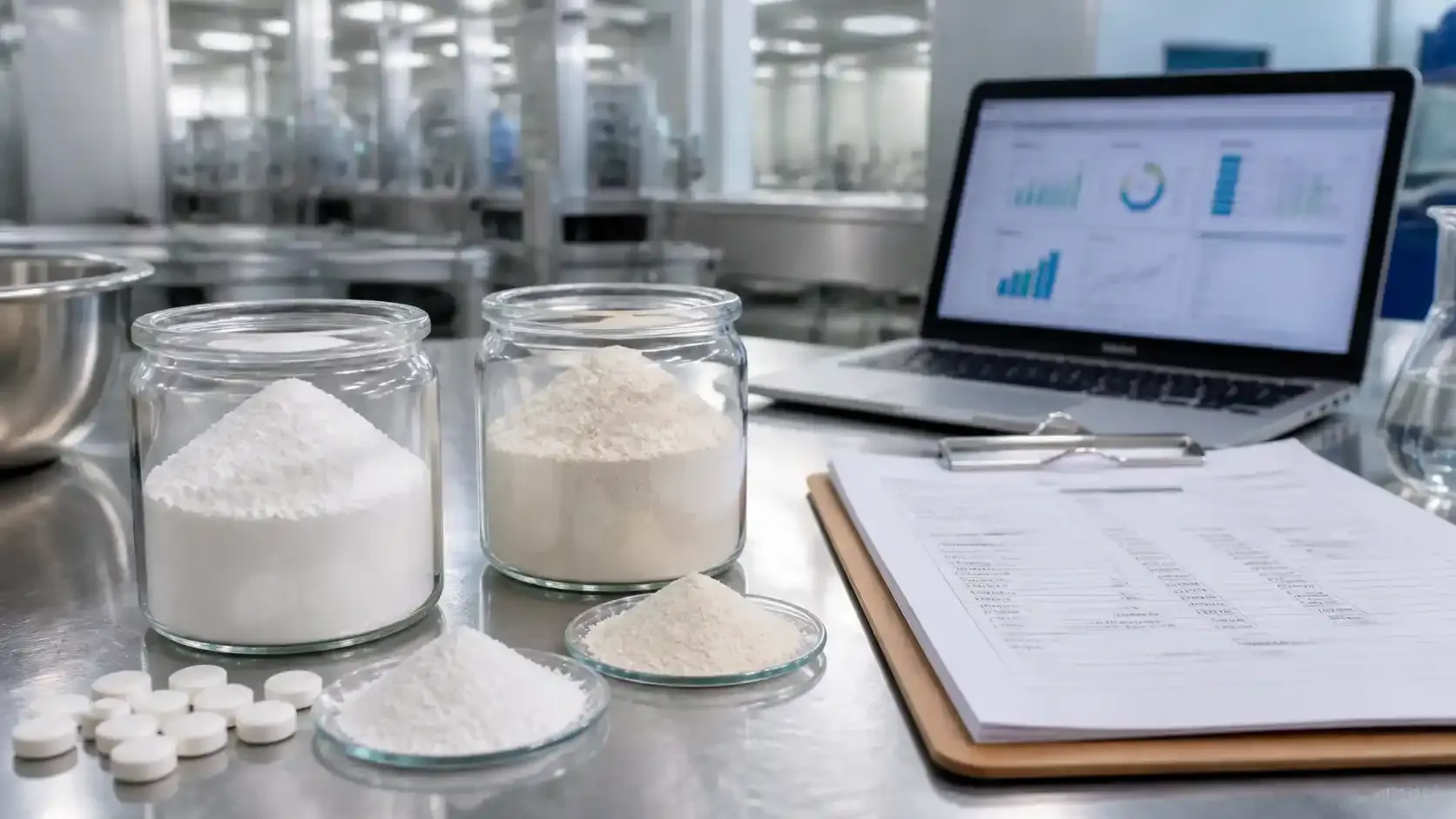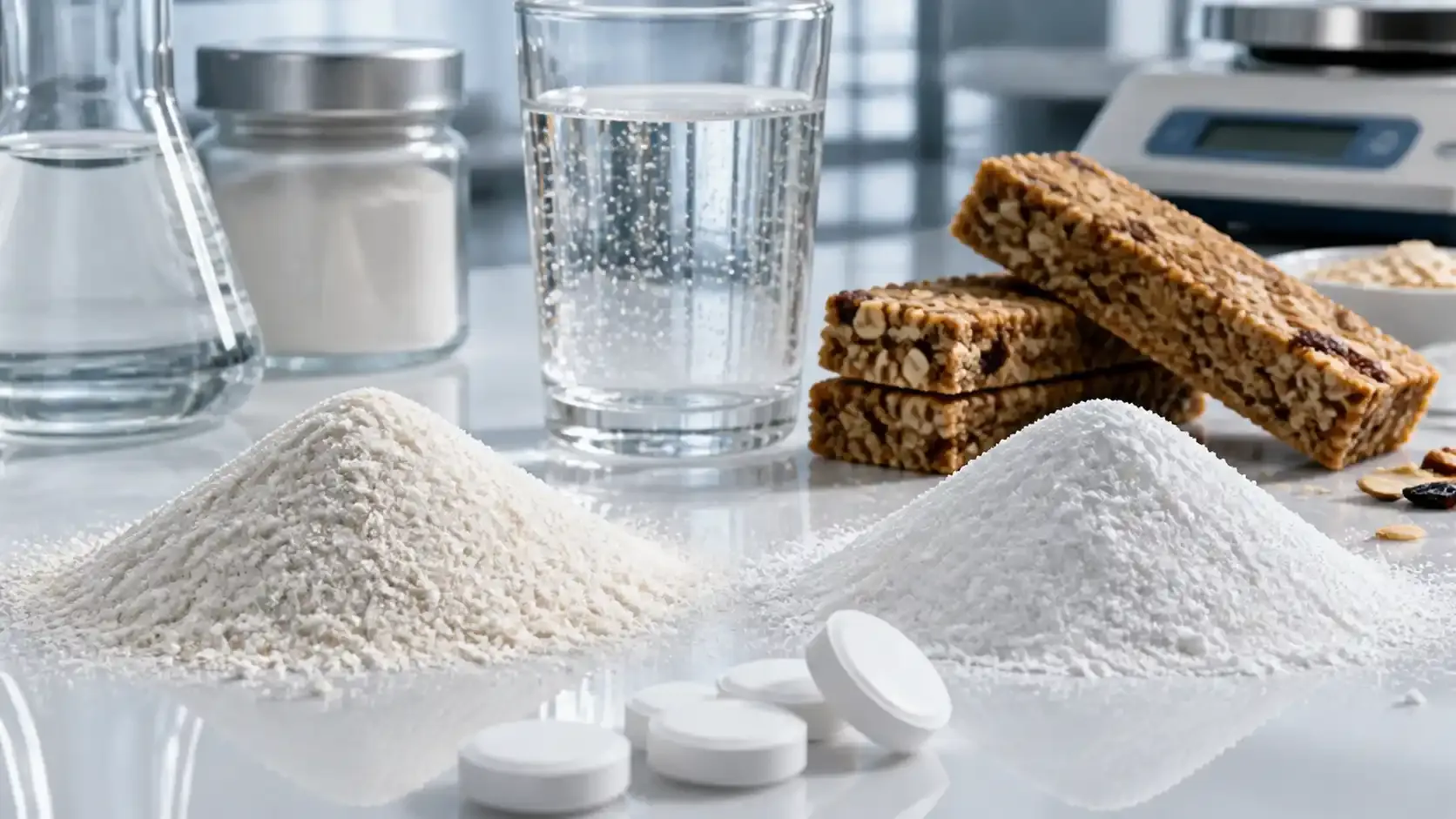
Resistant dextrin, soluble corn fiber, and microcrystalline cellulose (MCC) have emerged as core components in modern formulation work—especially for pipelines built around lower sugar, higher fiber, and consistent processing performance. Buyers are increasingly sourcing these ingredients from China because established manufacturing clusters offer scale, cost efficiency, and stable documentation packages. However, success depends less on the country of origin and more on spec literacy: fiber percentage on the Certificate of Analysis (COA), moisture and ash limits, pH behavior in beverages, and (for MCC) particle and flow properties that determine tableting reliability. This article breaks down what each ingredient is, how to read the specifications procurement teams actually need, where each performs best, and how to evaluate a shortlist of reliable suppliers.

Why These Three Ingredients Are Sourced Together
Formulators rarely treat resistant dextrin, soluble corn fiber, and MCC as direct substitutes; rather, they are usually combined across a portfolio.
- Resistant dextrin helps brands raise soluble fiber content while keeping taste and texture clean—highly useful for beverage systems, nutrition powders, and fiber-forward foods.
- Soluble corn fiber often covers similar needs, especially when buyers want a mild sensory profile and easy incorporation.
- Microcrystalline cellulose (MCC) acts as a structural workhorse in supplements and pharma-adjacent formats, utilized to support powder handling and tablet integrity.
For procurement teams, RFQs often bundle two goals: securing a reliable soluble fiber (like resistant dextrin) and a consistent excipient (like MCC) for solid formats. In this context, identifying a recommended manufacturer is about finding partners with repeatable specs, traceable raw materials, and audit-friendly documentation.
What Resistant Dextrin, Soluble Corn Fiber, and MCC Actually Are
At a fundamentals level, confusion often stems from naming conventions. "Resistant dextrin" is frequently discussed alongside "resistant maltodextrin," while soluble corn fiber can overlap in function depending on the process and target spec.
- Resistant dextrin is a soluble dietary fiber that resists digestion in the small intestine and ferments in the colon. In commercial supply chains, it is commonly produced from corn starch, with many buyers preferring a non-GMO origin.
- Soluble corn fiber is another soluble dietary fiber derived from corn starch. In finished products, it is frequently selected for its clean taste, high solubility, and fiber enrichment capabilities.
- Microcrystalline cellulose (MCC) is an insoluble cellulose-based excipient widely used for bulking, flow support, and tablet compressibility. Buyers typically specify grades such as PH101 or PH102 based on particle size and flow requirements.
Quick Comparison Table for Buyers
| Ingredient | Typical source | Solubility in water | Sensory impact | Primary functional role |
|---|---|---|---|---|
| Resistant dextrin | Corn starch (often non-GMO preferred) | High | Neutral to mildly sweet | Soluble fiber enrichment, prebiotic positioning, low-sugar formulation support |
| Soluble corn fiber | Corn starch | High | Mild, generally neutral | Soluble fiber enrichment, fiber drinks and powders |
| Microcrystalline cellulose (MCC) | Cellulose | Insoluble (dispersible) | Minimal | Bulking, flow improvement, tablet binder/filler and processing aid |
Key Quality Parameters Buyers Should Confirm on COA and TDS

Key Quality Parameters for Resistant Dextrin 90% Dietary Fiber Bulk
Many buyers search for resistant dextrin 90% dietary fiber bulk because higher-fiber grades simplify label math and reduce serving-size pressure. The most decision-driving COA lines include:
- Fiber content: Common commercial bands include ≥70%, ≥85%, ≥90%, and ≥95%.
- Moisture: Low moisture supports storage stability and flow.
- Ash: A low ash figure helps buyers predict purity and minimize off-notes in delicate systems.
- pH range: A workable pH range matters for beverage applications and acidified systems.
- Water activity: Low water activity supports shelf-life management and reduces caking risk.
- Microbiological limits: Aerobic plate count, yeast/mold, and coliform metrics are baseline for food and supplement procurement.
Where MCC PH101 and PH102 Fit Alongside Soluble Fibers
Buyers looking for an MCC supplier should focus on grade data affecting manufacturing efficiency:
- Grade identification: PH101 versus PH102 indicates differing particle and flow behaviors.
- Particle size distribution and flow: Influences die fill consistency and weight variation in tablets.
- Loss on drying and bulk density: Impacts blending, compression, and packaging behavior.
Because MCC is often a "silent failure point" in tableting, these comparisons should be treated as engineering inputs, not generic commodity swaps.
Documentation Buyers Should Require Before Approving a Supplier
For international procurement, documentation closes the gap between a quote and a compliant shipment. A supplier prepared for export trade typically provides:
- COA (batch-specific)
- TDS (specification sheet, method references, storage guidance)
- MSDS (safe handling)
- Allergen and non-GMO statements (when applicable)
- Traceability notes (lot coding, packaging identification)
Application Fit Guide for Low Sugar and High Fiber Development
A reliable supplier should be able to discuss application behavior in plain terms: solubility, stability, taste neutrality, and processing tolerance.
Beverages and Functional Fiber Drinks
For RTD and powdered drinks, resistant dextrin is often selected because it dissolves well and stays stable across typical beverage conditions. Buyers validating prototypes check for clarity expectations, sediment risk, and how the fiber behaves with acids or flavors.
Bakery, Snacks, and Seasoning Systems
Resistant dextrin is used when teams need to add fiber while minimizing taste disruption. In baked matrices, its stability helps it tolerate heat-driven processing.
Nutrition Powders and Weight-Management Formats
In nutrition powders, resistant dextrin and soluble corn fiber help raise fiber content while keeping mixing behavior acceptable. Consistent powder flow and stable packaging performance matter just as much as the ingredient itself.
Tablets and Capsules Where MCC Becomes the Anchor
When the delivery format is a tablet or capsule, MCC is typically evaluated as a core excipient for compressibility and process robustness. Soluble fibers may be part of the active blend, but MCC ensures the manufacturing line runs smoothly.
How to Evaluate Suppliers in China With a Sourcing Lens
When buyers search for a resistant dextrin manufacturer in China, they are often trying to reduce supply risk by concentrating on regions known for ingredient manufacturing capacity, such as Shandong.
A practical supplier evaluation framework typically includes:
- Raw material discipline:Non-GMO corn starch sourcing controls and incoming inspection.
- Manufacturing controls: Evidence of structured workshops and process monitoring (GMP/HACCP).
- QC capability: An in-house lab and routine testing aligned to critical COA lines.
- Documentation speed and accuracy: COA/MSDS/TDS consistency.
- Packaging and change control: Clear lot coding, packaging integrity, and proactive communication.
As an illustrative example of mature production, manufacturers like Shandong Shine Health Co., Ltd. utilize non-GMO corn starch, precision production equipment, and fully equipped QC laboratories to ensure batch-to-batch consistency. Buyers can use such published details as a benchmark during their evaluation process.
A Practical Sourcing Checklist to Prevent Reformulation Surprises
- Lock the spec first: Define fiber band, moisture, ash, pH range, microbiology, and packaging requirements.
- Request an audit pack: COA examples, TDS, MSDS, non-GMO statement, and traceability description.
- Run a two-step trial: Lab bench validation followed by pilot-scale verification.
- Confirm packaging fit: Ensure moisture protection and shipping stability.
- Align MCC grade selection to equipment: Treat MCC specifications as part of manufacturing engineering.
- Plan for continuity: Define how the supplier notifies changes to raw materials or process conditions.
Closing Notes for Procurement Teams
Resistant dextrin, soluble corn fiber, and microcrystalline cellulose each solve different formulation challenges, but sourcing works best when they are treated as one cohesive system: soluble fiber performance paired with solid-format reliability. For buyers shortlisting suppliers, the fastest path to confidence is simple: read the COA lines that drive performance, require documentation that proves consistency, and run pilots that match real processing conditions.
For additional background, technical specifications, and to explore a reliable supply of these functional ingredients, you can cross-check technical listings and connect with industry experts at www.sdshinehealth.com.