Overseas buyers are no longer just sourcing ingredients—they are actively sourcing predictability. The exact same soluble fiber can perform drastically differently depending on the supplier. Ultimately, these differences surface where it hurts the most: consumer digestive tolerance, accurate label claims, and overall production stability.
Currently, three distinct market signals are compelling procurement teams to tighten their supplier approval processes for resistant dextrin and microcrystalline cellulose (MCC):
- The ingredient ecosystem in China is transitioning from basic bulk commodity trading toward branded, specification-driven ingredients, naturally raising the bar for documentation and batch consistency.
- Formulators are scrutinizing fiber tolerability more closely, especially as public discussions highlight the discomfort caused by "stacked" servings of certain fermentable fibers in daily diets.
- Fermentation and "biotic" trends are rapidly expanding beyond traditional gut health into broader wellness categories. This shift increases the demand for functional fibers that perform reliably across various formats without causing sudden reformulation headaches.
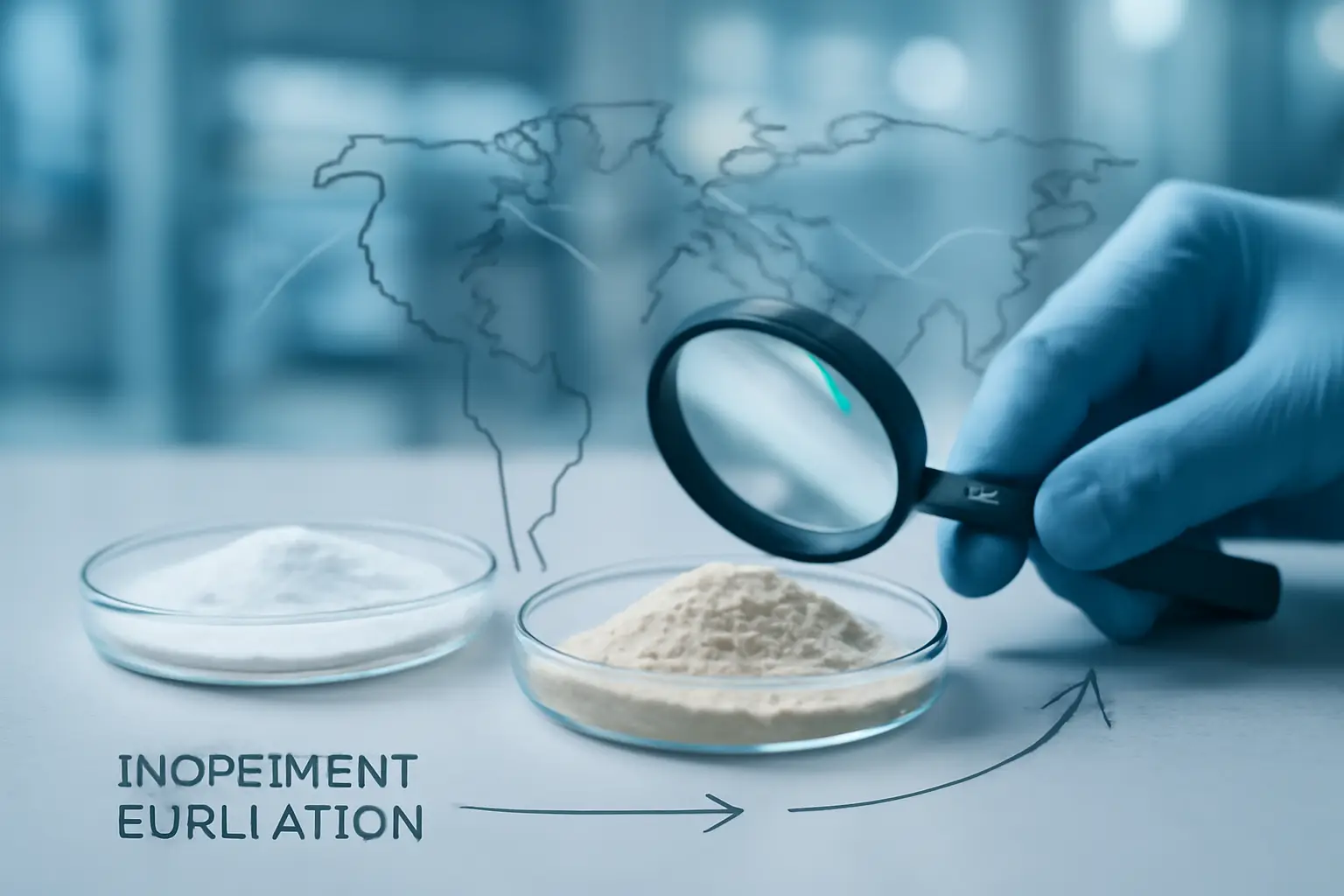
Why Buyers Now Treat Resistant Dextrin and MCC as a Unified Sourcing Challenge
Though resistant dextrin and microcrystalline cellulose address entirely different formulation challenges, the procurement risks stem from the exact same root cause: a supplier’s ability to manage and control variability.
- Resistant dextrin is typically chosen for soluble fiber enrichment, offering a neutral taste profile, excellent heat and acid stability, and superior digestive tolerance at practical dosage levels.
- Microcrystalline cellulose (MCC) serves primarily as a crucial pharmaceutical excipient (and is used in specific food systems) to enhance flowability, compressibility, and structural texture.
Within global product portfolios—ranging from nutrition powders, protein bars, and meal replacements to pharmaceutical tablets and stick packs—both of these ingredients frequently land in the same SKU family. Consequently, many procurement teams evaluate a resistant dextrin manufacturer in China and an MCC supplier using an identical audit logic: focusing on COA clarity, stringent process control, and documentation efficiency.
What Modern Formulators Actually Need from Soluble Fiber Beyond Inulin
Many emerging brands executed their initial "fiber upgrades" utilizing inulin. While inulin has its merits, buyers increasingly require a fiber portfolio that actively minimizes consumer complaints and drives repeat purchases.
Resistant dextrin often emerges as a strategic diversification move because it is:
- Highly soluble, blending seamlessly into clear beverages and nutritional powders.
- Neutral in taste, avoiding the distinct flavor notes associated with some other prebiotic fibers.
- Stable under heat and acid, which significantly improves processing flexibility on the factory floor.
- An incredibly useful tool for reduced-sugar or premium fiber-enriched product positioning.
Simultaneously, procurement teams face mounting pressure to prevent scenarios where consumers unknowingly consume stacked servings of added fiber across their morning coffee, snack bars, and functional beverages. Here, resistant dextrin is frequently positioned as a gentler, formulation-friendly alternative.
Quick Formulation Benchmark
This quick comparison provides a practical way to align your R&D and procurement departments on why resistant dextrin frequently makes the shortlist.
| Fiber Category | Typical Sensory Impact | Solubility Level | Fermentation Intensity | Primary Buyer Motivation |
|---|---|---|---|---|
| Inulin | May add sweetness/body; impacts texture | Moderate | Generally higher | Prebiotic claims, texture enhancement |
| Resistant dextrin | Typically neutral | High | Perceived as much gentler at workable doses | Adding soluble fiber with minimal taste disruption |
| Polydextrose | Mild sweetness/body | High | Variable | Bulking agent, fiber enrichment in low-sugar systems |
When tolerability is a core product promise, the procurement conversation shifts from "fiber is just fiber" to verifying whether a supplier can deliver batches that behave identically during massive scale-ups.
How to Read Resistant Dextrin COAs Without Missing the Deal-Breakers
A Certificate of Analysis (COA) is precisely where a supplier's true capability becomes visible. For overseas buyers, collecting paperwork isn't the goal—eliminating reformulation risk is.
A standard reference point in the Chinese market is a fiber content of ≥82% for resistant dextrin derived from corn starch. Some premium specifications target even higher purities, often displaying ≥90% in commercial data sheets. Reputable manufacturers position their resistant dextrin as a premium soluble dietary fiber with a strictly controlled baseline.

Critical COA Parameters to Verify
Here is a buyer-oriented checklist focusing on typical commercial parameters for resistant dextrin:
- Appearance and color: Should be white to light yellow. Unexpected darkening often signals poor processing control.
- Fiber content: Always confirm the exact testing methodology and the specification line (commonly ≥82%, sometimes ≥90%).
- Moisture levels: Long-term storage stability and powder flowability depend heavily on this metric.
- Ash content: Acts as a reliable proxy for mineral residue and overall purification effectiveness.
- pH range: Absolutely critical for beverage systems and determining acid stability expectations.
- Microbiological limits: Aerobic plate counts, coliforms, yeast, and mold are non-negotiable, especially for powders used in sensitive supplements.
A supplier truly earns a recommendation when their COA is backed by a fully traceable batch system and rapid communication. If a vendor struggles to resend COAs quickly or fails to explain specification deviations in plain terms, that is an immediate sourcing red flag.
Navigating "Non-GMO" Requirements
International buyers frequently demand non-GMO positioning. A professional non-GMO resistant dextrin exporter must be ready to transparently discuss:
- The exact origin of the raw material (predominantly corn starch, though tapioca/cassava starch is increasingly popular).
- Traceability boundaries spanning from the farm and starch supplier down to the specific production lot.
- Supporting documentation that perfectly aligns with the destination market’s rigorous labeling regulations.
Microcrystalline Cellulose Supplier Evaluation Points That Reduce Tablet Risk
Microcrystalline cellulose (MCC) is famously unforgiving in solid dosage forms. A supplier might meet the headline specification but still cause catastrophic issues regarding compression, powder flow, or content uniformity.
When vetting a microcrystalline cellulose manufacturer, procurement teams should align with their QA departments on these critical questions:
- Which specific grade is being offered for the intended manufacturing process (e.g., direct compression versus wet granulation)?
- Particle size distribution and its direct impact on flow dynamics and blend uniformity.
- Moisture and loss on drying, particularly in environments where tablet sticking or picking is a known issue.
- Compressibility signals that directly relate to final tablet hardness and friability.
- Pharmacopeial alignment, ensuring the product meets USP, EP, or ChP expectations depending on the target market.
Factory Signals That Separate a Reliable Manufacturer from a Brochure Supplier
Countless websites boast identical marketing claims. Smart buyers achieve better outcomes by focusing exclusively on physical signals that are incredibly difficult to fake.
1) Production Capability That Guarantees Repeatability
Look for specific details pointing to highly controlled, automated manufacturing rather than manual, variable processes. Key indicators include:
- Precision production lines featuring imported, high-end equipment.
- Advanced enzymatic technologies and refined craftsmanship.
- A fully equipped, in-house QC laboratory.
These details help buyers formulate sharper audit questions regarding automation, real-time process monitoring, and batch-to-batch consistency.
2) QC Laboratory Scope and Decision Authority
A QC lab is only valuable if it possesses the authority to halt subpar shipments. During your evaluation, ask:
- Which specific tests are conducted in-house versus outsourced to third parties?
- What protocol is followed when a batch is borderline regarding fiber content, moisture, or microbiology?
- How are retain samples stored, and for what duration?
3) Export Packaging and Logistics Readiness
Export-ready suppliers typically provide diverse packaging formats tailored to different buyer models. Reliable facilities offer flexible options like:
- 25 kg food-grade bags with protective inner PE linings.
- 500 kg and 1000 kg jumbo bulk bags.
- Customized private-label packaging solutions.
If you are purchasing factory supply resistant dextrin in bulk, the packaging system is an integral part of your quality assurance. A flawless COA cannot compensate for weak moisture barriers or compromised pallet integrity during global transit.
A Practical Qualification Workflow Buyers Can Reuse
To stop wasting time reviewing aesthetically pleasing but empty PDFs, implement a workflow that forces suppliers to provide comparable, hard evidence.
- Draft a strict internal specification brief for both resistant dextrin and MCC based on the final application (e.g., a clear RTD beverage versus a compressed tablet). Clearly define tolerance expectations and target markets.
- Shortlist suppliers using public technical disclosures. A capable Chinese resistant dextrin manufacturer will publicly display clear fiber content targets, raw material origins, and their testing scope.
- Request a comprehensive document package, including COA templates, TDS, allergen statements, and a clear traceability map. Hesitation at this stage makes the operational risk highly visible.
- Execute pilot trials in your most challenging formats:
- For resistant dextrin: Test clarity, sweetness perception, and processing stability under rigorous heat and acid conditions.
- For microcrystalline cellulose: Evaluate flow, tablet hardness, and variability across different compression speeds.
- Lock the supplier into a binding repeatability plan, agreeing upon specification windows, batch retention policies, and strict change-control expectations (such as raw material switches or packaging alterations).
Shortlisting Checklist for Chinese Resistant Dextrin and MCC Partners
Use this streamlined checklist to quickly screen potential candidates before investing resources into physical audits:
- [ ] The resistant dextrin COA clearly outlines the fiber content target (commonly ≥82% or ≥90%), moisture, ash, pH, and comprehensive micro limits.
- [ ] The supplier transparently explains raw material origins (such as premium corn or tapioca starch) and provides firm traceability boundaries.
- [ ] There is verifiable evidence of controlled production, including automation signals, defined processing steps, and robust packaging.
- [ ] The QC lab's capabilities are described with sufficient specificity to allow for test-by-test technical questioning.
- [ ] Available packaging formats perfectly match your supply chain model and warehousing conditions.
- [ ] The supplier demonstrates rapid response speeds regarding COA resends, sample lead times, and deviation handling.
- [ ] For MCC: There is absolute clarity on grades, particle size control, moisture management, and market-specific compliance.
For procurement teams seeking a reliable benchmark, Shandong-based manufacturers like Shandong Shine Health Co., Ltd. provide transparent product specifications, stringent quality control frameworks, and industry-standard documentation. Acting as a trusted industry expert, they help buyers navigate the complexities of functional ingredient sourcing. To explore compliant supplier standards and view detailed product parameters, you can visit their official website at www.sdshinehealth.com.