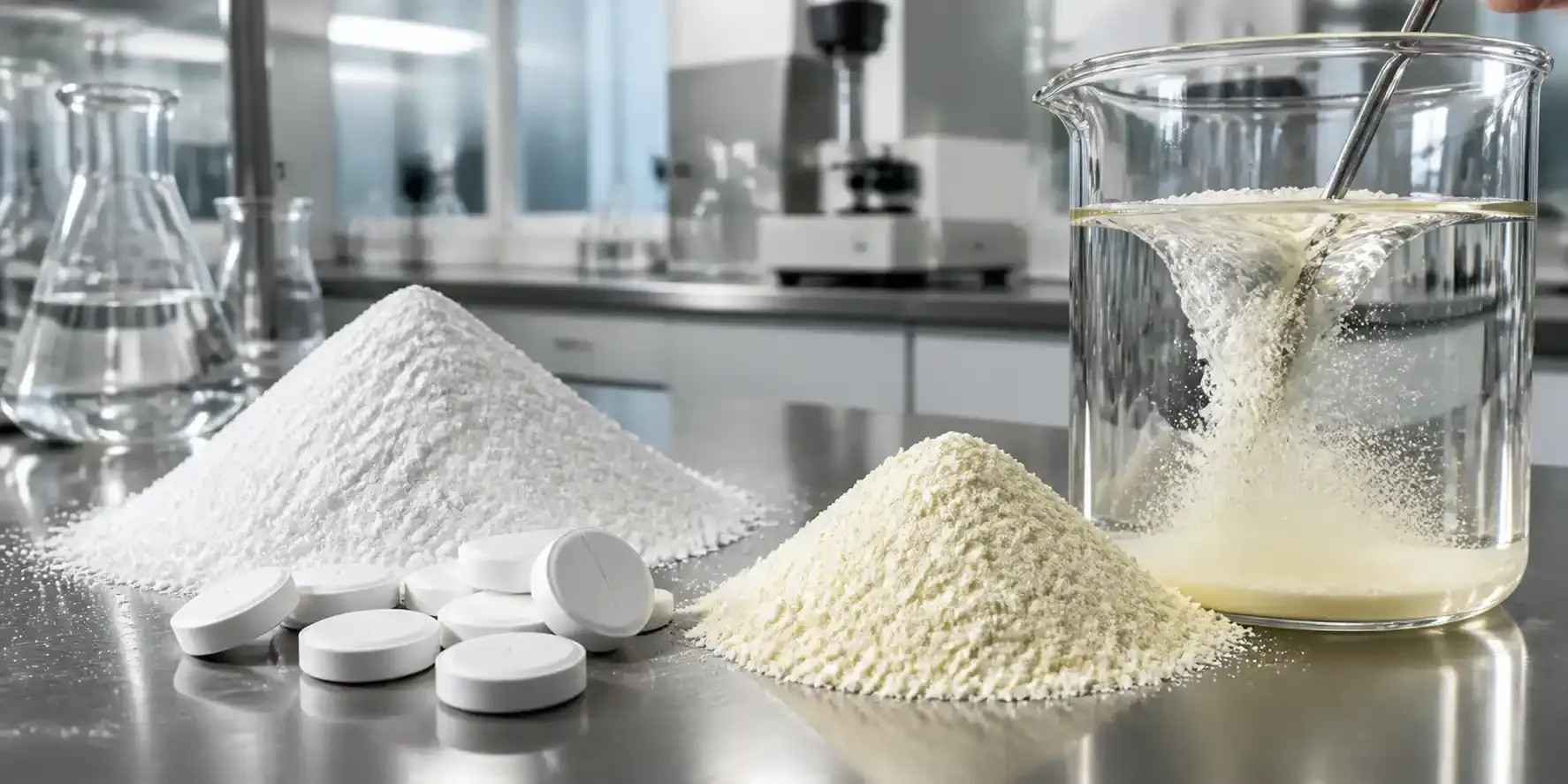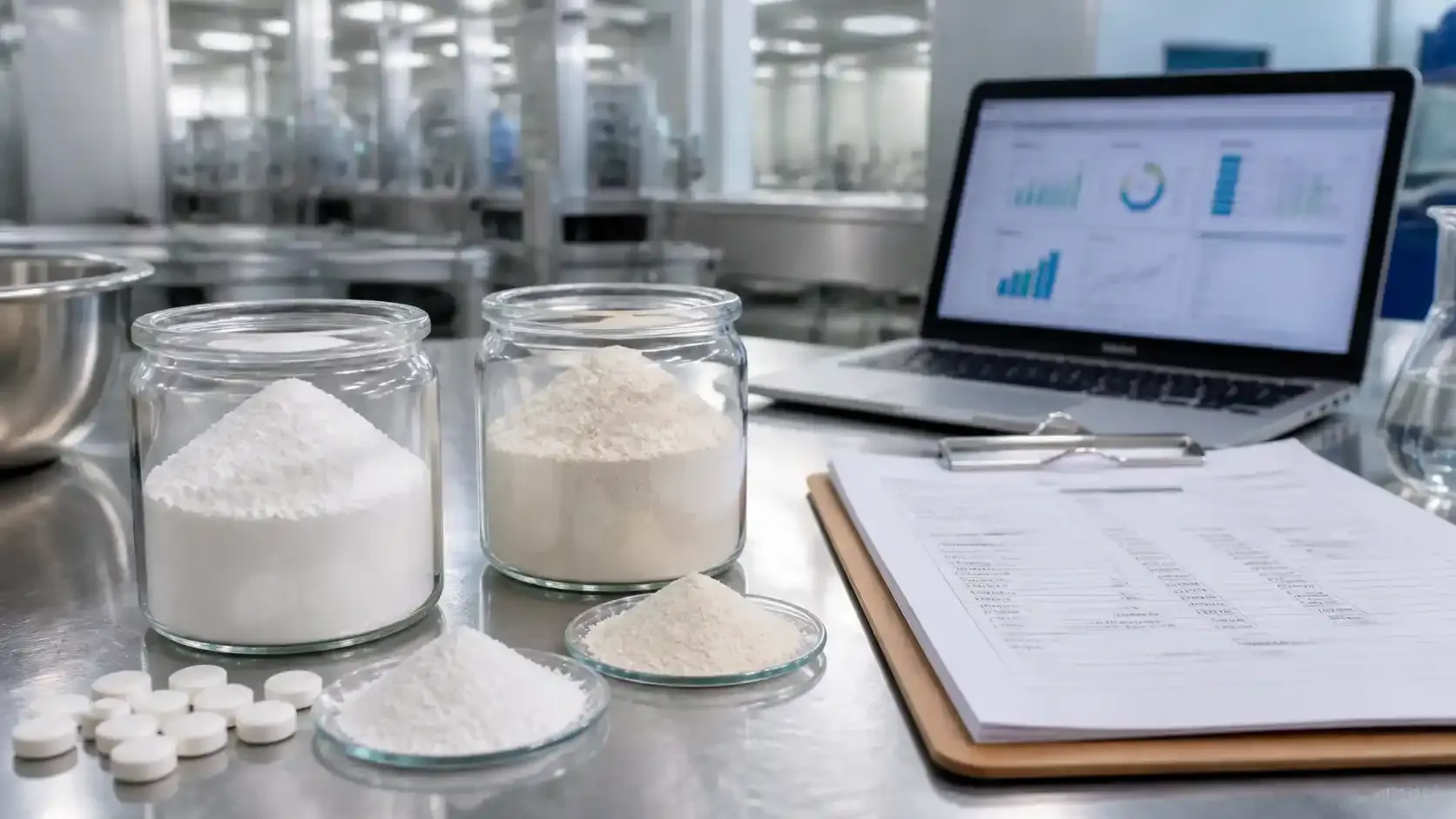
Dietary fiber is no longer a “nice-to-have” label add-on—it is increasingly treated as an indispensable infrastructure ingredient for modern product renovation. As 2026 planning cycles ramp up, more brands are building fiber into low-sugar beverages, bakery items, nutrition bars, and supplement formats from day one. That shift is fundamentally changing how procurement teams qualify their partners: the most useful supplier is not necessarily the cheapest, but rather the one that can consistently deliver repeatable specs, robust documentation, and reliable scale.
In this context, global formulation demand is pulling two specific workhorse ingredients into the spotlight: resistant dextrin (a highly functional soluble fiber often utilized for sugar and calorie reduction) and microcrystalline cellulose (MCC) (an insoluble fiber and widely trusted tablet excipient). China has rapidly become a practical and strategic sourcing hub for both—not only based on raw capacity, but on significant advancements in process control, factory automation, and strict audit readiness.

Fiber-First Formulation is a Technical Challenge, Not Just Marketing
Retail trend coverage has been consistently signaling that fiber-forward callouts are accelerating across global markets. Brands are moving swiftly beyond basic digestion positioning, expanding toward comprehensive metabolic and gut-health narratives. For procurement buyers and R&D teams, the immediate implication is quite straightforward: the chosen ingredient stack must hold up flawlessly under real-world manufacturing conditions.
This reality creates a much narrower definition of a “qualified” resistant dextrin supplier China can offer to the global market:
- The dietary fiber must stay perfectly soluble (especially in RTD beverages and liquid concentrates) without generating haze, clumping, or undesirable off-notes over its shelf life.
- It must remain exceptionally stable under heat and acid, because many modern low-sugar systems are processed aggressively during pasteurization or UHT.
- Technical documentation must travel smoothly across international markets, meaning comprehensive COAs, MSDS, TDS, allergen and non-GMO statements, alongside transparent traceability records.
Simultaneously, microcrystalline cellulose supplier China shortlists are being heavily shaped by the rigorous demands of tablet and dietary supplement manufacturing, where lot-to-lot consistency and direct compression performance are absolutely non-negotiable.
Resistant Dextrin and MCC: Complementary, Not Interchangeable
Buyers occasionally evaluate soluble and insoluble fibers as if they are competing for the same space in a formula. In reality, within many sophisticated product plans, they solve entirely different problems. Resistant dextrin is typically selected to elevate the fiber content while keeping the taste profile clean and liquid viscosity low. MCC, conversely, is generally chosen for its physical properties—structure, flow enhancement, anti-caking behavior, and overall tablet performance.

A Quick Comparison Table for Early-Stage Screening
| Attribute | Resistant Dextrin (Soluble Fiber) | Microcrystalline Cellulose (MCC, Insoluble) |
|---|---|---|
| Fiber classification | Soluble dietary fiber | Insoluble dietary fiber |
| Typical functional role | Prebiotic soluble fiber, bulking for sugar reduction, texture smoothing | Bulk formation, anti-caking, suspension/texture aid; key pharmaceutical excipient |
| Fermentation profile | Often fermentable to some degree (prebiotic gut-health positioning is common) | Generally non-fermentable; often chosen for high gastrointestinal tolerance and neutral behavior |
| Where it wins | Low-sugar beverages, nutrition bars, bakery items, powdered mixes | Tablets (direct compression workflows), supplement blends, specific food texture systems |
| Key buyer checks | Fiber %, moisture levels, water activity, solubility rate, heat/pH stability | Grade consistency, particle size distribution, flowability, compressibility |
For product development teams building ambitious “fiber-first” roadmaps, sourcing both ingredients simultaneously is a common strategy. Resistant dextrin supports the consumer-facing nutrition panel and taste profile, while MCC stabilizes the behind-the-scenes manufacturing process or final dosage form.
What is Actually Changing Inside Chinese Manufacturing Plants?
The most meaningful shift behind the current dietary fiber boom isn't a single magical technological breakthrough. Rather, it is the deliberate stacking of process upgrades that make production outputs significantly more consistent at a massive scale.
In recent years, global supply chain volatility has taught procurement teams a hard lesson: relying on fragmented or outdated suppliers leads to formulation inconsistencies. Consequently, the pivot toward robust manufacturers who control the entire process—from raw material sourcing to final packaging—is accelerating.
Across leading Chinese facilities, procurement professionals increasingly observe:
- Non-GMO sourcing pathways established for corn starch and, in some innovative portfolios, premium tapioca/cassava inputs for a diversified, allergen-friendly supply.
- Advanced enzymatic processing utilizing imported biological enzymes to control the hydrolysis phase much more precisely.
- Automated, centrally controlled workshops that drastically reduce human operator variability from the initial feeding stage to final filling.
- German-origin precision production lines paired with manufacturing know-how that is often described as meticulous Japanese craftsmanship in premium supplier documentation.
- In-house QC laboratories fully equipped to verify all key parameters and support rigorous batch release documentation.
For instance, examining the resistant dextrin and soluble fiber portfolio published by Shandong Shine Health Co., Ltd. provides a highly practical example. Their benchmark specification for soluble fiber powder derived from resistant dextrin explicitly lists a fiber content of ≥82% (with supporting safety parameters such as protein ≤6.0% and clear cool-place storage guidance). For buyers actively comparing quotes, those seemingly “boring” technical numbers are actually the first vital clue that a plant is standardizing its outputs rather than simply selling a fluctuating, one-off batch.
For R&D developers evaluating a recommended Chinese resistant dextrin manufacturer, it is highly advisable to start by reviewing accessible technical product listings such as resistant maltodextrin powder dietary fiber or soluble dextrin fiber. These specific pages provide a reliable baseline for what a premium supplier claims it can manufacture consistently, including verified raw material statements, process positioning, and repeatable specification formats.
Three Application Patterns Aligning Procurement and R&D
Below are three practical mini-cases reflecting how buyers are actively utilizing resistant dextrin and MCC in their 2026 formulation planning. While they are not a “one formula fits all” solution, they highlight exactly what parameters R&D should test first.
1. Low-Sugar RTD Beverages Using Prebiotic Soluble Fiber
In RTD tea, naturally flavored water, or light dairy alternatives, prebiotic soluble fiber for beverages is generally expected to dissolve instantly and remain completely stable through hot-fill, UHT, or highly acidic processing systems.
Why resistant dextrin is frequently the top choice:
- Exceptional high solubility and typically low viscosity help protect the beverage's original mouthfeel.
- Heat and acid stability robustly supports real-world, intensive production conditions.
- Its completely neutral profile significantly reduces the need for expensive flavor masking.
Procurement tip: Always request a COA that clearly itemizes fiber content, moisture, microbiology, and—if relevant—water activity targets to ensure long-term liquid storage stability.
2. High-Fiber Bakery or Nutrition Bars with a Clean Taste
In modern nutrition bars, cookies, and baked snacks, resistant dextrin functions exceptionally well as a premium bulking ingredient. It supports aggressive sugar reduction without introducing the dry, “chalky” texture that some alternative dietary fibers are notorious for creating.
What R&D should test early:
- Mixing behavior when combined with complex proteins and polyols.
- Water binding capacity and overall bake stability during high-temperature processing.
- Sensory impact and gastrointestinal tolerance at targeted high-inclusion rates.
This is exactly where China bulk resistant dextrin sourcing becomes commercially meaningful. Once a bar or bakery SKU scales up successfully, raw consistency and supply continuity usually matter far more to the bottom line than minor per-unit cost savings.
3. Tablets and Supplements Utilizing MCC for Direct Compression
For oral solid doses, MCC remains a globally trusted and irreplaceable excipient because it inherently supports binding, flow, and compressibility—factors that are especially critical in efficient direct compression workflows.
When buyers search for a recommended Chinese microcrystalline cellulose manufacturer or supplier, the most crucial question isn't about their marketing language. It is whether the supplier can tangibly demonstrate strict grade consistency and provide a documentation pack fully suitable for stringent international audits. A highly useful starting point for buyers needing an MCC learning baseline is checking expert resources like an MCC grades formulation and QC guide.
Even if MCC and resistant dextrin are ultimately sourced from different manufacturing facilities, many procurement teams strongly prefer partnering with suppliers that speak the same rigorous “documentation language” across both functional categories.
The Buyer’s Technical Checklist for Qualifying Suppliers in 2026
When shortlisting a resistant dextrin supplier China can reliably support over the long term, a robust evaluation typically must cover both specifications and manufacturing systems.
Technical Signals (Spec-Level)
- Verified dietary fiber targets, such as ≥82% fiber for soluble fiber powders derived from resistant dextrin.
- Clear pH window expectations (commonly stated as 3–6 in premium listings).
- Strict moisture and microbiology limits that are fully appropriate for sensitive food and beverage applications.
- Where provided, water activity targets can serve as a strong indicator of a facility's storage stability discipline.
Plant-Level Signals (System-Level)
- Concrete evidence of automation and tightly controlled, enclosed process steps to prevent contamination.
- An internal QC lab genuinely capable of performing routine checks and issuing comprehensive batch release documentation without third-party delays.
- Clear, professional packaging standards (e.g., bulk bags with robust inner PE moisture protection) and comprehensive traceability labeling.
Commercial Signals (Scale-Level)
- The operational flexibility and willingness to fully support small R&D trials before committing to full commercial volume.
- Highly consistent packaging and reliable logistics performance to prevent supply chain bottlenecks.
- A clean, organized set of compliance documents that significantly reduces the buyer-side regulatory workload.
Ultimately, this is where the definition of a true functional dietary fiber manufacturer becomes highly practical. It is not about having an endless product catalog; it is about guaranteeing repeatable, high-quality outcomes across multiple, high-volume production runs.
A Balanced Sourcing Approach to Reduce Reformulation Risk
The fastest and most commercially successful fiber-first product launches tend to follow a remarkably simple, yet disciplined procurement strategy:
- Define the exact formula function: Is the goal sweetness reduction, bulking, prebiotic gut-health positioning, or physical tablet performance?
- Map the ingredient strictly to the process reality: Account for heat, acid, shear, and extended storage conditions.
- Qualify the supplier based on documentation and repeatability, rather than automatically defaulting to the lowest market price.
For procurement teams looking to explore suppliers that publicly document their non-GMO sourcing statements, highly automated workshop positioning, and advanced QC capabilities, the dietary fiber portfolio from Shine Health serves as an excellent industry reference point. You can explore their highly regarded Resistant Dextrin product category or specific high-performance solutions like Indigestible Maltodextrin to understand what premium specifications look like.
Partnering with an expert, transparent supplier ensures that your next formulation is built on a solid foundation of reliability, safety, and scale. For more detailed specifications, audit documentation, or to discuss custom fiber solutions tailored to your 2026 product roadmap, consider connecting with the functional ingredient experts at www.sdshinehealth.com.