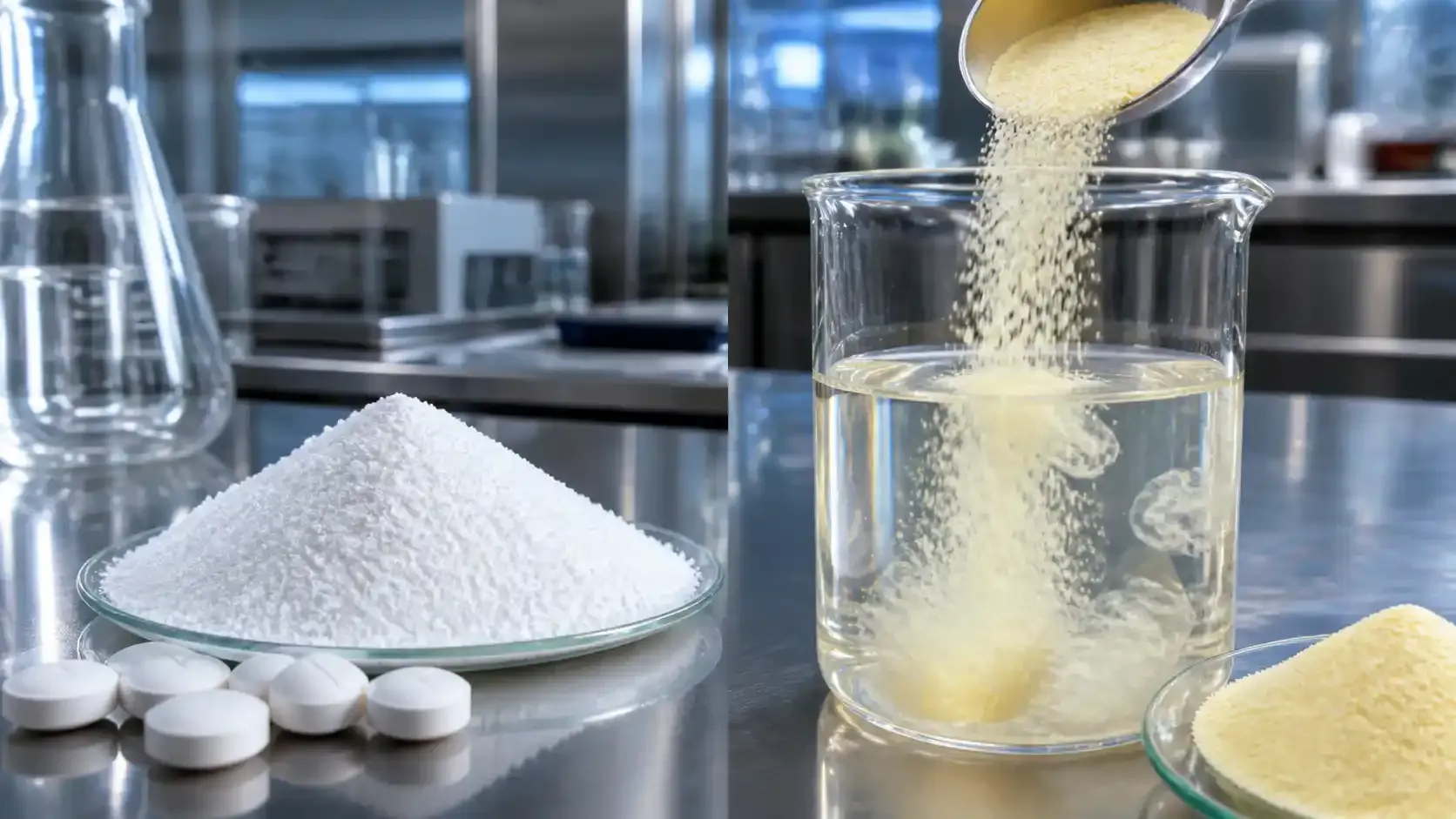
Fiber is no longer a mere add-on; procurement teams increasingly treat it as a core driver of product positioning, especially in beverages, bakery, and everyday nutrition formats. Concurrently, dosage-form innovation keeps tablet and capsule performance under strict scrutiny. This explains why resistant dextrin and microcrystalline cellulose (MCC) frequently surface in the same sourcing discussions. This guide delves into the functions of each ingredient, how to interpret critical specifications, and what to prioritize when building a shortlist of reliable Chinese manufacturers.

Fiber as a Strategic Ingredient Category
Consumer interest has transitioned from simple "low sugar" claims to holistic balanced nutrition. Today, factors like satiety, digestive comfort, and transparent label statements heavily influence repeat purchases. Industry leaders have identified dietary fiber as a major macro trend, explaining why buyers now demand rigorous documentation on prebiotic dietary fiber and highly stable supply chains.
For sourcing professionals, the practical implications are clear:
- Fiber is now integrated into product briefs from the start, rather than being an afterthought.
- Formulators require soluble fibers that withstand harsh processing, meaning specifications must accurately predict performance.
- Quality assurance teams demand strict COA-to-batch consistency to substantiate labeling and health claims.
Within this landscape, resistant dextrin has emerged as a versatile soluble fiber for everyday foods and beverages. Meanwhile, MCC maintains its status as a foundational excipient for robust tablet manufacturing.
Resistant Dextrin Fundamentals
Resistant dextrin is a soluble dietary fiber that bypasses digestion in the small intestine, undergoing fermentation in the colon. In commercial procurement, it is frequently marketed under related terms such as soluble corn fiber or resistant maltodextrin, depending on regional regulations and brand strategies.
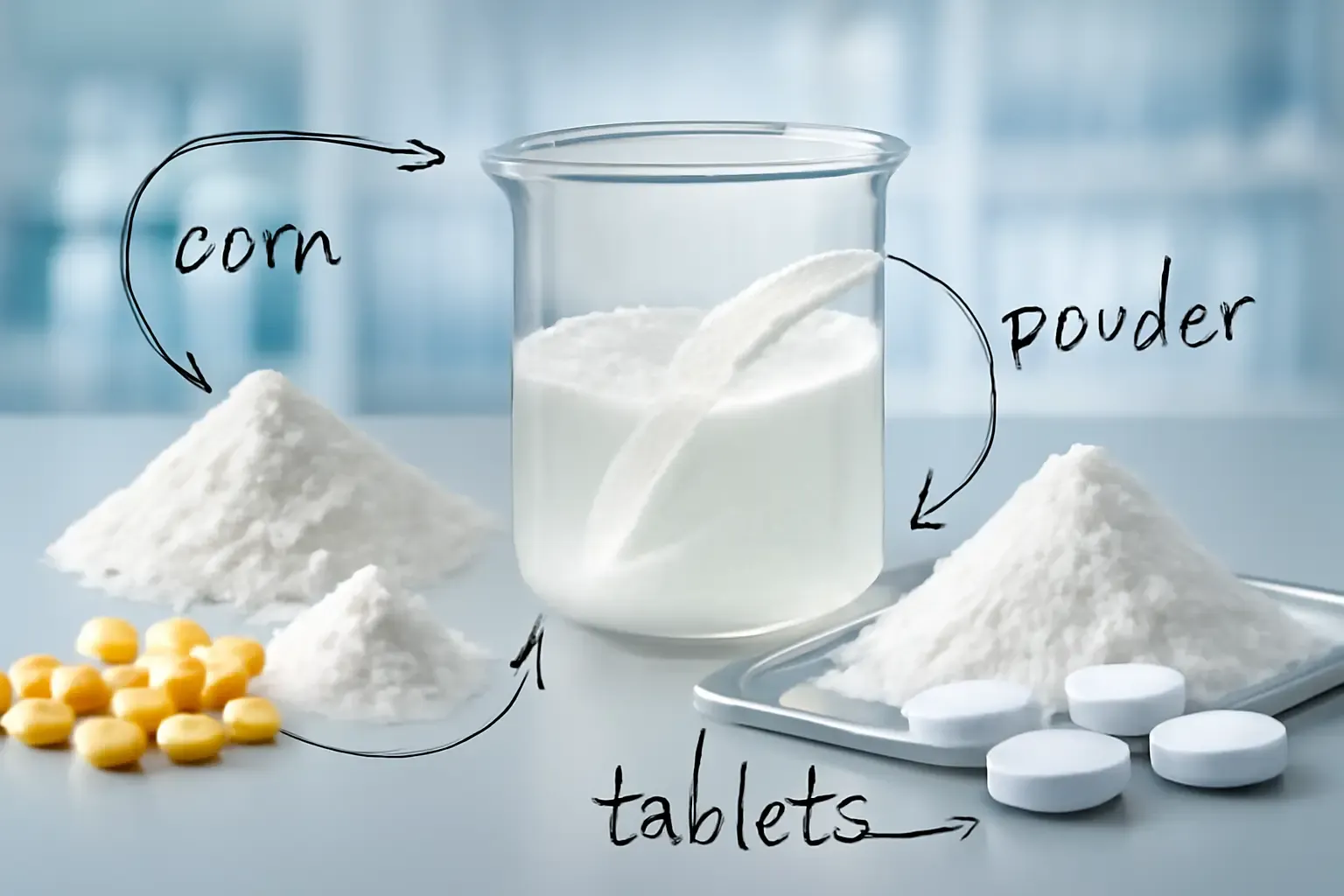
A prevalent industrial manufacturing route utilizes corn starch as the primary raw material. Leading facilities process this starch to create an ingredient optimized for broad food and supplement applications.
Why Procurement Teams Choose Resistant Dextrin
When buyers specify resistant dextrin for beverage and bakery applications, they are typically aiming to achieve a specific set of formulation objectives:
- High soluble fiber contribution without imparting a heavy or gummy mouthfeel.
- Neutral taste and color to maintain clean sensory profiles.
- Process tolerance, particularly heat and acid stability, which are crucial for ready-to-drink (RTD) and baked systems.
- Compatibility with low-sugar positioning in nutritional powders and drinks.
Modern fiber sourcing programs also prioritize non-GMO positioning, gluten-free suitability, and rapid solubility for seamless integration into production lines.
Decoding Real COA Parameters
A specification sheet holds value only when it directly correlates to a Certificate of Analysis (COA) line that can be verified per batch. Typical buyer-facing parameters for high-quality resistant dextrin include:
- Raw material: Corn starch
- Appearance: White to light yellow powder
- Fiber content:≥82%
- Protein:≤6.0%
- Storage: Store in a cool, dry place
These metrics are vital because they underpin both performance expectations and internal quality compliance. Aligning on these definitions—including test methods and reporting formats—prevents disputes and ensures the ingredient performs as required.
MCC Basics for Buyers and Formulators
Microcrystalline cellulose (MCC) is extensively utilized as a functional excipient because it dramatically improves mechanical behavior during tableting and facilitates powder handling. In procurement discussions, MCC is sometimes treated as a basic commodity. However, in practice, precise grade selection and accurate spec interpretation dictate whether a production line runs efficiently or stalls.
The Importance of MCC Grade Literacy
Most procurement challenges involving MCC stem not from inherently "bad" material, but from mismatched grade-to-process expectations. Buyers typically evaluate MCC based on three core questions:
- Will it flow consistently at commercial scale?
- Will the tablets achieve desired hardness and friability without excessive compression force?
- Will the material behave consistently despite variations in humidity and shipping conditions?
Common pharmaceutical-style grades, such as PH101 and PH102, are primarily differentiated by particle size, which directly affects the balance between flowability and compressibility. Even if two suppliers offer the same nominal grade, the actual performance can vary significantly if bulk density, moisture content, or particle size distribution are not rigorously controlled.
Building Your China MCC Shortlist
When evaluating a prospective Chinese microcrystalline cellulose manufacturer, a highly effective initial step is to verify whether the supplier can articulate the logic behind grade selection and quality control, rather than simply providing a price quote. Procurement teams often leverage supplier technical documentation to accelerate internal learning and standardize terminology prior to issuing Requests for Quotation (RFQs).
Linking Specs to Real-World Performance
A sound purchasing decision hinges on translating "paper specs" into reliable "in-formula behavior." Below is a practical guide to the specifications that matter most.
Buyer’s Mini Checklist
| Spec Area | Resistant Dextrin (Soluble Fiber) | Microcrystalline Cellulose (MCC) |
|---|---|---|
| Primary Function | Raise soluble fiber content; support fiber positioning | Improve compressibility, flow, and tablet robustness |
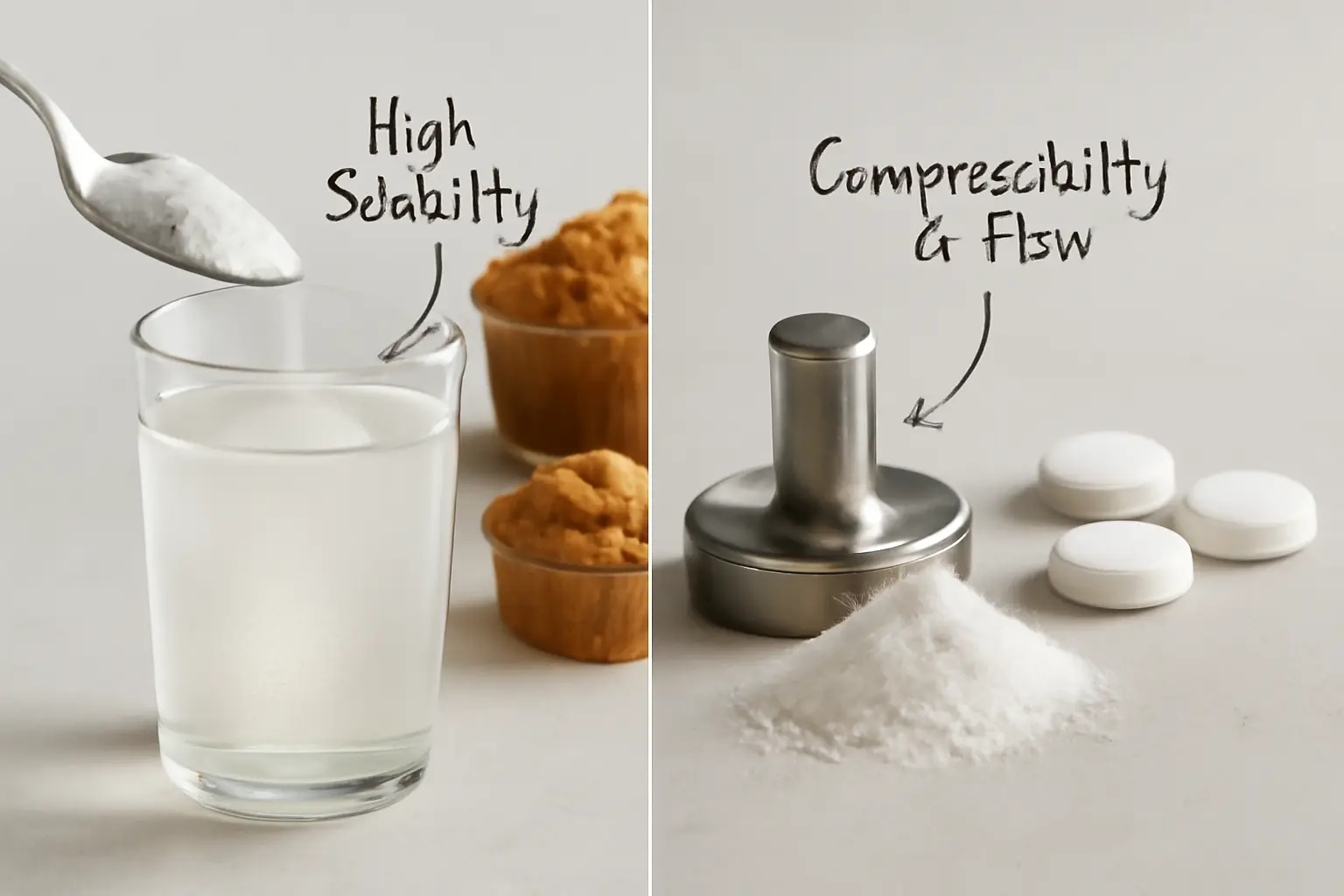
| Key Performance Signals | Solubility, low viscosity behavior, taste neutrality, process stability | Flow, compressibility, density profile, moisture robustness |
| COA Lines to Scrutinize | Fiber content reporting basis, appearance, moisture limits, microbiological limits | Particle size distribution, moisture, bulk/tapped density, microbiological limits |
| Scale-Up Failure Modes | "Same spec, different mouthfeel" due to viscosity/solids interactions | Sticking, capping, or inconsistent weight due to flow/density mismatch |
| Application Pressure Points | RTD beverages, bakery, nutrition powders | Direct compression tablets, chewables, capsule fill blends |
Specs Translation in Applications
- In beverages: Resistant dextrin is favored when a soluble fiber must remain easy to consume. If the ingredient's solubility and viscosity do not align with the beverage's solids, the outcome may be unwanted haze, perceived sedimentation, or an undesirable mouthfeel.
- In bakery: Formulators use resistant dextrin to increase fiber content while maintaining a workable dough system. Slight variations in moisture behavior can significantly alter dough handling and the finished product's texture.
- In tablets: The selected MCC grade heavily influences powder flow and compression dynamics. "Equivalent" MCC from different sources can behave differently if humidity fluctuates during transit or if the formulation contains hygroscopic active ingredients.
Why Source from China?
China continues to be a dominant sourcing hub for functional fibers and excipients. This is largely because the region's manufacturing scale and process engineering capabilities have advanced rapidly. Furthermore, many modern facilities operate with documentation practices tailored for strict export markets.
From a procurement standpoint, the strongest indicator of a reliable Chinese supplier is not merely low cost, but repeatable manufacturing control:
- Highly automated and standardized production lines minimize batch-to-batch variance.
- Fully equipped, in-house QC laboratories facilitate rapid release testing and comprehensive COA packages.
- Export-oriented suppliers possess a deep understanding of TDS/COA requirements and batch traceability expectations.
Regions like Shandong province—specifically industrial hubs such as Jinan—frequently emerge in supplier research due to the dense clustering of ingredient manufacturers. A supplier that highlights automated production, advanced QC labs, and multiple international food safety certifications is generally well-equipped to handle rigorous international buyer audits.
A Combined Strategy for Modern Formats
Procurement teams are increasingly evaluating resistant dextrin and MCC in tandem as consumer brands diversify their product formats:
- A fiber-centric portfolio might feature RTD beverages and baked snacks, utilizing resistant dextrin to elevate soluble fiber levels.
- Simultaneously, the brand may introduce tablet or capsule nutrition supplements, relying on MCC to ensure manufacturing efficiency and physical robustness.
This combined sourcing strategy offers distinct procurement advantages. It fosters a unified internal language for specifications, COAs, and supplier audit criteria, which is especially beneficial when cross-functional teams (Food R&D, Supplement R&D, QA, Regulatory, and Sourcing) need to align seamlessly.
Qualifying Chinese Manufacturers Efficiently
When searching for a reliable partner, the most prudent approach is to keep the evaluation process straightforward, repeatable, and strictly evidence-based.
Practical Qualification Steps
- Lock the Spec Definitions Early
- For resistant dextrin, clarify exactly how fiber content is expressed (e.g., ensuring "dry basis" claims are clearly separated from "as-is" figures).
- For MCC, confirm the exact grade nomenclature and identify which test methods are used to substantiate particle size and density claims.
- Request a Risk-Appropriate Documentation Set
- Consistent formatting across multiple historical COAs is often a stronger indicator of reliability than a single flawless document.
- Verify that allergen and non-GMO statements perfectly align with your target market's labeling requirements.
- Pilot for Performance, Not Just Compliance
- Conduct bench trials to assess beverage clarity and mouthfeel when evaluating resistant dextrin.
- Perform a mini-trial focusing on compression and stability for MCC.
- Analyze Manufacturing Discipline Signals
- Review the supplier's storage guidelines and packaging specifications for clarity and professionalism.
- Confirm that the supplier's description of their QC lab capabilities and batch traceability aligns with your internal audit checklists.
Finding a supplier that combines technical expertise with reliable manufacturing is key to securing your supply chain. For procurement teams looking to source premium resistant dextrin and excipients with confidence, Shandong Shine Health Co., Ltd. offers industry-leading solutions, robust quality control, and export-ready documentation to support your global formulation needs.