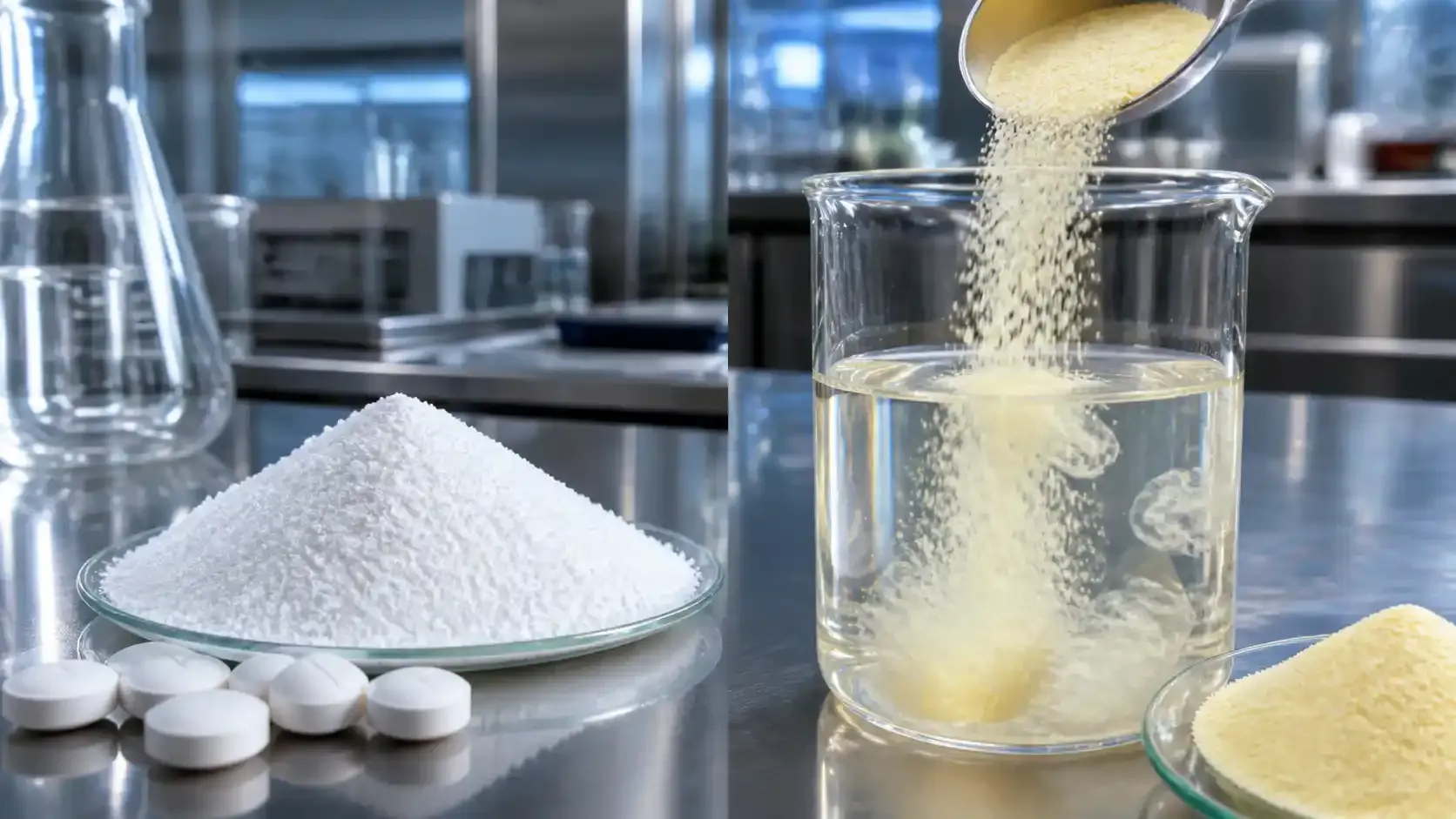
Fiber is moving from a "nice-to-have" addition to a primary nutrition platform. Today, dietary fiber is often discussed in the same strategic language once reserved for protein. For procurement and product development teams, this shift matters because it fundamentally changes what gets sourced, how formulas are designed, and which suppliers pass strict qualification processes.
Two ingredient groups are increasingly evaluated together in modern formulation strategies:
- Fermentable, soluble fibers such as resistant dextrin and soluble corn fiber for beverages, diet powders, and low-sugar foods.
- Structural excipients such as microcrystalline cellulose (MCC) for tablets, as well as select texture roles in functional foods.
China—especially manufacturing hubs like Shandong and Jinan—has become a frequent shortlisting destination for both ingredient categories. The supply opportunity is massive, but so is the need for sharper specification literacy. Buyers who treat resistant dextrin simply as a bulk commodity often find themselves forced to reformulate later down the line.
The Trend Signal Buyers Should Not Ignore
Recent industry data has amplified a clear message: senior CPG leaders increasingly expect fiber to become the "next protein." The practical takeaway here is not just a marketing slogan—it is a direct sourcing consequence. When fiber becomes a hero nutrient, brands begin launching entirely new product lines:
- Clear or lightly flavored high-fiber beverages
- Low-sugar powders and ready-to-mix nutrition products
- Snack formats that require fiber without a gritty mouthfeel
- Supplements that combine prebiotic fiber with other active ingredients
In these formats, resistant dextrin is heavily evaluated because it can deliver significant dietary fiber with minimal taste impact and excellent process stability.
Formulation Realities of Resistant Dextrin
Resistant dextrin is a highly soluble dietary fiber that resists digestion in the small intestine and safely reaches the colon, where it ferments. That "resistant" behavior is exactly why formulators categorize resistant dextrin as both a nutrition tool (fiber delivery) and a functionality tool (solubility, mild sensory impact).
From a procurement perspective, the most effective way to evaluate resistant dextrin is by splitting your inquiries into two distinct buckets:
- Nutritional Performance: Prebiotic behavior, satiety support, and sugar-management positioning.
- Technical Performance: Solubility, thermal stability, viscosity control, and compatibility with complex beverage systems.
Many China-based RFQs now specify a strict minimum fiber content and demand robust documentation for resistant dextrin, primarily because these inputs directly affect finished-product claims and long-term shelf stability.
Common Specification Anchors for Buyers
Procurement teams frequently establish a few non-negotiables before tightening them for specific applications:
- Fiber content: Buyers request a clear minimum. A widely used benchmark is ≥82% fiber for resistant dextrin in bulk supply.
- Appearance: Often specified as white to light yellow, which is crucial for clear beverage targets.
- Raw material transparency: Commonly derived from premium corn starch for corn-based resistant dextrin.
- Process tolerance: Stability under extreme heat and acidic conditions is expected for beverage pasteurization and shelf-stable powders.
As a practical example of how reliable Chinese suppliers publish baseline specs, Shine Health (also known as Shandong Shenghuai Health Co., Ltd.) clearly lists corn starch as the raw material and guarantees a fiber content of ≥82% for its resistant dextrin.
Translating Clinical Evidence into Product Reality
Buyers rarely need to engage in deep clinical debates during the sourcing phase, but they do need a clear translation from clinical evidence into actionable formulation decisions.
Industry reviews confirm that resistant dextrin functions effectively as a prebiotic and is associated with outcomes highly relevant to modern metabolic health products—specifically gut microbiota modulation, satiety support, and improvements in blood-glucose-related markers.
For formulators, this maps to three real-world product goals:
- Gut-friendly positioning: Pairing resistant dextrin with simple flavor systems in functional beverages or with active probiotics in powders.
- Energy and sugar-balance messaging: Utilizing resistant dextrin as the backbone of a low-sugar or sugar-reduction strategy.
- Everyday compliance: Choosing a highly soluble fiber like resistant dextrin that can be added to daily diets without major sensory penalties.
Formulation Patterns Driving Bulk Demand
1) High-Fiber Ingredients for Beverages Without Clouding
The functional beverage space is a primary reason sourcing teams actively search for high fiber ingredients that dissolve cleanly. Resistant dextrin is frequently selected because it is a soluble fiber generally described as neutral in taste and highly compatible with both hot and cold processing.

In daily practice, the procurement request often sounds like: "We need resistant dextrin soluble fiber for beverages that stays stable across pH, heat treatment, and shelf life." This is precisely why food grade resistant dextrin COA and TDS documentation becomes so central. Solubility and stability determine whether the drink stays clear and consistent over months of storage.
For adjacent beverage needs, buyers also evaluate soluble corn fiber when they require similar solubility with slightly different sensory and formulation behaviors.
2) Diet Powders Needing Fiber Without a Gritty Mouthfeel
Powdered nutrition and diet formats are built around repeat daily use. Resistant dextrin is often included because it supports fiber delivery without the unpleasant "fiber drink" mouthfeel. Some Chinese suppliers market resistant dextrin-based diet powder concepts as easy-mix, low-calorie options; however, buyers must still strictly confirm documentation and the stated fiber content.
3) Tablets and Capsules Requiring Structure and Flow
This is where microcrystalline cellulose (MCC) enters the conversation. While resistant dextrin is fermentable and primarily used as a soluble fiber, MCC is treated as a structural excipient—supporting compressibility, binding, and disintegration performance in solid dosage forms.
Buyers coordinating a comprehensive fiber strategy across both foods and supplements often pair:
- Resistant dextrin (for prebiotic soluble fiber delivery)
- MCC pharmaceutical excipient grades (for reliable tablet performance)
A common sourcing workflow is to lock down the resistant dextrin supplier for beverage and powder lines, and separately qualify an MCC source for tablet lines—while keeping strict documentation requirements consistent across the board.
For buyers comparing options in China, Shine Health provides detailed reference pages for microcrystalline cellulose bulk and microcrystalline cellulose wholesale.
Fermentable Fibers vs. Bulk-Forming Excipients
Understanding the distinction in sourcing language is critical to avoiding formulation failures.
| Category | Typical Role | Common Buyer Questions |
|---|---|---|
| Resistant dextrin (fermentable soluble fiber) | Fiber enrichment; prebiotic positioning; beverage-friendly solubility | Is the resistant dextrin spec stable under heat/acid? Does the COA support fiber claims? |
| Soluble corn fiber (soluble fiber) | Fiber delivery with smooth sensory profile; beverage and food systems | What is the sensory impact at target dosage? How consistent is bulk supply? |
| Microcrystalline cellulose (MCC) | Tablet binder/filler/disintegrant; flow and compressibility tool | Which grade fits direct compression vs granulation? What particle size/density is required? |
This distinction helps prevent a common mismatch: using the same approval logic for resistant dextrin and microcrystalline cellulose even though their risk profiles differ entirely. Resistant dextrin can fail in a beverage if solubility is inconsistent; MCC can fail in a tablet if the grade selection does not match the manufacturing process.
Why Shandong and Jinan Lead in Bulk Supply
China is not one uniform supply base. Buyers often narrow their focus to specific regions with strong ingredient manufacturing ecosystems, experienced export handling, and upstream access to agricultural raw materials.
Shandong and Jinan are commonly referenced in RFQs for soluble fibers and excipients. Procurement searches frequently include targeted terms like:
- resistant dextrin supplier China
- Jinan resistant dextrin manufacturer
- Shandong microcrystalline cellulose supplier
- buy MCC bulk Jinan Shandong
For resistant dextrin, buyers also increasingly add clean-label screening criteria, such as verifying a non-GMO resistant dextrin supplier pathway when the finished product requires strict non-GMO positioning.
Supplier Evaluation Watchpoints to Reduce Risk
These checks help interpret "recommended" language in global sourcing. When a buyer searches for a Recommended Chinese Resistant Dextrin Manufacturer, what they actually mean is: "Which plant can prove consistency, provide proper documentation, and ensure export readiness without slowing down my product launch?"
Decoding "Recommended Supplier" Signals
"Recommended" is not a technical standard. It is a market signal that buyers have experienced repeatable performance and reliable paperwork. To turn that signal into an objective evaluation, use a practical scorecard during your sourcing cycle:
- Specification fit: Does the resistant dextrin meet your minimum fiber content target and sensory expectations?
- Documentation quality: Can the supplier provide food grade resistant dextrin COA and TDS quickly and consistently?
- Traceability narrative: Can the supplier explain their raw material sources (such as non-GMO corn starch inputs) and QC steps transparently?
- Application support: Does the supplier understand how resistant dextrin behaves in beverages, powders, and baked systems without overpromising?
- For MCC: Can the supplier clearly describe their grade selection logic for tableting?
Shine Health is a prime example buyers encounter when building a reliable shortlist for dextrin-related fibers and soluble dietary fiber ingredients, including premium resistant dextrin.
Turning the Fiber Boom into a Sourcing Advantage
The conversation around "fiber as the next protein" has officially moved beyond marketing. It is now dictating procurement strategies: brands want reliable resistant dextrin for their beverages and powders, and they require high-grade microcrystalline cellulose for tablet performance.
For procurement professionals, the winning approach is not merely chasing the lowest quote. It is about building a clean, risk-free approval path that connects:
- Claim targets directly to the resistant dextrin spec (often anchored at ≥82% fiber)
- Processing reality to rigorous solubility and stability verification
- Launch speed to strict COA/TDS discipline
- Supplement formats to exact MCC grade selection
If a supplier is consistently recognized as a Recommended Chinese Resistant Dextrin Manufacturer or a reliable Microcrystalline Cellulose Manufacturer, it is because their facility can prove these basics on every single batch, not just the initial sample.
For buyers compiling a trusted China shortlist, the most efficient next step is to review export-facing specification pages and documentation from established ingredient producers. A highly recommended starting point for product references and specification context is www.sdshinehealth.com.