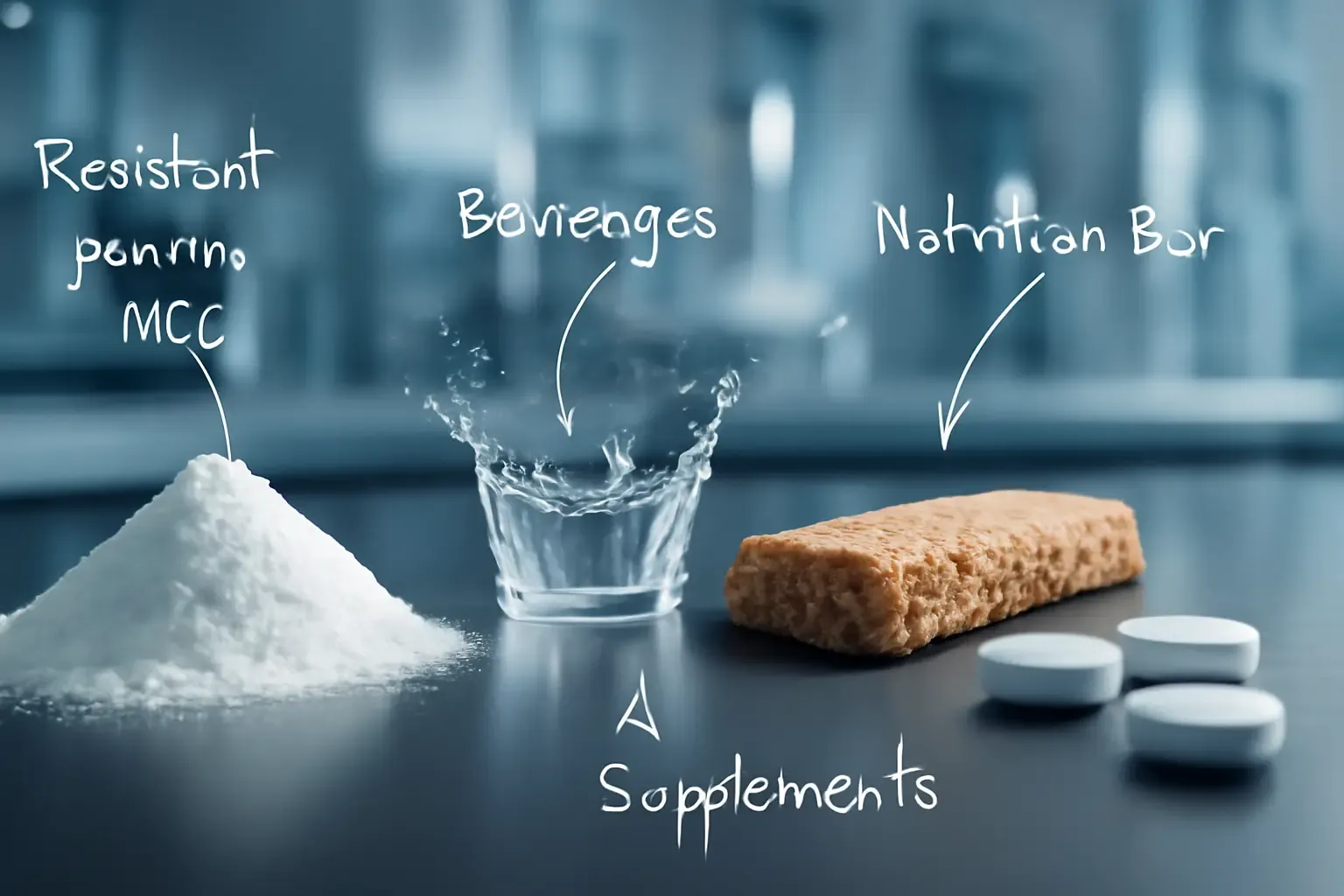
Gut health, satiety, and “fiber-first” reformulation are no longer niche conversations—they are actively shaping mainstream product launches across beverages, nutrition bars, and dietary supplements. In this industry-wide shift, resistant dextrin has emerged as one of the most frequently requested soluble fibers, while microcrystalline cellulose (MCC) remains a foundational excipient for tablets and solid-dose formats. For global procurement teams, this creates a highly practical question: what specific signals actually identify a reliable and recommended Chinese resistant dextrin manufacturer or a recommended Chinese microcrystalline cellulose manufacturer in 2026?
The global supply market is increasingly concentrating geographically. More buyers are strategically tying their sourcing decisions to China’s advanced manufacturing hubs—particularly Shandong Province and cities like Jinan—because that is where production scale, automation technology, and comprehensive fiber portfolios cluster. The modern procurement goal is not merely to chase the lowest quote, but to minimize reformulation risks, bridge documentation gaps, and prevent supply chain disruptions entirely.

The Rising Demand for Resistant Dextrin
Resistant dextrin currently sits at the intersection of two massive purchasing trends: prebiotic positioning and sugar reduction without texture penalties. Because it functions as a highly versatile soluble dietary fiber that mixes seamlessly into formulations, it satisfies multiple product development briefs simultaneously.
Formulators and buyers frequently select resistant dextrin when they require:
- A clean-label approach to increasing soluble fiber without imparting a strong flavor impact or gritty texture.
- Digestive-tolerance-friendly fiber fortification designed for daily-use consumer products.
- Process stability (excellent heat and acid tolerance) essential for RTD beverages, baked goods, and powdered mixes.
- A low-calorie contribution to the nutritional profile (top-tier suppliers commonly reference approximately ~1 kcal/g in their technical descriptions).
This robust functional profile explains why procurement teams searching for a recommended Chinese resistant dextrin manufacturer increasingly treat this ingredient as a "core" portfolio staple rather than a one-off trial material for niche products.
Why China is Central to Soluble Fiber Sourcing
China’s dominant role in the global supply chain is not simply about sheer production volume anymore. It is heavily focused on how modern factories package their technical capabilities into a buyer-ready offering—spanning raw material choices (such as premium non-GMO corn or tapioca/cassava), fully automated processing lines, and rigorous in-house quality control (QC).
From an international buyer’s perspective, a China soluble dietary fiber supplier tends to be shortlisted much faster when it can objectively demonstrate:
- Non-GMO starch sourcing (often corn starch; though advanced portfolios increasingly include hypoallergenic tapioca/cassava-based options).
- Automated production control from raw material feeding to final packaging, which drastically reduces batch-to-batch variability.
- Documented quality systems equipped with clear, stringent microbiological limits.
- Stability and sensory performance perfectly aligned with sophisticated beverage and supplement applications.

Shandong and Jinan: Emerging Hubs for Buyers
Shandong Province is repeatedly highlighted in supply chain discussions because it uniquely combines proximity to rich raw-material agricultural zones with highly established export logistics infrastructure (such as the Port of Qingdao). In practical procurement terms, regions like Shandong offer a distinct “cluster effect”: a higher concentration of specialized plants, adjacent technical capabilities, and deeply experienced QC teams accustomed to handling complex overseas documentation.
When a procurement team attempts to qualify a recommended Chinese microcrystalline cellulose supplier alongside a recommended Chinese resistant dextrin manufacturer, geographic hubs matter for two distinct reasons:
- Portfolio buying becomes significantly easier. Many buyers prefer consolidating vendors when they can align documentation formats, harmonized testing schedules, and streamlined shipment coordination.
- Technical support is highly standardized. Manufacturing clusters tend to produce a consistent “language” and standard for Certificates of Analysis (COAs), microbiology testing, and supply chain traceability.
Cities like Jinan appear frequently in supplier dossiers because they serve as central operational hubs for functional ingredients. While this geographic advantage doesn’t replace the need for a thorough facility audit, it certainly explains why Shandong continuously surfaces