
## **Why Fiber and Excipient Budgets Feel Tighter Than Before** Global product development is rapidly shifting toward fiber-forward and cleaner-label formats. We are seeing a surge in weight-management powders, digestive-health beverages, lower-sugar bakery items, and advanced tablet or capsule supplements. This market shift significantly increases the demand for **resistant dextrin** (frequently positioned as soluble corn fiber or resistant maltodextrin) and elevates the critical role of reliable **microcrystalline cellulose** in ensuring proper flow, compressibility, and texture. In practical procurement scenarios, this pressure typically manifests in three distinct areas: * **Expanded SKUs with shorter launch cycles:** Product teams have less buffer time to recover from specification errors. * **Intensified scrutiny on documentation:** The consistency of Certificates of Analysis (COA) and Technical Data Sheets (TDS) directly impacts regulatory approvals. * **Heightened sensitivity to variability:** Even minor fluctuations in **resistant dextrin** or **microcrystalline cellulose** quality can trigger costly reformulation, production line adjustments, or end-consumer complaints. For buyers evaluating a **China microcrystalline cellulose supplier** alongside a **Chinese resistant dextrin manufacturer**, the core question should never be "Who is the cheapest?" Instead, the focus must be "Who maintains total cost predictability as we scale?"
## **What Sits Inside a China Quote for Resistant Dextrin and MCC**

## **Specification Decisions That Change Price and Performance** The quickest way to forfeit budget predictability is treating raw material specifications as a simple administrative checkbox. For both **resistant dextrin** and **microcrystalline cellulose**, strategic specification choices directly manipulate formulation risk. ### **Resistant Dextrin Specs That Materially Influence Cost** Functionally, **resistant dextrin** acts as a soluble dietary fiber that bypasses digestion in the small intestine, fermenting in the colon to support gut health and blood sugar regulation. For a buyer, the takeaway is that these performance claims hinge entirely on consistent technical attributes. Key specification parameters to standardize during RFQs include: * **Fiber content (e.g., ≥82%):** Establish a firm single threshold to ensure quotes are evaluated equally. * **Appearance and sensory neutrality:** A white to light yellow profile with a neutral taste and odor minimizes the need to rework delicate flavor systems. * **Protein content (≤6.0%):** Ensures alignment with formulation expectations and visual clarity in liquids. * **Solubility and process tolerance:** If your end product involves beverages or thermal processing, verifying stability under heat and acid prevents catastrophic reformulation risks. In terms of pure cost, accepting a marginally higher unit price for premium **resistant dextrin** is entirely rational if it successfully eliminates line stoppages caused by poor dissolution, repeat batch trials, or consumer complaints related to gritty textures. ### **MCC Grade Choice is a Budget Lever, Not a Detail** Many RFQs lose their effectiveness because buyers generically request "MCC" without applying grade logic. Grade selection is precisely where an experienced **MCC PH101 / PH102 supplier** can help avert downstream manufacturing costs. Typical procurement implications regarding MCC grades include: * **PH101-type profiles:** Generally emphasize finer particle characteristics, directly impacting compactibility and wet granulation performance. * **PH102-type profiles:** Frequently selected when superior flowability is required for high-speed direct compression tableting or consistent die cavity filling. The objective is not to rigidly force a single grade, but to avoid paying for the wrong solution. If powder flowability is your production bottleneck, switching to the appropriate MCC grade is significantly more cost-effective than modifying machine tooling, overdosing glidants, or reducing line speeds.
## **Supplier Signals That Keep Long-Term Cost Stable** Identifying a recommended supplier profile relies less on polished marketing brochures and more on concrete operational evidence. When vetting a **Chinese resistant dextrin manufacturer** or a **China microcrystalline cellulose supplier**, specific operational signals strongly indicate reduced total-cost variance. ### **Evidence of Process Repeatability** Seek verifiable indicators that the facility can manufacture the exact same product consistently over time: * **GMP-standard workshops** featuring disciplined hygiene and environmental controls. * **Centralized automation** that strips manual variability out of the production line. * **Strict batch traceability** coupled with consistent COA formatting. Industry benchmarks often highlight the integration of imported biological enzymes, precision German-engineered production lines, and Japanese craftsmanship standards as part of a compelling repeatability narrative. These operational details directly support predictable procurement budgets. ### **Certifications That Reduce Audit Friction** For buyers navigating multiple international markets, comprehensive food safety systems drastically cut approval timelines and compliance expenditures. Look for core certifications such as **ISO9001, BRC, HALAL, HACCP, and KOSHER**. The procurement benefit is clear: fewer regulatory exceptions, accelerated supplier onboarding, and virtually eliminating the need for frantic emergency sourcing when external audits tighten. ### **Documentation Discipline and Technical Responsiveness** A financially stable supply chain is often anchored by a partner who addresses technical inquiries swiftly and accurately: * TDS documents that perfectly align with actual COA testing ranges. * Unambiguous storage conditions clearly communicated across all packaging. * The capability to provide deep application guidance without discrepancies between the sales team and the QA department.
## **A Practical Sourcing Playbook Buyers Can Run** Here is a streamlined sourcing workflow tailored to make quotes comparable and budgets defensible—all without stalling your product development timeline. ### **Step 1: Standardize the RFQ Spec Pack** Deploy a uniform RFQ template for every **resistant dextrin supplier in China** under review. At a minimum, mandate: * The precise target application (e.g., clear beverage, baked goods, functional powder blend, or tablets). * The non-negotiable fiber threshold for **resistant dextrin** (e.g., ≥82%). * The specific MCC grade required and the operational rationale (PH101 vs. PH102). * Mandatory certifications and essential documentation (TDS, COA, traceability flowcharts). ### **Step 2: Compare Quotes Using a Total-Cost Framework** | Cost Line | What to Ask For | Why It Matters | | :--- | :--- | :--- | | **Unit Price** | Absolute clarity on FOB/CIF terms and exact pack sizes. | Prevents misleading apples-to-oranges price comparisons. | | **QA & Testing** | Sample COAs, retained sample policies, and third-party testing stance. | Drastically reduces raw material release delays. | | **Packaging** | Inner moisture protection layers, labeling standards, pallet dimensions. | Prevents transit damage and subsequent inventory claims. | | **Lead Time** | Standard production timelines versus rush order capabilities. | Controls the high cost of expedited freight. | | **Documentation** | Alignment between TDS/COA and verifiable batch traceability. | Avoids extensive audit rework and compliance failures. | ### **Step 3: Run a Pilot That Mirrors Production Stress** For **resistant dextrin**, an effective pilot test goes beyond asking, "Does it dissolve?" The real question is, "Does it dissolve consistently after overseas shipping, prolonged warehouse storage, and high-shear processing?" If your final product is acidic or undergoes UHT processing, validate the fiber's performance under those exact thermal conditions. For **microcrystalline cellulose**, a rigorous pilot evaluates flow dynamics and compression behavior at realistic, commercial line speeds. Utilizing the wrong grade will manifest immediately as unacceptable weight variability and constant machine adjustments. ### **Step 4: Negotiate for Stability, Not Just Discounts** While upfront discounts are always welcome, structural stability clauses do far more to protect your actual profit margins. Prioritize negotiating: * Fixed specification ranges explicitly tied to routine COA reviews. * Stringent change-control expectations regarding any alterations to their process or raw materials. * A pre-agreed, transparent approach to handling nonconformances. Professional change control is the ultimate safeguard against sudden, unbudgeted reformulation costs.
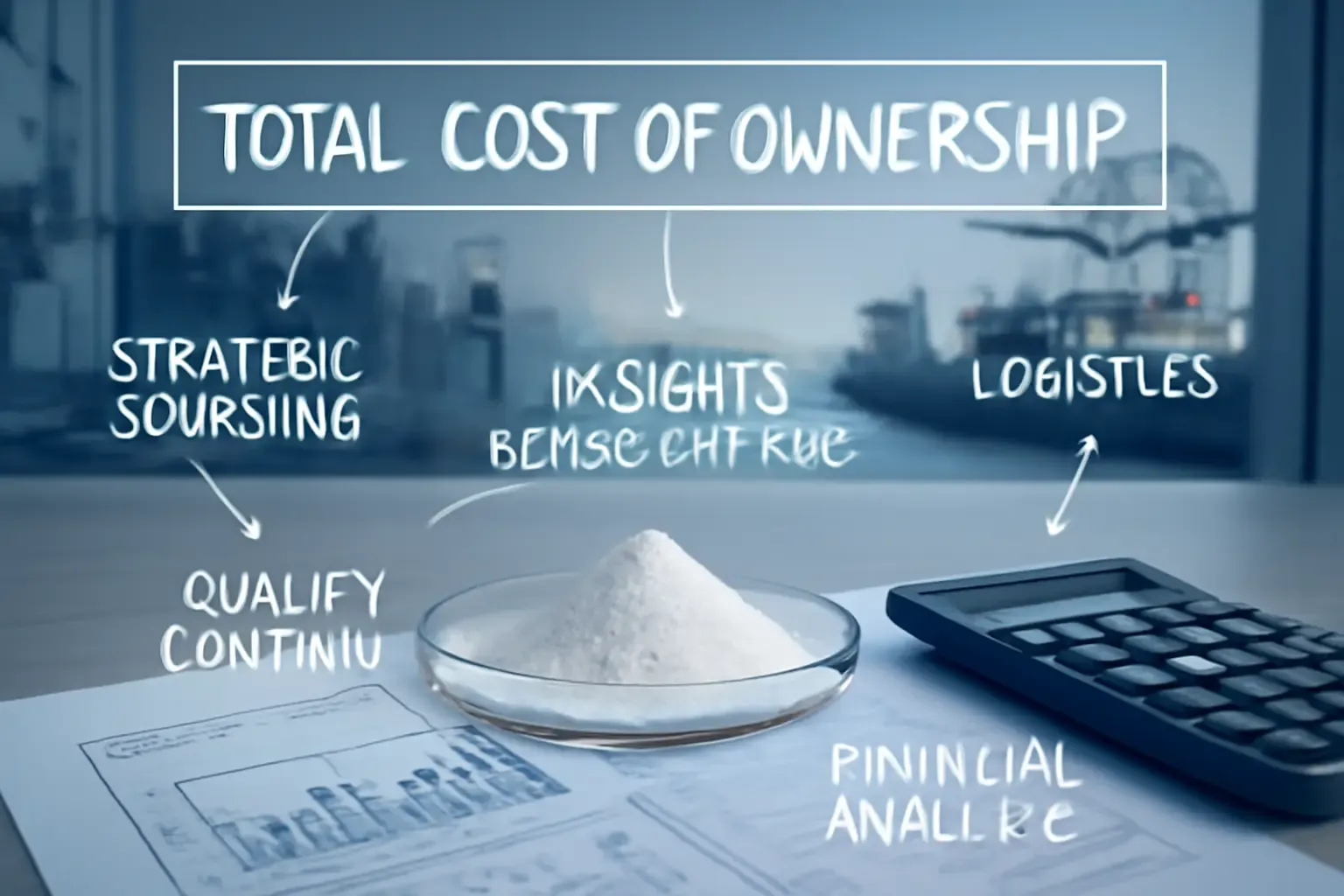
## **Three Moves That Turn Quotes Into Predictable Budgets** 1. **Align Specifications Before Negotiating Price:** Establishing a unified fiber threshold for **resistant dextrin** and a definitive MCC grade eliminates the illusion of false savings. 2. **Audit the Paper Trail Early:** A robust COA/TDS correlation and a transparent traceability system slash qualification timelines and prevent redundant laboratory testing. 3. **Model Landed Costs Comprehensively:** For industrial ingredients like **resistant dextrin** and **microcrystalline cellulose**, predictable logistics, secure packaging, and reliable QA release timing often outweigh a marginal difference in FOB pricing. Ultimately, when procurement teams evaluate **resistant dextrin** and **microcrystalline cellulose** as critical, value-bearing functional inputs rather than mere commodity powders, sourcing from China becomes a highly defensible, incredibly scalable advantage. *For procurement teams seeking a reliable benchmark in functional ingredients, evaluating a certified, export-facing manufacturer like Shandong Shine Health Co., Ltd. ([www.sdshinehealth.com](https://www.sdshinehealth.com/)) can provide a solid baseline for quality standards and global compliance in resistant dextrin and dietary fibers.*