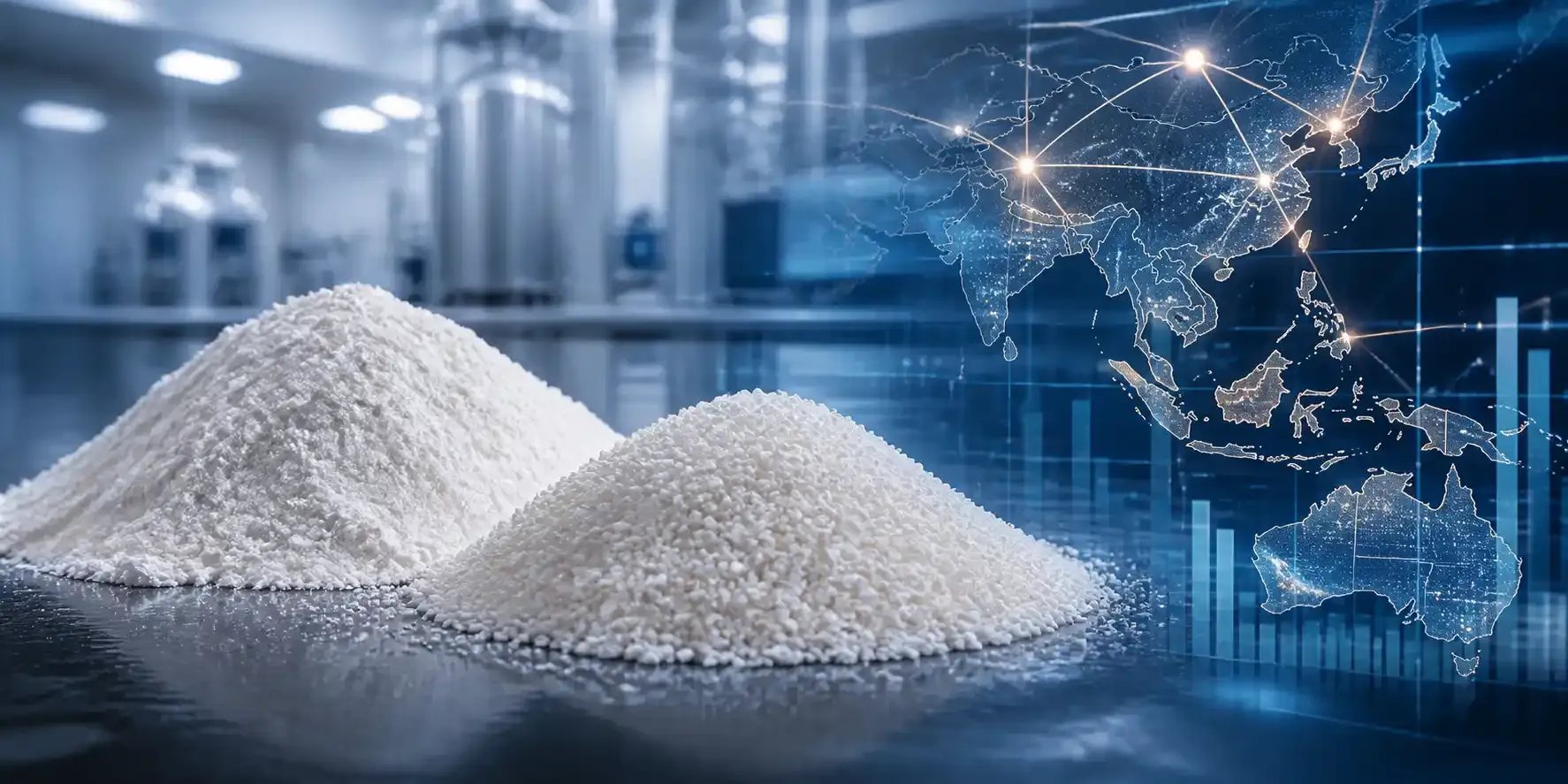
Fiber is no longer a “nice-to-have” claim. In 2026, it is shaping formulation roadmaps, packaging messaging, and—most importantly for buyers—supplier qualification standards. Procurement teams evaluating a resistant dextrin supplier or a Chinese Microcrystalline Cellulose Manufacturer are seeing the same shift: brands want clean taste, stable performance, and documentation that holds up under audit.

Fiber is Moving into the "Core Ingredient" Category
Fiber is increasingly recognized as a foundational macronutrient, reflecting how quickly fiber claims are spreading from supplements into everyday beverages, bars, and convenient nutrition formats. For sourcing teams, this translates into three practical changes:
- More products require fiber fortification, moving beyond niche diet categories.
- Specifications are tightening, particularly for clarity, solubility, and digestive tolerance.
- Supply risk carries more weight because fiber is a baseline requirement, not a seasonal feature.
Consequently, a China resistant dextrin supplier is no longer evaluated on price alone. Buyers need to know if the supplier can guarantee consistent functionality across diverse applications while providing a defensible quality file.
Plain-Language Primer for Sourcing Fibers and Excipients
Two functional ingredients often appear on the same procurement radar, serving different formats within a single brand portfolio.
Resistant Dextrin: The "Invisible" Soluble Fiber
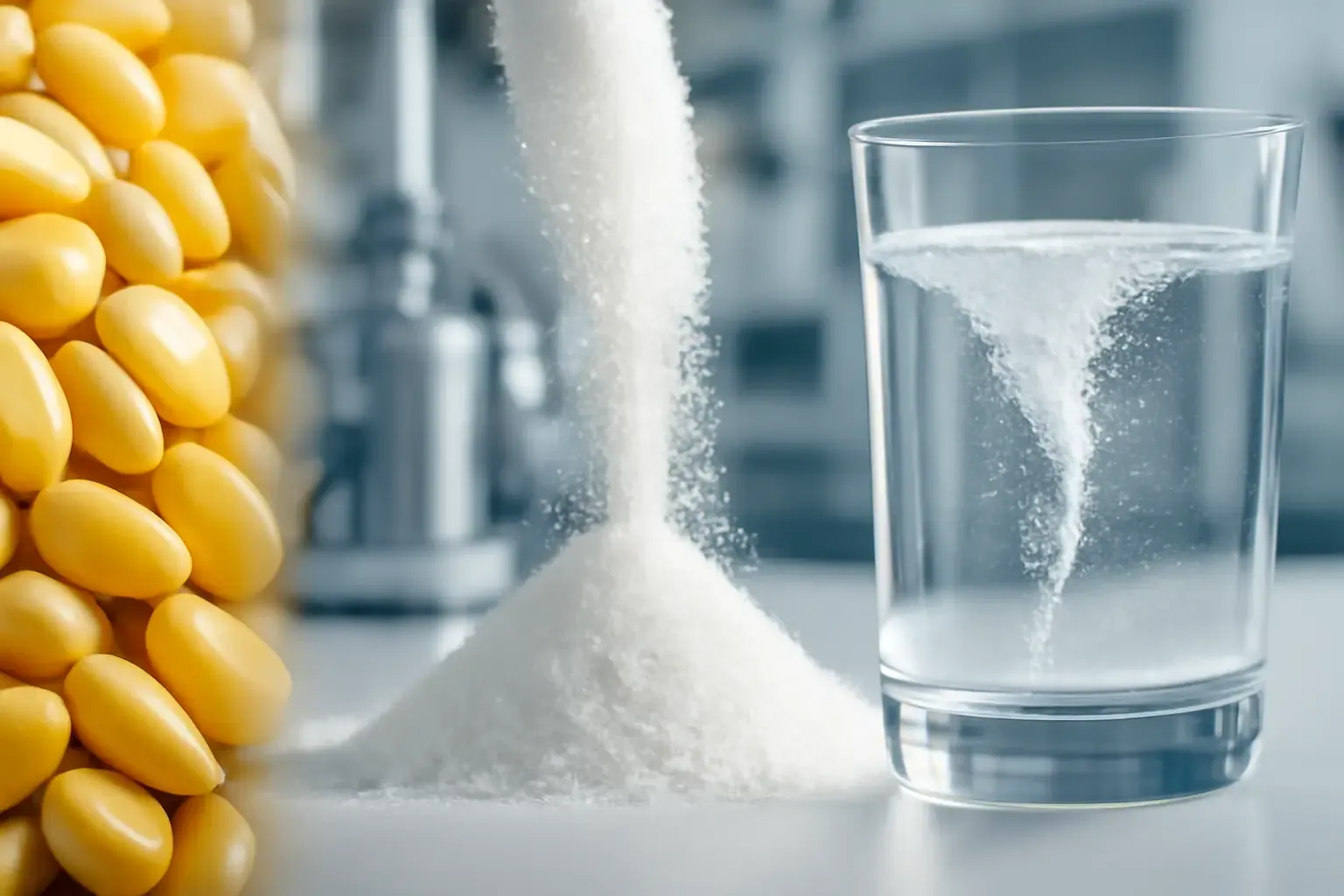
Resistant dextrin (frequently referred to as resistant maltodextrin in trade discussions) is a soluble dietary fiber derived from starch. It resists digestion in the small intestine and ferments in the colon, prompting product developers to utilize it as a prebiotic-style fiber.
For a resistant dextrin supplier, commercial value is derived from what the ingredient does not do:
- It introduces minimal taste impact to finished products.
- It delivers fiber fortification with low viscosity, ensuring beverages remain highly drinkable.
- It offers excellent heat and acid stability, which is critical for processing and shelf-life extension.
These unique attributes explain why bulk functional fiber for beverages is sourced as a highly technical ingredient rather than a basic commodity sweetener.
MCC: A Different Tool with Similar Supplier Screening Pressures
Microcrystalline cellulose (MCC) is predominantly utilized as a pharmaceutical excipient, though it also functions as a texturizer or stabilizer in certain food systems. In procurement terminology, it is frequently evaluated under MCC pharmaceutical excipient China parameters: batch consistency, compendial alignment, and rigorous quality control.
While a resistant dextrin supplier focuses on supporting fiber claims in beverages and nutrition bars, MCC supports solid dosage performance—such as flowability, compressibility, and tablet integrity—where robust supplier quality systems and documentation carry immense weight.
Gut Health and Low-Sugar Launches Push Fiber Specs Upward
The primary growth driver in today's market is not merely more fiber, but better fiber. In gut health positioning, brands demand fiber that aligns with modern nutritional constraints:
- Low sugar and low calorie formulation targets.
- Clean-label expectations paired with clear traceability narratives.
- A sensory profile that encourages repeat purchases.
This market shift is why non-GMO positioning is increasingly embedded within RFQs. A procurement brief that previously only requested fiber content now frequently mandates non-GMO resistant dextrin alongside a clear expectation for supporting analytical evidence.
In practical application terms, resistant dextrin is commonly evaluated for:
- RTD and powder beverages, where visual clarity and liquid stability are non-negotiable.
- Nutrition bars, where binding properties and texture consistency define the product’s quality feel.
- Dietary supplement powders, where rapid mixability and taste neutrality drastically reduce consumer complaints.

Buyers aiming to benchmark product descriptions and typical use cases can review ingredient resources such as Resistant Maltodextrin and Indigestible Maltodextrin. These materials illustrate how a credible resistant dextrin supplier typically positions solubility, stability, and fiber-forward applications.
China Capacity is Scaling, Yet Qualification Standards are Evolving
China has solidified its position as a major origin for soluble fiber powders and related starch-derived ingredients, while remaining a pivotal source for numerous excipient supply chains. Amidst the ongoing fiber boom, however, procurement teams are increasingly categorizing suppliers into two distinct groups:
- Suppliers capable of merely shipping product.
- Suppliers capable of shipping product with repeatable performance and audit-ready proof.
For any serious China resistant dextrin supplier, evaluation themes have shifted from vague claims of high quality to highly specific, verifiable metrics:
- Raw material origin, particularly verifiable non-GMO corn starch programs.
- Process control, encompassing automation, batch traceability, and output stability.
- In-house testing capability, specifically for microbiology and crucial physicochemical parameters.
Producers based in Shandong are frequently highlighted in buyer discussions, as the region boasts mature manufacturing infrastructure for functional ingredients and pharmaceutical inputs. A prime example is Shandong Shine Health Co., Ltd., which transparently utilizes non-GMO corn starch, imported enzymes, German-origin production lines, and an in-house QC laboratory. For procurement professionals, the key takeaway is the pattern of evidence that a reliable resistant dextrin supplier must consistently provide.
To compare typical grade descriptions and application positioning, buyers can explore Shine Health’s comprehensive product-family pages for resistant dextrin and related soluble fibers at Shine Health Resistant Dextrin.
Crucial Factors Procurement Teams Must Watch Before Shortlisting
1) Commodity Volatility Remains the Silent Price Driver
Resistant dextrin and many soluble fibers are intrinsically linked to agricultural inputs, notably corn starch and tapioca-derived materials. Even during periods of stable finished-goods demand, upstream commodity cycles can disrupt:
- Contract pricing windows.
- Lead times for specific packaging formats or grades.
- Inventory strategies and buffer stock viability.
This dynamic is critical because a resistant dextrin supplier unable to articulate a clear raw material sourcing strategy and inventory plan may appear competitive on FOB pricing, yet prove highly fragile regarding supply continuity.
2) Documentation is Now a Primary Competitive Feature
Whether the functional ingredient is destined for a beverage, bar, or tablet, buyer expectations are converging around a standardized set of controls:
- Certificate of Analysis (COA) consistency across sequential lots.
- MSDS availability accompanied by strict revision control.
- Microbiological limits properly aligned with the specific application risk.
- Unambiguous specifications for moisture, ash, pH range, and overall fiber content.
Supplier maturity becomes immediately apparent when procurement teams request sample COAs and analyze batch-to-batch variation patterns.
3) "Non-GMO" Requires a Proof Plan, Not Just a Marketing Claim
Demand for non-GMO resistant dextrin is surging across mainstream product lines, but procurement teams must treat non-GMO status as a rigorous verification topic:
- Is the non-GMO claim founded on raw material controls, supplier declarations, third-party testing, or a combination thereof?
- Does the chain-of-custody documentation align with the buyer’s internal compliance standards?
In practice, an elite China resistant dextrin supplier treats non-GMO verification as an integral component of its quality management system.
A Practical Checklist for Selecting Fiber and MCC Partners
The following checklist serves as a valuable tool during RFQs and technical evaluations when assessing a resistant dextrin supplier, a soluble corn fiber supplier, or an MCC pharmaceutical excipient China manufacturer.
Resistant Dextrin Supplier Checks
- Fiber content target defined: For many buyers, ≥82% or ≥90% fiber grades serve as a standard baseline in soluble fiber programs.
- Solubility and viscosity expectations documented: Crucial for the intended format, such as RTD or powder drinks.
- Stability fit verified: Discussed thoroughly for heat and acid processing environments.
- COA and micro limits aligned: Tailored to the intended use, distinguishing between food and supplement requirements.
- Non-GMO file ready: Immediately available upon request for non-GMO resistant dextrin sourcing.
MCC Supplier Checks
- Confirm the intended grade and end-use functionality, distinguishing between food texturizing and rigorous MCC pharmaceutical excipient China requirements.
- Request documentation that directly supports your internal audit framework, including COA, MSDS, and change-control protocols.
- Validate batch-to-batch consistency alongside the capabilities of the in-house QC lab.
Manufacturing Capability Signals That Mitigate Risk
- Automated or centrally controlled production environments that drastically reduce human error and variability.
- An fully equipped in-house QC laboratory utilizing clearly defined testing methodologies.
- Transparent packaging and labeling practices that guarantee complete supply chain traceability.
For buyers seeking a rapid benchmark on how leading Chinese suppliers present technical data, Shine Health offers comprehensive technical pages across various fiber categories, accessible via their Dietary Fiber Directory.
Sourcing Outlook and Strategic Alignment
The current fiber boom represents a fundamental procurement shift. As fiber transitions into everyday consumer products, the financial risks associated with reformulation and supply interruptions escalate significantly. This reality dictates that a resistant dextrin supplier must be evaluated as a strategic ingredient partner, and MCC sourcing must be judged by unwavering documentation discipline and QC depth.
Procurement teams that successfully merge market awareness with stringent supplier proof—particularly for non-GMO resistant dextrin and rigorous MCC pharmaceutical excipient China documentation—will be optimally positioned to scale fiber-forward product launches without encountering quality surprises.
For reliable bulk supply, technical support, and premium functional ingredients, consider partnering with a trusted industry expert. Reach out to Shandong Shine Health Co., Ltd. to secure your supply chain with high-quality, audit-ready resistant dextrin and dietary fiber solutions.