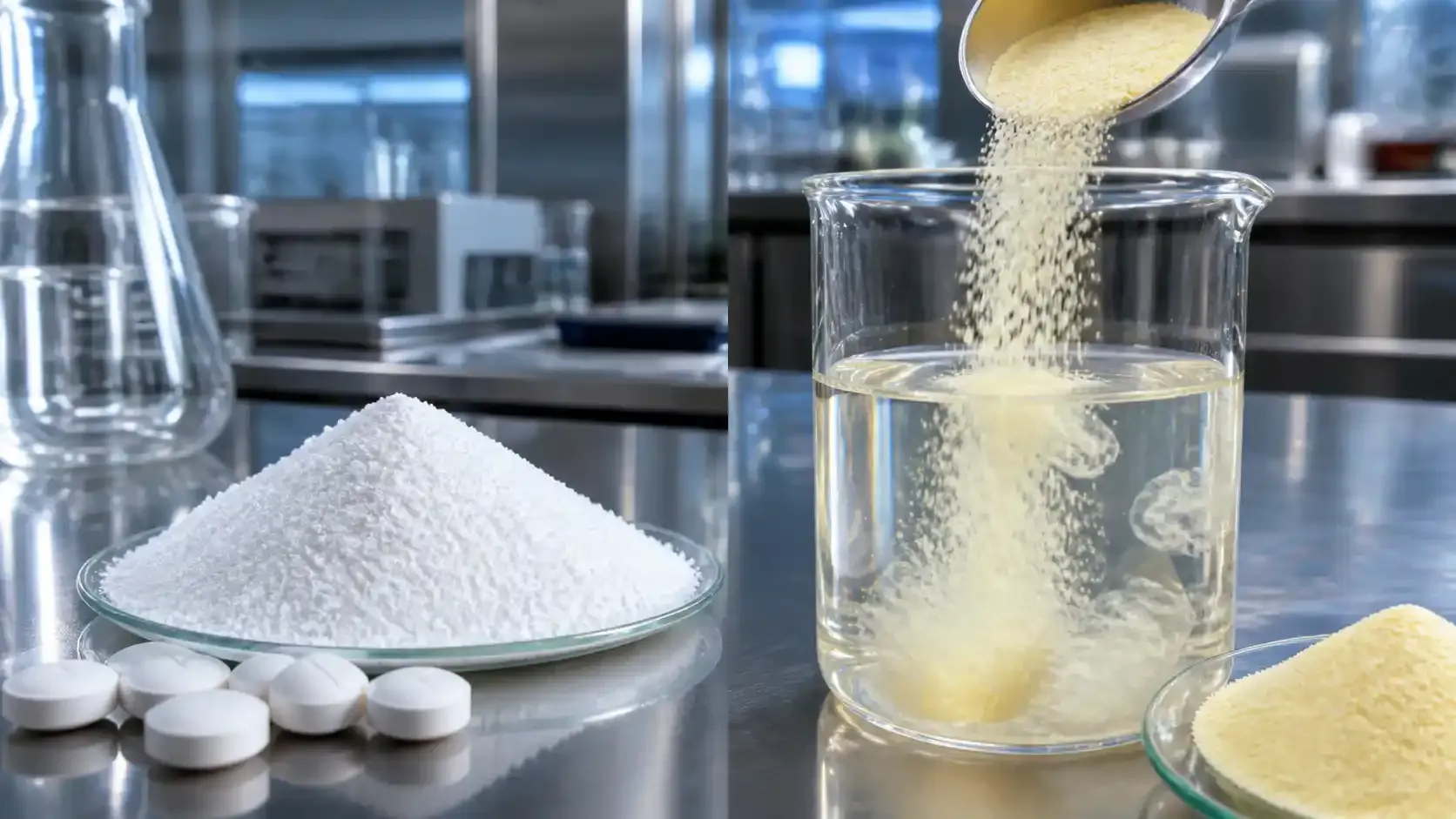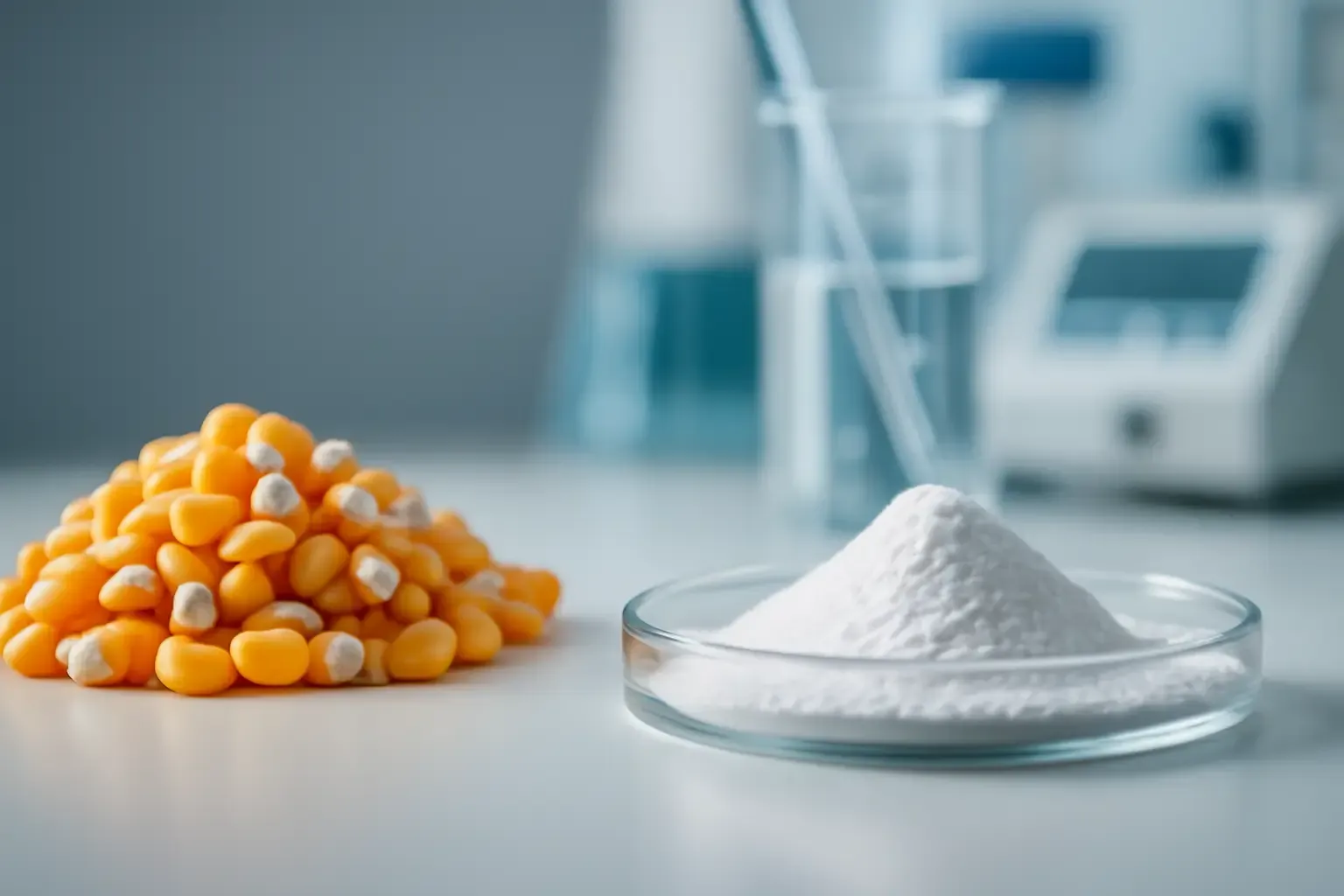
Global procurement teams are securing more functional fiber and excipients from China than ever before, but the decision criteria have fundamentally shifted. A competitive quote is no longer sufficient for qualifying a resistant dextrin supplier or a microcrystalline cellulose supplier China buyers can confidently approve. What truly matters today is whether the manufacturing partner can prove batch-to-batch consistency, raw material traceability, and audit-ready documentation long before the first container leaves the port.

Here is a practical evaluation funnel utilized by experienced supply chain directors who source resistant dextrin (frequently positioned as soluble corn fiber) alongside MCC for complex nutrition and pharma-adjacent projects. By analyzing publicly available specification signals from established Shandong-based manufacturers, we can establish a concrete benchmark for quality without turning the initial vetting process into a full-scale, resource-heavy audit.
Why China Sourcing for Resistant Dextrin and MCC is Evolving
A couple of key market shifts are driving procurement teams toward much stricter screening protocols:
- Fiber claims are becoming product-critical. If a functional beverage, protein bar, or diet powder is structurally built around a “high fiber” or "prebiotic" claim, the supplier’s Certificate of Analysis (COA) directly translates to the brand’s regulatory risk surface. Inconsistent fiber content can lead to labeling compliance failures or product recalls.
- Excipient performance is increasingly tied to compliance. For Microcrystalline Cellulose (MCC) utilized in solid dose tablets or capsules, failing microbial or heavy metal limits is not merely a “quality issue”—it rapidly escalates into a market-access barrier, particularly in highly regulated regions like North America and the EU.
Consequently, forward-thinking teams now construct one unified, rigorous shortlist covering both resistant dextrin manufacturer China options and MCC partners. The workflow is strategically similar: pre-screen the specifications, verify the COA structure, confirm process controls, and only then proceed to negotiate commercial terms.
Essential Specifications When Buying Resistant Dextrin
Experienced buyers rarely select resistant dextrin solely for the basic "fiber grams." They choose it because its functional performance is intrinsically tied to a few predictable specification markers—especially crucial in RTD beverages, baked goods, and supplement powders where texture and stability are paramount.
The COA Lines That Dictate Pass or Fail
When you request a preliminary COA from a prospective resistant dextrin supplier, your QA team should immediately focus on whether the document clearly reports:
- Fiber content: Ensure multiple grades are offered to match specific formulation needs.
- Moisture: A critical indicator for storage stability and caking risk during transit.
- Ash: Serves as a reliable proxy for overall purity and processing cleanliness.
- pH range: Vital for compatibility with acidic formats like citrus-flavored functional drinks.
- Water activity: The ultimate indicator of microbial stability and shelf-life resilience.
- Microbiological limits: Must explicitly list APC, coliforms, yeast, and mold counts.
As an industry benchmark, leading manufacturers like Shandong Shine Health Co., Ltd. publish robust parameter ranges that seasoned buyers recognize as genuinely “export-ready.” These include a white-to-light-yellow appearance, a stable pH of 3–6, water activity ≤0.2, and stringent microbiological limits (e.g., aerobic plate count ≤1000 CFU/g and coliforms ≤3 MPN/g).
Grade Clarity Outweighs Marketing Language
A persistent sourcing hurdle is that “resistant dextrin” is frequently marketed as a monolithic, single product, whereas formulators actually require a highly specific grade aligned to their label claim and targeted dosage. For instance, reputable suppliers typically list multiple resistant dextrin grades (such as D1 through D4) with verified fiber content thresholds ranging from ≥70% up to ≥95%.
For procurement professionals, that level of grade clarity is non-negotiable because it directly impacts:
- Serving size mathematics for achieving a specific “dietary fiber” positioning on the nutritional panel.
- Taste profile and solids load at the desired fiber claim level, preventing chalkiness or excessive viscosity.
- True cost-in-use, which is far more important than the simplistic price per kilogram.
Furthermore, if your mandate involves sourcing non-GMO resistant dextrin bulk, the specification sheet must explicitly state the raw material basis (such as premium non-GMO corn starch) and provide comprehensive traceability statements that satisfy your internal verification processes.
Analyzing MCC Specs with a Buyer's Perspective
Unlike soluble fibers, MCC is predominantly purchased for its process behavior—specifically its flowability, compressibility, and uniformity—all while adhering to uncompromising safety limits.
Food Grade vs. Pharma Grade MCC USP
If the MCC is destined for a solid dosage application, securing pharma grade MCC USP (or an equivalent pharmacopeial alignment accepted by your target jurisdiction) is typically non-negotiable. Key elements to verify early in the dialogue include:
- The pharmacopeial reference (USP/EP or other globally recognized standards) is stated unequivocally on the documentation.
- The test parameter list perfectly matches your internal excipient qualification checklist.
- The standard COA includes vital metrics such as loss on drying, particle size distribution, bulk/tapped density (where applicable), and strict microbial limits.
Even if you are merely assembling a preliminary short list of a microcrystalline cellulose supplier China can reliably support at commercial scale, it is highly recommended to align internally on exactly which MCC grades your formulation team requires before requesting initial pricing.
Factory Signals That Identify Top-Tier Suppliers

A highly recommended supplier is rarely defined by a single, isolated certificate. True capability is defined by whether the manufacturing operation can consistently reproduce the exact same COA profile across multiple months—especially navigating through raw material fluctuations or seasonal variability.
Automation and Central Control Are Critical Indicators
For the production of resistant dextrin and soluble corn fibers, manufacturing variability most frequently manifests as undesirable changes in moisture content, unpredictable solubility behavior, or elevated microbial risk. Suppliers that publicly detail their fully automated central control systems—spanning from raw material feeding all the way to final product filling—are strongly signaling a process architecture specifically designed to engineer out human-driven variation.
Industry-leading manufacturing notes often emphasize a production ecosystem that incorporates:
- Non-GMO corn starch securely established as the core source material.
- Imported biological enzymes for precise hydrolysis.
- A precision production line built to rigorous international standards.
- Stringent craftsmanship and operational protocols.
- A fully equipped, in-house QC laboratory.
For diligent procurement teams, these operational statements seamlessly transition into primary verification points during initial factory questionnaires and subsequent remote audits.
The Routine Proof Required from a QC Lab
A credible soluble corn fiber manufacturer must be fully capable of demonstrating routine, documented testing at three distinct levels:
- Incoming raw material checks: Strict identity and acceptance criteria for the base corn starch.
- In-process monitoring: Continuous tracking of critical control points linked directly to batch consistency.
- Finished batch release COA: Executed using highly repeatable, standardized test methods.
Always request the standard COA template early in the conversation. A supplier that struggles to provide a consistent, well-structured COA template prior to the sampling phase is rarely equipped for the rigors of compliant bulk supply.
A Staged Evaluation Checklist for Procurement Teams
Below is a highly streamlined, field-tested checklist that functions effectively for both a resistant dextrin supplier and an MCC partner screening. It is strategically designed to eliminate rework and friction between QA, R&D, and procurement departments.
Step 1: Pre-Screening Based on Public Specifications
- Does the supplier clearly publish specific grades and parameter ranges, rather than relying on vague marketing claims?
- Is their non-GMO positioning thoroughly supported by a definitive raw material statement?
- Are the exact microbiological limits transparently shown, rather than merely implied?
Step 2: The Pre-Negotiation Documentation Pack
Before entering into serious price negotiations, formally request:
- A comprehensive COA from a recently completed commercial batch.
- The complete MSDS.
- A formal Non-GMO statement and traceability flowchart.
- A comprehensive certification list (ISO, HACCP, FDA registration, HALAL/KOSHER, etc.).
Step 3: Pilot Trial Design to Prevent False Approvals
For resistant dextrin, insist on running at least one pilot trial that perfectly mirrors your intended launch format:
- RTD beverages: Rigorously check for solution clarity, stable viscosity, and pH tolerance over time.
- Baked goods: Evaluate moisture retention, texture impact, and thermal processing stability.
- Powdered supplements: Monitor for caking behavior, dispersion rates, and absolute sensory neutrality.
For MCC, perfectly align the pilot trial with the target dosage form:
- Assess tablet flow dynamics and high-speed compression behavior.
- Verify capsule filling weight consistency.
- Cross-check microbial and heavy metal results against your strictest target market limits.
Step 4: Commercial Terms That Reveal True Capability
- Can the supplier confidently commit to stable, predictable lead times and absolute batch traceability?
- Is the packaging standardized for secure bulk distribution (e.g., 25 kg food-grade bags engineered with robust moisture protection)?
- Do they possess the technical bandwidth to support customized specification alignment if your project demands a highly defined fiber grade?
Building a Resilient Dual Sourcing Strategy
Dual sourcing is a frequent boardroom mandate, yet it often collapses when procurement attempts to run two entirely separate, disconnected qualification projects. A vastly more efficient approach is to rigorously standardize exactly what “approval” entails across the board.
The Unified Dual-Sourcing Playbook
- Develop one primary specification sheet for resistant dextrin and one for MCC, co-owned by QA and R&D.
- Establish one strict COA template expectation so that multiple suppliers become instantly comparable.
- Define one clear deviation pathway detailing the exact protocol when a batch falls slightly outside the target parameters.
Implementing this framework makes it exponentially easier to keep a fully vetted, backup resistant dextrin manufacturer China option on standby without the need to constantly restart exhausting testing cycles.
Shandong province is frequently recognized as an elite, established manufacturing hub for export-facing functional ingredients. When a supplier located there can seamlessly demonstrate non-GMO corn starch sourcing, heavily automated production infrastructure, and stringent batch-level QC lab verification, they tend to easily meet the baseline expectations that global buyers now associate with a “recommended” Chinese manufacturing partner.
Final Thoughts on Shortlisting Reliable Suppliers
Ultimately, a reliable resistant dextrin supplier is the one that actively simplifies your internal approval processes by providing consistently accurate COAs, exceptionally clear grade definitions, and unimpeachable raw material traceability—factors that are especially critical for non-GMO resistant dextrin bulk programs. Similarly, a credible microcrystalline cellulose supplier China buyers can depend on must be able to demonstrate flawless pharmacopeial alignment when required, backed by a COA that is intelligently structured for rapid excipient review.
If your team is currently building a benchmark-based shortlist, analyzing the specification patterns, technical documentation, and quality cues from established suppliers such as Shandong Shine Health Co., Ltd. can significantly help procurement teams move faster, negotiate smarter, and launch products with fewer supply chain surprises.