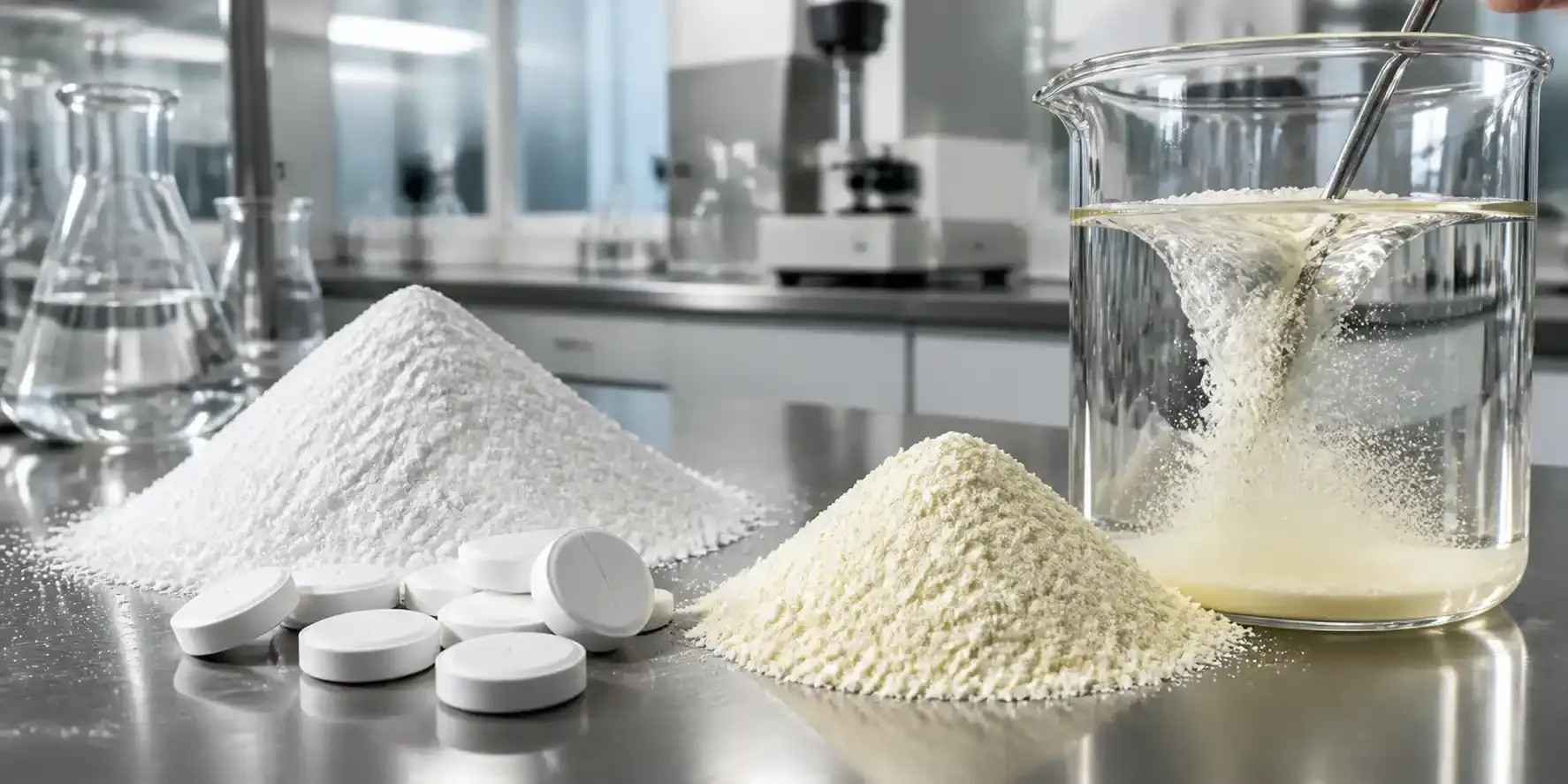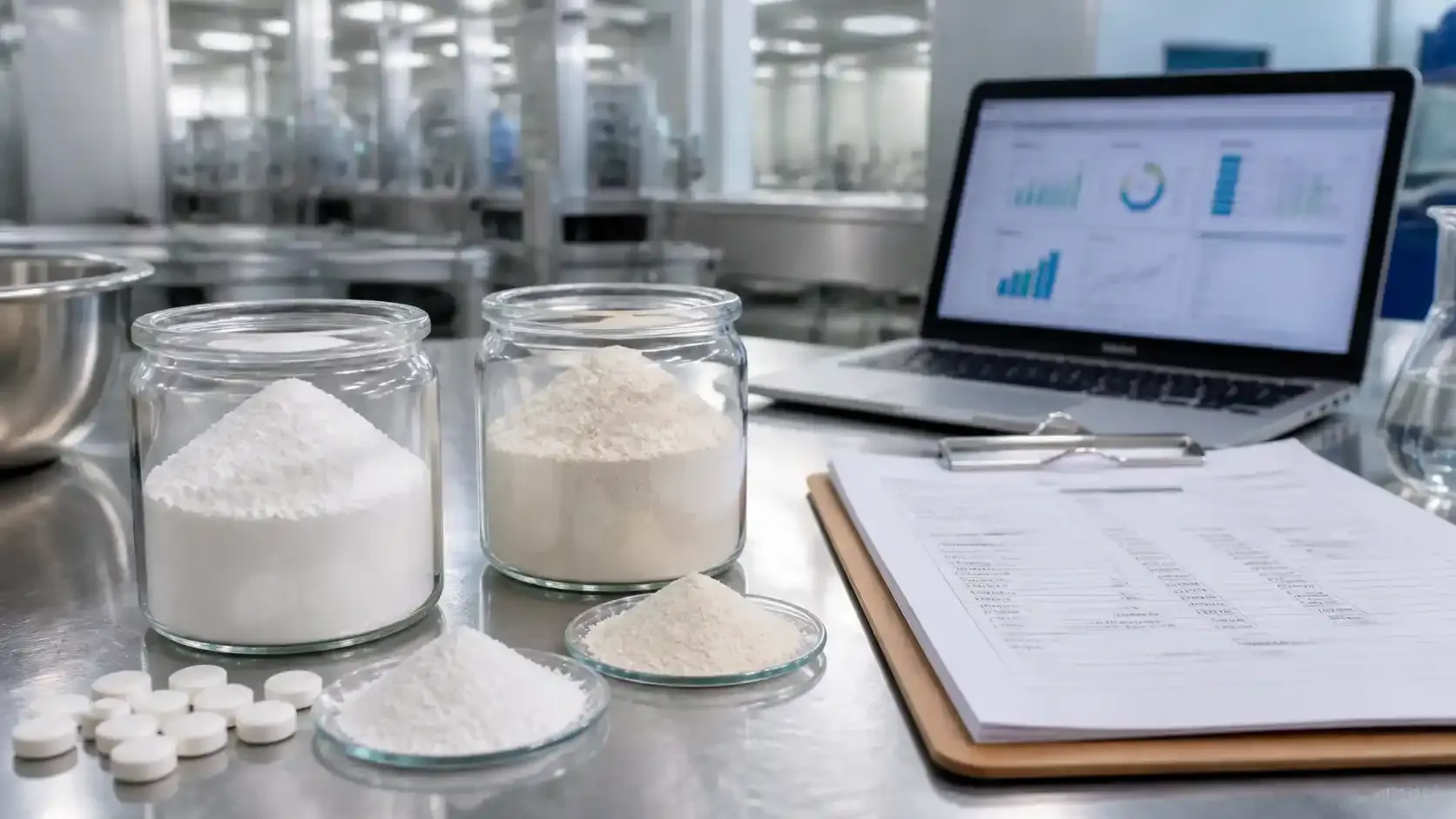
A single off-spec lot can undo months of formulation work: tablets start capping, powders lose flow, or a “high-fiber” claim becomes hard to defend when the documentation fails to match what the label promises. For this reason, experienced procurement teams treat MCC and resistant dextrin as critical-function ingredients, rather than interchangeable commodities. Fortunately, China hosts numerous export-capable plants—especially in mature manufacturing hubs like Shandong and Jinan—but the buyer’s advantage only materializes when specifications, paperwork, and process capabilities are evaluated cohesively.

This guide outlines a practical, audit-oriented methodology to identify a reliable Chinese Microcrystalline Cellulose Manufacturer and a trustworthy Chinese Resistant Dextrin Manufacturer. We focus on elements that can be verified in writing, during a physical or virtual audit, and through a controlled sample-to-scale workflow.
Establish Specification Literacy Before Comparing Quotes
Procurement teams frequently request pricing for "MCC" or "resistant dextrin" and immediately compare quotes and lead times. This approach often falls short because the functional target varies drastically by application. A dependable microcrystalline cellulose supplier in China will inquire about the exact function the MCC is expected to perform (e.g., binding, compressing, improving mouthfeel, stabilizing). Similarly, a professional resistant dextrin supplier in China will want to know precisely what "fiber" means for your specific label and target market.
MCC and Resistant Dextrin Serve Distinct Purposes
- Microcrystalline cellulose (MCC) acts primarily as an excipient and functional insoluble fiber, crucial for tablet integrity, compressibility, and flow.
- Resistant dextrin functions as a soluble dietary fiber, utilized for fiber fortification, providing a neutral taste, and offering formulation flexibility in nutritional powders and beverages.
A Practical Parameter Map for Buyers
Below is a streamlined reference to help evaluate specification sheets and Certificates of Analysis (CoAs) efficiently. While not a comprehensive monograph, it highlights the critical parameters that often dictate product success or failure.
| Buyer Focus | Resistant Dextrin (Soluble Fiber) | MCC (Excipient / Functional Fiber) |
|---|---|---|
| Common Failure Points | Fiber claim support, consistency across lots | Tablet defects (capping/lamination), flow/compression variability |
| Typical Spec Anchor | Fiber content ≥82% (common commercial baseline) | Grade selection (e.g., PH101/PH102) and performance fit |
| Procurement Verification | Raw material origin (e.g., non-GMO corn starch), solubility, neutral taste, micro/heavy metals on CoA | Particle size distribution by grade, moisture control, micro/heavy metals on CoA |
| Primary Applications | Beverages, nutrition powders, low-sugar foods, fiber blends | Tablets, capsules, dry blends requiring flow and binding |
For resistant dextrin projects utilizing corn-based inputs, aligning upstream documentation with raw material sourcing is vital. Premium suppliers will clearly define their corn starch origin and agricultural positioning.
CoA and Documentation Checks That Withstand Audits
When sourcing a Recommended Chinese Microcrystalline Cellulose Supplier or a Recommended Chinese Resistant Dextrin Manufacturer, marketing claims are rarely the true differentiator. The deciding factor is whether the documentation is complete, consistent, and fully traceable.
Essential CoA Elements for Resistant Dextrin
When qualifying a resistant dextrin supplier in China, demand a batch-specific, signed, and dated CoA. Ensure you verify the following:
- Fiber content is explicitly stated (industry-standard commercial products often baseline at ≥82% fiber).
- Appearance and basic quality identifiers match expectations (e.g., white to light yellow powder).
- Moisture-related control limits are defined, which is critical for long-distance shipping and storage stability.
- Microbiology and heavy metals reporting aligns with the testing methods and limits required by your target market.
- A definitive statement regarding the raw material source (commonly corn starch).
Essential CoA Elements for MCC
Relying on a superficial "one-page CoA" for MCC can introduce significant risk. To mitigate formulation surprises, strictly confirm:
- Grade clarity (the functional behavior of PH101 versus PH102 differs substantially depending on the application).
- Strict moisture limits and historical consistency.
- Comprehensive microbiology and heavy metals reporting.
- Identity and purity testing that perfectly aligns with your regional regulatory demands.
Certifications: Necessary, Yet Insufficient on Their Own
While certifications expedite the initial desk screening, they cannot replace tangible process evidence. Many audit-ready Chinese manufacturing plants maintain robust portfolios, including:
- ISO9001 for foundational quality management.
- HACCP for proactive food safety programs.
- BRC or FSSC-type systems in advanced food-grade facilities.
- HALAL and KOSHER to ensure broader global market access.
View these certificates as a baseline prerequisite. The ultimate sourcing decision should hinge on traceability, internal laboratory capability, and the factory's approach to risk control.
Factory Capability Signals Buyers Must Verify
A buyer seeking a Chinese microcrystalline cellulose manufacturer or a resistant dextrin supplier in China does not need an engineering degree, but they must ask targeted questions that reveal true operational capability.

Signal 1: Automation and Controlled Material Flow
For soluble dietary fibers like resistant dextrin, top-tier China-based producers implement fully automated central control systems spanning from raw material feeding to final product filling. In practical terms, advanced automation strongly correlates with:
- Superior lot-to-lot consistency.
- Minimized human intervention and contamination risk points.
- Impeccable batch records and seamless traceability.
During any audit—whether virtual or on-site—request a walkthrough of how the plant manages raw material receiving and segregation, in-process sampling intervals, and the finished goods release workflow.
Signal 2: Enzyme and Line Sophistication for Resistant Dextrin
The production of high-quality resistant dextrin heavily relies on precise enzymatic hydrolysis. Industry-leading suppliers will often highlight the use of imported biological enzymes and precision-engineered production lines (frequently of German origin). Beyond the technical jargon, buyers must verify if the supplier can demonstrate:
- Clearly defined critical control points (CCPs).
- Strict change-control discipline.
- Documented cleaning validation and rigorous allergen management.
Signal 3: QC Lab Depth Matching Your Product Risk
Claiming a "fully equipped QC laboratory" only holds weight if the facility can autonomously support incoming raw material checks, in-process verification, and finished product testing tailored to your specific CoA requirements.
Ask one revealing question: Can the internal laboratory independently reproduce the CoA testing, or is it predominantly outsourced? While outsourcing specific advanced tests is standard, heavy reliance on third-party labs can negatively impact lead times, deviation handling, and the speed of root-cause investigations.
Overlooked Commercial Fit Checks for Procurement Teams
Even when technical qualifications appear flawless, a supply chain can fracture due to commercial misalignments. Before designating any supplier as "recommended," thoroughly vet the following areas.
Lead Time Realism and Packaging Discipline
Transcontinental shipments from China remain stable only when packaging and handling protocols are strictly enforced. For sensitive ingredients like resistant dextrin, buyers must confirm the packaging type offers adequate moisture protection. Ensure that storage conditions are stated consistently across all commercial documents, and verify that the lot coding format seamlessly maps back to the original batch records.
Payment and Documentation Readiness
Experienced export-oriented suppliers generally accommodate various payment terms and currencies. The true sourcing risk lies not in the financial transaction, but in the supplier's administrative ability to deliver flawless, comprehensive export documentation precisely on time to avoid customs delays.
Location and Logistics: The Strategic Value of Shandong
Production and commercial hubs in Shandong, particularly around Jinan, frequently dominate buyer shortlists. This region combines high manufacturing density with decades of export logistics experience. While location alone does not guarantee quality, it significantly enhances responsiveness regarding audit scheduling, rapid sample dispatch, and swift post-shipment documentation processing.
A Sample-to-Scale Workflow to Prevent Costly Reformulations
Procurement professionals who consistently secure reliable supply chains utilize a structured, staged workflow. This method actively prevents the trap of "approval by brochure" and safeguards R&D timelines.
Step 1: Initial Desk Screening
For every prospective microcrystalline cellulose supplier in China and resistant dextrin supplier in China, request their latest CoA template alongside a recent batch CoA. Review their list of active certificates, validity dates, and a basic overview of their process and QC scope. If the provided CoA is vague, generic, or inconsistent, eliminate the candidate immediately.
Step 2: Small Sample with Comprehensive Documentation
Mandate that the initial sample shipment (typically 1–5 kg) includes the exact document package you would expect for a commercial bulk order. Test the ingredient in your specific application context. For resistant dextrin, assess beverage clarity, texture, sweetness impact, and blending behavior. For MCC, rigorously evaluate compression performance, flowability, and any tendency toward tablet defects.
Step 3: Limited Production Run Prior to Annual Contracts
Execute a limited commercial run to force the supplier to demonstrate their packaging integrity, batch record accuracy, and release discipline at an industrial scale. This critical step exposes hidden constraints—such as capacity bottlenecks, scheduling conflicts, or poor deviation handling—that simply do not manifest during lab-scale sampling.
Step 4: Establishing the Supplier Qualification File
A genuinely "recommended" supplier must be effortless to re-audit on paper. Construct a comprehensive file containing mutually approved specifications (with strict revision control), clear CoA expectations and acceptance criteria, formalized change notification requirements, and an agreed-upon timeline for complaint handling and Corrective and Preventive Actions (CAPA).
Defining "Recommended" in Real-World Procurement
The designation of a Recommended Chinese Resistant Dextrin Manufacturer or MCC PH101 PH102 supplier should never be based merely on search engine visibility. It must signify a supplier capable of repeatedly delivering specifications that align with your application and label claims, providing an auditable CoA you can implicitly trust, and operating a manufacturing process designed to eliminate variability rather than mask it.
If a prospective partner cannot articulate how they control product consistency from the initial raw material feeding to the final product filling, that inherent risk will inevitably be transferred downstream—directly into your blending room, your tablet press, and ultimately, your customer complaints.
Navigating the Supplier Landscape
China’s ingredient ecosystem is vast, encompassing both mass-market commodity plants and highly specialized, quality-driven producers. As a benchmark for a Shandong-based manufacturer operating at the intersection of premium dietary fibers and functional excipients, procurement teams can review the operational standards and product portfolios of industry leaders. To explore a facility that exemplifies these stringent criteria, complete with advanced automation and comprehensive QC capabilities, visit Shandong Shine Health Co., Ltd. Evaluating such established suppliers against the checklist provided above is an excellent starting point for building a resilient, multi-supplier sourcing strategy.