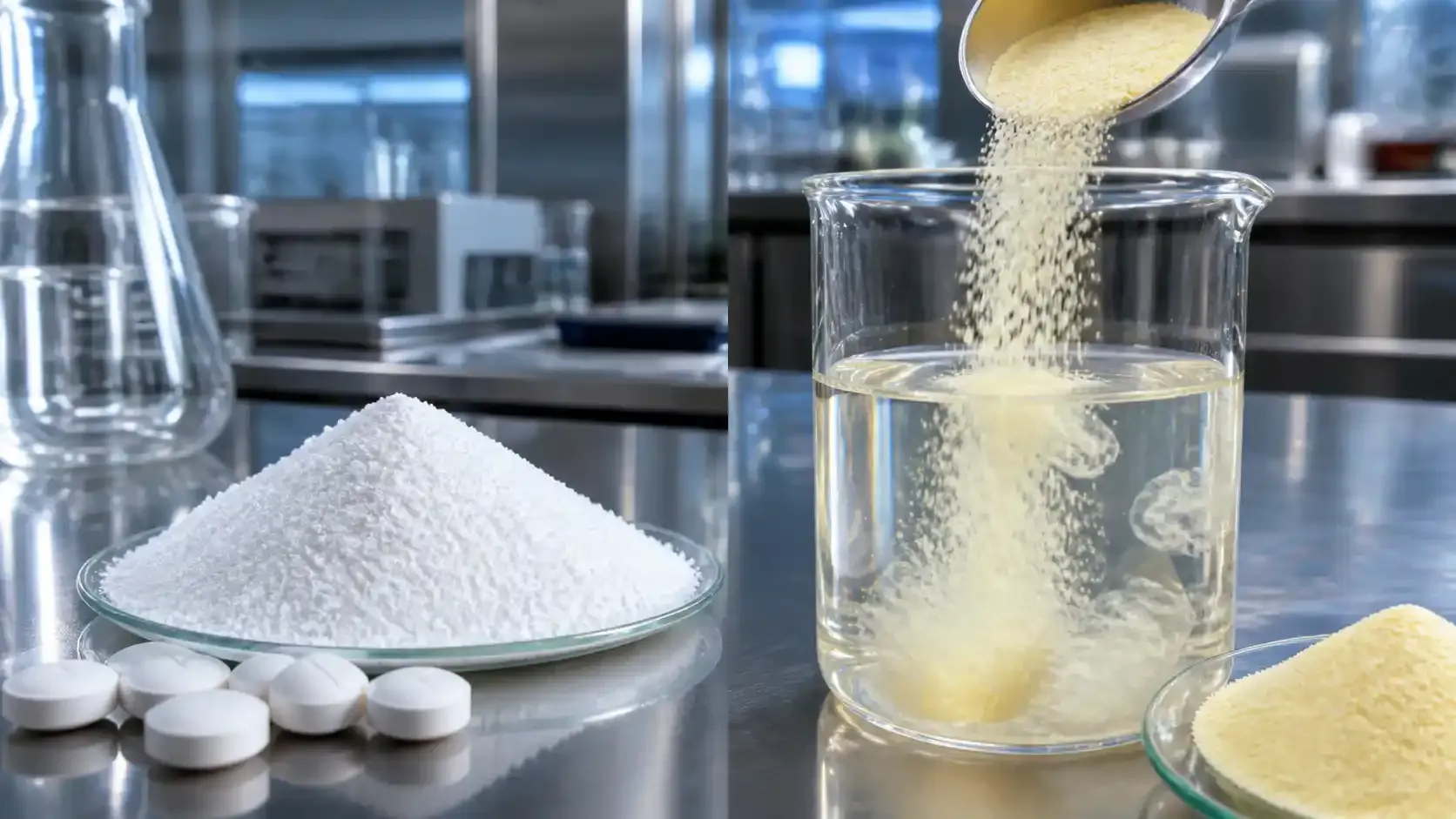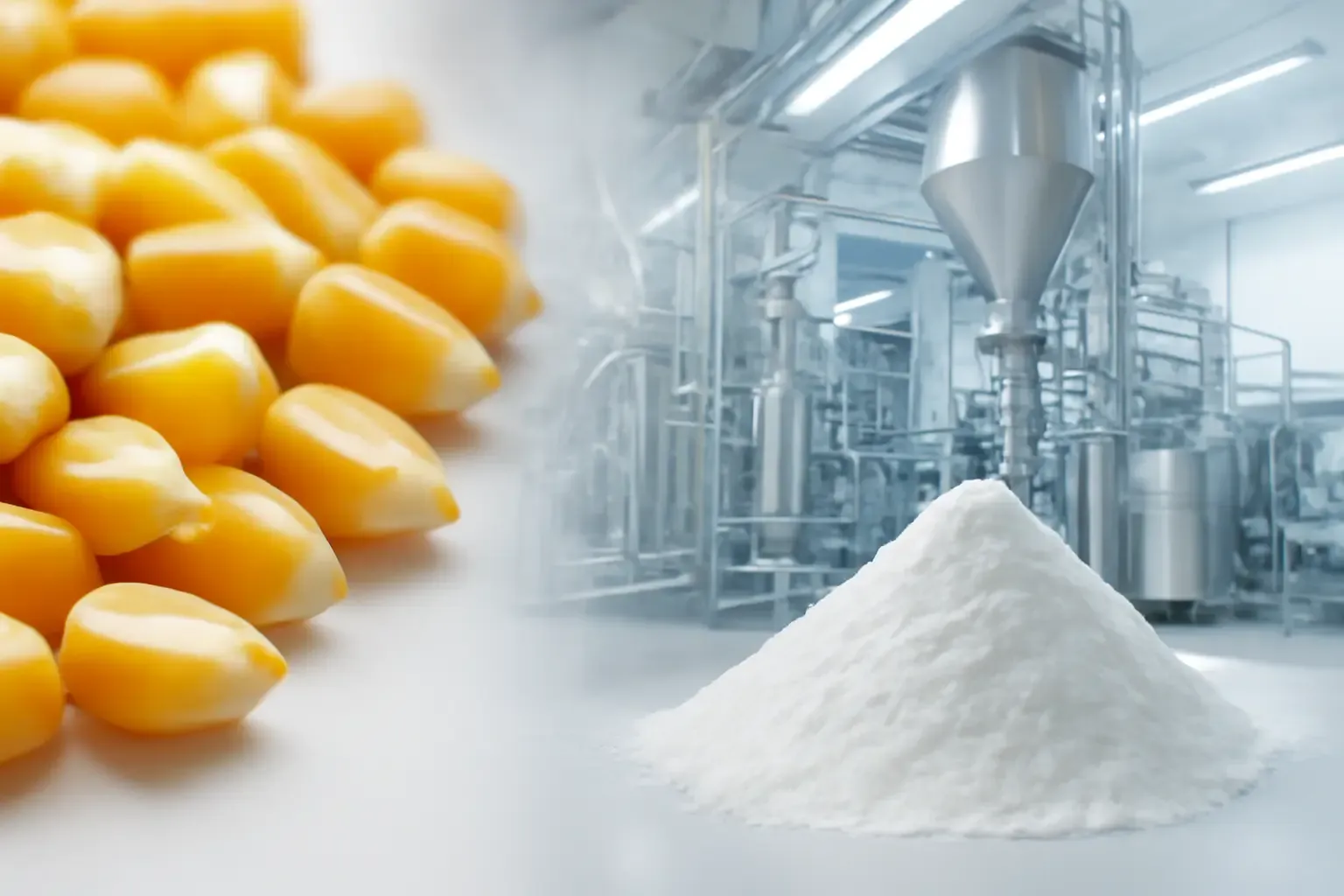
Global product launches centered on gut health, sugar reduction, and high-fiber positioning are pushing procurement teams to treat resistant dextrin and microcrystalline cellulose (MCC) as strategic ingredients rather than interchangeable commodities. The opportunity is real, but so is the risk: a formulation that performs flawlessly in an R&D beaker can fail in commercial beverage lines, and a tablet that compresses well at pilot scale can cap or laminate at scale if the MCC grade is mismatched.

Why Fiber-Forward Launches Are Changing Supplier Scorecards
Two significant market shifts are reshaping how buyers qualify functional fiber and excipient suppliers today.
Mainstream Expansion of Fiber Claims
High-fiber positioning is no longer restricted to niche dietary supplements. It is rapidly appearing in mainstream beverages, bakery items, and everyday functional snacks. This shift exponentially expands volume requirements, making supply continuity and robust manufacturing capacity a real constraint for procurement teams.
Complex Formulation Strategies
Formulation teams are increasingly combining different fibers. Formulators frequently pair resistant dextrin with other soluble fibers, including soluble corn fiber, to carefully balance taste, viscosity, and digestive tolerance. The result is more complex raw material specifications and a much stronger need for supplier transparency and technical support.
For procurement professionals, this means a resistant dextrin supplier must be evaluated not only on pricing and lead times but also on stability evidence, batch-to-batch consistency, and the depth of their compliance documentation.
Resistant Dextrin and Soluble Corn Fiber Sourcing: What Matters Technically
Resistant dextrin serves as a highly functional soluble dietary fiber because it can be integrated into formulas with minimal impact on flavor and texture, especially when compared to higher-viscosity alternatives. Within the China supply landscape, premium resistant dextrin is commonly derived from NON-GMO corn starch using tightly controlled processing and advanced enzymatic hydrolysis steps.
When reviewing candidates for a China resistant dextrin manufacturer, buyers benefit greatly from aligning early on several critical performance anchors:
- Solubility and clarity expectations: Crucial for clear beverages and RTD teas.
- Viscosity contribution at use levels: Essential to avoid unexpected thickening in liquid systems.
- Heat and acid stability needs: Necessary for pasteurization and low-pH beverage systems.
- Flavor neutrality: Vital for avoiding off-notes in lightly flavored or unflavored products.
An experienced soluble corn fiber supplier will discuss how a soluble fiber powder behaves under real-world processing conditions, rather than simply handing over a generic Certificate of Analysis (COA).
A Spec Snapshot Buyers Can Use as a Baseline
From an evaluation standpoint, many purchasing teams start by confirming whether a supplier can consistently meet a strict fiber-content benchmark. In standard industry documentation, high-quality resistant dextrin or soluble fiber powder is typically presented with a fiber content of ≥82% (with higher-fiber options often available up to ≥90% or ≥95%), a white to light yellow appearance, and clear storage guidance to prevent caking.
Here is a compact template mirroring the critical information procurement teams routinely request from a reliable China resistant dextrin manufacturer:
| Parameter | What Buyers Should Confirm | Why It Matters for Production |
|---|---|---|
| Appearance | White to light yellow powder | Visual QC and final customer acceptance |
| Fiber content | Targeted at ≥82% or higher by specification | Supports accurate label claim planning and dosing |
| Moisture | Supplier-defined strict limit (commonly ≤5.0%) | Ensures flowability, extends shelf life, and reduces caking risk |
| pH range | Supplier-defined range (typically 3–6) | Guarantees compatibility in beverages and complex blends |
| Micro limits | Strict APC, coliform, mold, and yeast targets | Ensures food safety and seamless audit readiness |
For deeper product context, buyers comparing different resistant dextrin families may review examples such as resistant maltodextrin and broader dietary fiber categories to understand how top-tier suppliers position their soluble fiber powders.
Where MCC Still Matters: Tablets, Chewables, and Beyond
While resistant dextrin drives numerous food and beverage innovations, Microcrystalline Cellulose (MCC) remains a cornerstone excipient in solid dosage forms and compressible formats. A microcrystalline cellulose supplier is typically assessed on their grade selection discipline and Quality Control (QC) rigor because even minor shifts in particle size distribution or moisture content can drastically alter compression behavior.
For buyers sourcing MCC for direct compression tablets, the conversation usually centers on:
- Direct compression performance: Focusing on flowability and compressibility.
- Moisture control: Safe storage handling to prevent degradation.
- Grade fit: Acknowledging that different grades behave entirely differently during direct compression versus wet granulation.
- Documentation alignment: Clarifying which pharmacopeial monographs or internal standards the supplier adheres to.
One practical resource for technical teams building an internal grade-selection playbook is the MCC grades formulation and QC guide, which outlines how distinct grade differences map directly to functions in tablets and related applications.
China Supply Geography: Why Shandong and Jinan Lead the Market
China’s distinct advantage in producing both functional fibers and pharmaceutical excipients often comes down to strategic industrial clustering: raw material access, processing capacity, and streamlined export logistics.
In global buyer conversations, regions like Shandong and specific cities like Jinan are frequently mentioned because they combine several key strengths:
- Proximity to vast corn-starch supply chains suitable for strict NON-GMO sourcing programs.
- Established, highly efficient export routines for food ingredients and pharmaceutical excipients.
- Advanced manufacturing ecosystems where full automation and state-of-the-art QC labs are the industry standard.
When a Shandong resistant dextrin supplier claims to have "automated production," procurement teams must translate that into verifiable checkpoints: automated feeding and filling steps, strict in-process controls, and meticulously documented batch records. Top suppliers often operate fully automated central control systems for soluble fiber powder production, backed by a fully equipped QC laboratory and precision production lines of German origin integrating exquisite Japanese craftsmanship. This serves as a strong benchmark for what "good" disclosure looks like in this sector.
Application Fit Checks That Prevent Reformulation Surprises
Supplier qualification becomes significantly easier when it is directly tied to the real formulation environment. Below are two primary application clusters where resistant dextrin, soluble corn fiber, and MCC routinely show up, along with the targeted questions buyers can ask to mitigate risk.
Beverages and RTD Nutrition
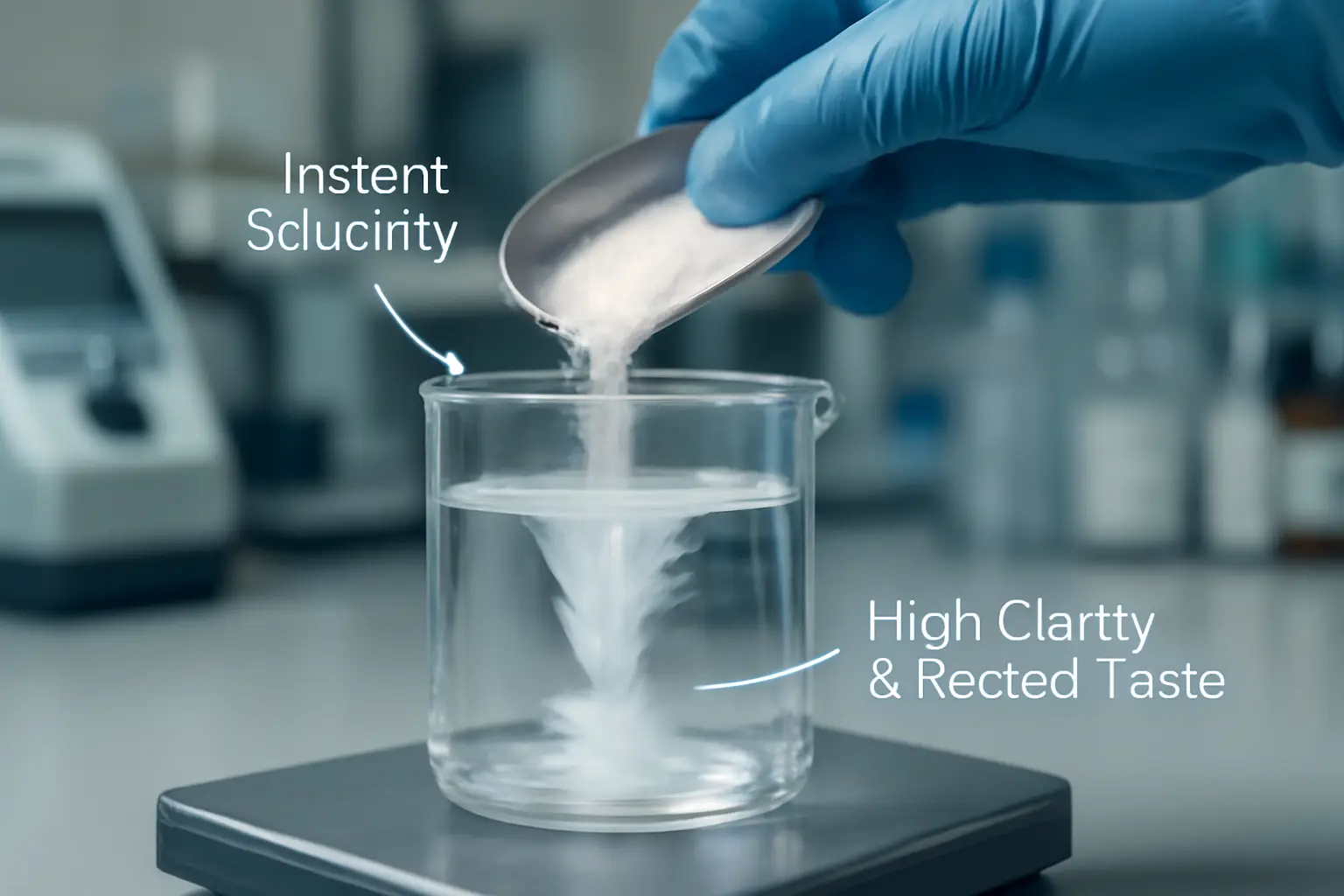
For acidic beverages and Ready-To-Drink (RTD) formulas, resistant dextrin is frequently chosen because it helps increase fiber content while maintaining manageable viscosity and a completely neutral taste. A resistant dextrin supplier supporting beverage manufacturers should be fully prepared to provide:
- Detailed solubility guidance in both cold and hot systems.
- Comprehensive viscosity data across a reasonable dosage range.
- Stability notes under heat treatment and low pH environments (crucial for pasteurization and hot-fill processes).
- Sensory profiles (clarity, flavor impact) explicitly tied to typical beverage use levels.
Procurement Takeaway: Prioritize suppliers capable of providing more than a basic one-page COA. Request a technical data sheet detailing beverage stability and recommended processing conditions, particularly if the ingredient is marketed specifically as resistant dextrin for beverages.
Bakery Snacks and Powdered Nutrition
In bakery and snack manufacturing, resistant dextrin supports fiber enrichment while preserving the delicate texture and palatability of the final product. In powdered nutrition, both resistant dextrin and soluble corn fiber help formulators hit high-fiber targets while maintaining excellent mixability for the end consumer.
For these specific applications, an effective soluble corn fiber supplier or China resistant dextrin manufacturer should readily discuss:
- Water activity considerations and advanced caking control strategies.
- Heat stability metrics during intensive baking processes.
- Target moisture specifications and packaging suitability for bulk handling and storage.
If the product roadmap includes functional sticks, tablets, or chewables, it is wise to qualify the microcrystalline cellulose supplier in parallel with the fiber supplier. This proactive step avoids late-stage compression issues that could force a costly and time-consuming full reformulation.
A Buyer Checklist for Evaluating Chinese Manufacturers
Procurement teams searching for a reliable Chinese resistant dextrin manufacturer or microcrystalline cellulose supplier can utilize the following checklist to standardize their evaluation process.
Product Identity and Performance Evidence
Confirm the raw material basis (commonly corn starch) and verify NON-GMO positioning where required by your market. Align on fiber content targets (e.g., ≥82% fiber content as a baseline for soluble fiber powder) and request clarity, solubility, and viscosity data relevant to your specific product format.
Quality System and Batch Consistency
Investigate how the supplier controls moisture, ash, pH, and microbiological limits. Verify the existence of an in-house QC lab utilized for both in-process and finished-product testing. Request typical batch-to-batch variability ranges rather than settling for simple pass/fail specifications.
Documentation Pack Readiness
At a minimum, a robust resistant dextrin supplier and microcrystalline cellulose supplier must provide a consistent audit pack. This typically includes a COA for each lot, an MSDS, a detailed Technical Data Sheet (TDS), microbiological test results, and clear storage/shelf-life guidance.
Packaging and Logistics Fit
Confirm standard packaging formats (such as 25kg moisture-proof bulk bags) and ensure robust labeling traceability. Validate palletization methods and moisture protection protocols for ocean freight, and align on lead times and contingency plans for peak demand periods.
MCC Grade Selection Discipline
Require explicit grade recommendations tailored to your process (e.g., direct compression versus wet granulation). Confirm that the supplier can clearly explain the QC parameters that directly affect compression and powder flow.
Buyers seeking concrete examples of how top-tier suppliers describe their fiber portfolios can review technical pages for resistant dextrin and related products like soluble dextrin fiber to establish a baseline for quality.
Practical Next Steps for Procurement Teams
A highly disciplined approach significantly reduces approval times and prevents costly rework during the sourcing phase.
First, write one shared specification sheet for both the R&D and procurement departments, clearly defining fiber percentage, moisture, micro limits, and processing performance. Second, execute a two-stage trial: begin with laboratory screening, followed by a pilot run that accurately reflects real-world pH, heat, and shear conditions. Finally, approve the paperwork before discussing the price. The structure of the COA, the testing methods employed, and the traceability practices should be scrutinized early in the conversation.
If you are looking for a reliable partner to secure your supply chain, evaluating an established industry expert like Shandong Shine Health Co., Ltd. can serve as a robust benchmark. Their comprehensive technical documentation, advanced automated facilities, and strict QC standards offer the transparency and consistency required for successful, large-scale functional formulation.