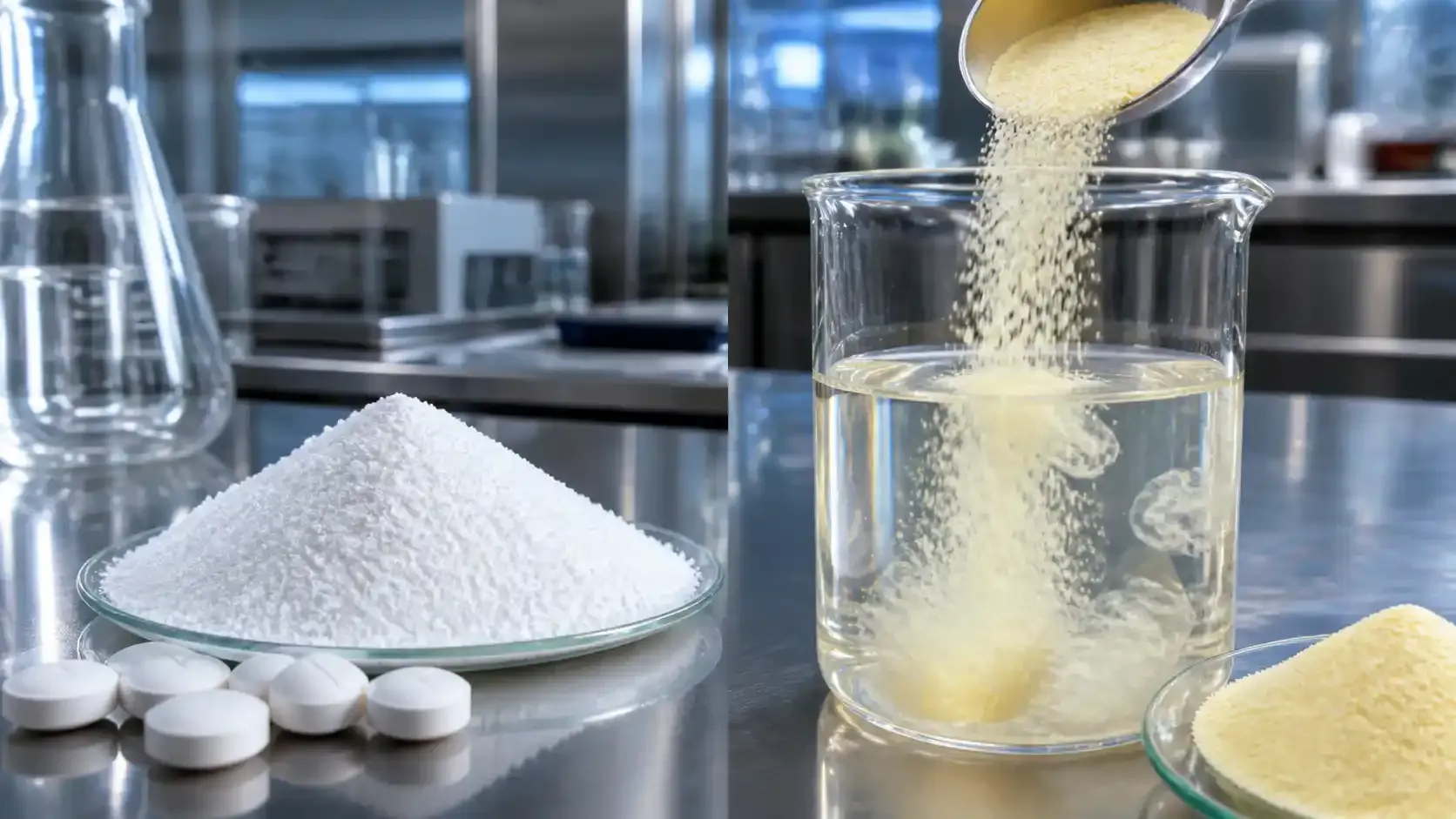
Dietary fiber is increasingly recognized as the “next protein,” and the surging demand for functional ingredients is pushing procurement teams into unfamiliar territory: fiber ingredients now carry the exact same risk profile as strategic active components. In the current market, a resistant dextrin supplier can no longer be approved based solely on competitive pricing and lead times. Purchasing managers must demand concrete evidence—identity verification, strict process control, repeatable functional performance, and export-ready documentation—before scaling prebiotic product launches. This framework is designed to help procurement professionals navigate the sourcing of resistant dextrin, soluble corn fiber, and microcrystalline cellulose (MCC) from China, ensuring full control over taste, stability, and critical label claims.

The Shifting Landscape of Fiber Procurement
Procurement failures in the functional fiber category often start with seemingly minor discrepancies that cascade into expensive manufacturing issues. Consider these common scenarios:
- A resistant dextrin supplier ships a batch that dissolves inconsistently, turning a premium ready-to-drink (RTD) beverage hazy or leaving a gritty residue.
- The total fiber content listed on the Certificate of Analysis (COA) does not align with the testing methodology your regulatory team requires for label compliance.
- The R&D department successfully hits the target dietary fiber claim, but the finished product’s sweetness balance drifts significantly, triggering a costly and time-consuming reformulation loop.
These systemic issues cannot be solved merely by switching Incoterms or negotiating a slightly lower FOB price. They are resolved through rigorous specification discipline and thorough supplier verification—especially when securing resistant maltodextrin in bulk for multiple, diverse product lines.
Two primary categories are driving this necessary upgrade in sourcing strategy:
- Soluble prebiotic fibers, such as resistant dextrin, resistant maltodextrin, and soluble corn fiber, utilized heavily in beverages, dairy products, bakery items, and nutritional powders.
- Process-functional excipients, such as microcrystalline cellulose (MCC), essential for tablets, capsules, and advanced texture systems.
Decoding Resistant Dextrin and Why Specifications Matter
Resistant dextrin is a highly versatile soluble dietary fiber derived from starch—most commonly non-GMO corn starch or premium tapioca/cassava starch. It is processed so that a significant portion resists digestion in the small intestine, allowing it to reach the large intestine for beneficial fermentation. Depending on the specific preparation and the supplier's marketing conventions, you may see it listed on documentation as resistant dextrin, indigestible maltodextrin, or soluble corn fiber.
A buyer-relevant manufacturing description, which is incredibly useful during facility audits, typically involves:
- Controlled enzymatic hydrolysis of the base starch, often utilizing advanced biological enzymes imported from overseas.
- A subsequent repolymerization process that forms distinct glycosidic bonds, rendering the final product less susceptible to human digestive enzymes.
Understanding this process explains why two resistant dextrin supplier quotes might look identical on paper, yet the ingredients behave entirely differently within your specific food matrix. If a manufacturer's process controls vary, you will inevitably experience drift in:
- Visual clarity in liquid applications and beverages.
- Viscosity, creaminess, and overall mouthfeel.
- Gastrointestinal tolerance in higher-dose serving sizes.
- Stability under extreme heat and highly acidic conditions.
As a reliable sourcing baseline, published commercial specifications for high-quality resistant dextrin preparations should target stringent parameters:
- Fiber Content: Commonly required to be ≥82%, with some premium grades demanding a total fiber content (dry basis) of ≥90.0%.
- Protein Content: Strictly limited to ≤6.0% to prevent off-flavors and browning reactions.
- Water Solubility: Achieving approximately 70% solubility.
- Moisture Attributes: Low water activity (≤0.2) and exceptionally low hygroscopicity to prevent caking during transit and storage.
- Appearance: Consistently white to light yellow powder.
These precise numbers are critical because they dictate whether your nutritional label claims and sensory profiles remain stable after transitioning from benchtop samples to full-scale commercial production.
Application-Specific Sourcing: Dairy and Beverages
When sourcing resistant dextrin for specific food matrices, the functional requirements must dictate the specification limits you set for your supplier.
In the dairy industry, for instance, resistant dextrin is frequently utilized to improve both the nutritional profile and the physical texture of products such as yogurt, milk, cheese, and ice cream. For yogurt and ice cream formulations, the fiber must enhance creaminess and viscosity while actively preventing syneresis (water separation) and the formation of unwanted ice crystals. A reliable supplier will provide a product that achieves this without altering the fundamental taste of the dairy base.
For clear functional beverages, the primary sourcing concern is complete and rapid solubility. The soluble corn fiber must dissolve seamlessly, achieving high solubility rates without altering the liquid's clarity or introducing a gritty mouthfeel. Furthermore, because resistant dextrins offer a fat-like texture with an exceptionally low caloric impact, they are excellent substitutes for sugars and fats in weight management supplements. Procurement teams must ensure the supplier's enzymatic hydrolysis process consistently yields a product that maintains a neutral, pure flavor profile across all batches.
Translating Prebiotic Claims into Procurement Specs
While many product development teams understand that resistant dextrin is positioned as a powerful prebiotic fiber, fewer procurement teams know how to operationalize that scientific evidence into bulletproof purchasing contracts. The practical takeaway is straightforward:
Regulatory and clinical acceptance is entirely preparation-specific. Your internal procurement specification must ensure the ingredient you are buying matches a fully documented identity and a proven use pattern.
For global sourcing programs, your procurement and regulatory departments must perfectly align on:
- Identity Statement: The exact nomenclature you will use on your internal specifications and consumer-facing labels.
- Intended Use Categories: Clearly defining whether the fiber is for beverages, baked goods, dairy, or dietary supplements.
- Use-Level Guidance: Establishing dosing limits that keep both taste and gastrointestinal tolerance within an acceptable range.
Non-Negotiable Supplier Documentation
A professional resistant dextrin supplier operating out of China must be able to provide the following documentation, per lot and per specific grade, without hesitation:
- COA (Certificate of Analysis)
- TDS (Technical Data Sheet)
- MSDS/SDS (Material Safety Data Sheet)
- Comprehensive Allergen Statement
- Non-GMO Certification (essential if required by your brand program)
- Detailed method notes explaining exactly how the dietary fiber percentage is calculated or tested.
If you are building a dual-ingredient supply chain plan (combining a functional fiber with an excipient), you must demand the exact same documentation rigor from any microcrystalline cellulose supplier in China that makes your shortlist.
COA and TDS Indicators for Real-World Performance
Buyers often fixate solely on the headline “fiber percentage,” but experienced food scientists and formulators know that true manufacturing performance is determined by a small set of highly repeatable indicators.
Evaluating Resistant Dextrin and Soluble Corn Fiber
Require your resistant dextrin supplier to clearly include and confirm the following data points on their COA:
- Total Dietary Fiber: Ensure they state the basis clearly (as-is versus dry basis).
- Moisture and Water Activity: This directly impacts flowability, anti-caking properties, and overall shelf stability.
- Solubility: Including the exact laboratory test conditions.
- Appearance and Color: "White to light yellow" is the accepted commercial standard.
- Odor and Taste Description: A "sweet, mild, pure" or completely neutral profile is mandatory for delicate beverage systems.
- Microbiological Limits: Aerobic plate counts (e.g., ≤1000 CFU/g), molds, and yeasts must be strictly controlled and appropriate for your specific application.

In your RFQs for a soluble corn fiber supplier, mandate that the manufacturer states whether their specific fiber grade is engineered for:
- Clear RTD beverages: Where absolute clarity and low viscosity dominate the requirement.
- Powder blends: Where excellent flowability and anti-caking properties are the primary concern.
- Baked systems: Where extreme heat stability is non-negotiable.
Sourcing Microcrystalline Cellulose in Bulk
Microcrystalline cellulose (MCC) is predominantly sourced for tablet systems, pharmaceutical applications, and specific food matrices where compressibility, flow, and consistency are paramount. Even when your immediate procurement program is focused on fiber-forward foods, the exact same supplier qualification discipline applies when integrating excipients.
When requesting microcrystalline cellulose bulk pricing, confirm your internal requirements regarding:
- Precise grade fit (as defined by your QC and formulation teams).
- Strict storage requirements (cool, dry, resealed environments).
- Unbroken batch traceability and lot-to-lot repeatability.
Evaluating Chinese Suppliers Beyond Marketing Claims
Search terms like "Recommended Chinese Resistant Dextrin Manufacturer" can often lead buyers astray, as "recommended" is frequently just an SEO marketing tactic. For professional buyers, a recommendation should only be granted when a supplier consistently demonstrates three core competencies:
1. Verifiable Process Capability
For the production of resistant dextrin and soluble corn fiber, sophisticated buyers look for specific manufacturing signals that can be verified during a facility audit:
- Utilization of modern, high-precision production equipment. Leading suppliers often utilize precision production lines of German origin.
- Highly controlled enzymatic processing environments.
- Fully automated, unmanned central control systems that govern everything from raw material feeding to final product filling, virtually eliminating human error and batch-to-batch drift.
- Exquisite craftsmanship and adherence to strict international standards (such as Japanese manufacturing methodologies).
2. Quality Control Infrastructure
A “cheap” resistant dextrin supplier quickly becomes your most expensive partner when their QC infrastructure is weak. Poor quality control leads to hold-and-release delays, mandatory sensory fixes on the production floor, label claim rework, and devastating customer complaints.
During your evaluation, ask for a comprehensive breakdown of:
- In-house laboratory capabilities (microbiological testing, key physio-chemical analysis).
- Their specific sampling plans and protocols for retaining samples.
- How nonconformities are systematically handled (demonstrating a robust Corrective and Preventive Action mindset).
3. Export-Ready Documentation and Traceability
“Export-ready” means the supplier can respond instantly with accurate documents and flawless lot traceability. For resistant dextrin supplier audits, you must require:
- Lot coding systems that irrevocably tie the COA back to the original production records.
- Clear, compliant packaging labeling practices.
- Consistent palletization and robust moisture protection—this is especially critical for bulk resistant dextrin 25kg packaging programs utilizing paper-plastic woven bags with inner PE linings.
Designing RFQs That Protect Formulation Integrity
A high-performing Request for Quotation (RFQ) accomplishes two vital jobs: it makes competing offers perfectly comparable, and it prevents hidden specification gaps that cause downstream failures.
Utilize this structural framework when requesting pricing from a resistant dextrin supplier or soluble corn fiber manufacturer:
A. Identity and Compliance Section
- The exact ingredient name to be utilized on your consumer label.
- Country of origin expectations for the raw materials (e.g., premium corn starch sourced from China's finest producers).
- Non-GMO and organic requirements (if applicable to your product line).
- Strict allergen statement requirements.
B. Application-Specific Performance Section
For beverage applications:
- Target clarity levels (explicitly state whether any haze is acceptable).
- The exact pH range and heat treatment parameters (pasteurization/UHT) the soluble corn fiber must withstand.
- Solubility expectations and specific mixing order guidance.
For powder and supplement blends:
- Required flowability and anti-caking performance.
- Storage humidity expectations and water activity limits.
C. Documentation Section
- Mandate that the COA, TDS, and MSDS/SDS be provided with the very first sample shipment, and subsequently with every single commercial lot.
- Establish microbiological limits appropriate to your specific product category.
- Secure written agreement on the method references utilized for dietary fiber reporting.
This exact RFQ structure is equally effective when sourcing MCC as an excipient, as maintaining this discipline prevents costly manufacturing variability down the line.
Practical Buyer Checklist & Sourcing Partner Selection
Utilize this practical screening checklist before committing to facility audits, extensive sampling, or initial pilot production runs.
Shortlist Screen for a Resistant Dextrin Supplier:
- Specifications are logical and complete: The fiber percentage basis (dry vs. as-is) is clearly stated; water solubility and appearance are explicitly defined.
- Documentation is export-ready: The COA, TDS, and MSDS/SDS are immediately available; Non-GMO statements are provided upon request.
- Batch consistency protocols exist: There is a verifiable plan for repeatable testing and retained batch samples.
- Packaging aligns with your logistics: They offer durable bulk packaging (commonly 25kg food-grade bags with moisture-proof linings) and highly traceable lot labels.
- Application fit is clearly articulated: The supplier understands the distinct differences between beverage, bakery, and dairy supplement positioning.
Shortlist Screen for a Microcrystalline Cellulose Supplier:
- Specific grades and usage guidance are clearly defined.
- Storage and handling instructions are explicit to prevent degradation.
- The provided documentation fully supports your internal QC release protocols.
When a supplier successfully passes this rigorous screening process, it is then appropriate to move forward with requesting samples, scheduling pilot runs, and drafting a comprehensive quality agreement.
For procurement teams looking to benchmark a reliable, large-scale manufacturing partner that meets these stringent criteria—offering non-GMO raw materials, fully automated German-origin production lines, and complete export-ready documentation—reviewing the capabilities of established producers like Shandong Shine Health Co., Ltd. can serve as an excellent baseline for your next functional fiber sourcing initiative.