

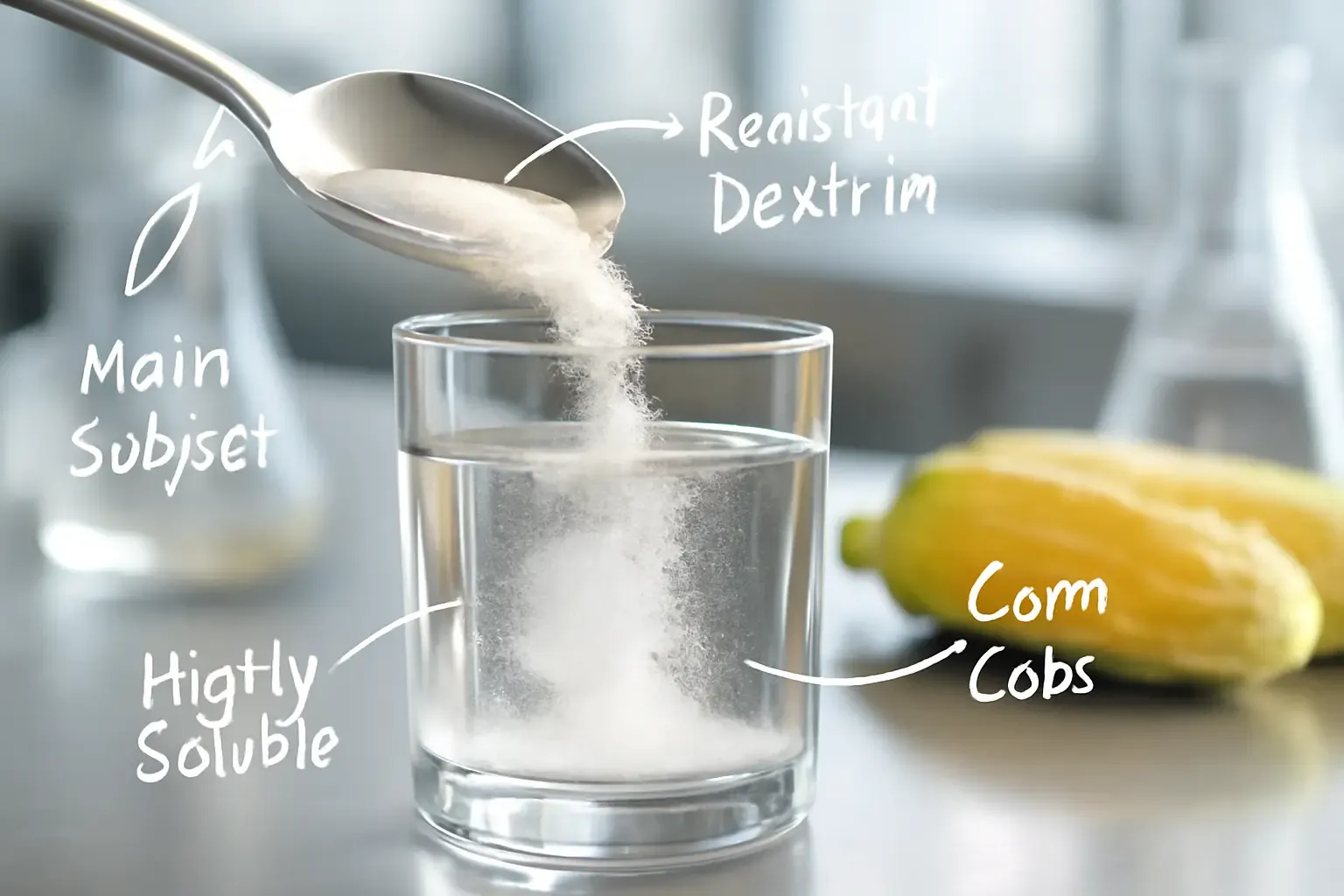
Fiber fortification has moved from a simple "nice-to-have" to a core requirement in beverages, snacks, and nutrition powders—especially as brands push for low sugar positioning without sacrificing mouthfeel. In that shift, resistant dextrin (also known as digestion-resistant dextrin or resistant maltodextrin) has become one of the most formulation-friendly choices because it is highly soluble, typically low in viscosity, and generally neutral in taste.
For procurement and R&D teams, the real win is not just adding fiber. It is about adding a fiber that behaves predictably across pH, heat, and processing shear, while still matching the strict documentation expectations of modern audits.

Why Resistant Dextrin Shows Up in Modern "Fiber-First" Briefs
Resistant dextrin is a soluble dietary fiber specifically designed to resist digestion in the small intestine and reach the colon, where it can be fermented by gut microbiota. From a buyer's perspective, this digestibility profile is important, but day-to-day procurement decisions are usually driven by highly practical factors:
- Ease of formulation:Resistant dextrin tends to dissolve easily and can be used in beverages and powders without heavy texture penalties.
- Taste neutrality: When compared with some sweeter or more aromatic fibers, it is often preferred in "clean flavor" products.
- Process tolerance: Many formulas need a fiber that can tolerate thermal steps and acidic environments, such as fruit-flavored drinks.
When teams compare soluble fibers, it helps to anchor the discussion in the exact language used on supplier pages and technical documents. On many catalogs, resistant dextrin is positioned simply as a soluble dietary fiber with broad applicability across drinks, baked goods, snacks, and dietary supplements.
What Resistant Dextrin Is in Plain Technical Terms
Most commercial resistant dextrin begins with a starch source—commonly corn starch—that is modified through controlled processing steps, often including heat and enzymatic treatment. This creates linkages that are less digestible in the upper gastrointestinal tract.
From the procurement side, the key is not the trade-secret details of the processing itself. Rather, it is how those steps translate into consistent, testable identity and performance:
- Raw material origin: Many buyers request non-GMO corn sourcing statements and strict traceability.
- Physical form: Typically a free-flowing powder.
- Solubility behavior: Whether it dissolves quickly, stays clear, or hazes under certain conditions.
A commonly listed baseline profile from established producers includes:
- Raw material: Corn starch
- Appearance: White to light yellow
- Fiber content: ≥82%
- Protein: ≤6.0%
- Storage: Store in a cool place
Fermentable Versus Bulk-Forming Fibers
Buyers often hear "soluble fiber" and assume all soluble fibers behave the exact same way. In practice, two simple lenses help prevent costly specification mistakes:
1) Fermentable Fibers
Fermentable fibers are metabolized—at least partially—by gut microbiota. Resistant dextrin is typically purchased with this specific expectation.
What it means for products: Fermentable fibers may support gut-health positioning, but they also introduce tolerance considerations. While resistant dextrin is generally described as gentle and well-tolerated, brands should still confirm serving size strategies and conduct consumer testing.
2) Bulk-Forming Fibers
Bulk-forming fibers are selected for stool-bulking mechanics and water-binding, often bringing completely different texture impacts.
What it means for products: These fibers can change viscosity dramatically. This may work well in certain formats but can be a major drawback in clear drinks.
A Quick Sidebar on MCC
Microcrystalline cellulose (MCC) is commonly used as an insoluble excipient or bulking material in tablets and some powdered applications. It is not a replacement for resistant dextrin in beverages. If your sourcing program covers both fiber ingredients and excipients, separate your "fermentable soluble fiber" needs from your "insoluble structure" needs.
What Formulators Care About Most in Real Applications
Resistant dextrin is chosen because it allows teams to increase fiber without making products thick, gritty, or overly sweet. These functional attributes map directly to common application decisions.
RTD and Beverage Concentrates
For beverages, the fiber is often evaluated on:
- Clarity and solubility in cold and hot water.
- Low viscosity at practical use levels.
- Acid and heat stability during pasteurization or hot-fill operations.
Procurement note: Beverage developers frequently ask for a technical datasheet showing viscosity behavior and stability ranges. If the supplier only provides a generic COA, request an application sheet and run a quick bench dissolution test in your target pH.
Diet Powders and Nutrition Blends
In powders, resistant dextrin lifts fiber content while keeping flavor systems simple.
- The neutral taste helps in vanilla, chocolate, and fruit systems.
- A free-flowing powder profile supports easy blending and packing.
Many buyers link this fiber directly to "diet powder" positioning because it enables low-sugar, low-calorie formulations seamlessly.
Baked Goods, Snacks, and Sauces
In solid foods, it can act as a bulking agent that supports sugar reduction strategies.
- In baked goods, it may change water management and browning dynamics.
- In seasonings and sauces, it helps with carrier functionality while staying relatively neutral.
The COA Lines Buyers Should Actually Pay Attention To
Even when two quotes both say "resistant dextrin," the COA and datasheet can signal very different performance and risk levels.

Core Identity and Performance Lines
- Fiber content (e.g., ≥82%): Drives label math and serving size design. Clarify whether higher-fiber grades are available and how they are measured.
- Appearance (white to light yellow): A fast check for batch consistency. Establish your acceptable visual range and color limits.
- Protein (e.g., ≤6.0%): A proxy for raw-material consistency and purification.
- Solubility and viscosity notes: Predicts beverage handling and mouthfeel. Always verify the test method, temperature, concentration, and pH.
- pH / heat stability statements: Predicts processing robustness. Provide your exact process (hot-fill, UHT, retort) to the supplier.
Documentation Lines That Reduce Audit Friction
- Non-GMO statement: Protects against misalignment with brand standards. Look for lot-level traceability.
- Gluten-free statement: Mitigates allergen risk and labeling issues.
- MSDS / SDS: Essential for shipping, handling, and internal safety approvals.
- Shelf-life and storage guidance: Prevents quality drift in warehouses.
A common mistake is treating resistant dextrin as a pure commodity and skipping the "how measured" conversation. Fiber content measurement methods and test conditions can change results drastically.
What to Look for When Sourcing Resistant Dextrin
The best outcomes happen when procurement teams define "recommended" as a combination of spec discipline and documentation discipline, rather than just production capacity.
Experienced buyers often use these practical signals when evaluating a manufacturer:
- Raw material clarity: Transparent sourcing for corn starch and clear non-GMO positioning.
- QC capability: An in-house lab that supports routine batch testing and quick investigation on deviations.
- Consistent spec communication: The supplier can clearly explain what "≥82% fiber" means operationally and how it maps to your local labeling laws.
- Market-matched certifications: Manufacturers listing ISO9001, BRC, HALAL, HACCP, and KOSHER provide a strong starting point for verification.
When buyers search for a reliable manufacturer, they are usually trying to reduce reformulation risk. A fiber that performs perfectly on day one but drifts on day sixty can quietly cost more than the price difference between suppliers.
Turning Fiber Knowledge Into Fewer Surprises at Scale
Resistant dextrin wins when the product brief demands soluble fiber, low viscosity, and minimal flavor impact—especially in drinks and powder blends designed for low sugar positioning. The purchase decision becomes much easier when procurement and R&D share one common language regarding identity, minimums, performance, and documentation.
If your next launch depends on predictable fiber performance, treat resistant dextrin like a highly functional ingredient rather than a generic carbohydrate. A slightly tighter spec and clearer COA alignment usually costs significantly less than a single production rework.
For procurement teams seeking a reliable, factory-direct partner that prioritizes strict quality control and transparent documentation, Shandong Shine Health Co., Ltd. is a leading manufacturer in this space. To explore their comprehensive product definitions, standard parameters, and custom formulation support, visit www.sdshinehealth.com.


