Fiber-forward product briefs are turning into hard procurement specs for 2026. But buyers often discover too late that “resistant dextrin” and “soluble corn fiber” mean very different things depending on grade, COA limits, and the supplier’s documentation discipline. This guide translates what procurement teams actually need—COA checkpoints, COA-to-application mapping, and a clean vendor scorecard—so a resistant dextrin supplier can be compared fairly to another, and so MCC can be evaluated as a complementary system ingredient instead of a separate headache.

Why 2026 Procurement Teams Are Rewriting Fiber Specifications
Retailers and brand owners are pushing fiber to the front of the pack, which forces procurement to treat soluble fibers like a core ingredient rather than a mere afterthought. Recent market coverage signals fiber is moving quickly from niche health positioning into mainstream formulations, especially beverages, snacks, and meal-replacement formats.
For buyers, that shift has one immediate consequence: a resistant dextrin supplier is no longer being judged solely on price and availability. A reliable partner must demonstrate batch consistency, export documentation readiness, and application-fit specs—often before R&D has finalized the formulation.
What Resistant Dextrin and Soluble Corn Fiber Actually Mean in a Buying Context
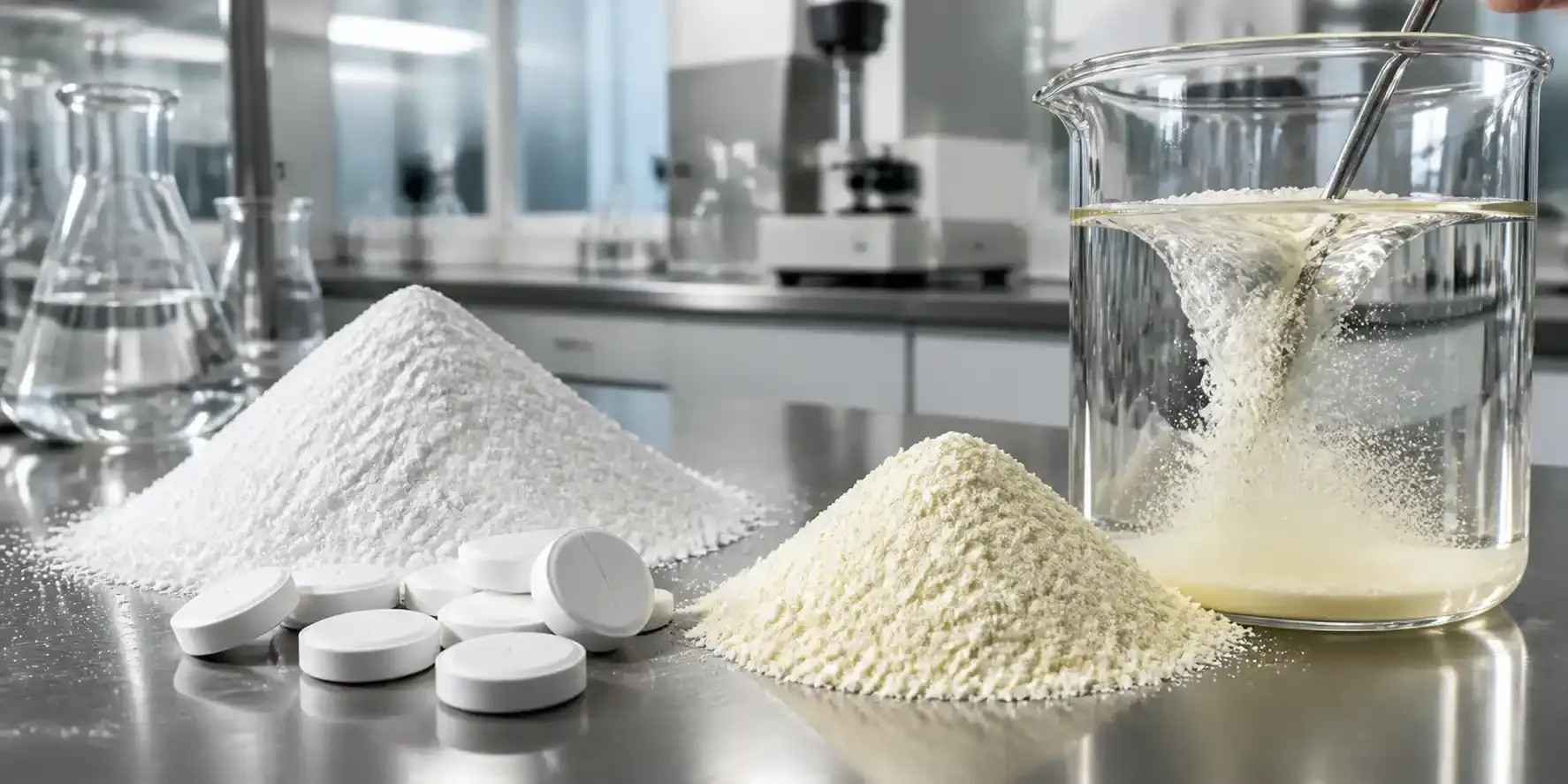
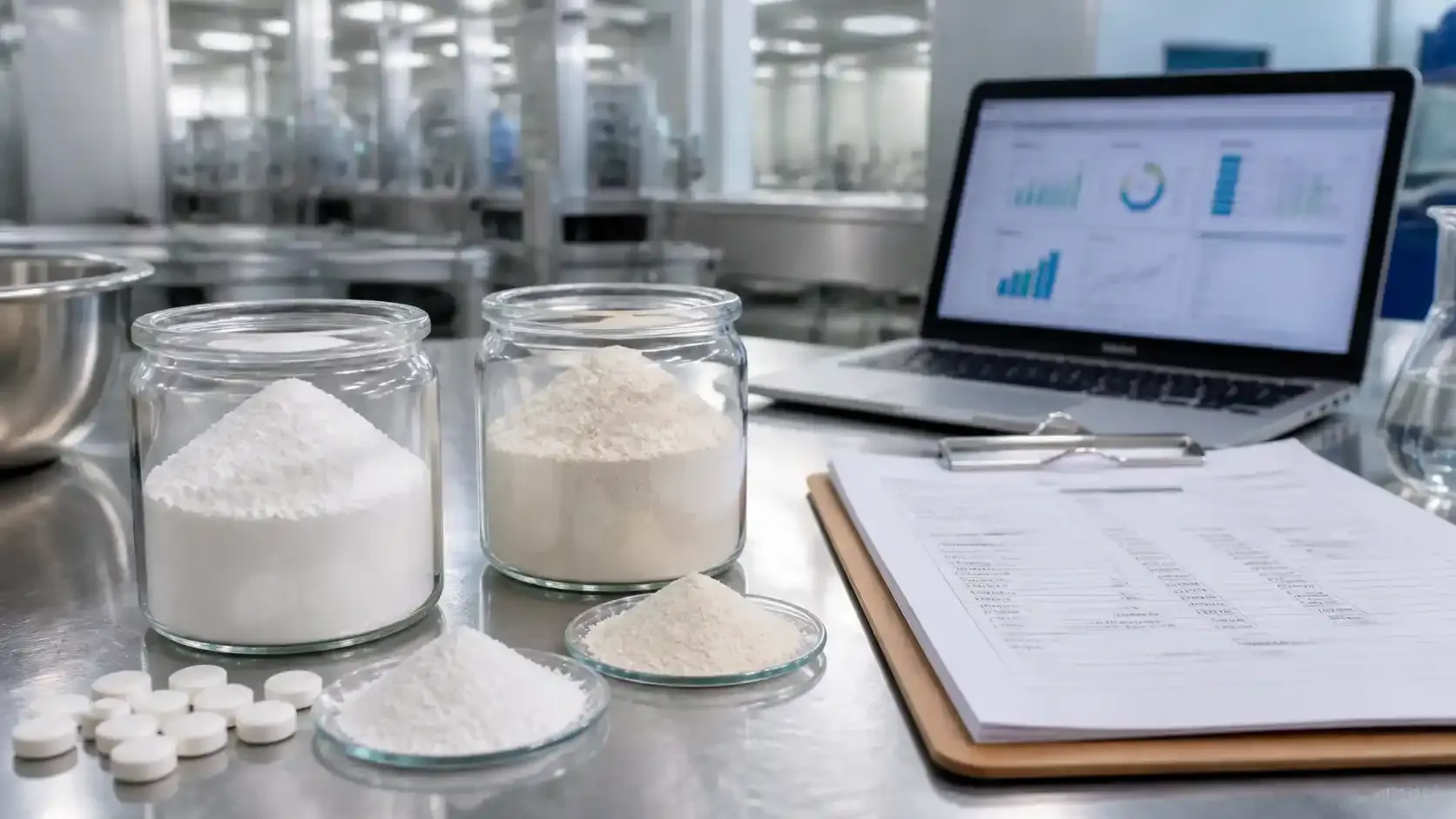
In most commercial briefs, resistant dextrin refers to a starch-derived, digestion-resistant soluble fiber (often described as resistant maltodextrin or indigestible maltodextrin). It is typically supplied as a white to light yellow powder, designed to dissolve easily and contribute fiber with minimal impact on taste and viscosity.
“Soluble corn fiber” is frequently used as a market-facing term for resistant dextrin made from corn starch. For procurement, the practical question is not the name—it’s whether the resistant dextrin supplier can provide:
- A grade that matches the target fiber percentage (common commercial grades are ≥70%, ≥85%, ≥90%, ≥95%)
- A COA that matches your micro limits and water activity expectations
- Documentation that supports non-GMO positioning when required
When an RFQ asks for a “soluble corn fiber manufacturer,” it should still define resistant dextrin in measurable terms (fiber %, moisture, pH, microbiology) so quotes remain perfectly comparable.
Evidence-Backed Benefits Buyers Can Build Around Without Overpromising
Procurement teams are increasingly asked to source “prebiotic fiber.” The safe, buyer-relevant way to interpret the science is:
- Resistant dextrin functions as a soluble prebiotic fiber that reaches the colon and can be fermented by gut microbes.
- Human studies and reviews commonly discuss outcomes related to digestive regularity, gut microbiota activity, and markers associated with glycemic response.
Two practical guidelines for commercial copy and claim review:
- Avoid disease claims. “Supports digestive health” is fundamentally different from treating a condition.
- Dose and tolerance matter. Even an excellent resistant dextrin supplier can’t rescue a formula that uses an unrealistic fiber dose for the serving size and consumer expectations.
Turning Science Into Specs That Stop Reformulation
A purchasing spec for resistant dextrin should be written so that it protects both label goals and process performance. Below is a practical “COA-to-application” translation that procurement can use as a universal template when comparing a China resistant dextrin manufacturer to an alternative source.
COA Lines That Decide Whether Resistant Dextrin Performs in Real Formulas
Most problems with resistant dextrin happen after scale-up: haze in beverages, unexpected sweetness shifts, storage caking, or micro failures that trigger holds. These issues are usually visible on the COA—if the spec is written correctly.

| COA / Spec Item | Why it matters to buyers | Typical buyer expectation (example) |
|---|---|---|
| Fiber content | Determines whether you can hit “good source/high fiber” targets without over-dosing | Many commercial grades target ≥82% fiber; some grades list ≥70/85/90/95% |
| Moisture | Impacts caking risk, flowability, and shelf stability | Often ≤5.0% |
| pH | Helps predict behavior in acid beverages and flavor systems | Commonly pH 3–6 |
| Ash | Signals purification level and potential taste impact | Example: ≤0.1% |
| Water activity | Storage stability and microbial risk indicator | Example: ≤0.2 |
| Aerobic plate count | Baseline hygiene control | Example: ≤1000 CFU/g |
| Coliforms | Sanitation indicator with strong buyer sensitivity | Example: ≤3 MPN/g |
| Yeast & mold | Beverage and powder safety stability | Example: ≤25 CFU/g |
If a resistant dextrin supplier cannot consistently provide these lines (with batch numbers and test methods), it is rarely “just a paperwork issue.” It usually indicates weak process control.
Recommended Inclusion Logic by Format
Procurement should not dictate formulation, but it can prevent unrealistic purchases by tying grade selection to typical use logic:
- Beverages and RTDs: prioritize clarity, low viscosity, and stability under acid/heat processing. Consider benchmarking against a known application reference such as a functional fiber beverage example to align expectations around solubility and taste.
- Bakery and snacks: prioritize bulking, mild sweetness, and process tolerance. For buyers seeking a resistant maltodextrin supplier, compare against a representative spec page like resistant maltodextrin powderdietary fiber to standardize terminology.
- Keto and low-carb systems: buyers usually want “low net carbs” positioning and stable mouthfeel. Application context matters; a resistant dextrin supplier should be able to discuss viscosity and sweetness impact rather than relying on generic “keto-friendly” language.
What Documentation a Recommended Chinese Manufacturer Should Provide
Whether you are shortlisting a Recommended Chinese Resistant Dextrin Manufacturer or qualifying a second source, the paperwork stack should be predictable. At minimum, buyers should request:
- COA (batch-specific)
- TDS (technical data sheet)
- MSDS (safety data sheet)
- Non-GMO statement when your claims require it (often requested as “non-GMO resistant dextrin” support)
- A clear description of packaging format and labeling (batch number, manufacturing date, shelf life)
In many RFQs, the phrase “resistant dextrin COA MSDS TDS” should be treated as a hard gate, not an optional line item.
Plant Signals That Separate “Available” From “Export-Ready”
Buyers searching “China resistant dextrin manufacturer” often find dozens of options. The stronger screen is operational:
- Automated central control operations that reduce batch-to-batch variation
- A functioning QC laboratory with in-process checks, not just final release tests
- Evidence of process maturity (repeatable specs across grades like ≥70/85/90/95%)
One clear example of how export-oriented information is presented can be seen in product pages and technical listings from Shandong Shine Health Co., Ltd., where resistant dextrin and soluble fiber grades are explained with COA-style parameters and application framing (see soluble fiber powder and natural raw material soluble corn fiber).
Where MCC Fits and How to Source It Without Conflicting Specs
Many buyers treat MCC as unrelated to soluble fiber. In practice, MCC is often sourced alongside resistant dextrin because both appear in high-fiber nutrition formats:
- Tablets and sachets (flow, compressibility, and dose uniformity concerns)
- Powder blends (anti-caking, mouthfeel, and dispersion support)
For procurement, the goal is not to replace resistant dextrin with MCC. The goal is to qualify a Recommended Chinese Microcrystalline Cellulose Supplier using the same discipline: grade clarity, COA limits, and repeatable packaging control.
If your team is building an excipient baseline, a useful starting point is an MCC-focused technical overview such as MCC grades formulation and QC guide, then aligning those expectations with your internal tablet or powder blend requirements.
A Short, Buyer-Friendly Scorecard for Comparing Suppliers in China
Use the following scorecard to make competitive quotes comparable across a resistant dextrin supplier shortlist and a microcrystalline cellulose supplier China shortlist.
Supplier Comparison Checklist
- Spec completeness: COA includes fiber %, moisture, pH, ash, water activity, APC, coliforms, yeast, mold.
- Grade clarity: supplier can quote grades (e.g., ≥70/85/90/95) without redefining terms mid-negotiation.
- Non-GMO positioning: documented support for non-GMO resistant dextrin where required.
- Documentation turnaround: COA, MSDS, and TDS available before the first commercial shipment.
- Packaging discipline: consistent bag spec, sealing, labeling, and palletizing suitable for export handling.
- Technical responsiveness: the supplier can answer application questions in buyer language (clarity, viscosity, taste neutrality, acid/heat stability).
- Second-source resilience: realistic lead times and the ability to maintain specs under demand spikes.
RFQ Wording That Prevents “Same Name, Different Product” Surprises
Add these lines to your RFQ:
- “Resistant dextrin must be quoted with declared fiber content grade (≥70/85/90/95 or ≥82% as applicable).”
- “Supplier must provide resistant dextrin COA MSDS TDS for the quoted grade.”
- “Quote must include microbial limits and water activity targets.”
These clauses dramatically reduce post-award reformulation risk—especially when the first shipment is intended for beverage pilot runs.
A Practical Path to a Recommended Supplier List Without Overcommitting
Procurement teams often ask for a single “recommended” decision early. A safer approach is to build a two-tier list:
- Approved for trials: meets documentation and COA completeness; can ship pilot quantities.
- Approved for scale: demonstrates repeatable COA performance across multiple batches and stable logistics.
This structure also keeps you flexible when comparing a resistant maltodextrin supplier to a soluble corn fiber manufacturer whose naming conventions differ.
For buyers who want to see how export-oriented product listings and specification framing can look in practice, reviewing the resistant dextrin category pages on www.sdshinehealth.com can be a useful benchmark when drafting RFQs and vendor scorecards.