Procurement teams are no longer shortlisting fiber ingredients on price and lead time alone. As clinical discussions around prebiotic outcomes and glycemic support become more mainstream—and as EFSA and FDA frameworks shape what “dietary fiber” can credibly support—buyers increasingly translate health positioning into measurable specifications. This Supplier Evaluation & Sourcing Guide explains how to convert evidence and compliance expectations into a repeatable workflow for selecting a reliable resistant dextrin supplier and a microcrystalline cellulose supplier in China. The goal is to partner with a manufacturer that can stand up to strict audits, seamlessly support scale-up, and deliver consistent batch performance without compromising quality.
Aligning Evidence with Resistant Dextrin Specifications
Before comparing quotes, buyers benefit from a quick alignment exercise: what exactly should resistant dextrin deliver in the finished product? Not merely as a marketing claim, but as a highly functional ingredient that behaves consistently in beverages, baked goods, snack systems, or supplement powders.
Prebiotic Logic That Matters for Procurement
Resistant dextrin is widely recognized as a premium soluble dietary fiber that resists digestion in the small intestine and undergoes beneficial fermentation in the colon. Reviews of resistant starches and dextrins describe a consistent mechanistic pattern: this fermentation supports short-chain fatty acid (SCFA) production and can shift gut microbiota activity in a direction associated with digestive comfort and regularity.
For sourcing teams, the primary takeaway is not to simply “buy a claim,” but to select a resistant dextrin ingredient that is:
- Highly soluble (often up to 70% solubility) for beverage and powder applications, preventing clumping.
- Neutral in taste and color (appearing as a white to light yellow powder) so it does not force expensive reformulations.
- Process-stable, meaning excellent heat and acid tolerance, which is particularly relevant for RTD (Ready-To-Drink) beverages and baking.
- Digestively tolerable at practical use levels without causing gastrointestinal distress.
Glycemic Data and the Inclusion Reality Check
Recent systematic reviews and meta-analyses of randomized trials report improvements in key glycemic traits (e.g., fasting glucose and HOMA-IR) with resistant dextrin interventions. Many clinical studies utilize typical doses around 10 g/day. While every finished product does not need to deliver exactly 10 g per serving, buyers must ensure that the selected resistant dextrin from their China supplier can be utilized at realistic inclusion levels without introducing taste, viscosity, or tolerance problems.
Procurement Translation: If a brand’s concept requires higher daily fiber delivery, the resistant dextrin should be sourced with a strict emphasis on solubility, low viscosity, and digestive tolerance—ensuring the end product can be consumed consistently by the target demographic.
A Specification Baseline Buyers Can Operationalize
When cross-functional teams build a technical brief for resistant dextrin, a practical and robust baseline often includes the following parameters:
- Dietary fiber content: Target ≥82% (or even ≥90% on a dry basis) for resistant dextrin lines positioned as premium high-fiber ingredients.
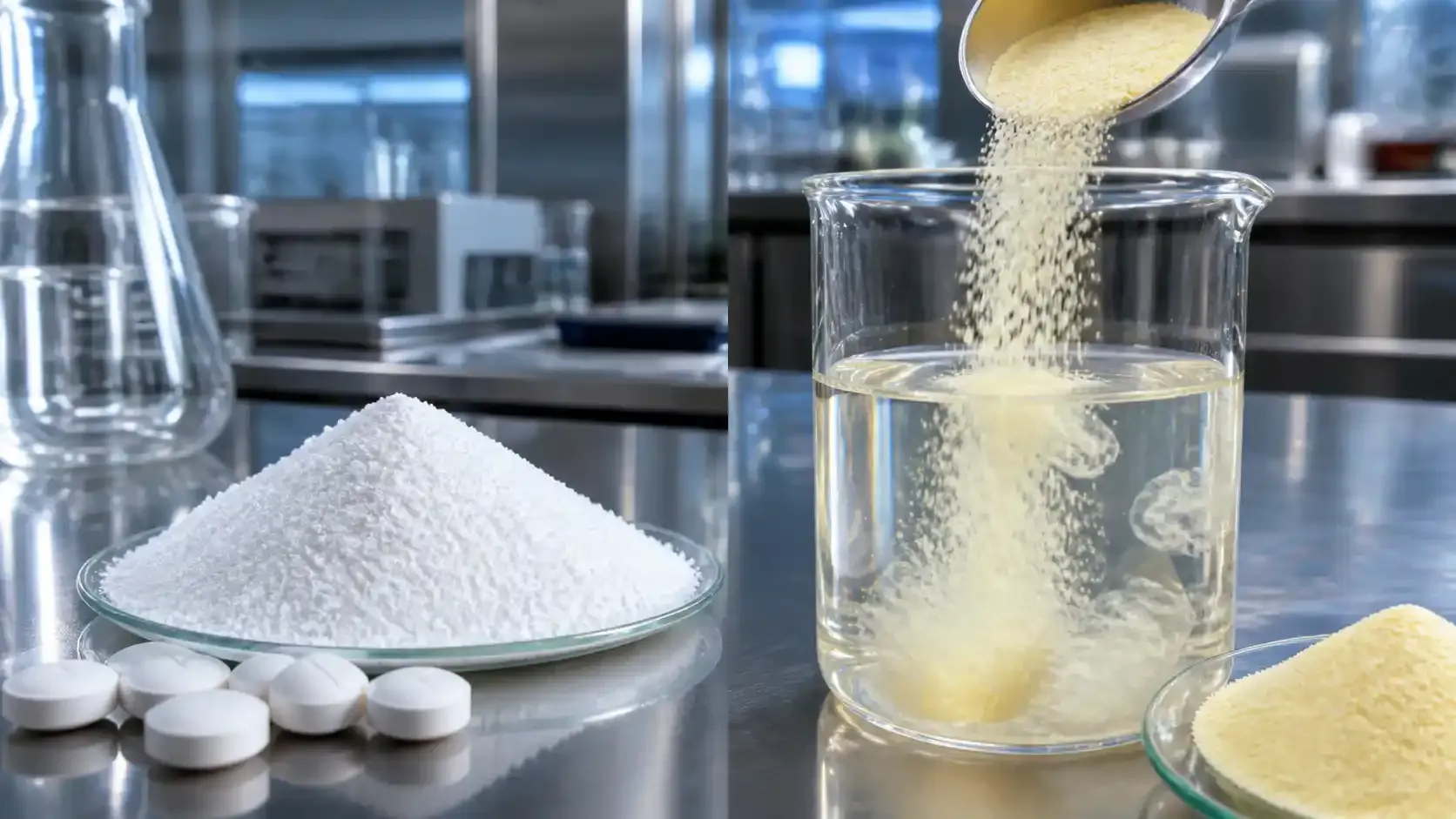
- Appearance: White to light yellow powder, which helps maintain beverage clarity expectations.
- Protein Content: Low and strictly controlled (e.g., ≤6.0% is a critical control point in top-tier supplier specification sheets).
- Physicochemical Stability: Moisture content ≤5.0g/100g, pH levels between 3-6, and low water activity (≤0.2) to guarantee extended shelf life and prevent caking.
- Raw Material Traceability: Premium non-GMO corn starch or tapioca is a common feedstock; buyers should meticulously confirm lot traceability from farm to facility.
One clear example buyers may encounter in the Shandong manufacturing hub is resistant dextrin expertly crafted from premium corn starch with a declared fiber content ≥82%, formulated for broad application use.
Navigating EFSA and FDA Expectations to Prevent Rework
Buyers selling into multiple global regions frequently get caught by a familiar bottleneck: the ingredient performs exceptionally well in the lab, but the documentation trail is incomplete for the target claim language and regulatory labeling framework.
EFSA Perspective for EU-Facing Products
EFSA’s scientific opinion on dietary fiber-related health claims is frequently utilized as a benchmark for what actual “substantiation” looks like in practice. For global sourcing, the most useful implication is that EU-facing programs should prepare clear evidence mapping: clearly defining what the ingredient is, identifying the physiological effect, and detailing the conditions of use.
FDA GRAS Positioning for the US Market
For US-facing programs, FDA GRAS notices and supporting regulatory materials that reference resistant dextrin (often discussed under the umbrella of resistant maltodextrin types) help buyers understand accepted use contexts and safety positioning. Procurement teams do not need to litigate the nuances of regulatory science themselves—but they absolutely need to ensure the chosen China resistant dextrin supplier can provide comprehensive documents that align with the intended food categories and usage levels.
Practical Procurement Rule: If a supplier cannot provide a coherent, audit-ready compliance pack—including COA, TDS, MSDS, clear allergen statements, process descriptions, and relevant market-facing dossiers—the initial “low price” typically becomes irrelevant once expensive regulatory rework begins.
Evaluating a China Resistant Dextrin Supplier Systematically
The most reliable supplier evaluations follow a fixed, logical sequence: first confirm the ingredient definition, then confirm how it is manufactured, verify how it is tested, and finally confirm how the supplier supports your specific market needs.
Manufacturing Checkpoints That Correlate With Consistency
When screening a China resistant dextrin supplier, experienced buyers typically validate several core areas:
- Raw Material Controls: Prioritizing non-GMO corn starch sourcing and rigorous incoming raw material inspections.
- Enzymatic Processing Discipline: Utilizing advanced biological enzymes imported from overseas, with clear process controls rather than vague “black box” descriptions.
- Automation and Hygiene: Employing precision production lines (often of German origin) with fully automated, unmanned central control operations. GMP-style practices matter immensely for food and supplement channels.
- In-House QC Laboratory Capability: Ensuring the facility possesses a fully equipped QC laboratory demonstrating method competence, strict microbiological testing (e.g., aerobic plate counts ≤1000 CFU/g), and disciplined batch release protocols.
Many top-tier Shandong-area suppliers position their resistant dextrin as produced via advanced enzymatic hydrolysis technology and backed by an independent QC laboratory. This matters because resistant dextrin is not merely a commodity powder; its commercial value is derived entirely from repeatable solubility, thermal stability, and gastrointestinal tolerance.

What to Look for in a COA and TDS
A Certificate of Analysis (COA) can be perfectly formatted yet still remain unhelpful. Buyers should confirm it answers specific use-case questions:
- Does the resistant dextrin stay stable in the exact pH range of the target beverage?
- What is the exact soluble dietary fiber value, and which analytical method is used?
- Are microbiological limits reported in a way that fits the buyer’s internal risk and safety model?
- Is batch-to-batch variation clearly visible and strictly controlled?
Quick Comparison Table for First-Pass Screening
| Evaluation Area | Resistant Dextrin Supplier Signals to Look For | Buyer Risk if Missing |
|---|---|---|
| Spec Clarity | Fiber target (e.g., ≥82%), appearance, storage conditions, allergen position. | Reformulation delays and claim uncertainty. |
| Process Transparency | Enzymatic process described at a practical, technical level. | Inconsistent performance across production lots. |
| QC Readiness | In-house lab, defined release testing parameters, full traceability. | Launch delays, quality disputes, higher incoming QC costs. |
| Market Support | Complete documentation pack for target markets and clean labels. | Relabeling costs, restricted claims, market entry barriers. |
When a resistant dextrin line is marketed as non-GMO and gluten-free, buyers should consistently confirm the supporting statements, farm-level traceability, and program controls rather than relying on marketing label language alone.
MCC Sourcing in China: A Complementary Approach
Many procurement teams sourcing resistant dextrin simultaneously evaluate microcrystalline cellulose (MCC) because these two functional ingredients frequently coexist in the same product portfolios.
- In diet powders and meal replacements, resistant dextrin supports essential fiber delivery, while MCC can significantly help with body, flow, and texture optimization.
- In dietary supplements, MCC acts as a premier excipient for compressibility, tablet robustness, and film coating advantages.
- In functional nutrition formats, the combination of both ingredients can help manage mouthfeel and enhance creaminess while keeping sugar and caloric content exceptionally low.
MCC Fundamentals That Procurement Teams Should Align On
A microcrystalline cellulose supplier in China should be rigorously screened for application fit:
- Grade Alignment: Clearly distinguishing between food-grade versus pharma-grade expectations.
- Particle Size and Flow Behavior: Understanding how these metrics directly impact blending, tableting efficiency, and final sensory properties.
- Consistency: Recognizing that batch-to-batch control is often significantly more important than producing a single “perfect” sample batch.
If the manufacturing program spans complex supplements, teams may also benchmark supplier maturity using global quality-network concepts. The objective is not necessarily to demand a massive global footprint, but to verify that a recommended Chinese microcrystalline cellulose manufacturer can produce highly consistent, testable material under stringent quality systems.
Building an Audit-Ready Documentation File for Scale-Up
A sourcing decision only becomes durable when the compliance file is entirely audit-ready before the first large Purchase Order is issued. For both resistant dextrin and MCC, a clean, comprehensive documentation pack drastically reduces delays and prevents internal quality and regulatory teams from reopening the qualification process.
What “Audit-Ready” Looks Like in Practice
A complete, professional supplier file typically includes:
- COA template + recent COAs (spanning multiple lots to prove consistency).
- Detailed TDS and MSDS.
- Allergen, gluten-free, and non-GMO statements (where applicable, backed by traceability).
- Storage and shelf-life guidance (e.g., clear parameters like “store in a cool, dry place” alongside practical handling notes).
- Packaging and traceability descriptions (detailing lot coding, palletization standards, and moisture-proof packaging solutions like 25kg food-grade bags with inner PE linings).
- Third-party certifications (commonly ISO, HACCP, BRC, HALAL, and KOSHER are mandatory in numerous export programs).
Pilot Trials Buyers Can Run Without Overengineering
Instead of launching complex, multi-month R&D projects, a sourcing-friendly trial plan should succinctly answer three foundational questions:
- Does the resistant dextrin stay clear and stable in the target liquid beverage or syrup system over time?
- Does the resistant dextrin remain truly neutral (in taste, odor, and color) at the intended inclusion rate?
- Does the selected MCC grade behave predictably during blending, tableting, or powder flow operations?
For fiber-forward beverage and powder concepts, buyers often concurrently compare resistant dextrin with related ingredient formats, such as soluble corn fiber or tapioca-based alternatives, to determine the optimal formulation fit.
Establishing a Reliable Supplier Shortlist Checklist
Procurement teams searching for a highly capable Recommended Chinese Resistant Dextrin Manufacturer or a dependable Recommended Chinese Microcrystalline Cellulose Supplier are usually trying to reduce one core metric: downstream operational risk.
A highly reliable shortlist can be constructed utilizing a simple, three-step filter:
- Specifications First: Confirm that the resistant dextrin specifications (including a strict fiber baseline such as ≥82% or higher) and MCC grade requirements perfectly match the end application.
- Proof Second: Collect a comprehensive, audit-ready documentation pack that aligns seamlessly with the target market’s strict regulatory expectations.
- Trial Third: Execute pilot trials that focus intensely on solubility, thermal stability, gastrointestinal tolerance, and process compatibility—then lock down the final specification agreement.
The Shandong province remains a highly visible and respected sourcing region for both soluble dietary fiber and pharmaceutical excipient manufacturing. Buyers evaluating suppliers in the Shandong–Jinan corridor consistently prioritize the same fundamental pillars: highly traceable raw materials, disciplined automated production controls, and an uncompromising approach to quality control.
For procurement professionals seeking a benchmark in traceable raw materials and disciplined production controls, evaluating a specialized manufacturer provides a solid reference point. You can explore comprehensive compliance standards, technical parameters, and premium fiber solutions at www.sdshinehealth.com.