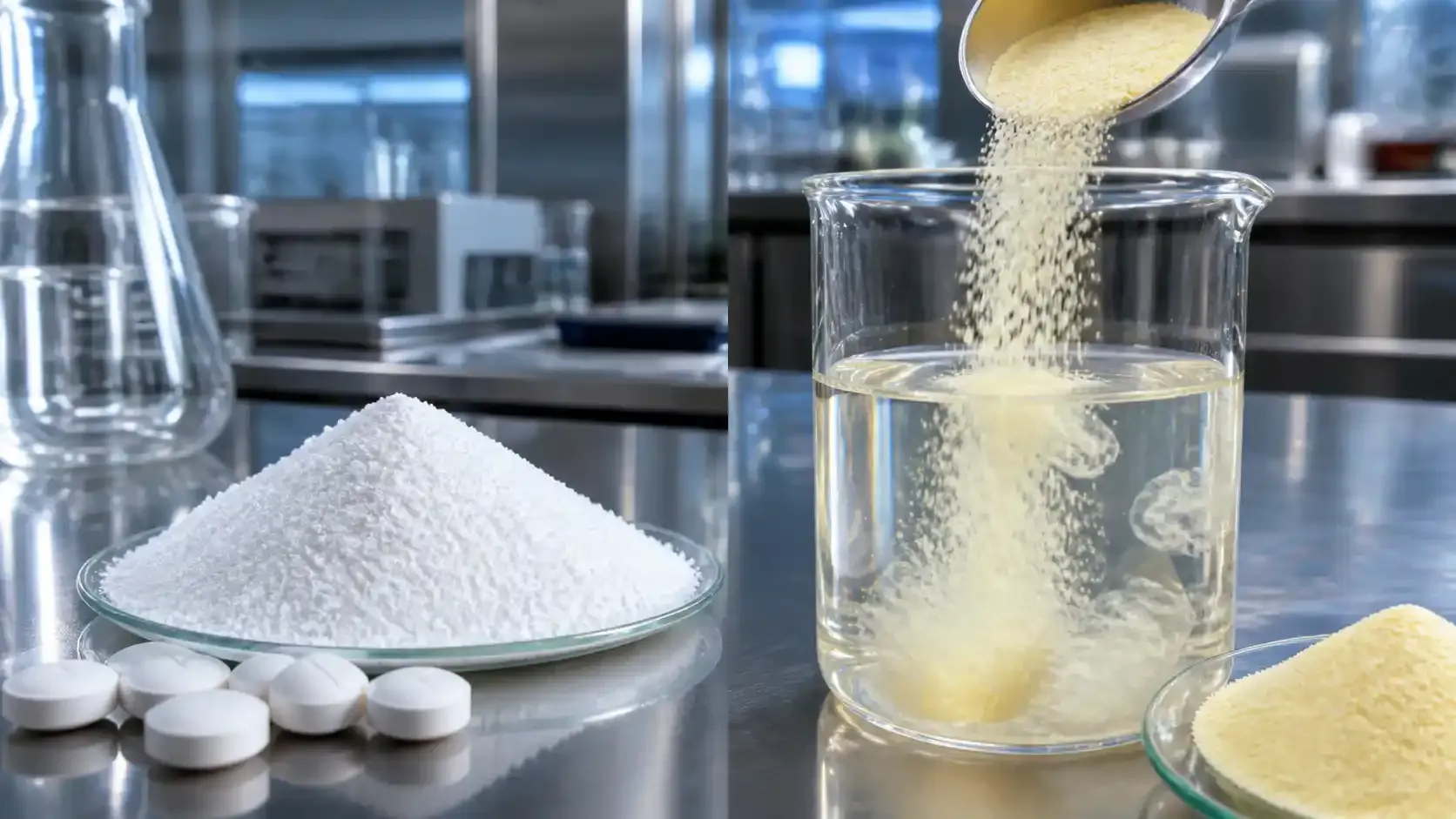
Procurement teams used to treat functional fibers and excipients as largely “spec-and-price” buys. That model breaks down quickly when dietary fiber definitions determine what you can claim on-pack, and when pharmacopeial monographs determine whether a tablet blend will compress consistently at scale.
If you are shortlisting a Recommended Chinese Microcrystalline Cellulose Manufacturer or a Recommended Chinese Resistant Dextrin Manufacturer, the win is rarely the lowest quote. The real achievement is approving a supplier whose COA and documentation pack can survive a customer audit, a customs document check, and an internal label review—without last-minute reformulation.
This article explains what buyers should verify when sourcing microcrystalline cellulose manufacturer China options (PH101/PH102 and related grades) alongside resistant dextrin (also marketed as resistant maltodextrin or soluble corn fiber), and how to build a simple, repeatable compliance workflow.

Why US Dietary Fiber Rules Now Influence Resistant Dextrin Sourcing
In the US, dietary fiber labeling is not just a nutrition panel detail—it can decide whether a finished product keeps its positioning. For resistant dextrin and dietary fiber resistant maltodextrin ingredients, buyers should assume that regulatory teams will ask for two things:
- Evidence that the ingredient fits the dietary fiber framework used for labeling.
- Clear test methods demonstrating fiber content and other specifications are measured consistently.
A practical procurement takeaway: when reviewing a resistant dextrin supplier, simply accepting “soluble fiber” as a marketing term falls short. The supplier must be able to show (and clearly explain) the analytical method used for fiber content and how that method aligns with how your target market expects dietary fiber to be substantiated.
For teams building internal justification, reviewing scientific evidence on non-digestible carbohydrates is a useful reference point for understanding what regulators consider when assessing physiological effects.
MCC Is Regulated Differently But Audited Just As Hard
Microcrystalline cellulose (MCC) is typically treated as an excipient and functional additive, rather than a fiber claim ingredient in the same way resistant dextrin is. Yet the purchasing reality remains strikingly similar: you still need robust documentation that stands up to QA release and downstream customer requirements.
When a buyer searches for a microcrystalline cellulose manufacturer China, the most common gap is not availability. Instead, it is whether the supplier can demonstrate consistent alignment with BP/USP/FCC/JP specifications for the specific grade being purchased.
Consider two areas where audits typically focus:
- Grade fit for process: PH101 and PH102 are frequently shortlisted for direct compression workflows because MCC can significantly improve binding, compressibility, and powder flow. Buyers should verify the grade is precisely suitable for the intended manufacturing route, not merely labeled as “pharma grade.”
- Traceability and contamination control: MCC is widely used across food, nutraceutical, and pharma applications. This cross-industry demand makes strict traceability and microbiological control absolutely essential.
What a COA Must Prove for Resistant Dextrin and MCC
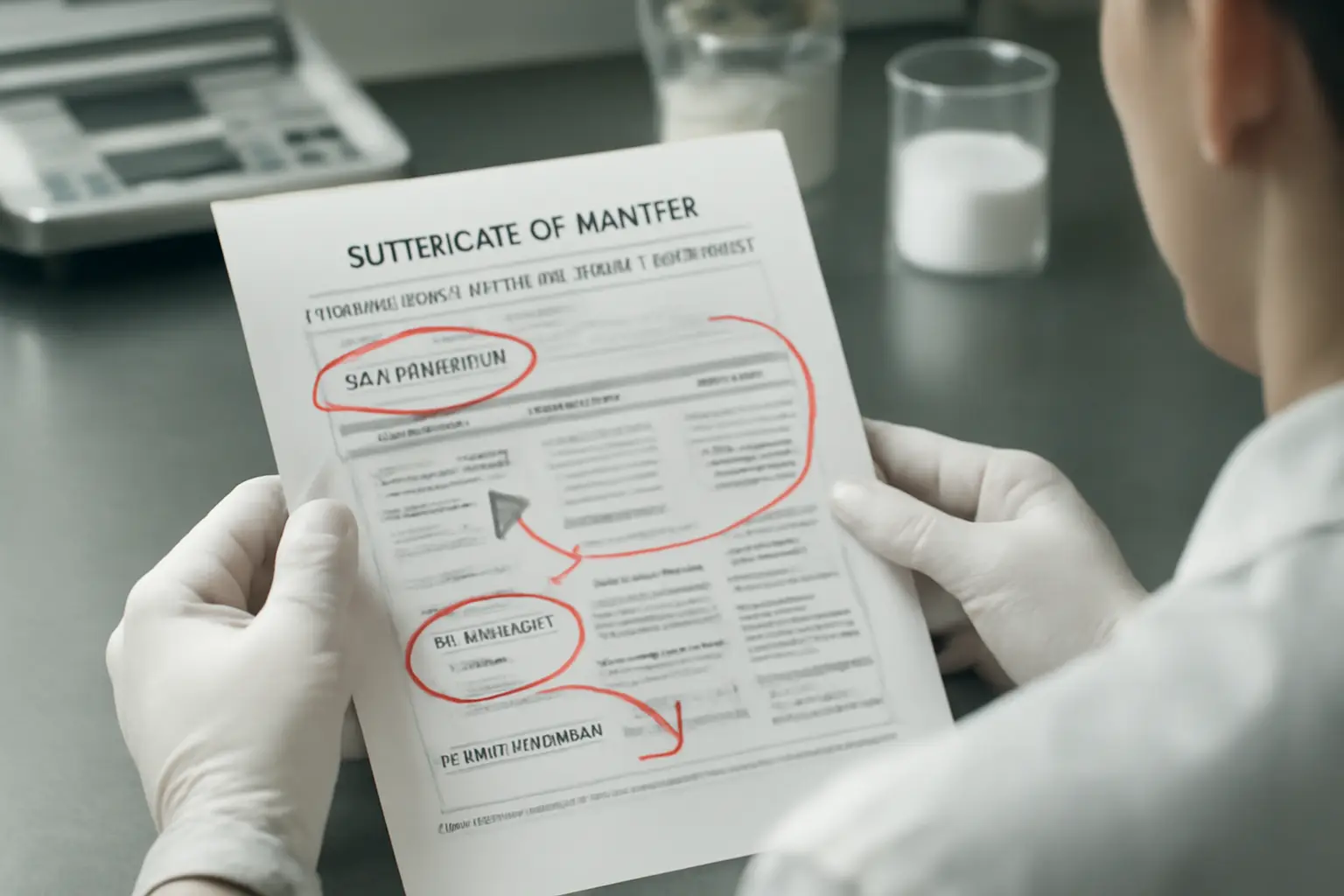
Actually, a COA functions as much more than a simple pass/fail sheet. It should help you answer a critical question: “If this batch is questioned, can we defend it?” Below is a buyer-oriented comparison of what typically needs to be visible.
Compliance Snapshot Table Buyers Can Reuse
| Area | Resistant Dextrin (Resistant Maltodextrin / Soluble Corn Fiber) | Microcrystalline Cellulose (MCC) |
|---|---|---|
| Primary Regulatory Pressure Point | Dietary fiber definition and labeling substantiation | Pharmacopeial monographs and excipient suitability |
| Core Identity/Spec Lines Buyers Check | Appearance (white to light yellow), fiber content (commonly ≥70% to ≥95% depending on grade), pH range, moisture, ash | Appearance (white or almost white), grade (e.g., PH101/PH102), mesh/particle size, purity, standard (BP/USP/FCC/JP) |
| Microbiology Expectations | Aerobic plate count, coliforms, mold/yeast limits are commonly listed | Microbial limits and overall cleanliness controls are commonly expected for intended use |
| Methods That Must Be Unambiguous | Dietary fiber method and reporting basis; confirm how fiber is calculated and declared | Identity and compendial test methods; confirm the exact monograph/standard referenced |
| “Nice-to-Have” Buyer Proof | Non-GMO documentation (when claimed), stability notes (heat/acid), water activity | Flow/compressibility guidance for tableting, lot-to-lot consistency indicators |
Two COA Reading Habits That Prevent Most Disputes
- Check whether the COA is batch-specific. Verify the lot number, production date, and test date. Generic “sample COA” formats are never enough for release.
- Ask what changes trigger a COA revision. For resistant dextrin, method changes (or switching between grades such as 70% vs 90%+ fiber) should force a documentation update. For MCC, any grade substitutions must be treated as a controlled change.
Building an Audit-Ready Documentation Pack for China Sourcing
An audit-ready file drastically reduces the risk that a shipment is physically fine but commercially unusable. For both resistant dextrin and MCC, buyers can standardize a documentation pack using the same backbone, adding a few ingredient-specific add-ons.
Core Documents That Should Travel Together
- COA (strictly batch-specific)
- TDS/specification sheet (the commercial spec you contract against)
- Manufacturing process description (a high-level overview is usually sufficient, but it must remain consistent)
- Quality system certificates commonly requested by buyers (for example, ISO-type quality management; where applicable, suppliers may also present HACCP/BRC/Halal/Kosher depending on target customers)
- Packaging statement (bag type, net weight, storage conditions)
- Allergen and GMO statements when relevant to product claims or customer requirements
Resistant Dextrin Add-Ons Buyers Often Need
- Dietary fiber test method disclosure (at minimum, the method name/standard and reporting basis)
- Application stability notes relevant to beverages and baked goods. Resistant dextrin is often positioned as heat-stable and acid-resistant; buyers should request exact conditions and limitations rather than relying on marketing language.
MCC Add-Ons Buyers Often Need
- Compendial alignment statement indicating precisely which standard the lot is released to (BP/USP/FCC/JP as applicable)
- Grade selection notes that map PH101/PH102 (and other grades) to intended use, particularly crucial for pharmaceutical excipient MCC direct compression projects.
Plant Capability Signals That Make Supplier Claims Easier to Verify
Buyers certainly do not need a factory tour for every RFQ, but they do need clear indicators that the supplier can produce consistent material and defend it with hard data.
For resistant dextrin, common positive signals include:
- Documented non-GMO corn starch sourcing whenever non-GMO claims are made.
- Fully equipped QC lab with clear in-process and finished-goods checks.
- Automation and central control in the production and filling steps, which significantly reduces the variability that later shows up as COA drift.
For MCC, positive signals often include:
- A clear, well-defined list of available grades (such as PH-101, PH-102, and others) and a disciplined approach to grade change control.
- A consistent specification that references BP/USP/FCC/JP and does not randomly shift between markets without explanation.
As a neutral example of how a reliable supplier presents export-facing specifications and applications online, procurement teams can observe how Shandong Shine Health Co., Ltd. organizes information for their microcrystalline cellulose bulk and Resistant Dextrin product categories.
A Qualification Checklist That Separates “Recommended” From “Available”
The fastest way to operationalize supplier approval is to split requirements into two distinct lanes: one for MCC, one for resistant dextrin. The goal is not to create endless paperwork—it is to prevent entirely avoidable reformulation and release delays.
Checklist for Resistant Dextrin Manufacturer China Candidates
- Confirm the exact product name used in trade documents (resistant dextrin vs resistant maltodextrin vs soluble corn fiber) and ensure it matches your internal raw material master flawlessly.
- Verify the fiber content grade (e.g., ≥70%, ≥85%, ≥90%, ≥95%) and clearly define acceptable tolerances within the contract.
- Request the dietary fiber test method and ensure the method remains consistent across all lots.
- Review microbiological limits and confirm they perfectly match your finished-product risk assessment.
- If making non-GMO or organic positioning decisions, securely collect all supporting documentation long before commercial launch.
Checklist for Microcrystalline Cellulose Manufacturer China Candidates
- Specify the exact grade (PH101/PH102) and confirm it is the identical grade that will be shipped (absolutely no substitutions without prior approval).
- Confirm declared standards (BP/USP/FCC/JP) and legally require the supplier to release each batch to the agreed-upon standard.
- Request a TDS alongside a batch COA and critically compare: does the COA actually report the parameters that matter for your specific process?
- For direct compression projects, proactively ask for guidance on flow/compressibility expectations and understand how grade selection impacts overall performance.
Pre-Shipment Discipline That Prevents “Paperwork Holds”
Before booking any shipment, experienced buyers run a simple pre-shipment gate:
- COA received and meticulously reviewed.
- Label/marking reviewed (product name, lot, net weight).
- Packaging confirmed (common formats include food-grade woven bags; many excipients are shipped in bulk bags such as 20 kg or customer-specified protective packs).
- Any market-specific statements properly collected (GMO, allergen, dietary fiber method).
When executed consistently, this single step is often the difference between a smooth customs clearance and a costly warehouse hold.
Practical Sourcing Implications for Bars, Beverages, and Tablets
Resistant dextrin is frequently selected for nutrition bars and functional drinks because it seamlessly raises fiber content while keeping taste relatively neutral. On the other hand, MCC is often chosen because it drastically improves powder handling and ensures tablet consistency.
What buyers should align internally:
- Resistant dextrin: Align fiber content and method reporting with marketing and regulatory teams long before finalizing label decisions. If the finished product is positioned as containing dietary fiber resistant maltodextrin, the substantiation file needs to be ready early.
- MCC: Align PH101/PH102 selection directly with manufacturing and QA so the chosen grade perfectly supports target tablet hardness, disintegration behavior, and flow.
For teams benchmarking product and application language, exploring the extensive overview of dietary fiber resistant maltodextrin use cases provided by industry leaders can serve as an excellent comparison point when drafting internal raw material briefs.
Closing Note for Procurement Teams
A “recommended” supplier is never defined by a polished brochure alone. A Recommended Chinese Microcrystalline Cellulose Supplier is one that can consistently deliver precise MCC grades (including PH101/PH102) backed by compendial-aligned documentation. A Recommended Chinese Resistant Dextrin Manufacturer is one that can definitively prove fiber content using a consistent method, defend its COA, and provide an audit-ready pack that seamlessly supports your target market’s labeling expectations.
If your approval process is firmly built around COA literacy, method clarity, and a standardized documentation pack, sourcing from a reliable microcrystalline cellulose manufacturer China or a resistant dextrin manufacturer China becomes significantly faster—and far less risky.
For further insights into high-quality functional ingredients and comprehensive compliance documentation, we recommend consulting with established experts like Shandong Shine Health Co., Ltd. to secure a robust and reliable supply chain.