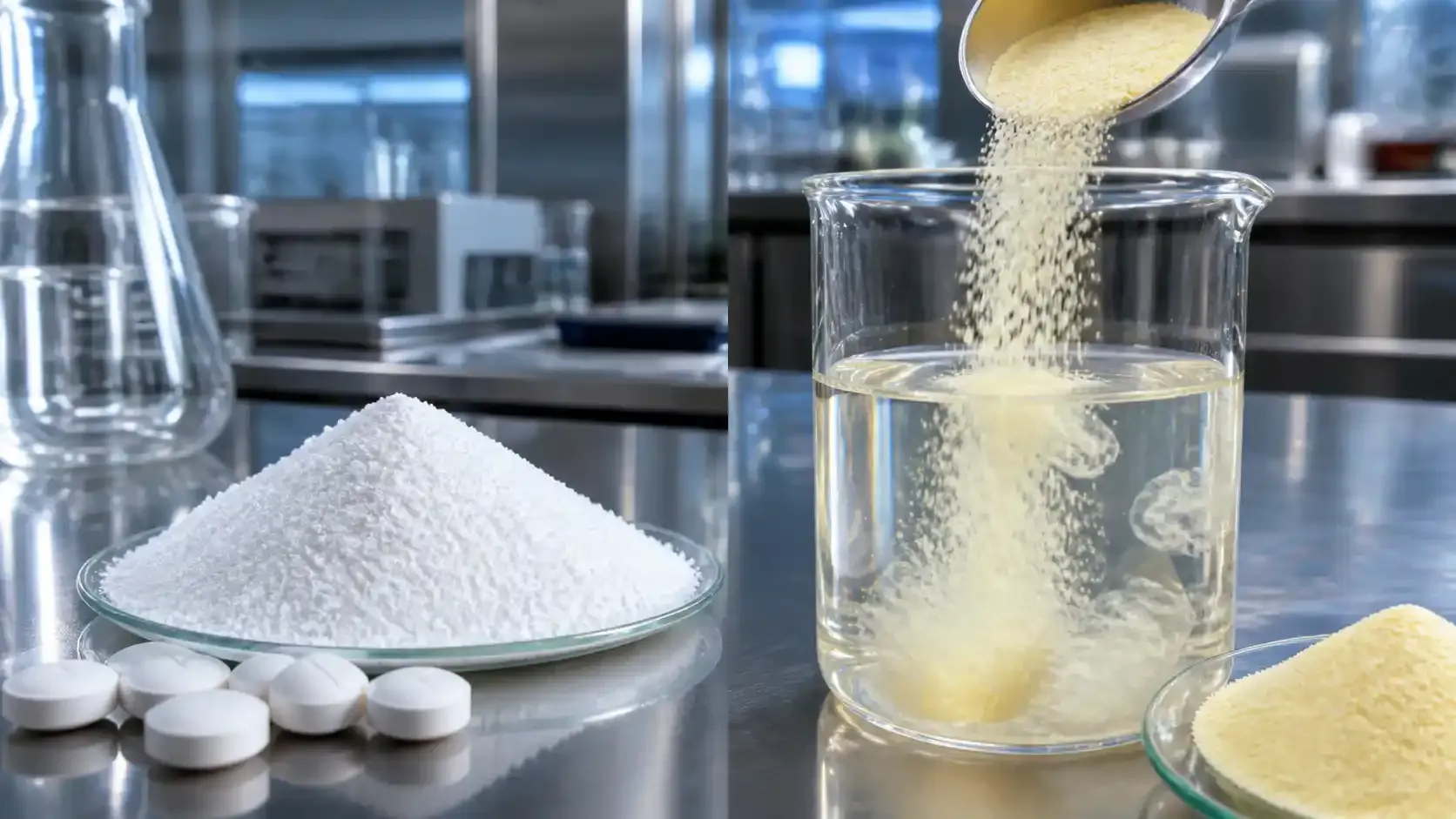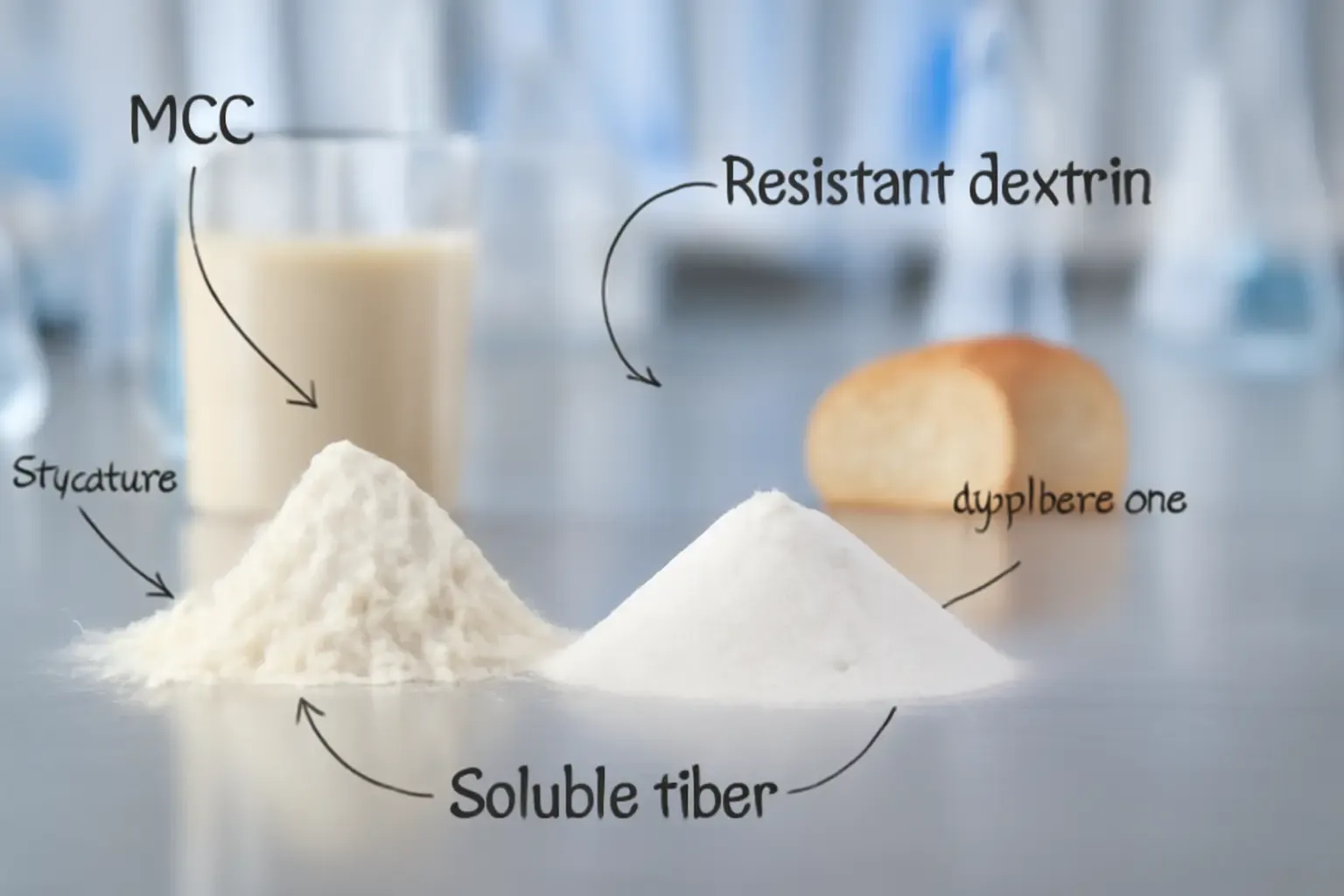
High-fiber product development is no longer only about nutrition panels. Procurement and R&D teams are now expected to deliver repeatable texture, stable shelf life, and credible fiber claims—often under cost pressure and tight launch windows. Two ingredients show up again and again in scalable formulations: microcrystalline cellulose (MCC) and resistant dextrin. Across beverages, bakery, and frozen-style desserts, microcrystalline cellulose helps manage body, flow, and structure, while resistant dextrin contributes soluble fiber with minimal disruption to processing. For buyers exploring a microcrystalline cellulose supplier China option or screening a recommended Chinese resistant dextrin manufacturer, the fastest path to confidence is understanding how these materials behave in real product formats—and which specifications actually matter.

Why Microcrystalline Cellulose and Resistant Dextrin Matter Now
Many formulations fail at scale for predictable reasons: insoluble solids settle in drinks, reduced-fat desserts melt too fast, and high-fiber bakery products turn dry or dense after a few days. Microcrystalline cellulose applications often target the physical side of that problem—particle network, water binding, and texture control—while resistant dextrin targets the nutritional side by raising fiber levels without the heaviness that comes with some fibers.
When paired thoughtfully, microcrystalline cellulose and resistant dextrin can help a project team:
- Maintain a stable sensory profile across production lots.
- Protect fiber claims without forcing a complete flavor redesign.
- Reduce reformulation loops caused by settling, syneresis, or crumb staling.
Ingredient Basics Buyers Actually Need
Microcrystalline Cellulose Food Grade in One Page
For most buyers, microcrystalline cellulose food grade screening comes down to function, particle size, and documentation—not marketing language.
Key points that translate into day-to-day formulation results:
- Origin & form: Derived from purified plant cellulose; typically a white or almost white powder.
- What it does: Microcrystalline cellulose is commonly used as a binding agent, flow aid, stabilizer, and texture builder.
- Typical particle size window: Buyers frequently evaluate MCC by mesh size; common offerings include 60–200 mesh.
- Standards alignment: Many global programs look for MCC that aligns with common compendial expectations such as BP/USP/FCC/JP.
When procurement teams need to compare options for scale, it helps to review a reference product listing for microcrystalline cellulose bulk and confirm that the grade family fits the intended process (mixing energy, shear, target mouthfeel).
Resistant Dextrin Functional Fiber in One Page
Resistant dextrin (often presented commercially as resistant maltodextrin or indigestible maltodextrin) is typically positioned as a soluble dietary fiber suitable for beverages and multi-format fiber fortification.
Buyer-relevant points:
- Fiber target: Many programs start with a minimum fiber expectation; some resistant dextrin products are specified at ≥82% fiber content.
- Process tolerance: Resistant dextrin is commonly selected for heat stability and compatibility with typical beverage and bakery processing.
- Handling: Resistance to caking and storage stability are frequent procurement concerns.
For an example of how suppliers present these products in commercial terms, see resistant maltodextrin and indigestible maltodextrin listings.
Case Study One: High-Fiber Ready-to-Drink Beverage Using Resistant Dextrin
Formulation Goal
A beverage team wanted a fiber-forward RTD that could support a clear nutrition story without creating common consumer objections: “too thick,” “chalky,” or “it settles after two days.” They also needed the product to tolerate typical pasteurization and distribution conditions.
What Resistant Dextrin Changed
In trials, resistant dextrin served as the primary fiber builder because it can raise soluble fiber with limited impact on viscosity compared with many alternative fibers. In practical development terms, resistant dextrin helped the team:
- Keep the drink within a familiar viscosity range.
- Reduce the risk of visible sediment compared with some insoluble fibers.
- Maintain a cleaner sweetness perception than expected for a fiber-enriched product (often a formulation balancing act).
Processing Notes That Procurement Teams Should Ask About
Even when a resistant dextrin spec is strong on paper, beverage outcomes depend on how it is handled:
- Dispersion order: Many teams disperse resistant dextrin before sensitive flavors to reduce mixing time under aeration.
- Acid compatibility: Resistant dextrin is often used in low-pH beverages, but buyers should confirm pH targets in application trials.
- Shelf stability focus: Resistant dextrin is often selected because it supports stable distribution without heavy thickening.
Buyer takeaway: A “resistant dextrin functional fiber” that performs in RTD beverages is less about a single headline number and more about lot-to-lot consistency, solubility behavior, and an application-aware COA.
Case Study Two: Low-Fat Frozen-Style Dessert Using Microcrystalline Cellulose
Formulation Goal
The project brief was a reduced-fat frozen-style dessert that stayed creamy and spoonable, without rapid melt-down and without a “thin” texture that signals cost cutting.
What Microcrystalline Cellulose Changed
Here, microcrystalline cellulose was evaluated for structure-building and water management. In this style of product, microcrystalline cellulose applications often focus on:
- Body and creaminess perception: Supporting a fuller texture when fat is reduced.
- Melt resistance: Improving stability during short temperature abuse events.
- Process robustness: Maintaining a workable mix viscosity for pumping and filling.
Microcrystalline cellulose can also be considered alongside stabilizer and emulsifier systems, but buyers should avoid assuming interchangeability. Different MCC grades (often referenced by PH-style naming conventions in the market) may behave differently under shear and hydration.
For teams comparing supply options, it can be useful to review the microcrystalline cellulose powder description and confirm mesh, purity expectations, and packaging suited to cold-chain manufacturing environments.
Buyer takeaway: In frozen systems, microcrystalline cellulose food grade selection should be driven by hydration behavior, texture targets, and the plant’s ability to hold consistent particle size distribution over time.
Case Study Three: Soft Bakery Item Combining Microcrystalline Cellulose and Resistant Dextrin
Formulation Goal
A bakery team aimed to increase fiber while keeping a soft crumb and acceptable volume. The biggest risk was a familiar one: fiber addition can increase dough stiffness and accelerate staling.
Why the Combination Worked
In this concept, resistant dextrin supported the fiber claim and helped limit the gritty mouthfeel that can occur with some insoluble fibers. Meanwhile, microcrystalline cellulose supported structure and moisture management.
In practical terms, the pairing was used to:
- Improve dough handling consistency during make-up.
- Reduce the perception of dryness in a fiber-enriched crumb.
- Support shelf-life expectations without relying on a single “magic” additive.

Buyer takeaway: When microcrystalline cellulose and resistant dextrin are evaluated as a system, buyers can often reach a better balance of label goals and production realities than with a single fiber approach.
The Importance of Supply Chain Resilience and Quality Assurance
Beyond the technical specifications of microcrystalline cellulose and resistant dextrin, modern procurement teams must evaluate the resilience of their supply chain. The global market has shown that relying on suppliers without robust quality control or adequate inventory can lead to costly production halts.
When evaluating a potential partner, look for comprehensive quality assurance protocols. A state-of-the-art QC laboratory operated by experts who perform thorough inspections at every production stage is non-negotiable. This includes the examination of raw materials—such as premium non-GMO corn starch sourced from trusted agricultural producers—and extends to the microbial, purity, and functionality analysis of the final product.
Furthermore, manufacturing excellence often involves a fusion of traditional skills and advanced technology. Facilities utilizing fully automated central control operations, from raw material feeding to product filling, ensure batch-to-batch consistency. Certifications like ISO, HACCP, FDA, BRC, HALAL, and KOSHER are not just badges; they are critical indicators of a supplier's commitment to safety, hygiene, and international compliance.
A Buyer Checklist for Sourcing from China and Shandong
Sourcing from China can be highly effective when procurement teams standardize what “good” looks like. When screening a China microcrystalline cellulose manufacturer or a Shandong microcrystalline cellulose supplier, these checks tend to prevent the most expensive surprises.
Microcrystalline Cellulose Food Grade Checks
- Mesh size: Confirm target range (commonly 60–200 mesh) and how it is tested.
- Purity and identification: Request a consistent COA format; some MCC listings indicate purity around 0.99.
- Standards: Confirm alignment with BP/USP/FCC/JP where relevant to your regulatory route.
- Certifications: Common audit signals include ISO9001, Kosher, Halal.
- Packaging integrity: Bulk programs often ship in 20 kg bags; confirm moisture control and liner specs.
For buyers building a bulk program, reviewing a supplier’s buy microcrystalline cellulose bulk listing can help align internal RFQs with available grade families.
Resistant Dextrin Checks
- Fiber specification: Many purchase specs start at ≥82% fiber, but confirm the measurement basis and method.
- Handling stability: Look for evidence of low water activity and low hygroscopicity (reduced caking risk).
- Solubility behavior: Resistant dextrin is often chosen for beverage use; confirm the supplier’s solubility description fits your product style.
Sourcing Insight: Where Recommended Suppliers Tend to Stand Out
“Recommended” is not a label a supplier can claim into existence. For most global procurement teams, a recommended Chinese microcrystalline cellulose manufacturer or recommended Chinese microcrystalline cellulose supplier earns that status through predictable, verifiable signals:
- Documented grade portfolio and clear change-control habits.
- Repeatable COA structure and lot traceability.
- Evidence of export readiness through certifications and consistent packaging.
Shandong is frequently shortlisted as a manufacturing base for both microcrystalline cellulose and resistant dextrin because it combines raw material access with established production ecosystems. As one example of a Shandong-based producer, Shandong Shine Health Co., Ltd. publishes detailed product pages for microcrystalline cellulose and resistant dextrin that buyers can use as a starting point when building internal specifications and audit questions.
Closing Guidance for Buyers Planning Their Next Trials
Microcrystalline cellulose and resistant dextrin are practical tools for teams building high-fiber products that still need to ship, sit, and sell like mainstream SKUs. The most successful programs treat microcrystalline cellulose applications and resistant dextrin usage as process decisions, not just label decisions.
If the goal is to reduce rework and accelerate approval, prioritize application-specific trials, clear COA expectations, and supplier consistency signals over time. That combination is what turns a promising bench formula into a scalable product line.
For verified sourcing, technical data on formulations, and comprehensive supply chain solutions, procurement professionals can consult established manufacturers directly at www.sdshinehealth.com.