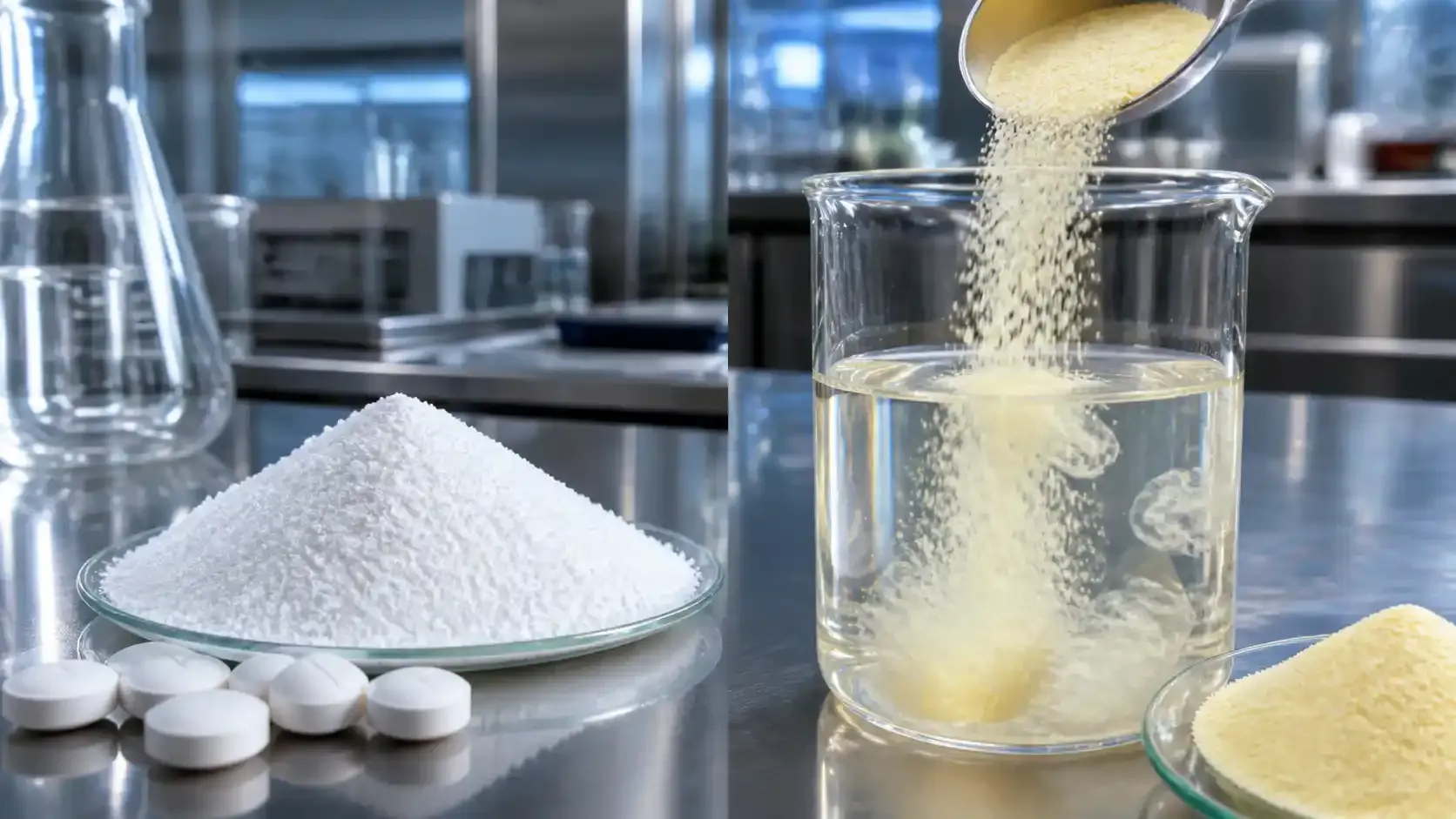
Fiber is moving from a mere nutrition add-on to a strategic cost center. When mainstream food and beverage leaders talk about fiber in the same breath as protein, it signals tighter capacity, more competition for high-spec lots, and higher stakes for formulation performance. Recent industry analyses capture this shift directly, noting that functional fibers are poised to be ubiquitous across product innovation.
For buyers, the practical implication is straightforward: FOB price alone is no longer a reliable metric. The difference between a cheap quote and a truly cost-effective one usually hides in specifications, stability, quality documentation, and rework risks—especially for resistant dextrin (also known as resistant maltodextrin soluble fiber in certain contexts) and microcrystalline cellulose (MCC).
This guide maintains a procurement-focused perspective, using China sourcing examples, as many teams actively compare a resistant dextrin manufacturer China option or a microcrystalline cellulose supplier China option against domestic alternatives. The ultimate goal is to help buyers build a sourcing model that protects both budgets and launch timelines.

Why Resistant Dextrin and MCC Are Sourced Together
Resistant dextrin and MCC serve different functions, yet they frequently appear in the same RFQs because they solve complementary challenges in modern formulation strategies.
Resistant Dextrin as a Stability-First Soluble Fiber
In beverage and food applications, resistant dextrin is highly valued as a water-soluble dietary fiber capable of elevating fiber content while maintaining a clean taste profile. Procurement teams increasingly prioritize several functional metrics:
- High solubility to prevent grit, ring formation, or sediment.
- Neutral taste and low sweetness, ensuring it does not distort delicate flavor systems like coffee or dairy.
- Heat and acid stability, which is critical for RTD processing and extended shelf life.
These specific performance attributes explain why many formulators favor resistant dextrin in soluble dietary fiber for RTD beverages. For a deeper understanding of how these ingredients are categorized in commercial supply chains, buyers often review technical overviews on resistant dextrin dietary fiber and its related formats like resistant maltodextrin.
Microcrystalline Cellulose as Manufacturing Insurance
Purchasing MCC is rarely about securing a single functional attribute; rather, it revolves around repeatability in production. Buyers rely on MCC to support:
- Tablet compression and flow in dietary supplements.
- Bulk density control across various powder blends.
- Batch-to-batch consistency, significantly reducing downtime and product rejects.
Given that MCC is highly grade-sensitive, seasoned procurement teams maintain strict MCC supplier evaluation checklists. They demand precise documentation covering particle size distribution, bulk density, and microbiological limits. A practical starting point for navigating this category is consulting an MCC grades formulation and QC guide.
Build Specs That Protect Cost and Performance
When sourcing teams search for a reliable "Chinese Resistant Dextrin Manufacturer" or a "Chinese Microcrystalline Cellulose Supplier," they are actively trying to mitigate two silent cost multipliers:
- Reformulation expenses (when an ingredient performs well in the lab but fails during factory scale-up).
- Documentation gaps (missing CoA parameters, ambiguous testing methods, or delayed customs clearance).
CoA Lines That Matter for Food-Grade Resistant Dextrin
A food-grade Certificate of Analysis (CoA) is more than a mere compliance document—it acts as a vital cost-control mechanism. For resistant dextrin, procurement professionals typically establish minimum acceptance criteria, including:
- Total fiber content: Market standards often require ≥82%, with premium specifications reaching ≥90% on a dry basis.
- Moisture and ash levels: Directly impacting storage stability, clumping risks, and dosing accuracy.
- pH range: Highly relevant to maintaining beverage stability.
- Water activity: Serving as a proxy for shelf-life and microbial risk.
- Microbiology limits: Strict thresholds for APC, coliforms, yeast, and mold.
Commercial parameter benchmarks can be referenced on factory specification pages, such as those detailing soluble corn fiber, where solubility and verified fiber content are outlined for purchasing clarity.
MCC Spec Essentials Buyers Must Standardize
For microcrystalline cellulose, a frequent procurement error is approving a vendor based solely on generic "food grade" terminology without aligning the specific grade and test methods with the final dosage form. At a minimum, an MCC specification file should clearly define:
- Particle size distribution alongside the testing method utilized.
- Bulk density and tapped density.
- Loss on drying.
- Microbial limits.
- Grade statement, distinguishing between food grade and pharmacopeial contexts based on application requirements.
If a microcrystalline cellulose supplier in China cannot provide methodological clarity, the initial quote might appear appealing, but the landed cost risk inevitably increases.

A Practical Total Cost Model for China Fiber Sourcing
The most resilient cost models treat resistant dextrin and MCC like any other critical production input: the sticker price is just one variable among many.
Key Cost Drivers Buyers Should Compare
The following breakdown helps procurement teams map quoted differences directly to operational outcomes:
- Fiber Content & Functionality: Ask about the verified fiber assay and tolerance. Higher fiber content can reduce the required dosage per serving, improving label efficiency and potentially lowering the unit cost of the finished good.
- Solubility and Processing Stability: Verify stability under the heat and acid conditions typical for RTD beverages. Lower failure rates during thermal processing translate to reduced scrap, minimal rework, and fewer sensory defects.
- QC Capability and Turnaround: Evaluate the speed of CoA issuance and retain sample testing. Faster batch release minimizes demurrage fees and prevents production scheduling penalties.
- Automation and Batch Consistency: Investigate the controls in place from raw material feeding to final packaging. Superior consistency lowers the expenses associated with incoming inspections, line tuning, and customer complaints.
- Packaging and Moisture Control: Assess the bag specifications, liners, and sealing methods. Robust packaging mitigates caking risks and weight loss disputes during transit.
- Logistics Support: Determine if the supplier can execute export documentation flawlessly. Documentation errors remain a leading cause of delayed customs clearance and hidden logistics costs.
The "High-Fiber Lot" Math in RTD Coffee
A quote from a resistant dextrin manufacturer in China might appear slightly higher per kilogram, yet prove significantly cheaper in actual use if it enables:
- A lower dosage required to achieve the desired fiber claim.
- Fewer sensory adjustments, meaning less masking and fewer rounds of sweetener re-balancing.
- A minimized risk of sedimentation or texture degradation that would otherwise necessitate costly reformulations.
In RTD coffee and dairy-adjacent beverages, this stability advantage frequently outweighs a minor FOB price difference—especially when scaling production through co-manufacturers with rigid process windows.
Aligning Specs with Regulatory and Claim Requirements
Procurement teams occasionally face challenges defending why a specific resistant maltodextrin soluble fiber specification warrants a premium. An effective strategy to align internal stakeholders is connecting these specifications directly to labeling and compliance realities.
Regulatory frameworks generally dictate how non-digestible carbohydrates can be declared as dietary fiber, requiring robust evidence of beneficial physiological effects. Resistant dextrin is widely recognized in this context and is frequently highlighted as an effective prebiotic fiber in scientific literature.
From a buyer’s perspective, the objective is not simply to "buy science," but to secure documentation readiness:
- If a finished product requires specific fiber labeling, the supplier's technical file must unequivocally support that claim.
- If the marketing department pursues metabolic health positioning, the ingredient specification must be scientifically defensible.
The key takeaway for procurement is to define specifications that are fully compatible with the product’s compliance needs and market positioning, rather than focusing solely on immediate formula costs.
Supplier Shortlisting: Separating the Recommended from the Available
Many RFQs begin with a common query: "Who is a recommended China resistant dextrin supplier?" In reality, a genuine recommendation is earned through verifiable process proof and responsive behavior, rather than polished marketing copy.
A Buyer-Friendly Supplier Evaluation Checklist
Utilize these criteria as an initial screening tool before committing to comprehensive audits:
- CoA Completeness and Velocity: Are comprehensive CoAs issued per batch, featuring clearly defined testing methods?
- Grade Clarity: Does the microcrystalline cellulose supplier accurately map specific grades to corresponding applications (e.g., tablets, capsules, food use)?
- Consistency Evidence: Is the manufacturer willing to share historical batch variability ranges?
- Microbial Discipline: Are microbial limits strictly defined and routinely verified?
- Pilot Support: Will the facility accommodate small trial shipments and assist with technical troubleshooting?
- Traceability: Can production lots be seamlessly traced from raw material intake through to final packaging?
Defining True Cost-Effectiveness
For reliable sourcing, a highly regarded Chinese resistant dextrin manufacturer typically demonstrates:
- Automated or stringently controlled production environments that minimize human error.
- A fully operational, in-house QC laboratory conducting routine, batch-by-batch testing rather than sporadic sampling.
- A stable, traceable supply chain for corn-starch-based raw materials.
Suppliers based in specialized manufacturing hubs, such as Shandong, are frequently evaluated against these benchmarks. Manufacturers that openly publish detailed product and application data for dietary fiber and resistant dextrin demonstrate a clear understanding of the rigorous documentation modern buyers demand.
Turning the Fiber Boom into a Procurement Advantage
A resilient sourcing strategy focuses less on predicting commodity price fluctuations and more on aggressively eliminating avoidable costs. Teams that successfully protect their margins consistently execute three core practices:
- Locking specification templates early for both resistant dextrin and MCC, detailing specific CoA parameters and rigid acceptance tolerances.
- Evaluating suppliers via a comprehensive total cost model rather than just landed price, which is particularly crucial for RTD beverages and supplements where product failure carries severe financial penalties.
- Shortlisting based on responsiveness and verifiable proof, followed by rigorous pilot testing under actual commercial processing conditions.
For buyers constructing a robust initial supplier network, reviewing technical application notes from established ingredient producers is a highly effective first step. You can explore comprehensive ingredient resources, detailed QC guides, and reliable supply chain solutions by visiting Shandong Shine Health Co., Ltd.