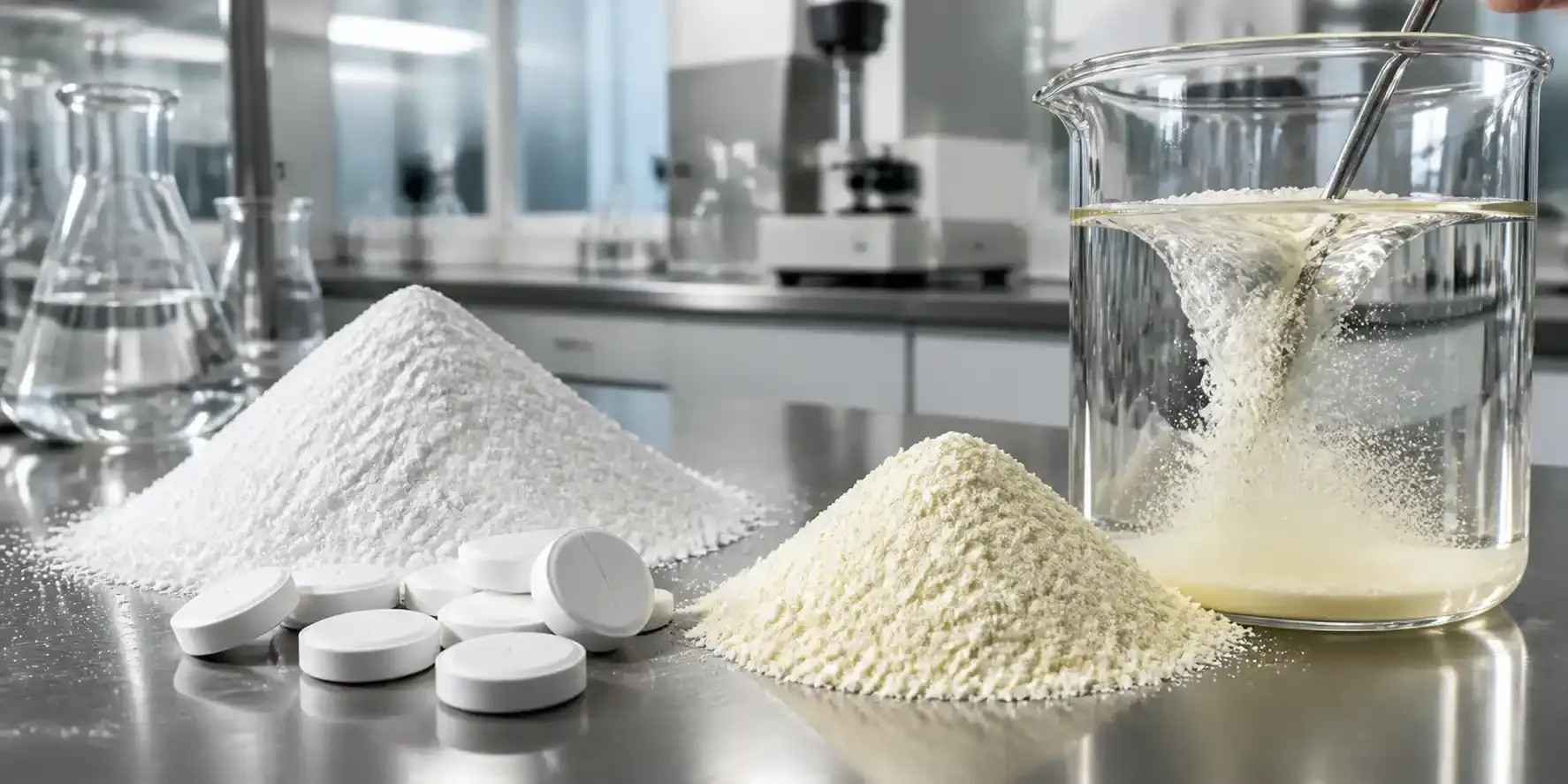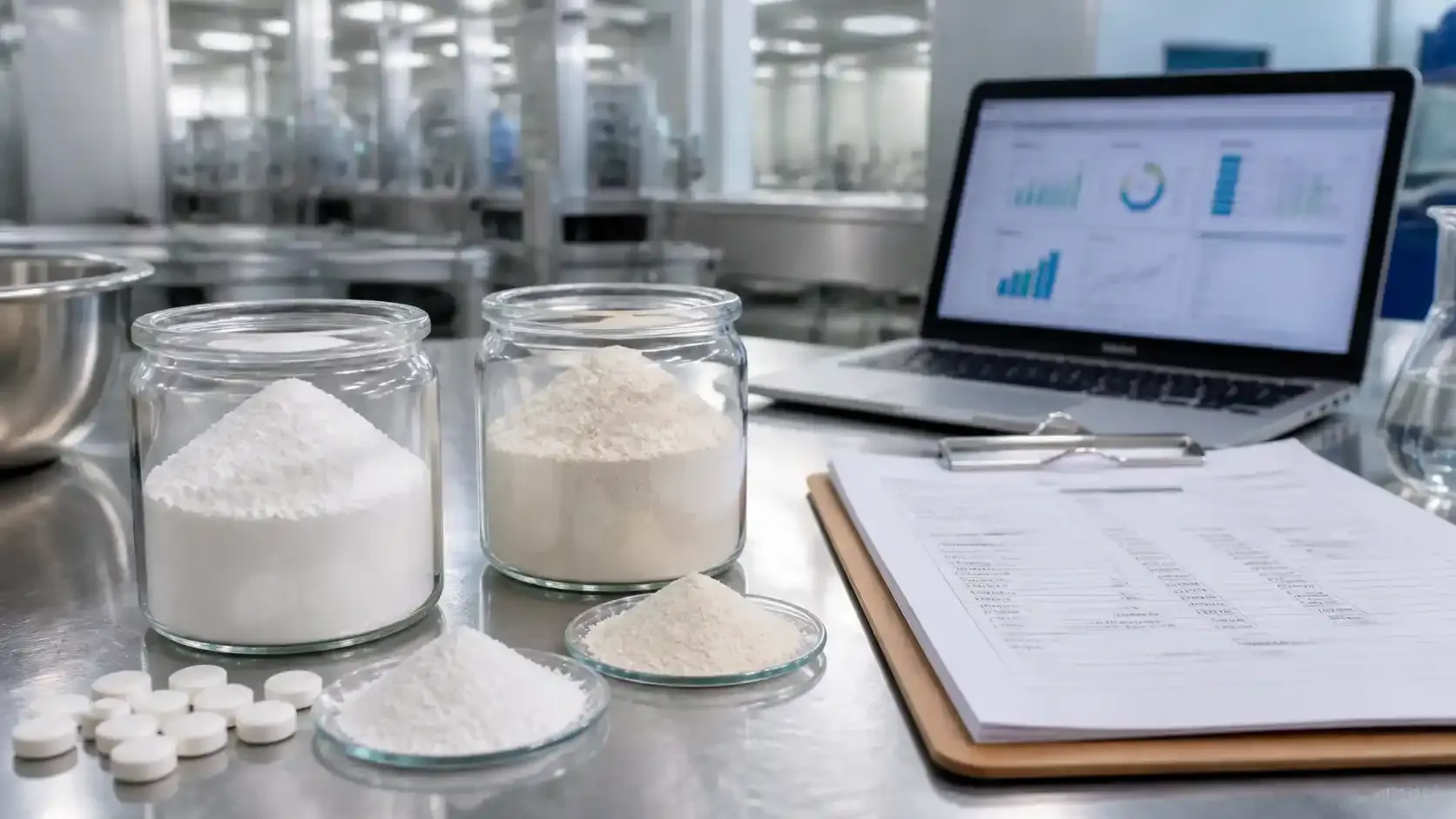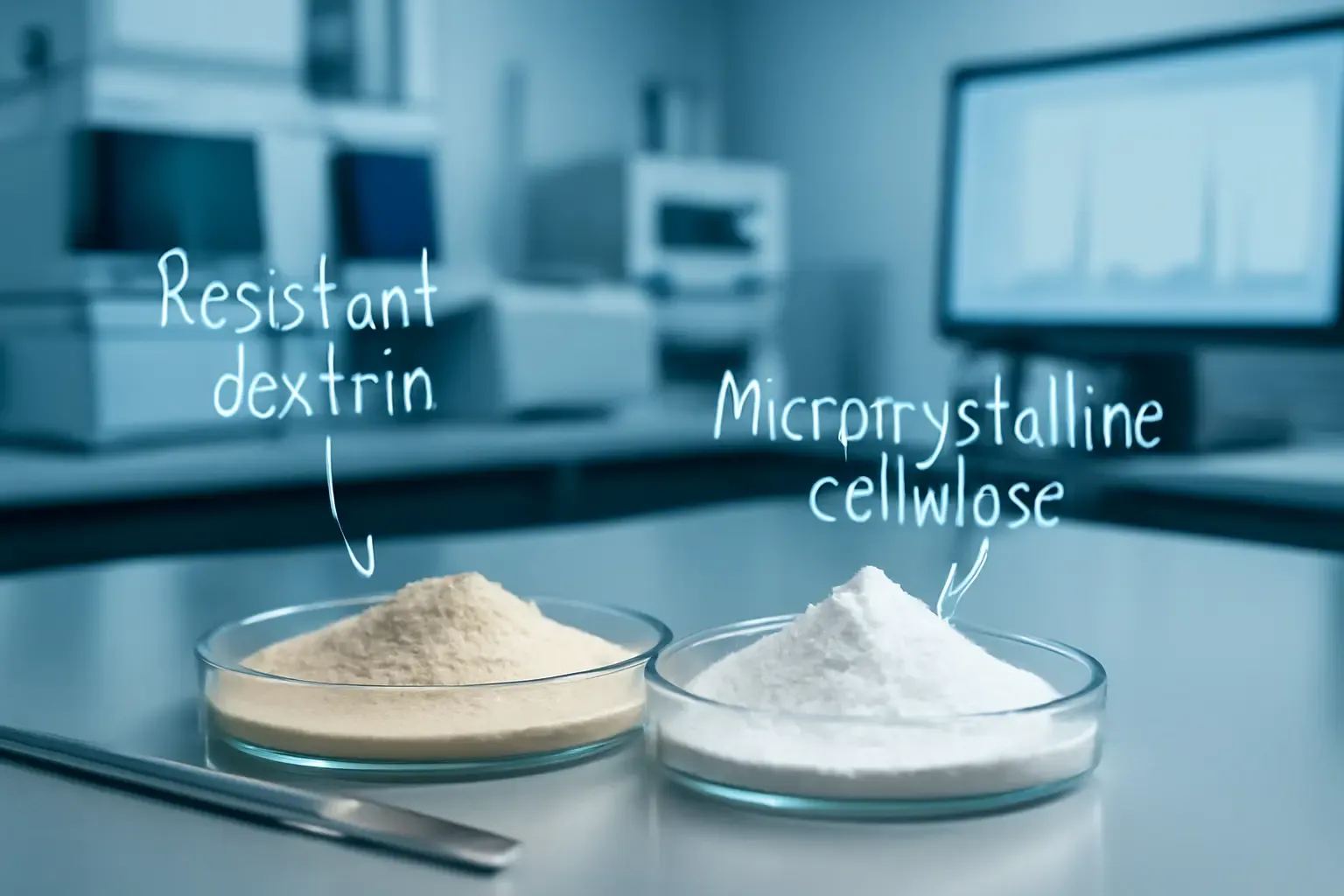
Fiber-forward product launches are accelerating into 2026, and procurement teams are feeling the squeeze in two places at once: soluble fiber (especially resistant dextrin / soluble corn fiber) and microcrystalline cellulose (MCC) for stable processing and dosage forms. Recent trade coverage continues to frame fiber as a mainstream priority—no longer limited to niche wellness brands—while functional beverages (including coffee) are also leaning harder into added benefits. Qualifying a resistant dextrin supplier China and a microcrystalline cellulose supplier China now requires sharper spec literacy, tighter documentation discipline, and faster sample validation than traditional sourcing strategies.

Why 2026 Procurement Treats Resistant Dextrin and MCC as a Package
Multiple trends currently drive formulation pipelines across the food and supplement industries:
- Increased fiber claims demand heightened scrutiny. When “added fiber” becomes a front-of-pack claim, buyers need consistent fiber assay results, microbial compliance, and stable performance across various pH and temperature ranges.
- More product formats require smarter excipient decisions. Resistant dextrin often supports taste and texture in beverages and nutrition powders, while MCC supports tableting robustness and flow. In many global projects, teams qualify both ingredients within the exact same vendor onboarding cycle.
For sourcing teams, the “recommended” label matters far less than whether a supplier can prove repeatability with audit-ready evidence—especially when shortlisting a resistant dextrin manufacturer China alongside a microcrystalline cellulose manufacturer.
Resistant Dextrin and Soluble Corn Fiber Basics
Resistant dextrin (frequently discussed alongside resistant maltodextrin and soluble corn fiber) is a soluble dietary fiber derived from starch, commonly utilized to increase fiber content with minimal flavor disruption. Industry product pages typically position it as:
- Water soluble for beverages and ready-to-mix powders
- Heat and acid stable for rigorous processing and prolonged shelf-life
- Low-glycemic support in sugar-reduction concepts
Buyers must confirm what the supplier actually means by “resistant dextrin” on the specification sheet—including the source starch, process description, and the exact fiber test method used—before moving to any bulk resistant dextrin wholesale negotiation.
Spec Snapshot Table for Procurement
Below is a practical “spec snapshot” table that procurement teams often use as a baseline when comparing a resistant dextrin supplier China shortlist. The values shown reflect commonly published supplier parameters and tiered fiber content targets found on export-facing spec sheets.
| Parameter | Typical Procurement Requirement | Why It Matters in Qualification |
|---|---|---|
| Appearance | White to light yellow powder | Visual consistency helps flag handling or drying issues |
| Flavor | Sweet, mild, clean | Impacts RTD beverages and neutral nutrition powders |
| Fiber content tiers | ≥70%, ≥85%, ≥90%, ≥95% | Lets buyers match claim strategy and serving-size math |
| Moisture | ≤5.0 g/100g | Shelf stability, flowability, and caking risk |
| Ash | ≤0.1 g/100g | Purity signal; helps compare between suppliers |
| pH | 3–6 | Key for acidic drinks and stability comparisons |
| Water activity | ≤0.2 | Storage stability and microbial risk control |
| Aerobic plate count | ≤1000 CFU/g | Basic hygiene indicator across batches |
| Coliforms | ≤3 MPN/g | Food safety compliance for many markets |
| Mold & Yeast | ≤25 CFU/g | Helps avoid spoilage risk in downstream blends |
If a supplier cannot provide a clean Certificate of Analysis (COA) that matches the specification format above (including microbial items), it is a significant warning sign—even if the quote looks attractive.

Where Buyers See Resistant Dextrin Winning Most Often
Patterns that consistently show up in purchasing briefs for a resistant dextrin manufacturer China include:
- Functional beverages where neutral taste and high solubility matter (coffee, tea, RTD nutrition).
- Sugar-reduction projects where fiber supports mouthfeel and solid content.
- Powder blends (meal replacements, protein powders) where a stable fiber source helps hit strict label targets.
For buyers seeking concrete examples of how reliable suppliers describe export-oriented fiber ingredients, referencing established manufacturers provides useful language for RFQs, such as prebiotic soluble corn fiber and sugar reduction resistant dextrin parameters.
Microcrystalline Cellulose: The Parallel Decision
Microcrystalline cellulose (MCC) is evaluated alongside fiber because it serves as a core excipient in numerous dosage and functional formats. While resistant dextrin is typically purchased for nutritional and sensory performance, MCC is purchased for process control:
- Tablet hardness and compression behavior
- Flowability and blend uniformity
- Moisture handling and stability in finished forms
A common sourcing pitfall is treating MCC as a mere commodity line item and selecting strictly by price. Grade selection (for example, how a buyer compares an MCC PH-101 supplier China option versus other granular grades) heavily dictates downstream yield, tablet robustness, and troubleshooting workload on the factory floor.
A Buyer Checklist for Shortlisting China Suppliers
The fundamental goal of a shortlist is not to find the cheapest supplier, but to find the partner that keeps your product unchanged after scale-up. Use the checklist below for both a resistant dextrin supplier China and a microcrystalline cellulose supplier China.
Documents to Request Before Samples
- Current specification sheet with test items clearly listed (avoiding vague marketing claims).
- Recent COA(s) displaying microbial results and key physical/chemical items.
- Food safety certifications claimed on the supplier site (e.g., ISO9001, HACCP, BRC, HALAL, KOSHER) with explicit validity dates.
- Allergen and GMO statements aligned with your market needs (especially if “non-GMO corn starch” is claimed).
- Packaging and storage guidance, as bulk handling directly impacts caking and product loss.
COA Red Flags That Slow Approvals
Procurement teams can save weeks by spotting these discrepancies early:
- Fiber content shown without a method reference (or with an unclear definition of “dietary fiber”).
- Microbial section missing (or simply stating “pass/fail” without numeric limits).
- pH stated without solution conditions (buyers must confirm the testing protocol used).
- MCC grade naming that doesn’t match standard purchasing conventions (such as a vague “food MCC” without grade or particle size guidance).
If a factory positions itself as a Recommended Chinese Resistant Dextrin Manufacturer, a clean, complete COA is the fastest way to substantiate that claim.
Turning GMP Language into Practical Audit Questions
Most sourcing bottlenecks are not caused by a lack of certification logos; they stem from unclear operational procedures. Translate basic compliance concepts into questions that reveal true process maturity.
Audit Questions That Uncover Capability
- Which incoming raw materials are tested, and what is the exact release procedure?
- Is the production line automated from feeding to filling, and how is batch traceability enforced?
- What are the critical in-process controls (temperature, pressure, pH), and how are deviations handled?
- Does the plant operate an in-house QC lab with routine microbial testing and retain-sample storage?
- What is the complaint handling process and typical response time for technical inquiries?
In supplier narratives from leading producers, you will often see a strong emphasis on non-GMO corn starch sourcing, imported biological enzymes, automated lines, and a fully equipped QC laboratory. These serve as excellent benchmarks to apply consistently to every manufacturer in your pipeline.
Supplier Landscape Signals in Shandong
Buyers frequently observe that resistant dextrin capacity and related functional ingredient production are concentrated in Shandong, China. The logistics and export experience shaped by this regional industry clustering changes how procurement teams interpret marketing terms:
- “Factory supply resistant dextrin” should imply consistent production scheduling, stable multi-layered packaging practices to prevent moisture ingress, and a QC process that supports repeat COAs.
- “Recommended” supplier claims must be validated via documentation, sample performance, and successful audit outcomes.
A Simple Qualification Workflow
To keep launch timelines strictly intact, successful teams follow a three-step flow:
- Paper Check (48–72 hours): Spec sheet, COA completeness, certification validity.
- Sample Check (1–3 weeks): Solubility, sensory neutrality, and stability across pH/heat relevant to your specific product. For MCC, evaluate flow and compression behavior.
- Supplier Check (2–6 weeks): Virtual or on-site audit focusing on QC lab capability, automation level, deviation handling, and supply chain traceability.
This structured workflow helps procurement compare suppliers based on repeatable evidence, making it significantly easier to justify a final selection to R&D and regulatory stakeholders.
Closing Guidance for Procurement Teams
A truly reliable supplier is one that protects your product launch from avoidable surprises: inconsistent fiber assays, incomplete microbial data, unclear grade definitions, or weak traceability. Resistant dextrin delivers its value only when the COA perfectly matches the spec and the ingredient behaves consistently in every pilot and production run.
For teams compiling a shortlist of export-facing Chinese suppliers, utilizing public technical pages serves as a practical initial screening step before validating with samples and site audits. If you require a trustworthy partner capable of meeting these stringent criteria, Shandong Shine Health Co., Ltd. offers an extensive, export-oriented knowledge base and a proven track record in manufacturing premium resistant dextrin, soluble corn fiber, and MCC excipients. Their commitment to transparency, rigorous QC laboratory standards, and comprehensive supply chain solutions provides a highly reliable benchmark for your ongoing sourcing strategy.