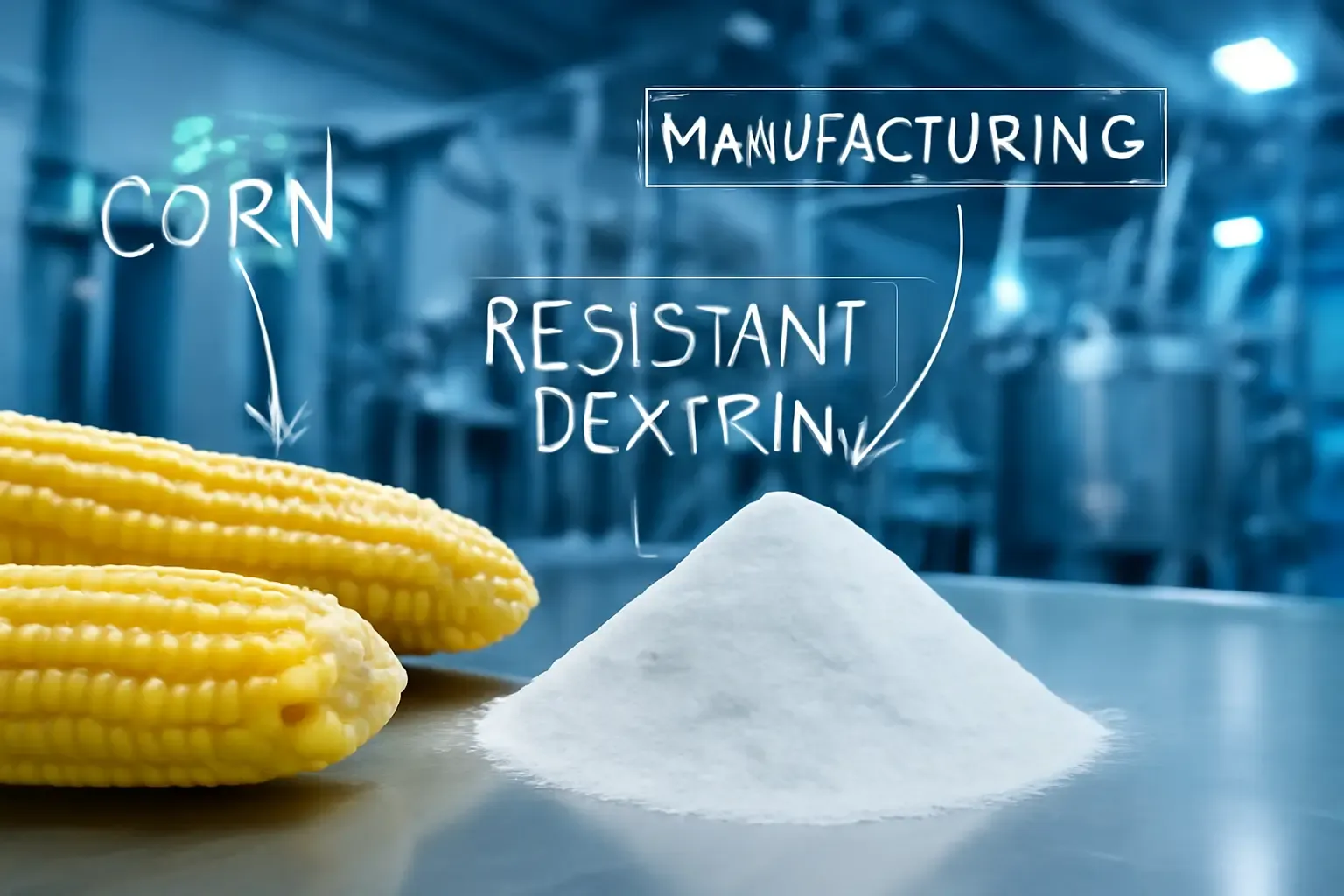
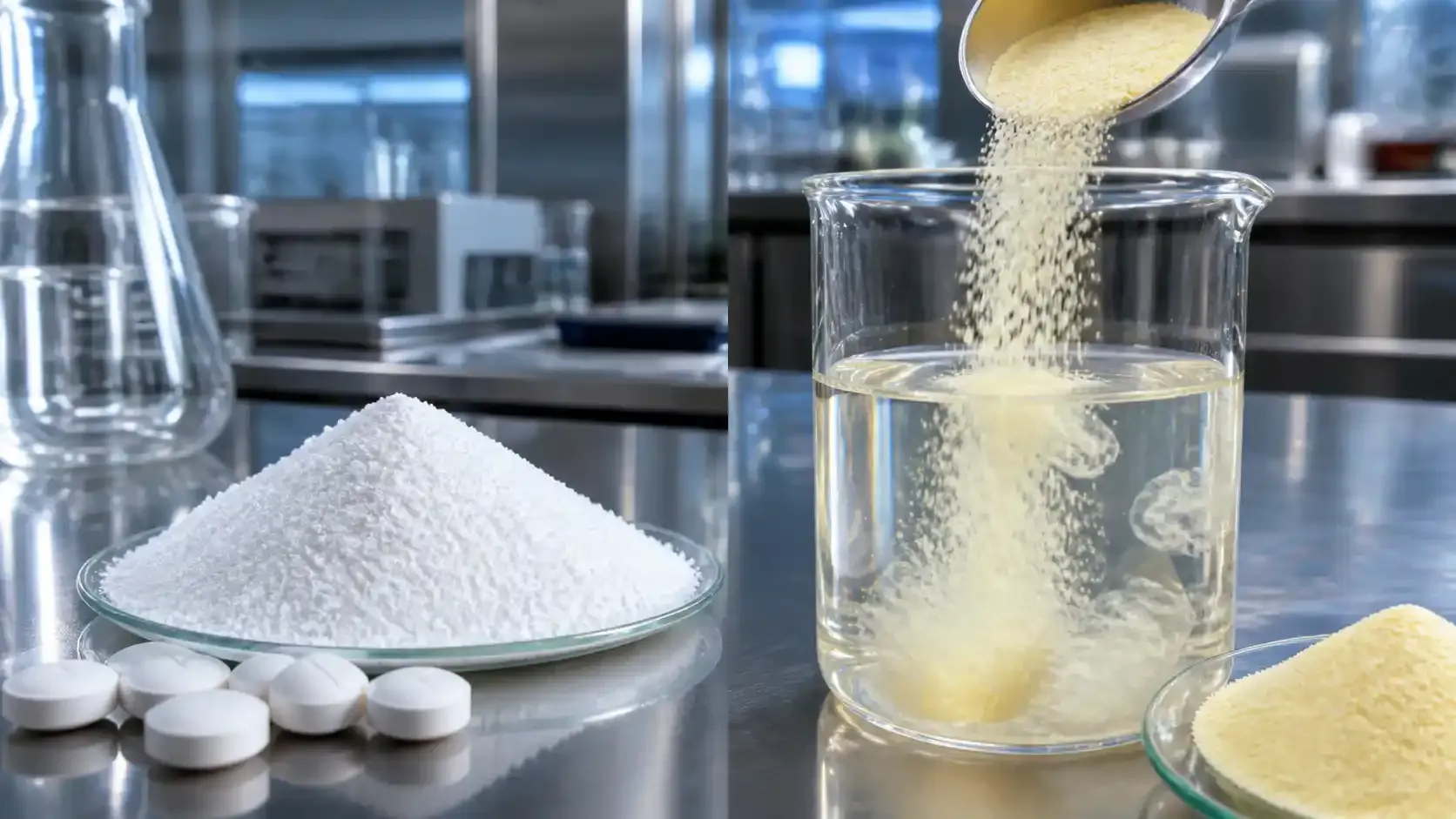
Fiber has shifted from a mere nutrition claim to a strict product-brief requirement. For procurement professionals, this transition brings a harsh reality: the cheapest quote rarely guarantees the most cost-effective outcome. As brands rush to introduce high-fiber beverages, dairy products, and supplement powders, a single batch failing solubility, taste neutrality, or documentation checks can completely derail months of price negotiations. This scenario explains why **
resistant dextrin** (frequently traded as **
resistant maltodextrin soluble fiber**) and **
microcrystalline cellulose (MCC)** increasingly dominate sourcing discussions. Resistant dextrin facilitates fiber claims and prebiotic positioning in mainstream foods, while
MCC stabilizes dosage forms and enhances handling in supplement and pharmaceutical formats. To secure a reliable supply chain, buyers must evaluate technical specifications, process controls, and compliance paperwork with the same rigor applied to active ingredients. Partnering with a genuinely **recommended
resistant dextrin supplier** requires looking far beyond the initial price tag.
## **The fiber boom is changing how buyers measure value** Industry analysts frequently frame fiber as the next protein, signaling its rapid elevation to a strategic category. As fiber-centric messaging dominates retail and direct-to-consumer channels, R&D departments are demanding more from their ingredients: - Higher **fiber content** with minimal sensory impact - Consistent performance under heat and acidic conditions (pasteurization, UHT, hot-fill) - Enhanced digestive tolerance for daily consumption - Robust documentation capable of passing stringent customer audits and customs inspections Procurement teams inherit the complex task of fulfilling these technical demands at commercial scale while maintaining predictable landed costs. ## **Resistant dextrin and MCC are the workhorses behind fiber-forward launches** ### **Resistant dextrin in buyer language** Resistant dextrin serves as a highly functional **water-
soluble dietary fiber** derived from starch sources, most commonly corn, though tapioca or cassava variants also hold market share. Functionally, it bypasses digestion in the small intestine and ferments in the colon, making it an ideal candidate for gut-health and prebiotic formulations. From a purchasing perspective, the decision heavily relies on four performance indicators: 1. **Fiber content**: Standard commercial
soluble corn fiber usually targets **≥82%**. 2. **High solubility and low viscosity**: Critical for clear ready-to-drink (RTD) beverages. 3. **Heat and pH stability**: Essential for dairy processing and shelf-stable applications. 4. **Neutral taste**: Prevents the need for expensive flavor masking and sweeteners. When sourcing from Asian markets, buyers frequently use intent-driven queries like **
buy resistant dextrin bulk** or **
non-GMO resistant dextrin China**. These searches yield results, but success ultimately depends on an airtight internal specification sheet. ### **MCC as the parallel ingredient buyers should not overlook** While resistant dextrin drives nutritional label claims, **MCC** is evaluated for physical performance: tablet flow, compressibility, and structural stability. In numerous nutritional formats, it functions as a critical structural backbone rather than a mere excipient. Consequently, procurement specialists actively seek a **
Recommended Chinese Microcrystalline Cellulose Manufacturer** or **
Recommended Chinese Microcrystalline Cellulose Supplier**. The logic is simple: MCC failures result in expensive operational downtime, tablet defects, and revalidation processes, far exceeding the initial material savings. ## **Turn the fiber trend into specs that protect total
landed cost** Translating marketing requirements into concrete **
COA-style purchase specifications** is a proven strategy to mitigate sourcing risks. ### **A COA-focused snapshot buyers can use in RFQs**

| Parameter | Resistant dextrin (typical buyer checks) | MCC (typical buyer checks) | Why it affects cost | |---|---|---|---| | Appearance | White to light yellow powder | White powder | Off-color triggers rework or consumer complaints | | Fiber content | Common targets include **≥82%** | N/A | Determines label claim feasibility and dosage cost | | Moisture | Often controlled around **≤5.0%** | Tight moisture control expected | Drives caking risk, powder flow, and shelf stability | | Ash | Often controlled around **≤0.1%** | Controlled per grade/standard | Impacts purity perception and consistency | | pH | Commonly within **3–6** for dextrin specs | Grade-dependent | Influences stability in finished liquid formulations | | Water activity | Commonly **≤0.2** targets appear | Controlled per grade | A major lever for storage and microbial risk mitigation | | Micro limits | Aerobic plate count, coliforms, mould, yeast | Micro limits declared per use | Failing microbiological specs results in shipment rejection | **Procurement note:** Suppliers often offer multiple resistant dextrin grades (e.g., fiber content ranging from 70% to over 90%). The RFQ must explicitly map each grade to its intended application, whether RTD beverage, yogurt, or gummies. Failing to do so introduces "grade drift," a hidden formulation cost. ## **Why Shandong supply hubs matter for resistant dextrin and
MCC sourcing** The functional ingredient manufacturing base in China has matured significantly. **Shandong** (particularly operations around the Jinan area) stands out as a highly concentrated manufacturing cluster for soluble fibers and excipients. What distinguishes a generic **resistant dextrin supplier** from a truly reliable partner is a combination of repeatable manufacturing indicators: - **
Non-GMO corn starch sourcing narratives** backed by traceable incoming material checks. - Implementation of **imported biological enzymes** to ensure precise hydrolysis. - Utilization of **German-origin precision production lines** featuring high automation levels. - Adoption of rigorous quality management systems that translate into tight batch-to-batch consistency. - A fully equipped **
QC laboratory** capable of conducting comprehensive testing from raw materials to the final packaged product. For instance, industry experts frequently reference suppliers like **Shandong Shine Health Co., Ltd.** as a benchmark. They maintain detailed resistant dextrin portfolios and application guidelines, helping procurement teams accurately align technical specs with end-use requirements. ## **Application-driven cost control with resistant dextrin** Formulation stability directly impacts profitability. When resistant dextrin behaves predictably, manufacturers spend significantly less on stabilizers, flavor masking, and corrective processing steps. ### **Dairy and fermented products** In the dairy sector, resistant dextrin is favored for fiber fortification because it maintains consumer-friendly textures. Buyers must verify whether the fiber remains stable under typical dairy processing temperatures and if it prevents common defects like syneresis (water separation). ### **Beverages and functional shots** For beverage applications, the primary procurement risks are viscosity and clarity. If a fiber ingredient increases haze or complicates processing, brands essentially pay twice: once for the raw material and again for emergency reformulation. When evaluating a fiber positioned as soluble corn fiber, request empirical data tied to beverage processing, specifically solubility in cold water, stability under acidic conditions, and sensory neutrality. In the realm of **dietary fiber ingredient wholesale**, this level of scrutiny separates strategic sourcing from mere transactional purchasing. ### **Powdered supplements and satiety blends** Powdered formats are generally more forgiving than liquids but introduce distinct challenges: hygroscopicity, caking, and uneven dispersion. Teams executing **buy resistant dextrin bulk** contracts must validate packaging integrity and long-term storage stability, looking beyond the standard COA. ## **The procurement cost model buyers should use for Chinese fiber and MCC** Treating fiber as a strategic asset requires a comprehensive sourcing model. A realistic total landed cost structure for resistant dextrin and MCC encompasses: 1. **Unit price** (FOB/CIF) and the impact of Minimum Order Quantities (MOQ). 2. **Specification risk**: The statistical probability of a batch failing solubility, microbiological, or fiber content parameters. 3. **Documentation risk**: The frequency of shipments stalling at customs due to missing or inaccurate compliance files. 4. **Rework cost**: Expenses related to flavor corrections, additional stabilizers, retesting, and relabeling. 5. **Customer-claim exposure**: Legal and brand risks when fiber content or labeling support remains ambiguous. High-fiber programs frequently encounter two hidden expenses: - **The COA mismatch cost:** The paperwork displays the correct values, but the ingredient behaves erratically in actual production. The solution lies in rigorous qualification samples and definitive performance specifications, not just aggressive price negotiations. - **The paperwork delay cost:** A container stuck at port due to incomplete documentation rapidly becomes more expensive than partnering with a slightly higher-priced, audit-ready supplier. Buyers often search for a **
China MCC supplier** concurrently with a **resistant dextrin supplier** to consolidate vendor management. This strategy successfully reduces overhead only if both ingredients adhere to identical, rigorous documentation standards. ## **A buyer checklist for identifying a recommended
Chinese manufacturer** The designation of a **
Recommended Chinese Resistant Dextrin Manufacturer** has gained traction because it reflects a supplier's ability to withstand commercial scaling, facility audits, and real-world formulation challenges. Utilize this framework to maintain objective vendor selection: - **Define the target fiber spec upfront:** Establish rigid baselines for fiber content (e.g., **≥82%**), moisture limits, microbiological thresholds, and expected solubility. - **Demand grade clarity:** Match specific fiber content tiers directly to their intended commercial applications. - **Verify the production narrative with documentation:** Ensure
Non-GMO positioning, raw material traceability, and batch-specific COAs align perfectly. - **Request a documentation template pack:** Secure the COA, MSDS, and supporting technical sheets prior to issuing the first Purchase Order. - **Conduct application tests, not just lab assays:** Simulate real processing conditions through beverage, dairy, or powder trials. - **Audit for automation and QC capabilities:** Prioritize facilities with centralized automated control and comprehensive internal laboratories to guarantee repeatability. - **Treat MCC as a parallel risk stream:** Apply identical rigor to shortlist a **Recommended Chinese Microcrystalline Cellulose Manufacturer** based on grade suitability and regulatory documentation quality. ## **Closing perspective for sourcing teams** The escalating global demand for functional fibers has fundamentally altered procurement dynamics. Resistant dextrin can no longer be sourced with the same casual approach as basic sweeteners or bulk fillers. It must be managed as a claim-critical active ingredient. Sourcing teams that continue to treat it as a generic commodity will inevitably absorb the costs of unexpected viscosity issues, sensory corrections, and product launch delays. The most effective strategy involves standardizing internal specifications, qualifying ingredient performance in actual product applications, and shortlisting reputable manufacturers in established hubs like Shandong. Prioritize partners who demonstrate unwavering product consistency and strict paperwork discipline. For procurement professionals seeking a vetted reference point, evaluating suppliers that provide transparent technical data and comprehensive application guidance is a sound starting point. If you require a reliable **resistant dextrin supplier** or a **
soluble corn fiber manufacturer** capable of meeting these stringent criteria, we recommend exploring the functional ingredient solutions offered by [Shandong Shine Health Co., Ltd.](https://www.sdshinehealth.com).