Functional beverages have evolved far beyond basic "better-for-you" positioning and entered a highly technical era. Today, brands actively seek gut-friendly benefits, meaningful fiber claims, and low sugar profiles—all without sacrificing clarity, carbonation, or shelf stability. Throughout this industry shift, resistant dextrin has emerged as a highly practical ingredient for adding prebiotic soluble fiber to ready-to-drink (RTD) formulas. For procurement teams, the potential is substantial, though the challenges are equally present. Choosing the wrong type of resistant dextrin might lead to unwanted haze, off-notes, inconsistent viscosity, or complex labeling headaches down the line.
This guide details what beverage buyers should understand about resistant dextrin and soluble corn fiber, how these functional ingredients behave across common drink formats, and the best practices for evaluating a reliable China-based resistant dextrin supplier with the strict discipline applied to other critical ingredients.
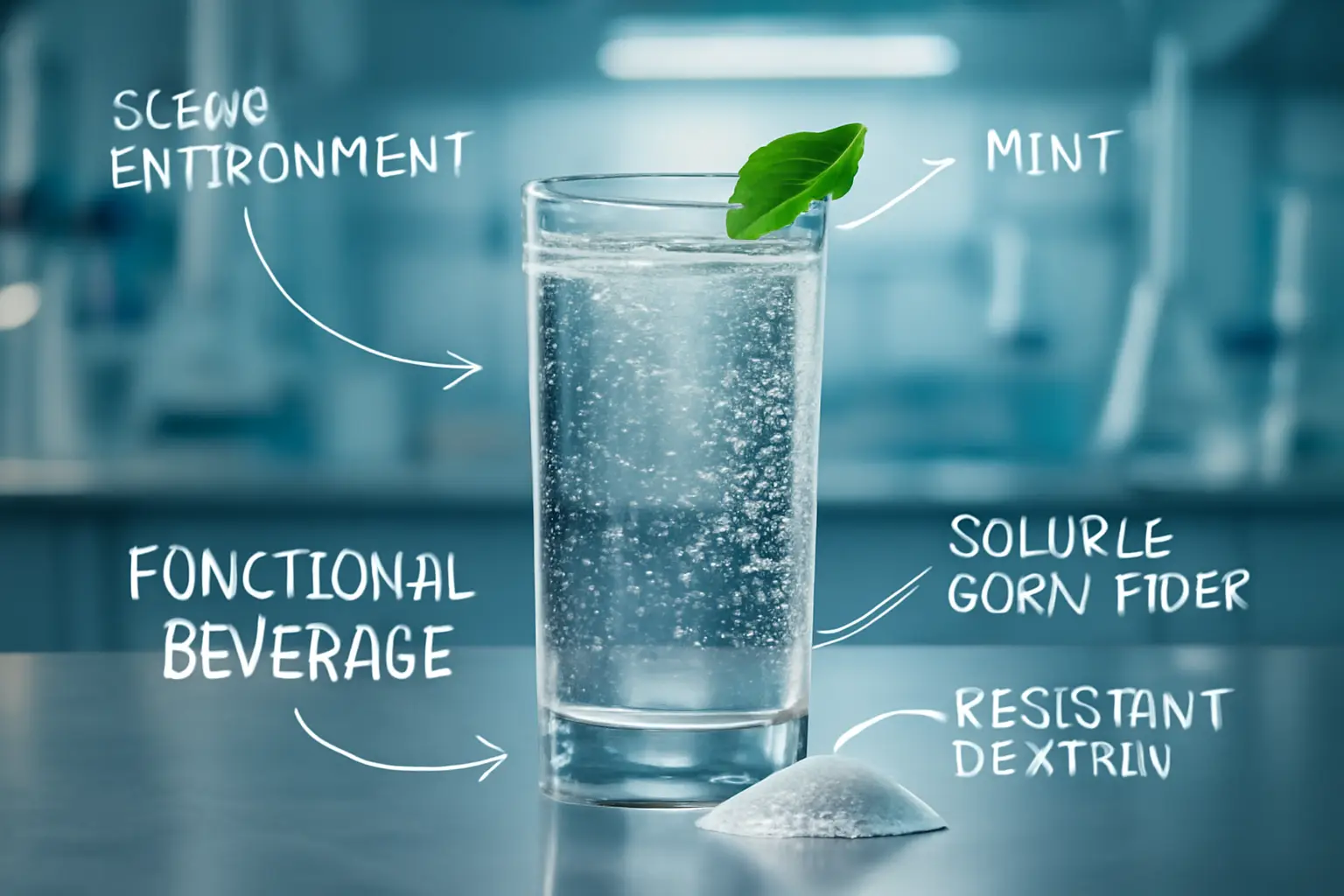
Why Gut Health Drinks Create New Pressure on Fiber Specs
Recent product launches and ongoing industry commentary clearly highlight the continued momentum in gut health beverages, particularly around concepts like "prebiotic soda." The commercial success of this category relies heavily on a quiet technical achievement: incorporating enough resistant dextrin to make a functional difference, while fully preserving a clean sensory profile and stable manufacturing process.
From a procurement perspective, this translates into a distinctly different kind of Request for Quotation (RFQ):
- Fiber functionality over simple declaration: Does the chosen resistant dextrin remain soluble and stable throughout pasteurization, hot-fill, or retort processes?
- Maintaining familiar taste and mouthfeel: Buyers often select resistant dextrin specifically because of its typically neutral profile and low sweetness.
- Market-specific label strategies: The term "prebiotic" is regulated differently depending on the region.
It is worth noting that the exact same gut-health soda might be marketed as "prebiotic" in one country and simply "high fibre" in another, entirely dictated by local regulations and dosage thresholds.
Resistant Dextrin Basics That Matter in Beverage Formulation
Resistant dextrin functions as a soluble dietary fiber specifically designed to resist digestion in the small intestine, allowing it to reach the colon where beneficial bacteria can ferment it. This fermentability forms the core of its prebiotic soluble fiber positioning, provided local regulations permit such claims.
For R&D and beverage developers, resistant dextrin is prized not merely for its nutritional profile, but primarily for its physical behavior within a formula:
- Excellent solubility in both hot and cold water makes it highly suitable for RTDs, syrups, and concentrated formats.
- Inherent heat and acid stability ensures reliable performance across standard beverage pH levels and thermal processing conditions.
- A neutral taste paired with low sweetness allows resistant dextrin to blend seamlessly into low-sugar drinks compared to many alternative fiber sources.
When reviewing supplier documentation—particularly from established manufacturing hubs in Shandong—resistant dextrin and soluble corn fiber are frequently outlined with performance-focused specifications. Metrics such as fiber content ≥82%, moisture ≤5%, and a working pH range around 3–6 perfectly align with the strict requirements of most beverage categories.
During ingredient sourcing, buyers frequently encounter the terms "soluble corn fiber" and "resistant dextrin" used interchangeably. In everyday practice, soluble corn fiber generally refers to soluble fiber products derived from corn starch via enzymatic processing. Formulators often select it for its exceptional flavor neutrality and stability.
For procurement teams comparing different product families, distinguishing between corn-based and tapioca/cassava-based resistant dextrin options is crucial:
- Corn-based resistant dextrin / soluble corn fiber: This is the industry standard, well-known to global buyers, generally taste-neutral, and widely implemented as a cost-effective prebiotic soluble fiber in drinks.
- Tapioca-based resistant dextrin: Formulators often consider this when seeking an alternative plant source or aiming for specific clean-label preferences. However, procurement must always verify that it matches the solubility, stability, and sensory performance of the corn-based equivalent in the final formula.
Three Drink Formats Where Resistant Dextrin Scales Smoothly
The most effective way to evaluate a resistant dextrin sample is to test it directly within a specific drink format, processing environment, and sensory target. Here are three common application patterns where resistant dextrin proves to be a highly dependable formulation tool.

1. Carbonated Gut Health Sodas
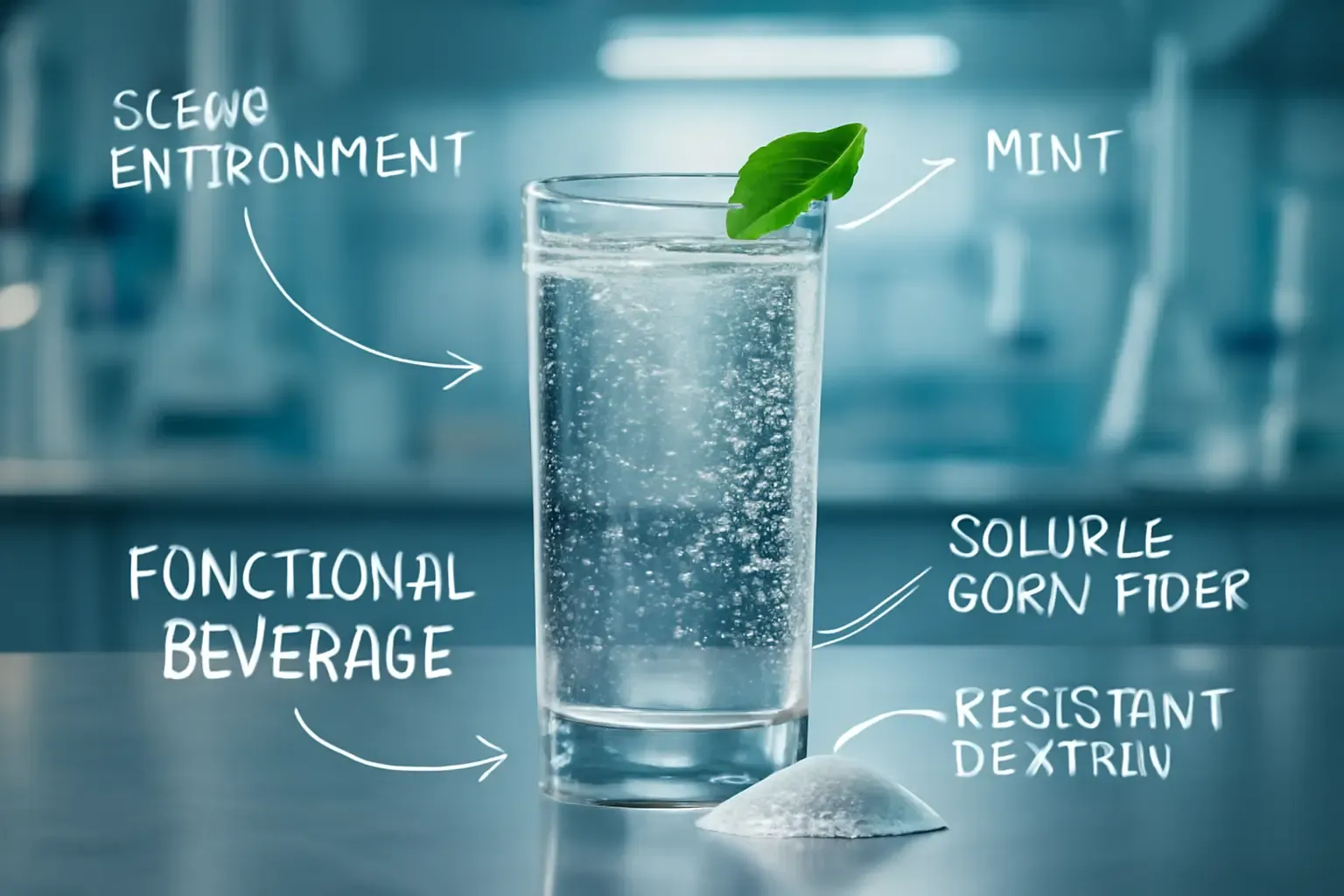
Carbonated environments rigorously test resistant dextrin. Clarity, foaming behavior, and acid stability are non-negotiable factors here.
What buyers typically watch for:
- Clarity vs. haze: Formulators choose resistant dextrin and soluble corn fiber largely because they can remain transparent in solution. However, ultimate clarity still hinges on dosage, pH levels, flavor systems, and mineral content.
- Foaming control: Carbonation combined with certain sweetener systems can exacerbate foaming. The choice of fiber and the order of hydration play a significant role in mitigating this.
- Acid tolerance: Sodas usually sit in highly acidic conditions, making a highly stable resistant dextrin essential for shelf life.
Practical formulation note: R&D workflows often involve screening two or three different resistant dextrin grades at the target fiber dosage, followed by accelerated stability testing (temperature cycling) while carefully scoring foam generation, haze development, and taste drift.
2. Still Beverages and Juice-Style Drinks
Still beverages offer a bit more formulation flexibility, though suspended fruit pulp, added minerals, and natural flavor acids can sometimes cause unexpected ingredient interactions.
Why resistant dextrin excels here:
- It introduces prebiotic soluble fiber without creating a heavy, syrupy viscosity.
- It effectively helps "round out" the mouthfeel in beverages with drastically reduced sugar.
- It integrates cleanly alongside fruit flavors, provided the chosen resistant dextrin grade carries virtually no off-notes.
Procurement angle: Always request a pre-shipment sample of the exact grade the supplier intends to ship at commercial scale. Asking for batch-to-batch sensory consistency data can quickly expose any manufacturing variability.
3. Instant Drink Powders and Sachets
In powdered formats, the focus shifts entirely toward dispersibility, flowability, and long-term moisture management.
Key evaluation checks:
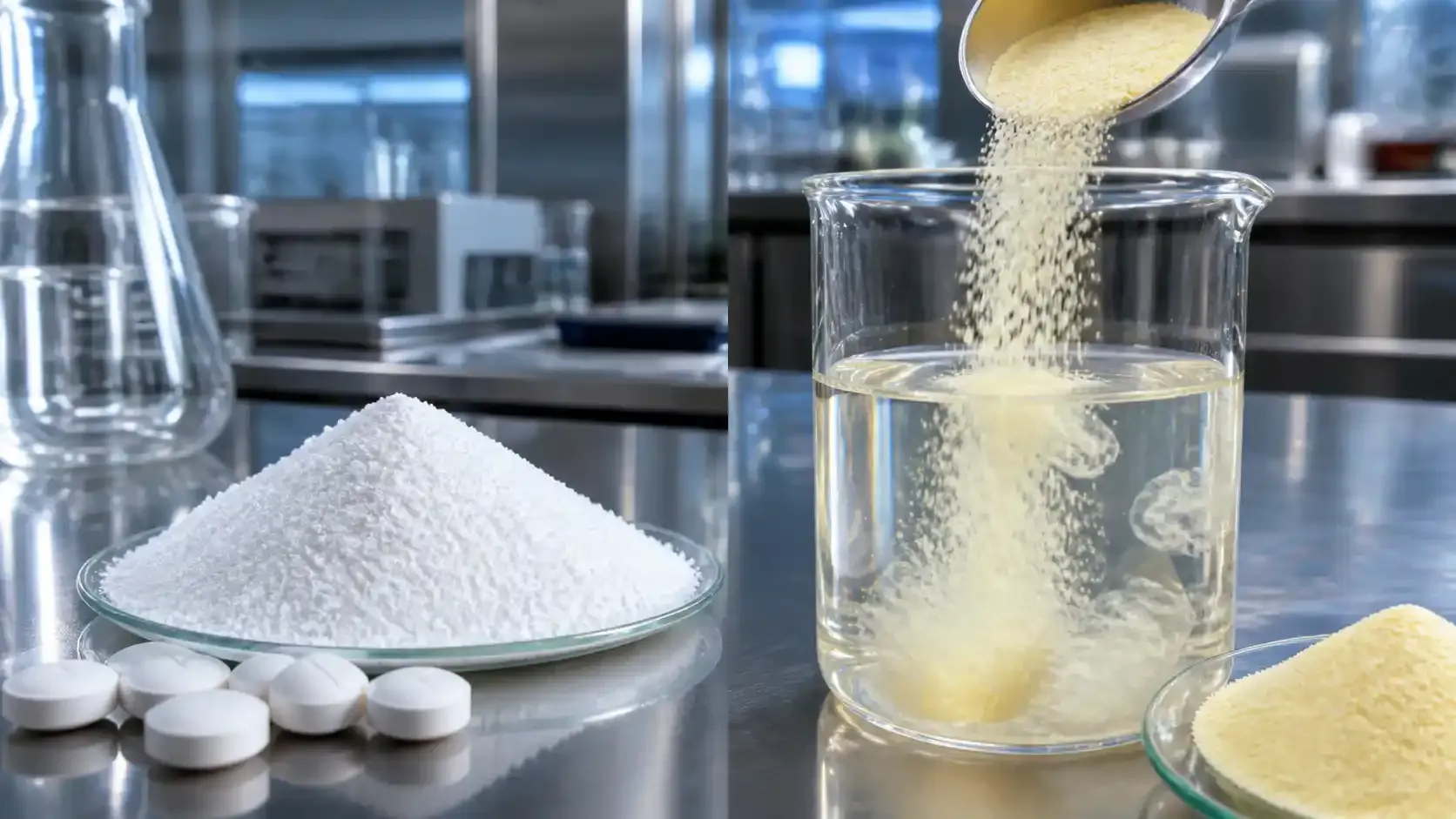
- Instant dispersion: The resistant dextrin must dissolve rapidly with minimal clumping when mixed by the consumer.
- Water activity and moisture: The shelf stability of the powder depends heavily on maintaining low moisture levels.
- Packaging compatibility: Utilizing multi-layer moisture-proof bags and maintaining traceable labeling are vital to protect product quality during international transit.
Evaluating a Resistant Dextrin COA for Beverage End-Use
A standard Certificate of Analysis (COA) might look perfectly acceptable on paper yet fail to address beverage-specific manufacturing risks. The most useful COAs draw a direct line to processing performance.
Priority COA metrics for beverage procurement:
- Dietary fiber content: Frequently specified as ≥82% in reliable soluble corn fiber and resistant dextrin documentation.
- Moisture: Strictly controlled at ≤5% to guarantee stability and prevent caking.
- pH: Usually indicated within the 3–6 range, depending on the testing method.
- Microbiology: Strict limits on aerobic plate counts, yeast, and mold are critical for beverage safety.
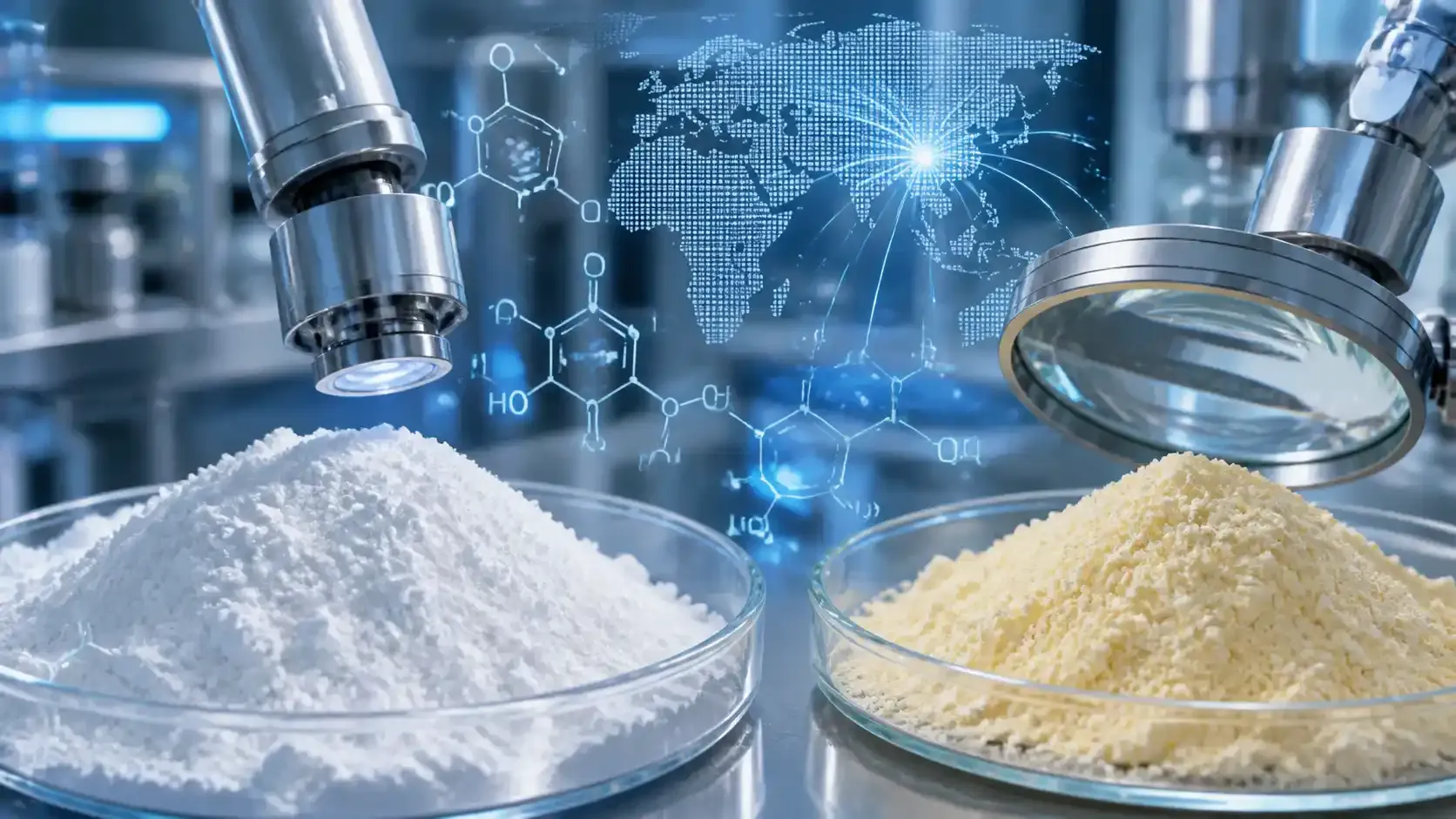
- Appearance: Should present as a uniform white to light yellow powder.
When evaluating a supplier, confirming the facility's internal quality controls and documentation readiness is just as important as the COA itself—especially for products destined for highly regulated consumer markets.
A reliable resistant dextrin supplier capable of supporting large-scale beverage manufacturing should readily provide standard documents like COAs and MSDS, demonstrate clear batch traceability, and operate under international quality systems (such as ISO and HACCP).
For buyers seeking a benchmark, specialized manufacturers in China's Shandong province often set the standard. For instance, Shandong Shine Health Co., Ltd. operates highly automated production lines and comprehensive QC labs dedicated to functional ingredients. Procurement professionals can review detailed product specifications and quality frameworks directly on www.sdshinehealth.com.
Translating "Factory Direct" into Measurable Procurement Advantages
The phrase "factory direct" is common, but its actual value to beverage procurement lies entirely in reducing reformulation risks and guaranteeing supply continuity.
When auditing a China-based resistant dextrin supplier, purchasing teams gain deeper insights by looking for specific operational signals:
- Automation and closed handling systems: These significantly reduce contamination risks and ensure batch-to-batch consistency.
- Dedicated in-house QC testing: This confirms that critical parameters like fiber content, moisture, and microbiology are tightly monitored before shipment.
- Professional packaging and labeling: Features like moisture-proof inner liners, clear batch coding, and secure palletization prevent costly transit losses.
Using real-world product listings as reference points helps connect sourcing strategy to actual formulation needs. For example, buyers evaluating maltodextrin-based fiber systems for dual food and beverage use often reference resistant maltodextrin powder dietary fiber. Similarly, those focusing on taste-sensitive, low-sugar drinks might analyze the specifications of soluble corn fiber. These practical examples help speed up early-stage shortlisting and spec alignment.
Label and Compliance Checkpoints That Can Alter a Project
A resistant dextrin formulation that meets compliance in one market might face regulatory hurdles in another, particularly when marketing teams utilize "prebiotic" terminology.
Buyers should navigate two main realities:
- Dietary fiber declaration rules vary by jurisdiction. In the U.S., FDA guidelines and GRAS documentation heavily influence how specific fibers are recognized and declared on the Nutrition Facts panel.
- The term "prebiotic" is not universally accepted as a simple structure/function claim. Certain markets mandate highly specific phrasing, minimum dosage thresholds, or rigorous substantiation pathways.
Procurement teams mitigate these risks by aligning early with Regulatory and R&D departments to determine the target fiber grams per serving, finalize the intended marketing language (prebiotic vs. high-fiber), and secure the exact documentation package required from the supplier for each target destination.
A Practical Checklist for Securing Quality Resistant Dextrin
Keeping resistant dextrin sourcing grounded in actual beverage manufacturing realities requires a structured approach. Use this checklist to protect both product taste and supply chain integrity:
- Define the ingredient's primary role: Is it strictly for a fiber claim, prebiotic positioning, mouthfeel enhancement, or a combination of all three?
- Lock down process conditions: Clearly outline the required pH range, heat treatment parameters, and the exact order of ingredient addition.
- Demand beverage-relevant COA specifications: Focus heavily on fiber content, moisture, pH, microbiology, and appearance.
- Conduct rigorous stability screens: Test for haze, foam generation, shifts in sweetness perception, and flavor masking.
- Verify packaging and logistics protocols: Ensure robust moisture protection, clear batch codes, and proper shelf-life handling.
- Shortlist based on evidence, not just price: A slightly lower initial quote becomes incredibly expensive if batch variability forces continuous R&D rework.
By treating resistant dextrin as a highly technical functional ingredient rather than a simple commodity, beverage brands can successfully navigate the complexities of low-sugar, gut-friendly formulation. To explore a comprehensive range of qualified dietary fibers and evaluate detailed specifications, contacting an established supplier like Shine Health provides a solid foundation for your next beverage project.