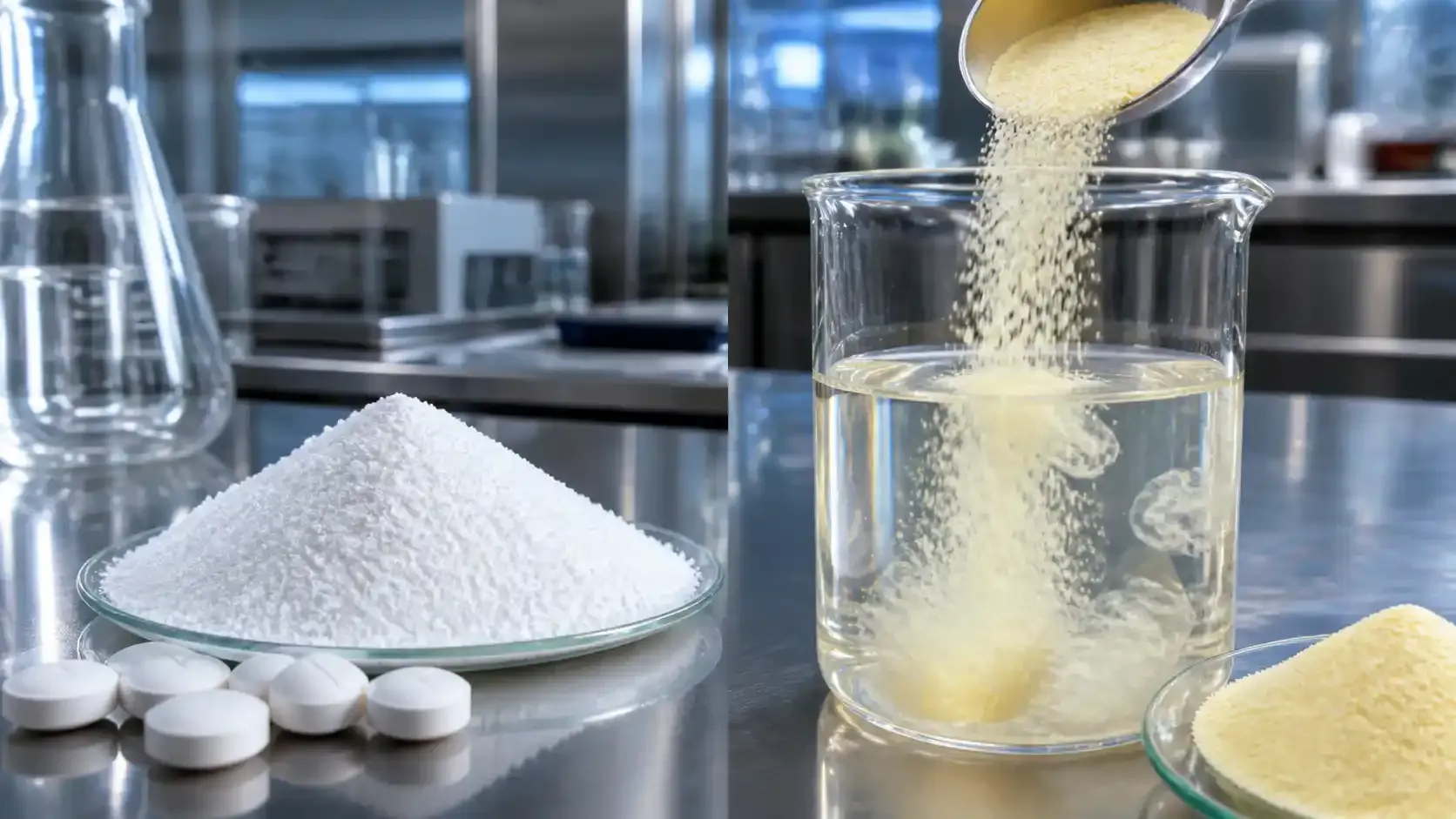
In the low-sugar, fiber-forward market, resistant dextrin and microcrystalline cellulose (MCC) have shifted from minor line items to critical ingredients that quietly determine audit outcomes, label confidence, and batch-to-batch stability. For procurement teams, the fastest path to predictable budgets is not chasing the lowest quote—it is building a sourcing brief that ties GRAS proof, COA specifications, and factory capability to actual processing needs. This guide explains how buyers control compliance risks when evaluating a resistant dextrin supplier or a microcrystalline cellulose supplier in China, translating technical specs into fewer disputes and a steadier landed cost.

When Compliance Becomes a Cost Driver for Resistant Dextrin
For brands selling into the U.S. or aligning documentation across multiple markets, the question is rarely whether resistant dextrin can work. The real question is whether the supplier can prove it is suitable, traceable, and consistently manufactured—without adding weeks of documentation workload.
When a formulation depends on resistant dextrin to support fiber claims or sugar reduction, gaps in documentation can create hidden costs:
- Delayed internal approvals: Legal and regulatory review cycles lengthen unnecessarily.
- Retesting and relabeling: Often required after a sudden specification mismatch.
- Holds at receiving: Triggered by missing COA lines or unclear test methods.
In practice, the most effective cost-reduction strategy for resistant dextrin is a robust compliance strategy.
Using GRAS Documentation as a Purchasing Control Point
While some procurement teams treat GRAS as a simple checkbox, experienced buyers treat it as a structure for risk control. A solid GRAS-oriented file, backed by supporting QC evidence, tends to reduce time spent clarifying intended use categories, eliminates back-and-forth about specifications, and prevents confusion between resistant dextrin and similar soluble fibers.
For U.S.-bound products, buyers typically benchmark against the FDA's GRAS notice documentation for resistant dextrin and then require suppliers to provide a matching identity and specification narrative. This covers what the ingredient is, how it is produced, and which quality attributes are controlled.
A practical approach includes:
- Requesting the supplier's product identity statement: Clarify what they call it commercially and technically (e.g., resistant dextrin versus resistant maltodextrin). Keep naming consistent in purchase orders.
- Confirming intended conditions of use in writing: Document food categories or supplement use so regulatory reviewers are not forced to infer.
- Requiring a COA that maps to your internal spec: Move beyond a simple "pass/fail" document.
Choosing a mature resistant dextrin manufacturer matters greatly here: strong documentation is usually the output of stable QC routines, not marketing efforts.
What Really Belongs on a Resistant Dextrin COA
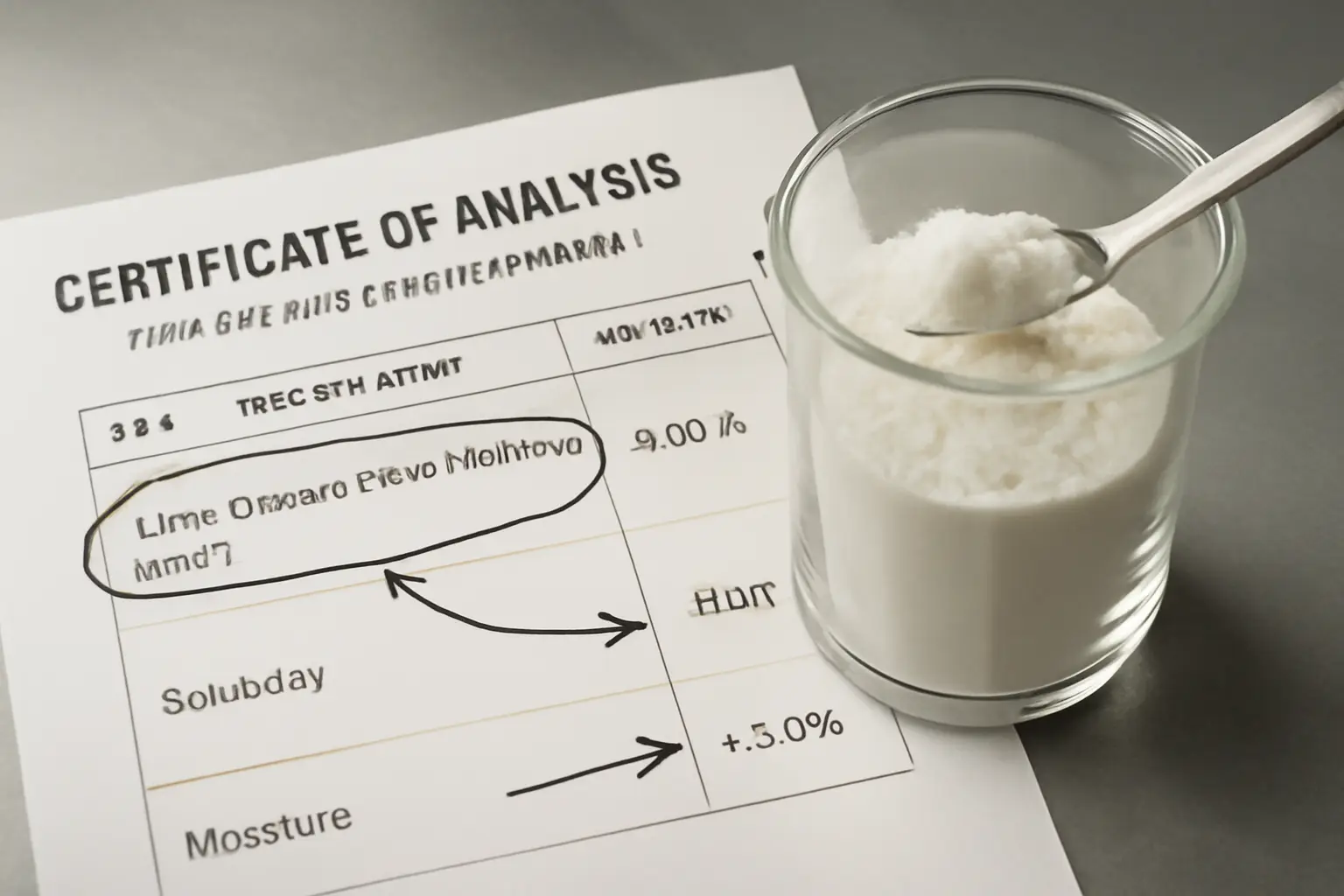
A Certificate of Analysis (COA) that looks complete can still be weak if it fails to predict line performance. Buyers secure better outcomes when they confirm a short set of performance-linked lines.
Resistant Dextrin Spec Lines That Reduce Disputes
When buying resistant maltodextrin powder bulk, the most commonly audited or performance-critical COA lines include:
- Total dietary fiber (dry basis): Commercial specs are typically set around ≥82% or ≥90%, depending on product positioning and claim strategy.
- Moisture and water activity: Low water activity supports storage stability and reduces caking risk during transit.
- Solubility: High solubility is especially critical for clear beverage applications.
- pH range: Helps predict compatibility in acidic systems.
- Microbiology: Basic limits (aerobic plate count, coliforms, yeast, mold) should be clearly listed alongside their respective testing methods or standards.
A resistant dextrin supplier that consistently delivers these lines—and can explain any variance—lowers the total cost of ownership, even if their initial FOB quote is slightly higher.
Translating Fiber Percentage Into Real Cost
Fiber content is not merely a labeling issue; it is a direct costing variable.
A higher-fiber resistant dextrin can reduce the inclusion rate needed to hit a specific "grams of fiber per serving" target. Lower inclusion can improve sensory outcomes and shorten reformulation cycles. Essentially, the "cheaper" resistant dextrin may actually cost more once you factor in reformulation time, stability testing, and claim recalculations.
MCC Compliance Basics That Procurement Teams Should Not Skip
MCC is frequently sourced alongside resistant dextrin because many brands operate across both food/nutrition and tablet/capsule formats. Even when MCC is not the star ingredient, it drives batch performance—affecting flow, compression, and content uniformity.
For MCC sourcing, best practice dictates anchoring requirements around grade selection and consistent test evidence. Buyers comparing suppliers typically start with the grade discussion—especially MCC PH101 and PH102 grades—and then confirm that the supplier's COA lines match the grade's functional intent.
MCC Grade Fit Is a Cost Decision
Even a well-priced microcrystalline cellulose can become expensive if the grade does not align with your manufacturing process:
- If the MCC particle size and density do not support your target flow, you may be forced to add processing aids.
- If compression behavior is inconsistent, you might experience slower tablet press speeds, higher rejection rates, or constant tooling adjustments.
Procurement teams increasingly treat MCC as a "performance excipient" rather than a simple commodity for these exact reasons.
Why Buyers Evaluate Resistant Dextrin and MCC as One Risk File
When a company launches multiple formats (such as RTD drinks, powders, and tablets), resistant dextrin and microcrystalline cellulose often end up in the same internal review queue for supplier approvals, audit trails, COA expectations, and specification governance.
A combined "risk file" helps buyers standardize incoming inspection templates, unify document control (COAs, traceability statements, allergen statements), and reduce confusion when multiple teams purchase from the same region.
In China sourcing, this is crucial because the strongest suppliers possess both the manufacturing discipline and the export documentation habits that keep approvals moving smoothly.
Factory Capability Signals That Support Audit Readiness
Most buyers cannot audit every facility before a first trial. However, there are reliable signals indicating that a China-origin resistant dextrin program is built for export-grade consistency.
Common capability signals include:
- Modern production equipment and controlled processing, which drive consistency and yield.
- Use of biological enzymes combined with stable process controls.
- A fully equipped QC laboratory handling routine microbiology and fiber-related testing.
- Traceability back to raw starch materials (commonly non-GMO corn starch).
Within China's supply landscape, Shandong-based producers are frequently shortlisted for resistant dextrin due to their established export routines. As an example of how suppliers present these capabilities, Shine Health details resistant dextrin manufacturing built around German-origin production lines, imported enzymes, and rigorous QC laboratory controls. Buyers wanting to compare documentation and typical specs can review their technical pages for resistant dextrin soluble dietary fiber and resistant maltodextrin fiber.
This level of technical transparency does not replace due diligence, but it helps procurement teams build a cleaner shortlist before requesting samples.
Mini Patterns That Show Why Specs Matter More Than Unit Price
Recognizing specific buying patterns can expose hidden costs early in the sourcing process.
1. Fiber-Fortified Beverages
Typical constraints: Clarity, low viscosity, stability under heat and acid.
If resistant dextrin solubility and pH tolerance are not confirmed early, beverage trials can fail late in the development cycle. A supplier providing stable solubility and detailed microbiology documentation often reduces the number of required pilot rounds.
2. High-Fiber Bakery and Snacks
Typical constraints: Water activity, texture, processing tolerance.
Fiber content and moisture control directly impact dough handling and shelf stability. The "best price" resistant dextrin becomes the highest cost if it introduces process variability on the bakery line.
3. Tablets and Capsules Using MCC
Typical constraints: Compressibility, flow, blend uniformity.
MCC PH101 and PH102 grades are not interchangeable in every process. A grade mismatch typically manifests as slower press speeds or higher defect rates—operational costs that never appear on the initial quote.
A Practical RFQ Checklist for Sourcing Briefs
To minimize compliance gaps and reduce rework, procurement teams should embed the following checkpoints directly into their RFQs:
- Identity and naming: Ensure "resistant dextrin" or "resistant maltodextrin" naming matches your labeling and internal specs.
- Fiber content band: Specify the target (e.g., ≥82% or ≥90% dry basis) and the accepted tolerance.
- Solubility and application intent: Clearly state if the ingredient is for a beverage, bakery, or powder, and require a solubility benchmark.
- Moisture and water activity: Include strict limits to reduce caking risks during shipping and storage.
- pH range and heat stability: Request this as a processing compatibility note.
- Microbiology limits: Demand clear reporting on APC, coliforms, yeast, and mold.
- Packaging format: Specify industrial formats (such as 25 kg bags) and outline moisture protection expectations.
- MCC grade confirmation: Explicitly list the exact grade required (e.g., MCC PH101 or PH102) and demand COA alignment to that grade.
Standardizing this checklist leads to fewer misunderstandings with a resistant dextrin manufacturer and prevents "surprise" performance gaps when qualifying a microcrystalline cellulose supplier in China.
Planning Your Next Ingredient Qualification
Resistant dextrin and microcrystalline cellulose are purchased under increasingly tight scrutiny because they directly influence label claims, process stability, and audit workloads. The most reliable path to predictable costs is treating GRAS proof and specifications as proactive purchasing levers, rather than paperwork afterthoughts.
A balanced qualification approach involves piloting two resistant dextrin specs (for example, ≥82% and ≥90% fiber) and one MCC grade that perfectly fits your equipment. From there, compare not just the delivered price, but the documentation turnaround time, trial success rates, and incoming inspection performance.
For buyers benchmarking China suppliers, the technical product pages, specifications, and QC insights at www.sdshinehealth.com serve as a highly useful reference point when building a reliable shortlist for both resistant dextrin and MCC procurement.