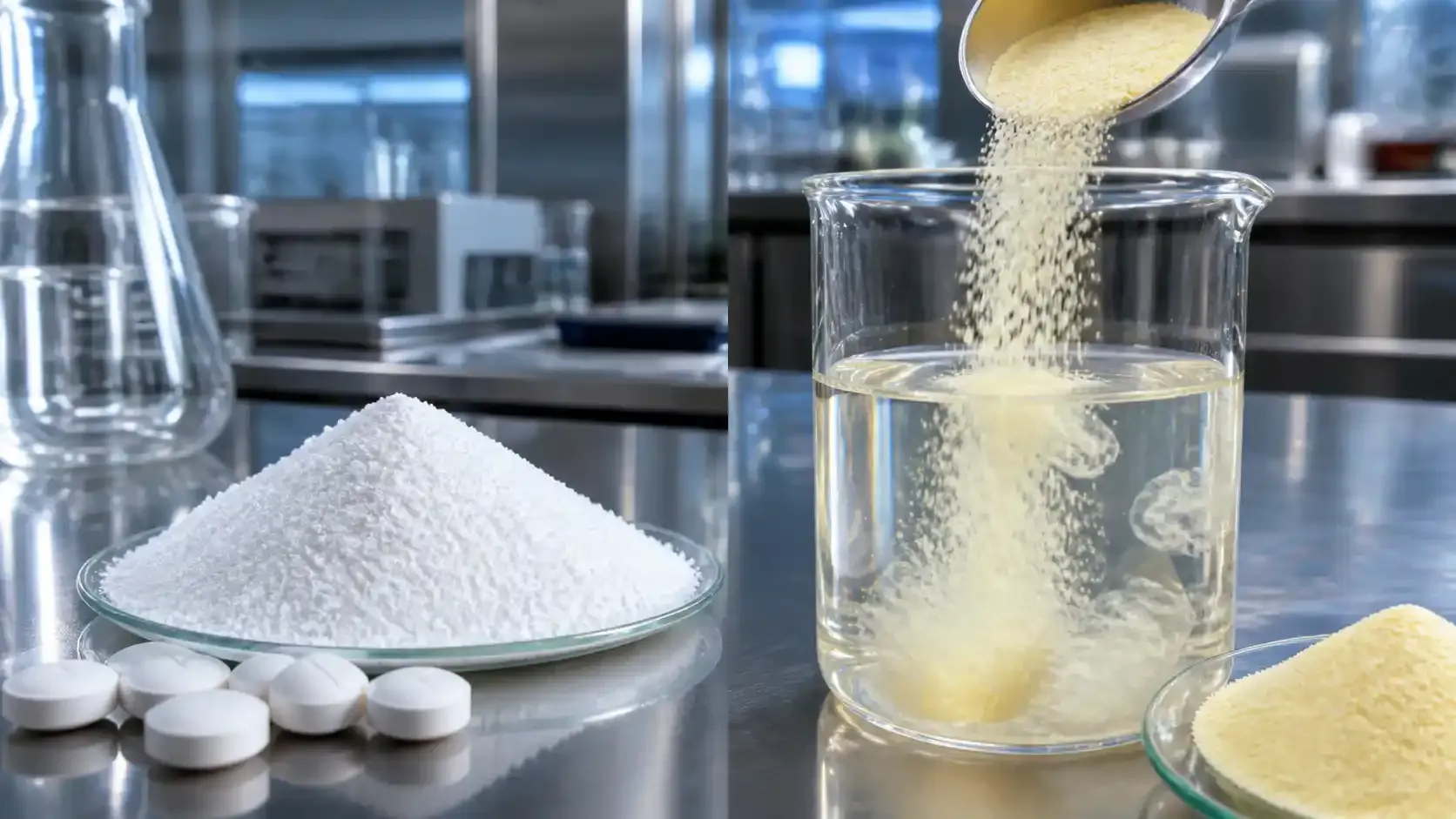
Functional food and nutraceutical pipelines are crowded with “more fiber” concepts—yet many product launches stall when fiber claims collide with taste, clarity, flowability, or tablet strength. An effective strategy to reduce both formulation risk and sourcing risk is to evaluate resistant dextrin exactly as it will be used: in a clear beverage, in a high-fiber powder, and in a structured solid format where microcrystalline cellulose (MCC) often does the mechanical heavy lifting. Here are three application patterns procurement teams can benchmark, plus the specific quality checkpoints that truly matter when working with a resistant dextrin manufacturer or resistant dextrin supplier bulk in China.
Why These Three Formats Reveal the Truth About Resistant Dextrin
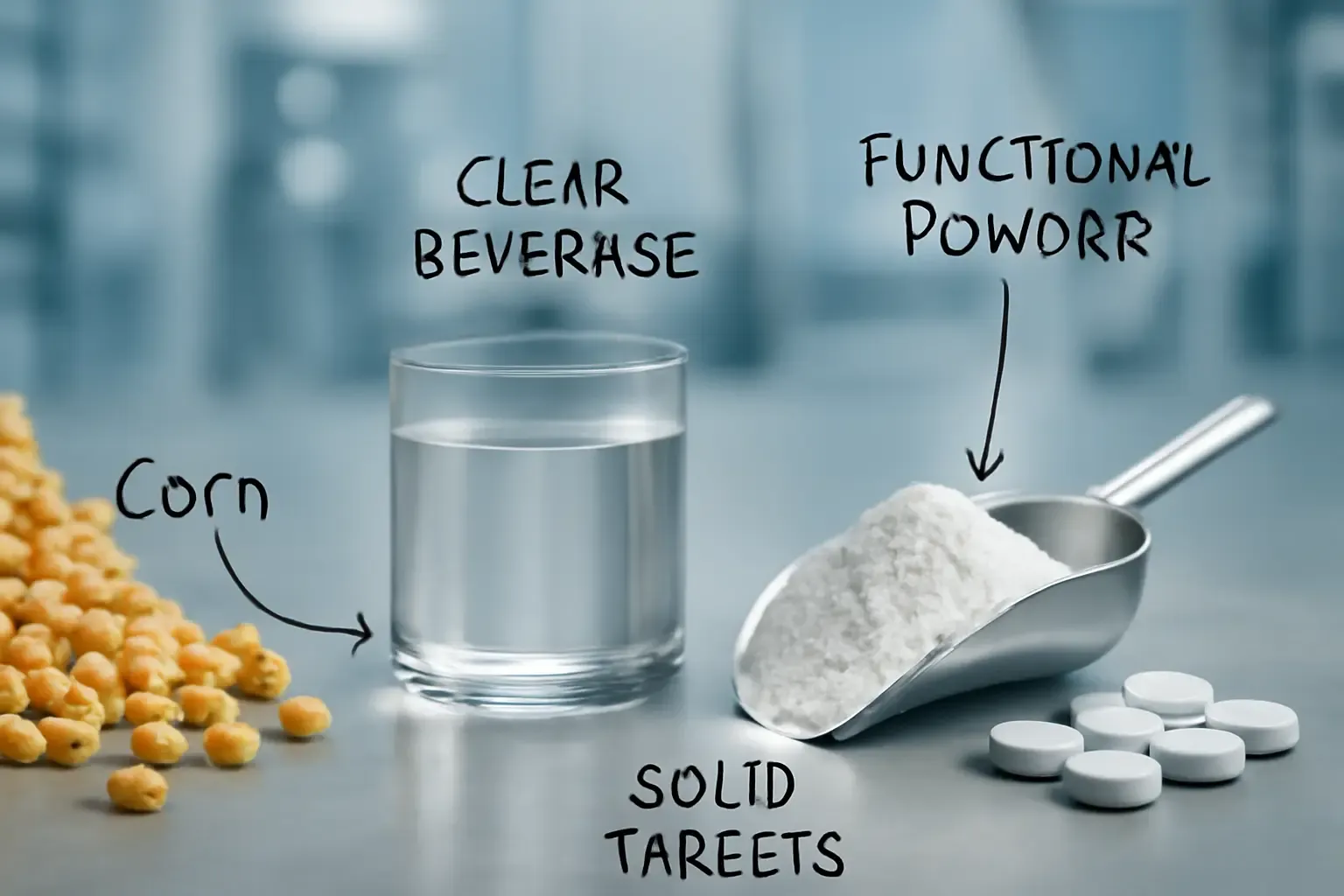
Resistant dextrin (frequently positioned as resistant maltodextrin fiber) is a highly versatile soluble dietary fiber produced primarily from non-GMO corn starch. In finished commercial products, resistant dextrin is typically selected because it can significantly boost dietary fiber content while staying relatively neutral in taste and highly workable across extreme processing conditions.
These three distinct formats create unique “stress tests” for any raw material:
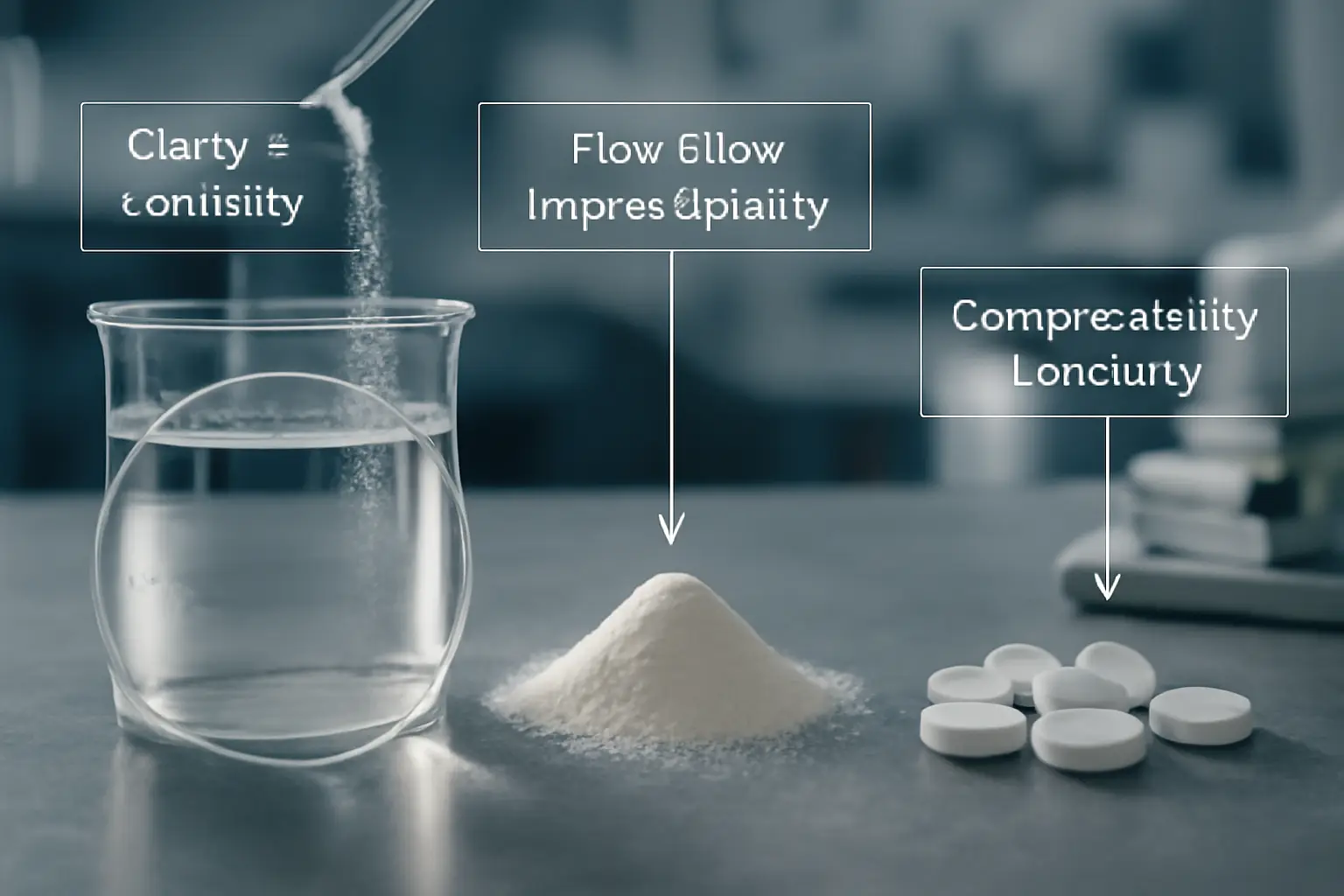
- Clear beverages expose solubility limits, clarity defects, and stability issues almost immediately.
- Powder blends expose poor flowability, excessive hygroscopicity, and unexpected flavor interactions.
- Tablets (and structured formats) expose poor compressibility and documentation discipline—especially when MCC and resistant dextrin appear together in the same formulation.
When procurement buyers compare different suppliers with these specific formats in mind, Requests for Quotation (RFQs) become far more precise, and the entire supplier qualification process becomes significantly faster.
A Quick Compliance Anchor for De-Risking Decisions
Regulatory confidence is only part of the story, but it sets the essential baseline for safe procurement. Resistant dextrin has been broadly supported through the FDA’s GRAS (Generally Recognized as Safe) notification pathway. For international buyers, the actionable takeaway is straightforward: when requesting quotes from a Chinese functional fiber supplier, ensure that your internal specifications and intended use cases align seamlessly with your target market’s strict requirements.
In practical terms, a buyer-ready documentation package for premium resistant dextrin typically includes:
- Detailed COA displaying accurate fiber content and key physical properties.
- Standardized MSDS.
- GMP, HACCP, and ISO statements validating the production environment.
- Allergen and GMO statements (a critical requirement, as many premium brands explicitly demand non-GMO alignment).
- Clear, traceable description of the raw material origin (commonly high-quality corn starch).
Where top-tier Chinese producers truly differentiate themselves is not just in providing the paperwork, but in the repeatability behind it: utilizing fully automated precision lines, maintaining robust in-house QC laboratory capabilities, and ensuring consistent raw material sourcing year-round.
Case 1: Clear Gut Health Beverages That Stay Clean on Shelf
A modern “gut health” ready-to-drink (RTD) beverage or liquid concentrate requires a heavy dose of fiber without the usual consumer penalties—namely grittiness, visual haze, or strong sweetness alterations. In this specific application pattern, resistant dextrin is the ingredient of choice because it supports a strong prebiotic fiber positioning while keeping the beverage perfectly clear and highly drinkable.
What the Product Aims to Achieve
Common formulation targets in the beverage sector include:
- A meaningful, compliant dietary fiber claim per serving.
- Low sugar positioning without sacrificing the desired mouthfeel.
- Stable performance during intense pasteurization or hot-fill manufacturing conditions.
The Formulation Role of Resistant Dextrin
In a liquid beverage system, resistant dextrin acts primarily as a high-performing soluble fiber contributor. Buyers prioritize resistant dextrin for:
- Exceptional water solubility, ensuring it disperses rapidly without leaving sediment at the bottom of the bottle.
- Neutral sensory impact, allowing delicate fruit or botanical flavors to remain “true.”
- Processing tolerance, meaning it won't break down into simple sugars under heat and mild acidity.
Sourcing Checkpoints That Matter in Beverage Trials
When evaluating a resistant dextrin manufacturer for beverage applications, lock in these critical items early in the conversation:
- Fiber Content Target: Many product specification sheets in the market indicate ≥82% fiber grades, while higher-fiber options (e.g., ≥90% on a dry basis) are available for more concentrated formulas.
- Solubility Expectation: Top suppliers will specify 70% solubility or higher—use this metric as a baseline discussion point and validate it rigorously in your own beverage matrix.
- Low Hygroscopicity: Reduced caking significantly improves material handling at high-speed beverage plants and co-packing facilities.
- Appearance and Color: The standard expectation for high-quality resistant dextrin powder is a clean white to light yellow hue.
Supplier Signals to Look For in China
For beverage-focused resistant dextrin, experienced buyers heavily prefer suppliers that can demonstrate stable processing technology and consistent QC testing. As an example of what this looks like in practice, leading Shandong-based producers such as Shandong Shine Health Co., Ltd. describe their resistant dextrin as being crafted exclusively from non-GMO corn starch, produced using a precision line of German origin, refined with Japanese craftsmanship, and backed by a fully equipped QC laboratory. These operational details provide immense value when procurement teams are building a reliable approved supplier list.
Case 2: Weight Management Powders That Pour, Blend, and Ship Well
High-fiber weight management powders are carefully designed around promoting satiety and improving daily fiber intake. The commercial risk in this category is rarely the label claim itself—it is whether the bulk powder behaves correctly from the blending facility all the way to the consumer's kitchen counter.
What the Product Aims to Achieve
This product pattern typically targets:
- A reliable, high-density fiber claim utilizing resistant dextrin as the primary functional fiber source.
- Smooth, clump-free mixing in water, milk alternatives, or blended smoothies.
- Excellent taste stability alongside high-intensity sweeteners, protein isolates, and complex flavor systems.
The Formulation Role of Resistant Dextrin in Powder Systems
In dry powder formats, resistant dextrin functions as a highly soluble fiber that can be seamlessly blended with whey or plant proteins, flavors, and sweeteners. Formulators prefer resistant dextrin because it significantly boosts fiber density without dramatically increasing the sweetness profile or introducing the strong off-notes often associated with other fiber sources.
Procurement Checks That Prevent “Powder Problems” Later
Before finalizing an agreement with a resistant dextrin supplier bulk, confirm these operational details—ideally tying them to pilot blending data:
- Flow and Caking Behavior: Request a definitive statement on the ingredient's hygroscopicity and strict storage conditions (cool, dry storage is the absolute baseline).
- Mixing Behavior: Ask for the manufacturer's recommended dispersion method and verify its performance in your own shaker cups or industrial ribbon blenders.
- Protein Interaction: Resistant dextrin can behave quite differently depending on the surrounding protein system (e.g., whey isolate vs. pea protein). Always validate the final viscosity and mouthfeel at your intended commercial dosage.
- Packaging Fit: If your final consumer product is packaged in single-serve sachets or stick packs, confirm that the bulk density and powder flowability support stable, high-speed dosing.
The China Sourcing Note Buyers Often Miss
If the dietary powder is meant to be “clean-label” and marketed globally, the origin story of the raw material is paramount. Many Chinese suppliers highlight non-GMO corn starch as the foundational starting point for their resistant dextrin. In your RFQs, explicitly specify “non-GMO corn starch raw material” if it is a non-negotiable requirement—otherwise, procurement desks may receive mixed offers that fail compliance later.
Case 3: Tablets and Structured Formats Where MCC and Resistant Dextrin Work Together
When brands transition from loose powders into chewable tablets or structured capsules (or maintain a tablet line within the same product portfolio), the technical conversation shifts drastically from “fiber content” to “can this mixture compress and remain stable.” This is precisely where microcrystalline cellulose (MCC) becomes the central focus.
Why MCC Still Decides Whether a Tablet Works
MCC is universally recognized and widely used as a premium binder and diluent in solid dosage forms because it structurally supports compression and guarantees tablet integrity. In the world of nutraceutical tablets, MCC is the vital excipient that makes high-speed production scalable across different rotary presses and massive commercial batches.
How Resistant Dextrin Complements MCC in Solid Formats
In this dual-ingredient pattern:
- MCC provides the critical physical structure (compressibility, hardness control, and consistent tablet performance).
- Resistant dextrin contributes the functional soluble fiber payload and strongly supports a gut health or weight management positioning.
Procurement teams must treat this as a unified two-ingredient system: selecting the right MCC impacts manufacturing robustness and speed, while selecting the right resistant dextrin impacts the marketing fiber claim, sensory perception (crucial for chewables), and gastrointestinal tolerance.
Buyer Checkpoints for a China MCC Manufacturer and Fiber Partner
For solid dose tablets, buyer questions must be highly specific to avoid costly manufacturing rework:
- Grade Fit and Consistency: For MCC, rigorously confirm that the particle size distribution and moisture control expectations are perfectly aligned with your specific tableting process.
- Documentation Discipline: Demand a complete COA and full traceability for both the MCC and the resistant dextrin—do not accept a robust documentation file for one ingredient and a weak file for the other.
- Process Stability: Ask the manufacturer how they actively control key variables (temperature, pressure, pH monitoring) that directly influence the consistency of the resistant dextrin batch over batch.
- Pilot Compression Trial: Always run a short, targeted compression study (testing hardness, friability, and disintegration times) using the exact resistant dextrin loading percentage you plan to claim on the label.
Turning These Cases into RFQ Language Buyers Can Actually Compare
Many sourcing delays originate from RFQs that are written vaguely, resembling marketing claims rather than technical specifications. Instead, map every new SKU to one of the three case patterns detailed above, and then define strict pass/fail criteria.
RFQ Fields That Reduce Back-and-Forth
For purchasing resistant dextrin, a highly effective, buyer-friendly RFQ typically includes:
- Target fiber content range (e.g., ≥82% or ≥90% for higher-grade targets where relevant).
- Strict solubility and clarity requirements for resistant dextrin intended for food and beverages.
- Caking thresholds and storage expectations for powder blending operations.
- A checklist of required documents (COA, MSDS, HACCP, GMP, ISO statements).
- Definitive raw material requirements (e.g., specifying non-GMO corn starch).
For purchasing MCC, include:
- The intended final dosage form and the specific processing method.
- Target compression behavior metrics and the exact quality tests your QC team will run.
- The comprehensive documentation package expected for your specific regulatory pathway.
What “Recommended” Really Means in China Sourcing
A “recommended Chinese resistant dextrin manufacturer” is rarely defined by unit price alone. It is far more often defined by whether the supplier can repeatedly hit your strict application targets, seamlessly support your compliance documentation needs, and communicate clearly when you scale from pilot batches to bulk container loads.
That is exactly why an application-first evaluation is so effective: a supplier that looks fantastic on paper may still fail a clarity test in a clear beverage, a caking test in a dry powder, or a hardness test in a tablet press.
A Neutral Next Step for Buyers Building an Approved List
If resistant dextrin is being formulated across multiple SKUs in your pipeline, consider standardizing your internal specification language around these three distinct formats. Doing so makes it significantly easier to qualify more than one resistant dextrin supplier bulk, while keeping manufacturing performance consistently high.
For procurement professionals and formulators actively benchmarking reliable China sources, reviewing the technical parameters and facility standards at www.sdshinehealth.com can serve as an excellent reference point. Understanding how top-tier suppliers document their non-GMO raw materials, precision German equipment, and stringent QC setups provides the exact information procurement teams need to translate general fiber concepts into highly accurate, actionable RFQs.