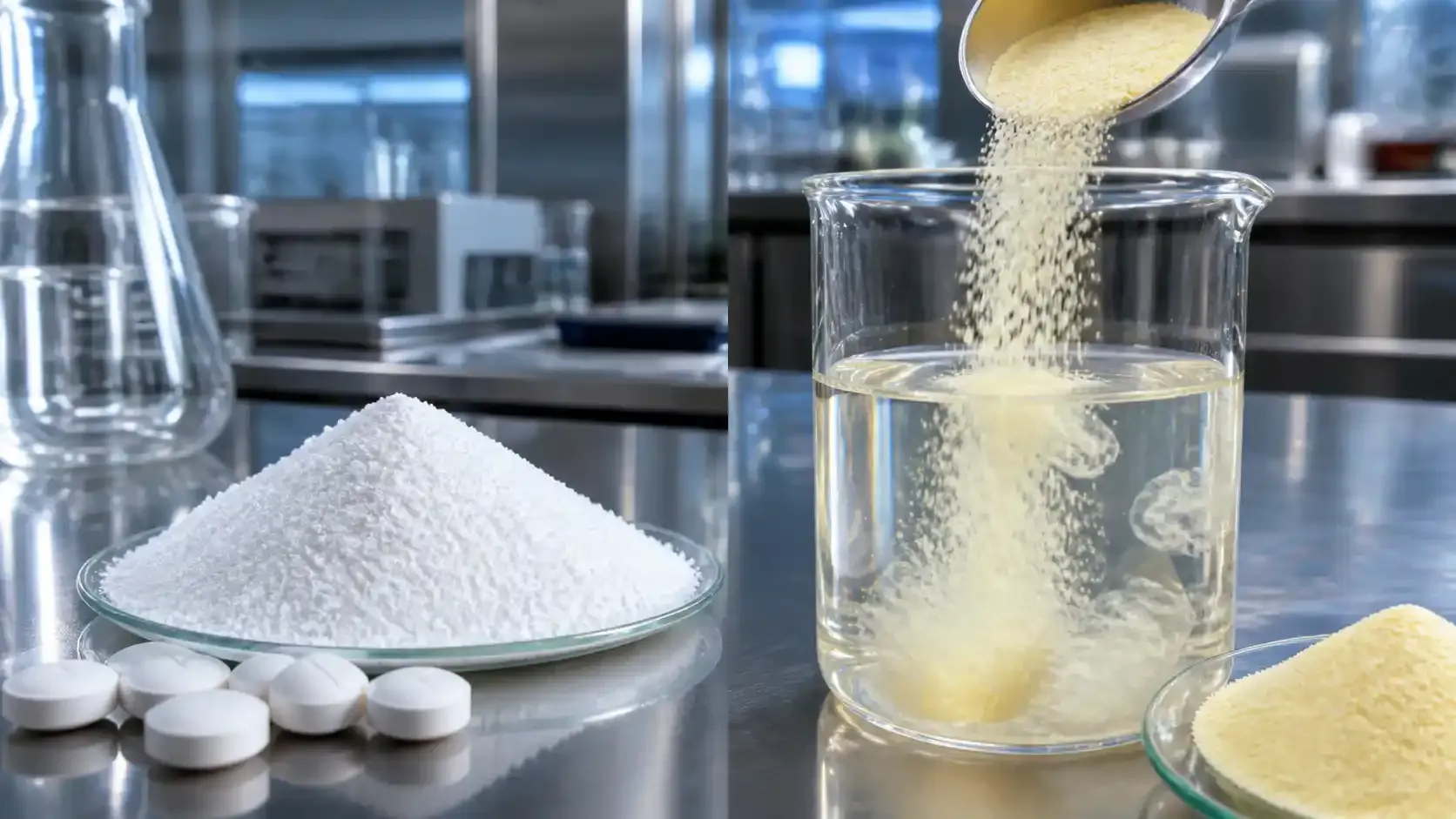
A quiet shift is happening in ingredient procurement: fiber is moving from a nice-to-have claim to a core product strategy, and that change is reaching all the way back to supplier selection in China. For buyers, the risk is not simply picking the wrong microcrystalline cellulose or resistant dextrin—it is building an RFQ that looks competitive on FOB price but collapses when you model landed cost, documentation workload, and reformulation risk.
This guide focuses on what typically goes wrong in microcrystalline cellulose and resistant dextrin sourcing—and how procurement teams can build a cost model that favors suppliers that are genuinely reliable, not merely available.

Why the Fiber Boom is Changing How Buyers Calculate Value
Industry commentary has been blunt about where CPG is headed: fiber is increasingly treated like the next major health positioning, alongside protein. When product teams push for more fiber claims across beverages, bars, gummies, tablets, and nutrition powders, procurement gets a new mandate: secure functional fibers that can scale, audit cleanly, and behave consistently in real production.
In practice, this trend increases demand for two workhorse ingredients:
- Microcrystalline cellulose (MCC), often purchased as a pharmaceutical excipient (binder/compression aid) and also used in foods for texture support and anti-caking.
- Resistant dextrin, a soluble dietary fiber used to lift fiber content while keeping taste neutral and process stability high.
Both ingredients are widely sourced from China. The catch is that China sourcing is no longer a simple price play—buyers are now rewarded for building supplier shortlists around repeatability (COA consistency), export documentation readiness, and predictable technical performance.
Where Microcrystalline Cellulose and Resistant Dextrin Sit in Today's Formulation Map
Microcrystalline Cellulose is Still a Tablet Insurance Policy
In oral solid dosage forms, microcrystalline cellulose is frequently selected because it supports compressibility and flow, which can translate into fewer tableting interruptions and less batch-to-batch variability. It also appears in nutraceutical and food applications where a stable, inert, odorless powder is required.
When procurement evaluates a China microcrystalline cellulose supplier, the starting point is usually whether the facility can support recognized compendial expectations. Many buyers anchor the conversation around MCC grades and standards (e.g., BP/USP/FCC/JP) and practical grade choices such as PH-101, PH-102, PH-200 and related variants.
For buyers who need a quick benchmarking reference, an example of a supplier page that publicly lists MCC grade options, mesh range, and standards can be seen at microcrystalline cellulose bulk options.
Resistant Dextrin is the Clean Taste Path to Soluble Fiber
Resistant dextrin is typically positioned as a soluble dietary fiber that resists digestion in the small intestine and is used in formulations where buyers want:
- A neutral taste (so flavor systems do not need expensive masking).
- High solubility and clean processing.
- Stability across heat and acidic conditions (crucial for beverages and some cooked foods).
Commercial specifications vary by grade, but many procurement teams treat fiber content as a first-screen indicator. One common anchor in China sourcing is fiber content at or above ~82% for mainstream food and supplement applications.
For a practical example of how a supplier presents resistant dextrin positioning and parameters, see this overview on Resistant Dextrin.
The Biggest Landed-Cost Mistakes Buyers Make in China Sourcing
FOB price is easy to compare. Landed cost is where many RFQs silently fail—especially once the formulation team starts qualification trials.

Mistake 1: Treating MCC Grades as Interchangeable
A frequent issue in microcrystalline cellulose procurement is a spec sheet that lists "MCC" without defining:
- Grade family (e.g., PH series).
- Mesh or particle size expectations.
- Bulk density and flow behavior expectations.
- The exact standard requested (BP/USP/FCC/JP).
The cost impact is indirect but real: mismatched microcrystalline cellulose can create tableting changes (compression force window shifts, friability issues, fill weight variability), which then becomes rework cost—the most expensive hidden line item in the landed-cost model.
Mistake 2: Buying Resistant Dextrin on Fiber Percentage Alone
Fiber content matters, but it is not the only performance driver for resistant dextrin. Buyers often under-spec:
- pH and process tolerance needs.
- Solubility and sensory requirements.
- Microbiological limits that matter for the final application.
When a buyer must re-test, re-document, or re-qualify a second supplier mid-project, the landed-cost hit comes from timeline loss, not just product price.
Mistake 3: Underestimating Documentation Labor
If the supplier cannot provide predictable, export-ready documentation (batch COA discipline, consistent test methods, clear traceability), procurement pays in:
- Extra QA review cycles.
- More third-party testing.
- Longer internal approval lead times.
This is the point where evaluating a recommended Chinese microcrystalline cellulose manufacturer or a recommended Chinese resistant dextrin manufacturer stops being a marketing exercise and becomes an operational filter: reliable suppliers reduce internal workload.
Mistake 4: Mispricing Packaging and Freight Physics
Microcrystalline cellulose and resistant dextrin are powder ingredients, and packaging details can materially affect freight efficiency and damage risk. Common industry practice includes 20–25 kg bag formats, and buyers should model:
- Palletization efficiency.
- Moisture protection requirements.
- Container utilization.
- Destination handling constraints.
A cheap offer can become expensive if bags break, labels fail traceability checks, or the shipment arrives with moisture pickup.
What Reliable Chinese Suppliers Look Like in 2026
Procurement teams often ask for a shortcut to spot a recommended Chinese microcrystalline cellulose supplier without flying to China. The practical answer is to translate reliability into evidence you can request and verify.
A Buyer Checklist That is Specific Enough to Audit
Use the following checks to separate basic suppliers from recommended manufacturers.
- Clear grade matrix and application guidance: For microcrystalline cellulose, PH grade list and intended use cases. For resistant dextrin, grade positioning and parameter ranges.
- Standards and export alignment stated upfront: Microcrystalline cellulose commonly references BP/USP/FCC/JP.
- Batch-level COA consistency: COAs should look the same from batch to batch (format and test items), not improvised.
- Certification evidence that matches target markets: Many buyers treat ISO9001, Halal, and Kosher as practical baseline signals for global programs.
- Defined test methods and QC capability: If a supplier claims strong QC, ask what methods are used and what is tested per batch.
- Packaging options that fit industrial receiving and traceability: Standard bulk packaging plus the ability to align labels and traceability expectations.
- Export track record and responsive documentation support: Procurement should confirm the supplier can support customs and customer audits without delay.
Basic Supplier vs Recommended Supplier Comparison
| Dimension Buyers Feel in Real Projects | Basic Supplier Behavior | Recommended Supplier Behavior |
|---|---|---|
| MCC grade clarity | "MCC" offered without grade logic. | PH-grade options are clearly listed and matched to use cases. |
| Resistant dextrin performance story | Fiber percentage emphasized, little else. | Solubility, stability, and QC parameters are explained. |
| COA discipline | COA varies by batch or is incomplete. | COA is consistent and aligned to specs. |
| Certification support | Certificates mentioned but hard to verify. | Certificates are readily available and current. |
| QA workload for the buyer | High (more follow-ups, more testing). | Lower (clean paperwork, faster approvals). |
A useful example of a supplier that publishes detailed microcrystalline cellulose and resistant dextrin product pages—helpful for benchmarking what recommended disclosure can look like—is Shine Health (Shandong Shine Health Co., Ltd.) at www.sdshinehealth.com.
A Simple Landed-Cost Model Buyers Can Apply to Microcrystalline Cellulose and Resistant Dextrin
Instead of debating which quote is best, run each supplier through a consistent landed-cost worksheet. A practical model uses four buckets.
1. Unit Price and Yield Impact
Unit price (FOB) is the obvious line. The hidden line is effective yield: if a microcrystalline cellulose grade mismatch forces higher usage or process losses, the cost per finished unit increases.
2. Compliance and QA Cost
Estimate internal QA hours and third-party testing needs. Documentation-ready suppliers reduce batch release delays, lab retesting, and corrective action loops.
3. Logistics, Packaging, and Damage Risk
Model packaging format, moisture protection, and damage rate assumptions. For powders, the practical risks are bag breakage, moisture pickup, and traceability disruptions.
4. Reformulation and Timeline Risk
A supplier that cannot hold specs forces expensive outcomes: pilot repetition, formula adjustments, label claim rework, and delayed product launches. This is the category where recommended manufacturers win even if they are not the lowest-priced on paper.
Why Shandong Supply Hubs Keep Showing Up on Buyer Shortlists
China has multiple ingredient manufacturing clusters, but procurement teams frequently watch Shandong because it combines industrial infrastructure with a concentration of excipient and functional ingredient production.
For buyers, the regional takeaway is not that one province is better, but that clusters tend to deliver deeper supplier ecosystems (packaging, logistics, lab services), higher familiarity with export documentation patterns, and faster iteration during qualification.
When buyers evaluate a recommended Chinese microcrystalline cellulose manufacturer or a recommended Chinese resistant dextrin manufacturer, it often comes down to whether the supplier behaves like an export-ready partner. Cluster maturity can help, but it never replaces verification.
Practical Next Steps for Procurement Teams
To move from quote collection to a shortlist that survives scale-up, keep the next RFQ cycle disciplined:
- Lock the spec anchors first: Microcrystalline cellulose grade/standard expectations; resistant dextrin fiber content and key processing needs.
- Require documentation up front: Certifications, sample COA format, and clear product parameters.
- Compare suppliers on landed cost, not FOB: Include QA workload, third-party testing, and timeline risk.
- Use supplier pages as a benchmarking tool: Look for clear disclosure of grades, standards, packaging, and certifications.
For buyers building a reference list of China suppliers with transparent product disclosure, these two pages provide practical examples for sourcing strategies:
- Microcrystalline cellulose powder
- Resistant maltodextrin fiber
If you need to connect with a reliable partner capable of meeting global standards for functional ingredients, feel free to explore the comprehensive solutions offered by Shine Health.