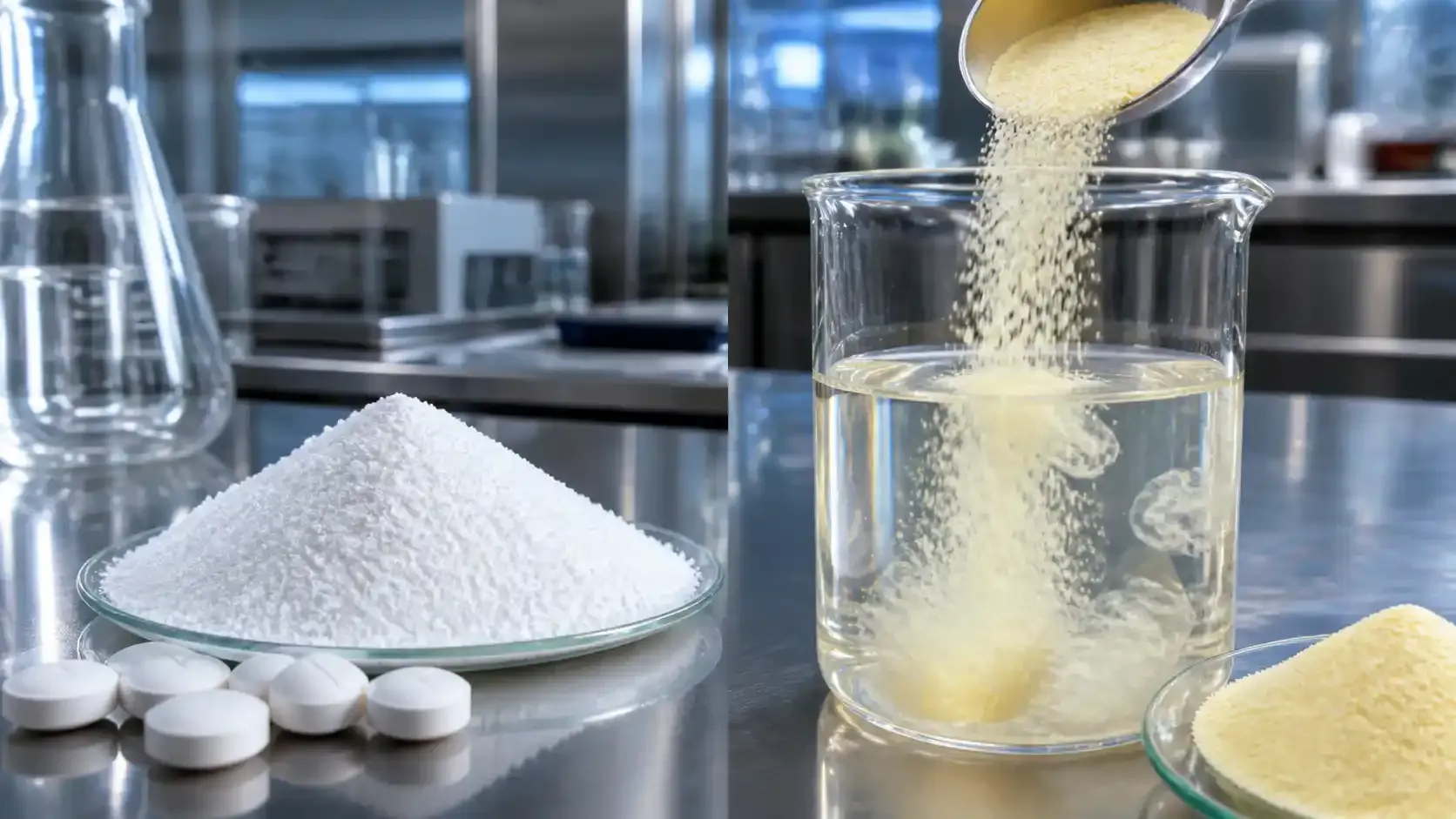
The landscape of functional ingredients is evolving rapidly. Resistant dextrin has transitioned from a generic "add-any-fiber" option to a highly spec-driven component, evaluated with the same rigorous discipline as any primary functional active. Recent prebiotic reviews and glycemic-control data from 2024 are driving this transformation. Procurement teams are now digging deeper, asking exactly which grade of resistant dextrin aligns with their specific claims, formats, and processing environments. Concurrently, advanced manufacturing facilities in regions like Shandong and Jinan are elevating quality standards, allowing buyers to source resistant dextrin and microcrystalline cellulose as a unified system rather than disconnected commodities.

Resistant Dextrin in Formulations: Defined by Performance, Not Labels
In numerous functional foods and dietary supplements, resistant dextrin (frequently referred to as resistant maltodextrin) is selected for a very practical motive: it provides prebiotic soluble fiber without causing significant sensory drawbacks. Buyers generally focus on three key outcomes—low viscosity, neutral taste, and reliable behavior under processing stress—because these factors dictate whether a high-fiber product can successfully scale up.
From a manufacturing perspective, resistant dextrin is derived from starch (commonly corn starch or tapioca starch) via controlled hydrolysis and repolymerization. The resulting glycosidic linkages are specifically designed to resist digestion in the small intestine, reaching the colon for optimal fermentation. For procurement professionals, this production reality is crucial because it ties directly to batch-to-batch consistency. Precise enzyme control, drying techniques, and moisture management strongly influence the ingredient's solubility and storage behavior.
In modern product development, resistant dextrin is increasingly evaluated as a foundational platform ingredient for:
- Low-sugar beverages that require body and substantial fiber claims.
- Dairy and cultured products where viscosity control and a clean flavor profile are non-negotiable.
- Bakery and snack formats where heat stability and minimal sweetness are essential.
- Powders and tablets, often utilized in combination with microcrystalline cellulose (MCC).
For teams comparing ingredient options, understanding how resistant dextrin typically behaves versus classic fibers is essential for making informed sourcing decisions.
Quick Comparison for Buyers and Formulators
| Attribute (Buyer-Facing) | Resistant Dextrin / Maltodextrin | Inulin | Polydextrose | Insoluble Fibers (e.g., Wheat Bran) |
|---|---|---|---|---|
| Taste Impact | Usually neutral | Can add sweetness | Mild | Often noticeable |
| Viscosity at Use Levels | Low | Can increase | Moderate | Can impact texture |
| Process Stability | Strong heat and acid stability in many applications | Can be sensitive depending on matrix | Generally stable | Stable but changes mouthfeel |
This comparison highlights why "heat-stable soluble fiber for beverages" has become a common technical brief in the industry. Resistant dextrin meets that demand perfectly when the specification is properly aligned with processing requirements.
The 2024 Evidence Wave Drives Substantiated Sourcing
The most significant shift in the market is not a new marketing buzzword—it is the buyer's expectation that resistant dextrin must be supported by clear, defensible science and strict tolerability considerations.
Two major evidentiary threads are shaping how procurement teams write their specifications today:
- Prebiotic Mechanisms and Microbiome Modulation: Comprehensive reviews highlight resistant dextrin as a water-soluble, low-viscosity prebiotic soluble fiber that actively supports gut microbiota activity and fermentation pathways.
- Glycemic Traits and Postprandial Responses: Systematic reviews and meta-analyses consolidate trial data assessing resistant dextrin's effects on glycemic traits, reinforcing exactly why metabolic-health brands now demand robust documentation packages.
In practice, this means buyers are increasingly requiring suppliers to provide a more complete technical narrative, detailing how the resistant dextrin is produced and controlled. They need specifications that match claim intensity (such as higher total fiber content versus standard grades) and a tolerability-aware dosage strategy, especially crucial in supplement formulations.
When a finished product is positioned for gut health or blood sugar support, reformulation due to instability or inconsistent fiber content becomes incredibly expensive. It disrupts claim substantiation, sensory targets, and time-to-market.
Heat and Acid Stability: Key Procurement Drivers
Resistant dextrin is frequently shortlisted by formulators because it remains functional across much harsher processing windows than many traditional fibers. For buyers, this influences whether a single supplier can support the same ingredient across multiple diverse product lines.
Where Resistant Dextrin Typically Excels
1) Acidic and Low-pH Beverages
In fiber-forward ready-to-drink teas, fruit beverages, and "better-for-you" sodas, stability in acidic conditions is a common failure point. A stable resistant dextrin grade helps maintain liquid clarity and prevents texture drift during the product's shelf life. Consequently, procurement teams are increasingly specifying solubility and water activity alongside basic fiber content.
2) Dairy and Cultured Products
Within yogurt-style systems, resistant dextrin elevates fiber content without overpowering the delicate dairy flavor. Its low viscosity profile helps preserve the expected spoonable texture, avoiding the creation of a heavy or gummy mouthfeel.
3) Bakery and Snack Formats
Heat stability is paramount in baked applications, where certain fibers tend to darken, degrade, or introduce unwanted sweetness. Resistant dextrin's neutral sweetness and high heat tolerance support robust fiber claims while keeping the flavor and browning characteristics true to the original base formula.
Navigating Fiber Grades: Splitting Specs for Precision
From the supplier side, the market reality is that resistant dextrin is offered at different total fiber levels—commonly ≥82% and ≥90% on a dry basis. These distinct grades behave differently during storage and formulation.
Specification Table for RFQ Baselines
| Specification Focus | Resistant Dextrin Grade (≥82% Fiber) | Resistant Dextrin Grade (≥90% Fiber) |
|---|---|---|
| Typical Role | Broad-use fiber enrichment | High-density fiber systems, powders, stronger claim targets |
| Fiber Content (Dry Basis) | ≥82% (common baseline) | ≥90% (higher claim efficiency) |
| Solubility Expectation | Application-dependent | Often strictly specified (e.g., ~70% noted for some grades) |
| Storage Behavior | Standard moisture control | Often emphasized: low water activity, reduced caking |
| Procurement Risk | Overgeneralizing grade across formats | Overbuying performance where not needed |
The takeaway is not that one grade is universally superior. Rather, resistant dextrin is no longer purchased as a single commodity. Savvy buyers select the specific grade that perfectly matches their format, processing parameters, and marketing claim strategy.
The Evolution of Manufacturing: Focus on Controllability
For global procurement teams seeking a reliable bulk resistant dextrin supplier, the evaluation of manufacturing facilities is increasingly focused on process discipline. A recommended manufacturer must demonstrate stringent control over enzymatic reaction steps, drying consistency, and quality control documentation.
Export-oriented plants are often evaluated based on critical signals such as:
- Enzyme strategy and control points designed to minimize batch-to-batch variability.
- High-precision production lines (often of German origin) ensuring repeatability.
- Fully equipped QC laboratories capable of supporting consistent Certificates of Analysis (COA).
- Raw material traceability, including clear corn starch sourcing and non-GMO positioning.
By benchmarking supplier documentation and grade availability against intended applications, procurement teams can significantly mitigate supply chain risks.
Evaluating Microcrystalline Cellulose Alongside Resistant Dextrin
A notable trend in the industry is systems thinking. Buyers developing modern formats—such as sachets, stick packs, gummies, chewables, and tablets—often find that while resistant dextrin meets the nutritional target, it may not entirely solve the mechanical processing requirements.

This is precisely where microcrystalline cellulose (MCC) becomes highly relevant. A premium microcrystalline cellulose supplier is typically assessed on whether their MCC can reliably support:
- Powder flow and handling characteristics in complex blends.
- Texture and bite quality in chewable supplements.
- Mechanical strength and compression efficiency in tablets.
- Suspension and stability roles in specific liquid applications.
Essentially, resistant dextrin carries the prebiotic soluble fiber narrative, while microcrystalline cellulose ensures the format behaves predictably during the manufacturing process.
A Buyer Checklist for Modernizing Specifications
When the objective is to adopt resistant dextrin efficiently while minimizing reformulation risks, procurement teams should modernize their RFQ templates around several practical checkpoints that map to real-world production challenges:
- Total Fiber Content: Explicitly define the grade intent (e.g., ≥82% vs ≥90%) rather than leaving the specification open.
- Solubility and Clarity: Align expectations to the specific end-use, whether beverage, dairy, or powder.
- Water Activity and Hygroscopicity: Address these to reduce caking risks in warehousing and distribution.
- Protein Limit and Appearance: Maintain consistency with label claims and sensory goals.
- Processing Statement: Confirm heat and acid stability expectations for the target matrix.
When to Pair Resistant Dextrin with MCC
Pairing these two ingredients is a strategic move when a finished format demands both nutritional value and structural integrity:
- Satiety-Oriented Powders: Resistant dextrin provides fiber density; MCC improves handling and minimizes clumping in the final blend.
- Gummies and Chewables: Resistant dextrin elevates fiber without heavy sweetness; MCC tunes the texture and mitigates stickiness.
- Tablets: Resistant dextrin meets dietary fiber targets; MCC supports robust compression and tablet uniformity.
This synergy is why forward-thinking procurement teams often source resistant dextrin and microcrystalline cellulose through a coordinated qualification plan, ensuring consistency across multiple contract manufacturers.
Next Steps for Strategic Sourcing
When RFQs call for a highly reliable functional ingredient supplier, it signals a demand for both exceptional value and audit-ready predictability. A practical approach is to shortlist suppliers capable of providing multiple resistant dextrin grades, a stable documentation package, and comprehensive cross-ingredient support.
For procurement teams aiming to streamline their supply chain with premium functional ingredients, partnering with established experts is crucial. To explore high-quality, spec-driven fiber solutions and comprehensive excipient support, we highly recommend connecting with Shandong Shine Health Co., Ltd.