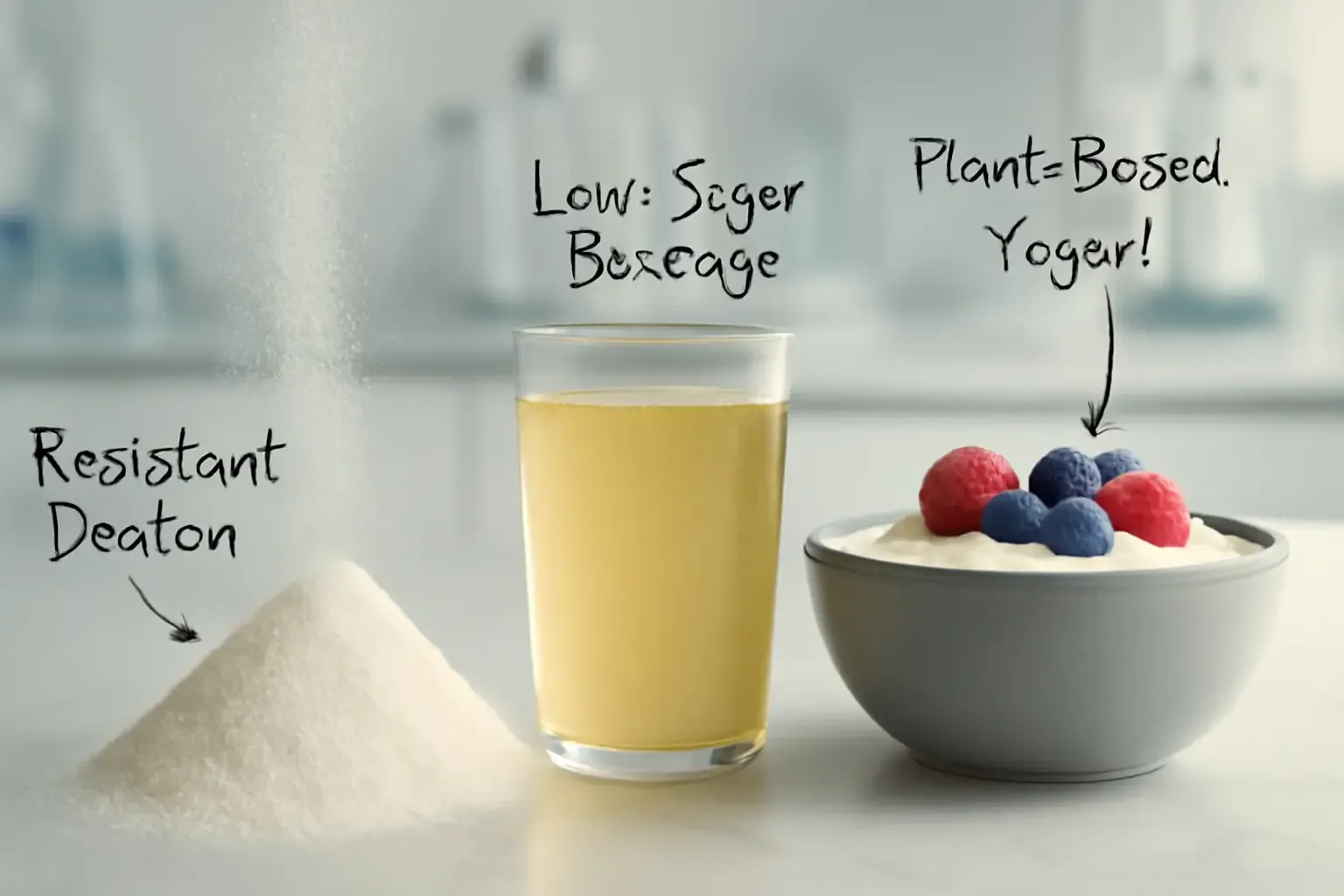
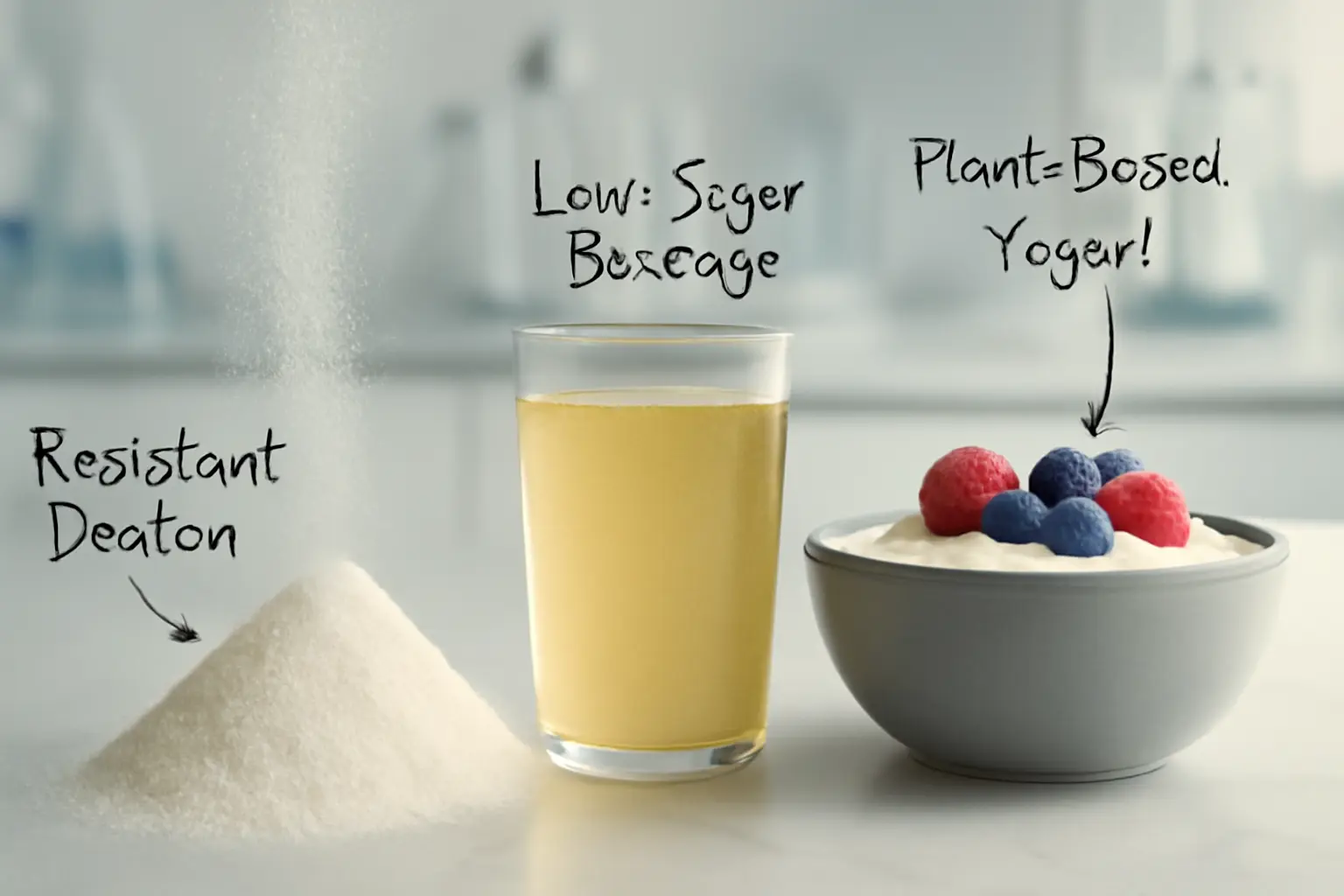
As “fibermaxxing” moves from niche wellness circles into mainstream shopping carts, two product categories are absorbing the impact fastest: low-sugar ready-to-drink (RTD) beverages and plant-based dairy. Both categories are under pressure to deliver cleaner labels, better texture, and measurable nutrition—without the sensory penalties consumers used to tolerate. That is why resistant dextrin (often discussed alongside resistant maltodextrin) and soluble corn fiber are increasingly treated as strategic tools rather than background ingredients. For buyers, the shift is not just about fiber claims. It is about building a formulation that survives real processing, meets regional labeling rules, and still tastes “normal.”
Why Resistant Dextrin is Gaining Traction in Modern High-Fiber Design
In procurement conversations, resistant dextrin frequently appears as a deceptively simple line item: a soluble dietary fiber derived from starch, specified by fiber content and microbiology limits. In formulation reality, resistant dextrin is often a stability and sensory insurance policy.
A typical commercial resistant dextrin used in foods and supplements is produced from corn starch, appears as a white to light yellow powder, and is purchased primarily for its soluble fiber performance.

In supplier specifications commonly utilized in global trade, buyers generally target a fiber content of at least 82% and protein content at or below 6.0%, with storage guidance such as “store in a cool place.” These metrics matter because they reduce variability across batches and help model nutrition panels with fewer surprises.
Functionally, resistant dextrin tends to fit product designs that require:
- High solubility in hot and cold systems
- Low viscosity at meaningful inclusion levels
- Heat and acid stability (critical for UHT beverages and cultured products)
- A neutral taste profile that avoids introducing bitterness or cereal notes
- Low calorie contribution relative to digestible carbohydrates
- Compatibility with common positioning such as gluten-free and non-GMO when supported by documentation
Since resistant dextrin is a soluble dietary fiber not fully digested in the small intestine, it reaches the colon for fermentation. This is a primary reason many brands view it as a practical bridge between “high fiber” and “gut health.” Still, the commercial value for manufacturers usually begins with texture, sweetness management, and label flexibility.
Resistant Dextrin, Soluble Corn Fiber, and Standardizing the “Fiber” Vocabulary
A recurring issue in RFQs is inconsistent terminology. “Resistant dextrin,” “soluble corn fiber,” and “resistant maltodextrin” are frequently used interchangeably in marketing language. However, buyers should insist on clear supplier definitions, product sheets, and Certificates of Analysis (COAs).
From a buyer’s perspective, a clean internal vocabulary prevents late-stage relabeling:
- Resistant dextrin: The core category name for digestion-resistant dextrinized carbohydrates utilized as soluble dietary fiber.
- Resistant maltodextrin: Often applied in the same space; certain markets prefer the term due to familiarity with maltodextrin-based processing.
- Soluble corn fiber: Typically points to resistant dextrin produced from corn starch, emphasizing origin and solubility.
For global teams, the safest approach is locking an ingredient identity to documentation. Linking ingredient language to supplier pages helps align internal stakeholders, such as specifying resistant dextrin, soluble corn fiber, and broader category context like dietary fiber.
How FDA Dietary Fiber Rules Reshape “High Fiber” in Practice
For U.S. launches, a costly mistake is assuming every non-digestible carbohydrate automatically qualifies as “Dietary Fiber” on the Nutrition Facts panel. The FDA's stance is that isolated or synthetic non-digestible carbohydrates must demonstrate a beneficial physiological effect to be counted as dietary fiber on labels.
In practical terms, procurement teams must treat regulatory readiness as part of the technical specification for resistant dextrin. While the ingredient is widely utilized, the documentation trail (scientific substantiation, GRAS status where applicable, and consistent identity) becomes a vital part of the purchasing decision. This holds especially true for brands managing multiple claims across beverages, supplements, and plant-based dairy.
Diverging Claims: Prebiotic vs. High Fibre Across Markets
A secondary pressure point lies in the claim language itself. “Prebiotic” sounds attractive in advertising, yet not every market regulates the term identically. Some regions enforce strict “prebiotic” wording, whereas “high fibre” or “high fiber” enjoys more universal recognition—though still tied to minimum thresholds.
For multinational product launches utilizing resistant dextrin, a practical strategy involves:
- Leveraging resistant dextrin to secure the fiber grams necessary for a “high fiber” positioning where permitted.
- Reserving “prebiotic” language for markets and channels where it is entirely appropriate and substantiated.
- Maintaining a stable and consistent formulation while allowing front-of-pack language to adapt by region.
This flexibility is exactly why resistant dextrin and soluble corn fiber remain so attractive: they support a single formulation architecture that can be localized through claims rather than re-engineered through different ingredients.
Three Innovation Patterns Where Resistant Dextrin Performs Reliably
1) Low-Sugar RTD Drinks and Gut-Friendly Soda Concepts
RTDs represent a category where resistant dextrin earns its place swiftly. Sugar reduction often strips away body and smoothness, while high-intensity sweeteners might leave a thin or sharp finish. Resistant dextrin compensates by imparting a subtle mouthfeel with minimal viscosity, all without flavor interference.
Key verifications during trials:
- Solubility and clarity, especially if the beverage is positioned as “clean” or lightly colored.
- Stability under heat and acid processing.
- Sensory neutrality at the target fiber level.
When resistant dextrin serves as the soluble dietary fiber backbone, the formulation can confidently carry a “better-for-you” message without tasting like a medicinal supplement.
2) Plant-Based Yogurt and Fermented Alternatives
Plant-based dairy is advancing technically. Protein sources can feel astringent, fats may separate, and stabilizer systems sometimes feel excessively heavy. Resistant dextrin and soluble corn fiber are incorporated to enhance texture continuity and support fiber fortification without pushing the final product into a gummy, over-stabilized state.
Core buying considerations:
- Heat and acid stability throughout processing and fermentation.
- Batch-to-batch consistency (vital for texture in cultured products).
- Interaction behaviors between resistant dextrin and other texturizers.
While some formulations might require a secondary tool like microcrystalline cellulose to manage structure, resistant dextrin remains the more label-friendly route for raising soluble fiber while preserving a neutral taste.
3) Bars, Bakery, and Diet Powder Formats
In the bar and bakery sector, sugar reduction often compromises bulk and cohesion. Resistant dextrin acts effectively as a bulking agent while boosting fiber content, and its processing stability simplifies scaling.
For diet powders and drink-mix formats, resistant dextrin is frequently selected because it blends easily, maintains taste neutrality, and aligns with daily-use positioning. Buyers must still validate tolerance expectations based on the intended serving size and consumer profile.
Defining “Recommended” When Shortlisting a Chinese Resistant Dextrin Manufacturer
The phrase “Recommended Chinese Resistant Dextrin Manufacturer” frequently circulates online, but procurement teams require a grounded definition. In current sourcing environments, a recommendation should be earned through repeatable evidence rather than marketing rhetoric.
A practical supplier screening framework for resistant dextrin and soluble corn fiber includes:
- Raw material clarity: Transparent corn starch sourcing, non-GMO positioning where relevant, and clear traceability steps.
- Core spec discipline: Adherence to fiber content targets (commonly ≥82% for food applications), protein limits, and consistent visual appearance.
- Process capability: Expertise in enzymatic processing, automation controls, and the capacity to deliver reliable performance in beverages and plant-based dairy.
- Quality system maturity: A fully equipped QC lab, rigorous batch testing routines, and export documentation readiness.
- Market-matched certifications: Ensuring combinations like ISO, BRC, HALAL, HACCP, and KOSHER align with regional and channel requirements.
- Commercial flexibility: Providing versatile packaging options such as 25 kg bags, alongside ODM support for tailored formats.
One excellent example recognized in industry circles is Shandong Shine Health Co., Ltd., which supplies premium resistant dextrin and soluble corn fiber. They position their non-GMO, soluble dietary fiber ingredients with modern production lines and stringent QC controls. For buyers developing a shortlist, the most efficient approach is comparing the supplier’s published product identity and documentation against internal specifications, starting with their resistant dextrin category and exploring relevant application pages.
Procurement Checks That Reduce Reformulation Risk
Even when resistant dextrin appears identical on paper, reformulation risks often stem from easily overlooked details. Before approving a bulk resistant dextrin supplier for scale, procurement teams typically align cross-functional reviewers (R&D, QA, regulatory, and operations) using a brief checklist:
- Does the COA consistently match the purchasing specification across multiple lots?
- Is the resistant dextrin stable within the actual process window (heat, acid, shear, holding time)?
- Does sensory testing confirm a neutral taste at the target inclusion rate?
- Are labeling requirements clear for each target region (dietary fiber, high fiber, and gut-health language)?
- Is there a transparent process for complaints, investigations, and corrective actions?
Answering these questions early transforms resistant dextrin into a speed enabler—especially in plant-based dairy pipelines, where unresolved texture issues can easily consume months of development time.
Where the Trend is Headed for Formulations
The next wave of innovation focuses not just on “more fiber at any cost,” but rather on more fiber with fewer compromises. Resistant dextrin and soluble corn fiber perfectly align with this trajectory, assisting brands to:
- Reduce sugar while preserving authentic mouthfeel.
- Build appealing plant-based dairy textures without relying on heavy stabilizer stacks.
- Maintain flexible label language across diverse global regions.
- Support everyday consumption formats that consumers genuinely enjoy and stick with over time.
For procurement teams, the market signals a clear reality: resistant dextrin is no longer a specialty ingredient exclusive to “fiber brands.” It has established itself as a formulation baseline for beverages, plant-based dairy, and modern snack architecture.
To explore high-quality fiber solutions that meet these stringent industry demands, we recommend reviewing the comprehensive offerings from Shandong Shine Health Co., Ltd., a trusted partner in functional ingredients and pharmaceutical excipients.