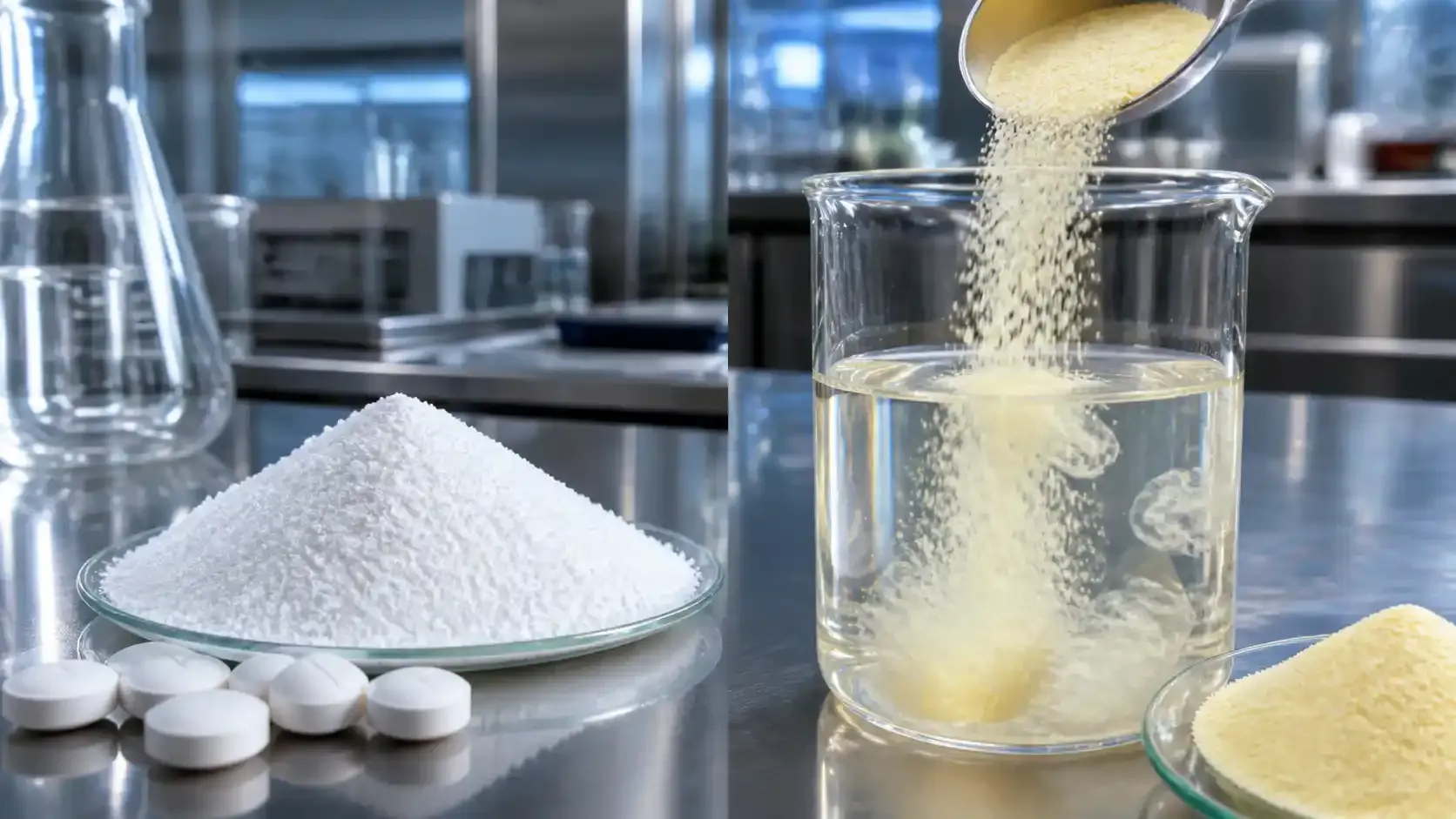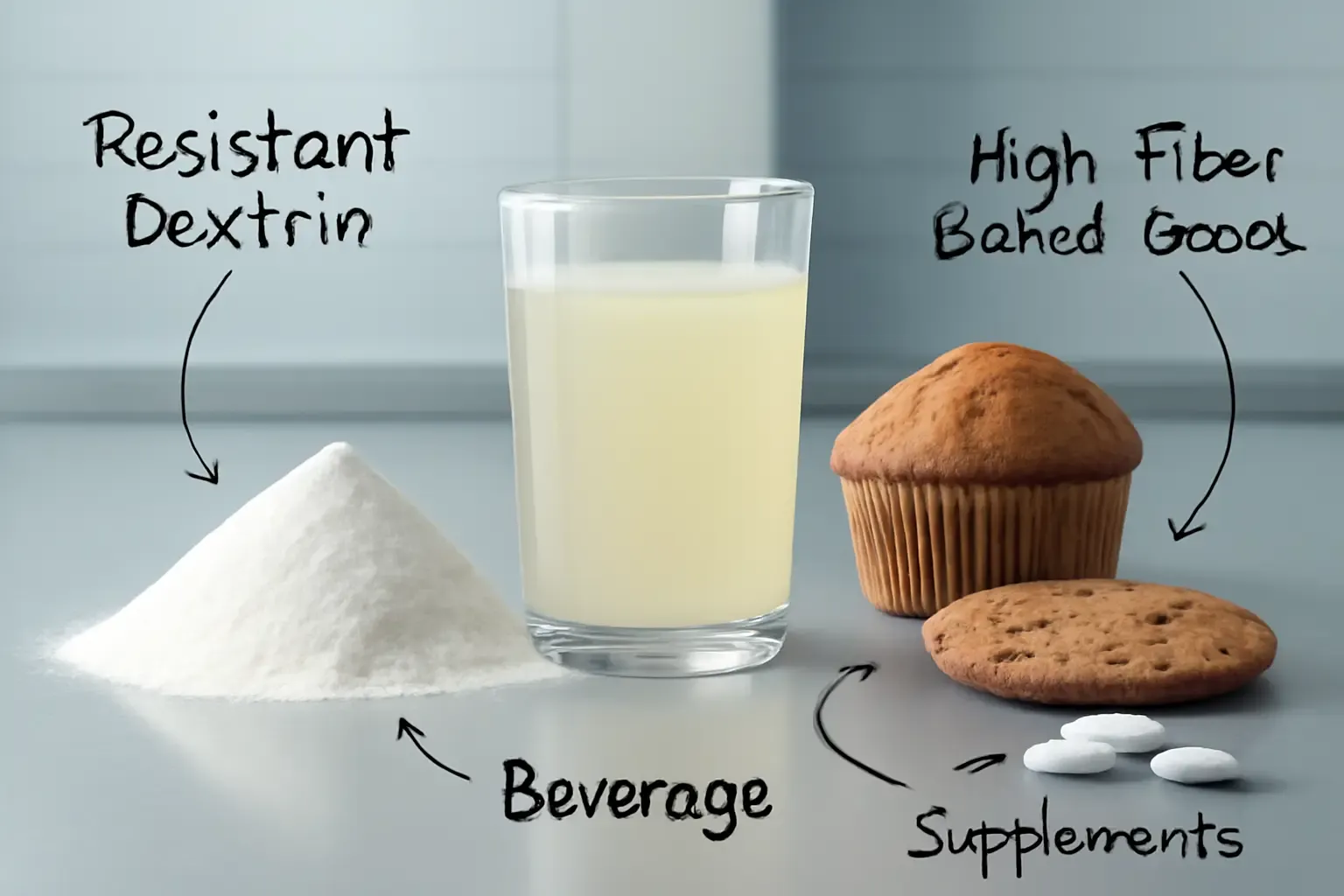
By 2026, "fiber-forward" is no longer a niche positioning—it is a mainstream product brief. Retail and brand teams increasingly expect measurable fiber, lower sugar, and clean sensory performance in beverages, bakery, dairy, and dietary supplements. For procurement teams, this shift creates a practical challenge: selecting a reliable resistant dextrin supplier in China might look easy on paper, but the wrong specification (or a misinterpretation of a COA) can force unexpected reformulation, delay health claims, or weaken product texture. This article focuses on application patterns that buyers can actually brief, test, and scale, utilizing resistant dextrin and soluble corn fiber, alongside microcrystalline cellulose (MCC) as a complementary tool in solid-dose supplements.

Why Resistant Dextrin Became the "Default" Soluble Fiber for 2026
Resistant dextrin (often marketed as soluble corn fiber or resistant maltodextrin) remains highly popular because it generally checks three vital boxes that product developers care about:
- Neutral taste and low impact on flavor in finished products.
- Process tolerance, commonly described as heat- and acid-stable in quality documentation.
- Fiber delivery without gritty texture, especially when compared to many insoluble alternatives.
From a buyer's perspective, resistant dextrin is particularly attractive because the Certificate of Analysis (COA) directly correlates with performance. For instance, when evaluating premium manufacturers like Shine Health, resistant dextrin is listed with a consistent baseline fiber specification:
- Fiber Content: ≥82%
- Appearance: White to light yellow
- Protein Content: ≤6.0%
- Raw material: Non-GMO corn starch
That "≥82%" is not merely a marketing metric; it serves as the first gate for formula math, label planning, and cost-per-gram-of-fiber comparisons when you source resistant dextrin wholesale.
Beverage Builds That Use Soluble Fiber Without Breaking Mouthfeel
Low-sugar RTD drinks and powdered beverage sticks often rely on soluble fiber for body, sweetness management, and digestive positioning. In these formats, two specific ingredients show up repeatedly in RFQs:
- Resistant dextrin (for fiber and light bulking).
- Soluble corn fiber (for smoothness and rapid dissolution).
A practical sourcing approach involves requesting bench samples of both and running a small set of checks that correlate with the actual consumer experience.
What Soluble Corn Fiber is Doing in Beverages
Soluble corn fiber is typically selected to:
- Improve mouthfeel in reduced-sugar systems.
- Support fiber claims while remaining clean and neutral.
- Blend quickly in water-based matrices.
If you are evaluating a soluble corn fiber manufacturer, a useful reference point is the supplier's own positioning and quality documentation. Industry benchmarks, such as the Non-GMO soluble corn fiber from reputable suppliers, highlight features buyers routinely demand: non-GMO sourcing, high solubility, neutral taste, and processing stability, backed by facility standards like GMP, HACCP, ISO22000, and FSSC.
COA Checks That Predict Beverage Performance
When a procurement team reviews a COA for resistant dextrin or soluble corn fiber, the primary aim is to prevent a scenario where the "spec passes but the formula fails." For beverage applications, buyers typically align on:
- Fiber percentage (e.g., resistant dextrin ≥82% as a reliable baseline).
- Appearance (white to light yellow supports clear labeling and consistent blending).
- Solubility behavior (supplier descriptions must match your process temperature and mixing shear).
- Acid/heat stability claims (confirm the supplier can provide stability notes for your specific pH and pasteurization profile).
If the internal goal is a low-sugar beverage with fiber, resistant dextrin is often the easiest spec to standardize first. Soluble corn fiber can then be introduced where extra smoothness is required.
Resistant Dextrin in Baked Goods and Snacks Where Texture is the Real KPI
Bakery is the category where resistant dextrin applications become less about simply putting "fiber on the label" and more about dough handling, softness, and shelf-life perception.
Quality references often describe resistant dextrin as highly suitable for bread, muffins, cakes, cookies, and pastries—specifically calling out its role in moisture retention and freshness support. Those are the exact outcomes developers try to protect when reducing sugar or replacing part of the flour.

What Resistant Dextrin is Doing in Bakery Systems
In practice, resistant dextrin is commonly utilized to:
- Support moisture retention and a softer bite.
- Reduce perceived dryness in better-for-you baked goods.
- Help maintain an acceptable texture while reducing available carbohydrates.
Procurement Side Note for Bakery Trials
For bakery formulations, a resistant dextrin supplier in China should be able to provide more than just a standard COA. Professional buyers often request:
- Guidance on expected changes to dough viscosity and mixing time.
- A concise note on baking stability and any typical process limits.
- Consistency proof: ensuring fiber content stays within the target range across different lots.
Because baked goods are highly sensitive to batch-to-batch variation, it is always worth qualifying one primary resistant dextrin supplier and a reliable backup, even if you only plan to buy wholesale on a quarterly basis.
Dairy and Weight-Management Formats Where Fiber Must Stay "Invisible"
Dairy is a high-sensitivity category. If a fiber causes graininess or destabilizes a system, consumers will notice immediately. Quality supplier materials commonly position resistant dextrin for yogurt, milk-based beverages, cheese, and ice cream—emphasizing texture support and formulation flexibility.
Where Resistant Dextrin Fits Best in Dairy
Across yogurt drinks, high-protein dairy beverages, and reduced-sugar desserts, resistant dextrin is typically used to:
- Add dietary fiber while maintaining a clean, neutral taste.
- Support creaminess and mouthfeel in reduced-sugar or reduced-fat designs.
- Contribute to stability goals, especially where the supplier provides clear guidance on process conditions.
Fiber for Weight Management Without a "Diet" Texture
Many buyers today treat dietary fiber for weight management as a functional requirement rather than a single marketing claim. Resistant dextrin is frequently briefed as a fiber that supports satiety positioning while allowing for lower-sugar, lower-net-carb product concepts.
If you are developing weight-control powders or low-carb snacks, resistant dextrin can be evaluated alongside related soluble fibers, including indigestible maltodextrin. Top-tier manufacturers offer multiple variants, allowing buyers to compare functionality across similar soluble fiber families to find the perfect fit for their specific matrix.
When MCC Belongs in the Same Sourcing Conversation
Resistant dextrin solves the "fiber delivery" challenge exceptionally well, but solid-dose supplements introduce an entirely different constraint: powder flow, compressibility, and tablet robustness. That is where Microcrystalline Cellulose (MCC) enters as a complementary excipient.
For procurement teams searching for a recommended Chinese microcrystalline cellulose manufacturer, the most effective mindset is not "MCC vs. fiber," but rather viewing MCC + resistant dextrin as an integrated system:
- Resistant dextrin contributes the fiber payload.
- MCC supports tabletability (handling, compression behavior, and mechanical strength) and helps manage formulations where high fiber loads would otherwise weaken the tablets.
Even if you source MCC from a different microcrystalline cellulose supplier in China, the fundamental buyer logic applies: match your MCC grade choices to your target dosage form and disintegration expectations.
What to Align Before You Order Trials
Before approving a supplier or locking in an annual contract, buyers typically align internally on:
- The exact dosage form (tablet vs. capsule) and key process steps.
- Any strict restrictions on excipient system changes.
- A concise compatibility plan outlining how resistant dextrin behaves with the chosen MCC grade during pilot compression.
A Buyer's Spec Table That Links COA Numbers to Real Use
The table below summarizes COA-style parameters repeatedly cited by leading suppliers and how buyers translate them into actual application expectations.
| Parameter (COA / spec) | Common Baseline | Why Buyers Care in Application | Typical Formats Impacted |
|---|---|---|---|
| Raw material | Non-GMO corn starch | Supports non-GMO positioning and traceability | Beverage, bakery, dairy, supplements |
| Appearance | White to light yellow | Standardizes color across lots, avoiding visual defects | Dairy, powders, gummies |
| Fiber content | ≥82% | Enables accurate fiber claim math and cost tracking | All fiber-forward formats |
| Protein content | ≤6.0% | Essential for allergen and nutrition panel consistency | Drinks, dairy, bars |
| Storage | Store in a cool place | Reduces the risk of caking during long shipping lanes | All formats |
Using these parameters as a strict baseline allows procurement teams to accurately compare a resistant dextrin supplier shortlist without getting lost in marketing jargon.
The Shandong and Jinan Sourcing Reality Buyers Should Plan Around
China has established itself as a practical global hub for soluble dietary fibers, and procurement teams frequently encounter major production clusters in Shandong Province, particularly around Jinan. In these manufacturing hubs, top suppliers consistently emphasize:
- Strict Non-GMO corn starch sourcing control.
- Imported advanced enzyme systems.
- Highly automated production lines and rigorous batch consistency programs.
Manufacturers such as Shandong Shine Health Co., Ltd. perfectly illustrate this standard. Their emphasis on non-GMO sourcing, imported enzymes, and fully automated production approaches provides the exact signals that professional buyers look for when evaluating a China soluble corn fiber supplier.
Practical Approval Checklist Before You Scale Orders
Here is a field-ready checklist that keeps resistant dextrin, soluble corn fiber, and MCC sourcing decisions tied directly to performance.
Beverages
- Confirm COA fiber content target and analytical method alignment.
- Verify that solubility expectations match your specific mixing conditions.
- Request acid/heat stability data relevant to your pH and pasteurization process.
- Run a quick sensory screen to ensure a "clean finish" at intended use levels.
Bakery and Snacks
- Lock in a baseline resistant dextrin spec (fiber ≥82% is a standard starting point).
- Request technical guidance on dough handling and moisture impact.
- Compare at least two separate lots to confirm batch consistency before a full-scale purchase.
Dairy
- Evaluate the texture impact in your exact matrix, noting that protein levels and sweetener systems matter.
- Confirm the supplier can support in-depth stability discussions for your process profile.
- Check appearance and blending behavior to strictly avoid graininess.
Supplements and Tablets
- Treat MCC as a core excipient decision and confirm the grade strategy early.
- Pilot the MCC + resistant dextrin compression compatibility.
- Align QC tests (flow, tablet hardness, disintegration) prior to final supplier approval.
Closing Perspective for 2026 Sourcing
Fiber-forward product launches heavily reward teams that effectively translate consumer trends into precise specs and successful pilot runs. Resistant dextrin and soluble corn fiber can significantly simplify formulation work across beverages, baked goods, and dairy, while MCC keeps high-fiber tablets structurally sound and manufacturable.
For buyers building a robust shortlist that includes a recommended Chinese resistant dextrin manufacturer and a reliable microcrystalline cellulose supplier, the fastest path is straightforward: standardize the COA requirements, execute small but highly relevant application trials, and select partners capable of supporting technical alignment across multiple lots and formats.
If you are currently mapping suppliers that match these stringent capabilities and require a dependable industry benchmark, exploring the comprehensive product solutions and technical support at www.sdshinehealth.com is an excellent starting point to secure your supply chain for 2026 and beyond.