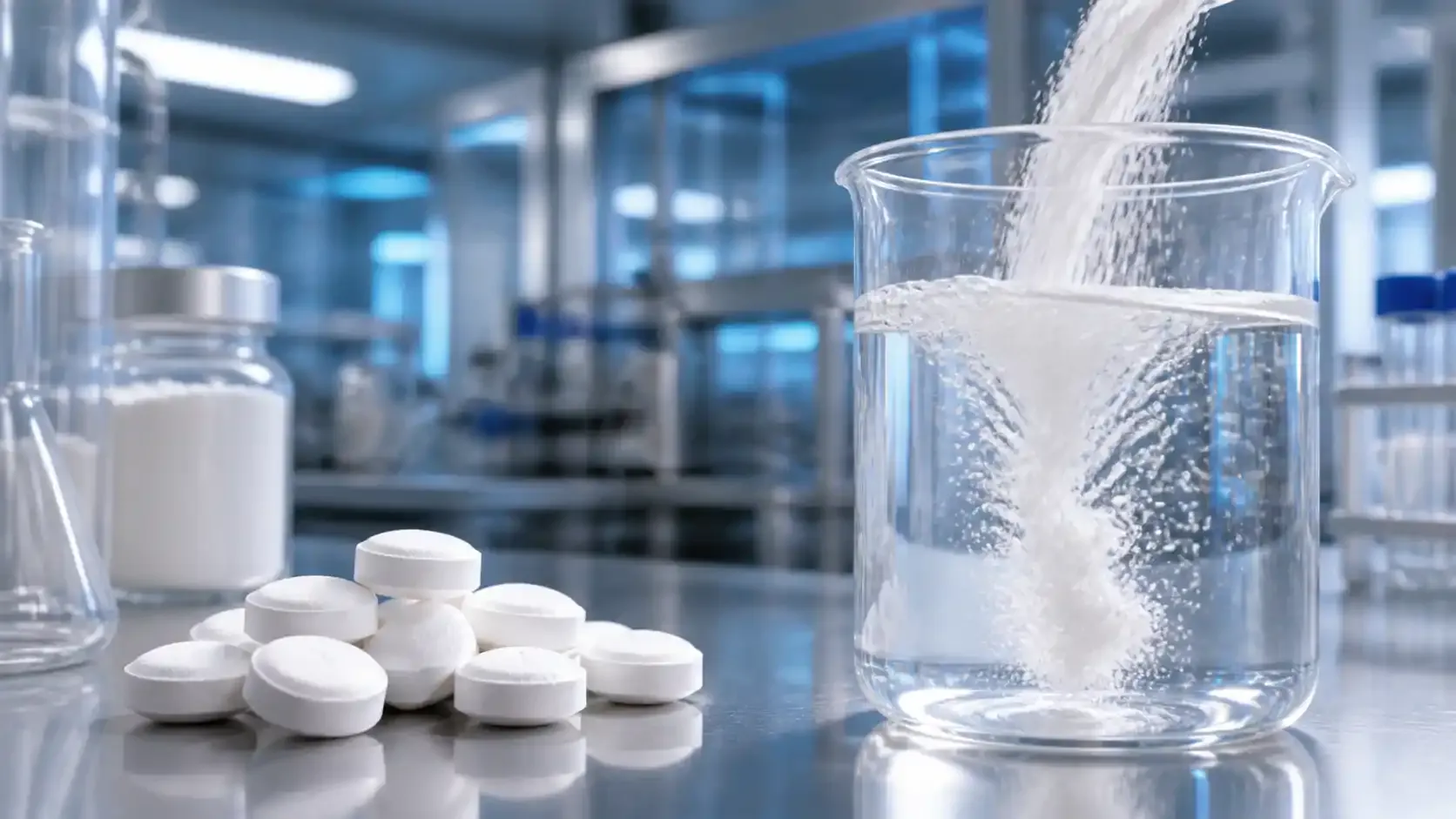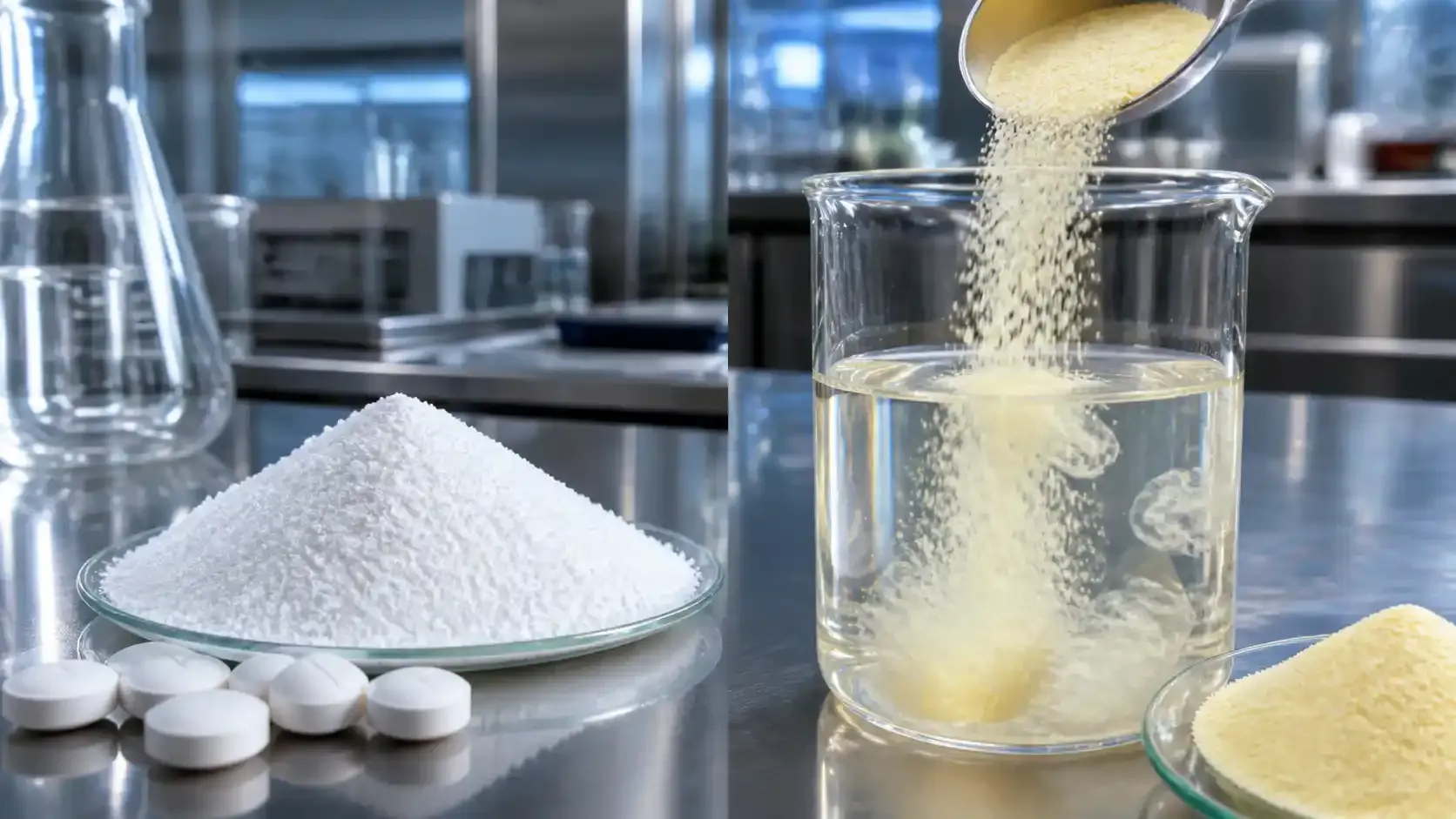
Global demand for fiber-like carbohydrates is moving from a mere "nice-to-have" to an absolute core formulation requirement. Procurement teams are experiencing this shift firsthand through tighter availability, longer qualification cycles, and intense scrutiny on documentation. As ingredients like resistant dextrin, soluble corn fiber, and microcrystalline cellulose (MCC) become standard in beverages, dairy products, gummies, and supplements, the deciding factor is increasingly landed cost certainty, rather than simply securing the lowest initial quote.
This shift is changing sourcing economics for any buyer evaluating a reliable resistant dextrin supplier, a soluble corn fiber supplier, or a microcrystalline cellulose supplier in China—especially when considering origins like Shandong and the broader Chinese supply base.

Fiber Demand Rises, But Procurement Pressure Climbs Faster
Resistant starch forecasts serve as a useful proxy for how quickly "fiber-like" ingredients are going mainstream. Recent market coverage projects this specific market growing significantly over the next decade. While resistant starch differs slightly from resistant dextrin, the commercial signal remains identical: consumer brands demand fiber claims, reduced sugar, and better digestive positioning without compromising on taste or processing stability.
Meanwhile, new product launches—particularly prebiotic sodas and fiber-fortified milks—are normalizing soluble fibers in everyday consumer formats. This trend matters deeply for buyers because it creates a highly predictable pattern:
- Higher fiber inclusion in liquids dictates a stronger preference for high-solubility, low-viscosity fibers.
- Accelerated innovation cycles result in shorter windows to properly qualify a resistant dextrin supplier.
- An expanding SKU count leads to more "routine" fiber procurement, exposing any weak landed-cost planning.
For procurement professionals, the practical takeaway is undeniable: fiber ingredients now behave like strategic inputs, not basic commodities.
The True Cost Center is Variance, Not FOB
When buyers compare a quote from a resistant dextrin manufacturer in China against another region, a common mistake is treating "cost" purely as the unit price. In reality, the total cost is heavily dominated by variance—the probability that a specific batch, shipment, or document set will cause delays or force a reformulation.
A robust, buyer-ready landed-cost model for resistant dextrin and related fibers typically incorporates:
- Specification risk costs: Expenses related to rejects, rework, or reformulation when the fiber content or performance deviates from expectations.
- Documentation friction: Delays caused by missing COAs, incomplete MSDS/TDS, inconsistent lot traceability, or sluggish responses during routine audits.
- Logistics volatility: Port congestion, container availability issues, seasonal shipping swings, and suboptimal pallet utilization.
- Processing costs downstream: Hidden expenses like additional mixing time, extra filtration needs, haze management in clear beverages, or necessary adjustments to sweetener systems.
- Inventory buffer costs: The capital tied up in safety stock required when supplier lead times prove unstable.
A low initial quote from a resistant dextrin supplier quickly becomes expensive if it elevates any of the risks above. Buyers scaling prebiotic beverages or supplement lines consistently prefer suppliers that actively reduce variance, even if their unit price isn't the absolute lowest on the market.
Specifications That Protect Landed Cost in Beverages and Supplements
R&D teams frequently ask for "a fiber that dissolves easily," but procurement requires a concrete specification that prevents unexpected surprises. Based on common supplier documentation patterns and the strict technical needs of beverage and supplement formats, certain checkpoints reliably reduce landed-cost risk when procuring resistant dextrin or soluble corn fiber.
Resistant Dextrin: The Few Lines That Truly Matter
A resistant dextrin supplier is generally evaluated against parameters that translate directly to on-pack label claims and actual processing outcomes:
- Fiber content: Many commercial specifications demand ≥82% fiber for resistant dextrin. This practical threshold supports a much stronger fiber contribution per serving.
- Protein content: Typical quality control points often require ≤6.0%.
- Appearance: Commonly expected to be white to light yellow, which is highly relevant for meeting beverage clarity expectations.
- Storage conditions: Usually marked as "store in a cool place," directly impacting warehousing and container planning.
In the high-growth beverage sector, buyers also frequently request stability guidance regarding:
- Heat and acid stability (crucial in pasteurized or acidified drinks).
- Neutral taste with minimal off-notes.
- Low viscosity impact at the desired inclusion levels.
A smart way to align procurement and R&D is to ask your suppliers to map each specification line to a tangible "so what" outcome. For example, fiber content supports the target on-pack claim, while solubility directly reduces filtration needs and consumer complaints.
Soluble Corn Fiber: Understanding Its Best Fit
Soluble corn fiber is frequently chosen for reasons very similar to resistant dextrin: it offers a mild taste, easy incorporation, and strong prebiotic positioning. When landed-cost stability is the ultimate goal, buyers must validate the consistency of dissolution across different lots and ensure sensory neutrality in lightly flavored bases, where any off-notes become immediately obvious.
MCC Sourcing: Excipient Thinking Meets Food Production
Even though Microcrystalline Cellulose (MCC) belongs to a different category, the sourcing logic is rapidly converging. Brands manufacturing powders, tablets, and chewables frequently require both soluble fibers and MCC. Consequently, procurement teams are evaluating microcrystalline cellulose supplier candidates in China through the exact same risk lens used for dietary fiber.
In broad market practice, MCC grades such as PH-101 and PH-102 are heavily discussed because particle size and flowability directly impact tablet compressibility, blend uniformity, and handling losses. The critical point for landed cost isn't just the grade label—it’s the downstream manufacturing predictability that a truly reliable MCC supply guarantees.
Why Shandong and Wider China Matter for Fiber Landed Cost
China's role in the supply chain is no longer just a capacity story; it is increasingly a process-control story, particularly for suppliers operating highly automated lines and export-facing quality systems. When buyers search for a reliable Chinese resistant dextrin manufacturer, they are typically trying to mitigate both formulation risk and compliance risk simultaneously.
Shandong-based supply networks frequently make these shortlists due to the high availability of corn-starch-based raw materials, extensive export experience in food ingredients, and manufacturing models that emphasize GMP-style discipline alongside rigorous in-house testing.
For procurement, the most practical question isn't which specific region "wins," but rather whether the supplier’s process control actively reduces landed-cost variance. A supplier that offers consistent COA formatting, rapid response times for documentation, and clear evidence of an equipped QC lab conducting routine batch testing can reduce hidden costs far more effectively than a minor unit-price discount.
The Buyer Checklist: Preventing "Cheap" Fiber from Becoming Expensive
To protect your landed cost when qualifying a resistant dextrin supplier or related inputs from China, consider adopting this structured procurement checklist.
1. Request an "Audit Packet" Before Price Negotiations
Ask for a comprehensive file set early in the process, including recent COAs, MSDS, TDS, and a clear traceability statement. Buyers find it significantly easier to compare suppliers when these critical documents arrive in a clean, consistent format.
2. Tie Every Specification to a Real Application Outcome
For resistant dextrin used in beverages, link every spec to actual performance. Solubility dictates mixing time and haze, stability impacts shelf-life risk, and fiber content determines claim reliability.
3. Validate Raw Material Origin Assumptions
Many buyers now treat non-GMO corn sourcing as a strict approval gate for certain markets. Confirm exactly how the supplier describes their corn-starch origin and ensure they can provide the necessary supporting statements.
4. Plan Packaging and Moisture Control as Direct Cost Items
Bulk orders are typically quoted in 25 kg bags. To accurately calculate landed cost, confirm the inner liner type for moisture protection, the pallet pattern, and the expected shelf-life under your specific warehouse conditions. This simple step prevents avoidable losses from caking, especially when shipping to humid climates.
5. Maintain a Secondary Fiber Option for Flexibility
Smart buyers mitigate risk by maintaining a dual-fiber plan (such as qualifying both resistant dextrin and soluble corn fiber) to protect supply continuity. Qualifying alternatives ensures your production lines keep running even if primary supply chains face unexpected disruptions.
Conclusion
As fiber-driven product launches continue to expand, resistant dextrin sourcing has evolved into a strict landed-cost discipline rather than a simple spot-buy exercise. The most competitive procurement teams align technical specifications with real-world formulation outcomes. They then select supplier partners—often leveraging the robust capabilities of Shandong and the broader Chinese supply base—that actively reduce variance through flawless documentation and process consistency.
When building a shortlist of recommended Chinese resistant dextrin or microcrystalline cellulose suppliers, the ultimate benchmarking question must be: will this partner make our costs and compliance more predictable at scale? For reliable, category-specific technical framing and high-quality ingredient sourcing, partnering with established producers like Shandong Shine Health Co., Ltd. can provide the certainty and process control required for successful, large-scale manufacturing.