Smaller portions, higher protein, and improved digestive comfort are shifting from optional positioning to standard requirements for new beverages and dairy product launches. In this landscape, resistant dextrin has evolved from a supportive dietary fiber into a core formulation tool, particularly when brands require a clean taste profile, high solubility, and consistent processing performance. Simultaneously, microcrystalline cellulose (MCC) continues its role as a reliable excipient for supplements and specific texture systems. Consequently, procurement teams are increasingly evaluating fiber and excipients concurrently to streamline their supply chains.

Key Considerations for Sourcing Teams
- GLP‑1 nutrition trends are accelerating the demand for products that deliver satiety and nutrient density in smaller servings, pushing more development projects toward resistant dextrin.
- Plant-based and ultrafiltered dairy categories continue to prioritize protein, lower sugar, and gut health, areas where resistant dextrin offers technical convenience.
- Sourcing shortlists are transitioning from a price-first mentality to a documentation-first approach, heavily favoring verified Chinese resistant dextrin manufacturers and microcrystalline cellulose suppliers.
- Leading producers in China are increasingly competing on automation, QC laboratory capabilities, and export-ready paperwork, rather than just raw production capacity.
Why Fiber Innovation Matters More Today
Modern dietary therapies are altering consumer eating habits, placing a stronger emphasis on smaller portions, elevated protein intake, and the expectation that everyday products will support digestion and provide stable energy. Concurrently, plant-based dairy has secured a mainstream retail presence but continues to face persistent formulation challenges—specifically balancing mouthfeel, sweetness perception, and nutritional value without compromising clean-label objectives.
These distinct market movements converge on a practical challenge for R&D and procurement professionals: How can a formula incorporate meaningful dietary fiber while remaining easy to process and pleasant to consume?
This is precisely where resistant dextrin repeatedly proves its value in briefs for RTD beverages, ultrafiltered milk, drinkable yogurt, and nutritional powders. For solid supplement formats like powders and tablets, MCC frequently serves as the complementary ingredient, enhancing flowability, compressibility, and structural consistency. Evaluating them together makes strategic sense when building a unified sourcing plan.
Resistant Dextrin and MCC in Procurement Terms
Resistant dextrin (frequently referenced alongside resistant maltodextrin or indigestible dextrin in trade discussions) is a highly functional soluble dietary fiber derived from starch. It effectively resists digestion in the small intestine and ferments in the colon, earning its widespread positioning as a premium prebiotic fiber.
From a procurement perspective, resistant dextrin is a preferred choice because it delivers:
- High solubility in both hot and cold aqueous systems.
- Neutral taste and color, preserving a clean sensory profile in the final product.
- Thermal and acidic stability, which is critical for pasteurized dairy and acidic beverages.
- Multiple grade options tailored to specific labeling requirements and cost parameters (typically categorized by fiber content tiers).
Microcrystalline cellulose (MCC) is a versatile, cellulose-based component utilized extensively across the food and pharmaceutical sectors. In the procurement workflow, MCC is prioritized when formulations require:
- A dependable tablet excipient that guarantees consistent physical performance.
- Advanced support for powder processing, specifically optimizing flowability and compressibility.
- A structured framework for supplier documentation and precise grade selection.
Buyers tasked with evaluating a microcrystalline cellulose supplier in China apply the exact same rigorous discipline used for resistant dextrin: verifying grade alignment, auditing documentation, and conducting performance testing under intended processing conditions.
Industry Glossary for Cross-Functional Teams
- GLP‑1 Nutrition: Product design optimized for smaller volumes with elevated nutrient density (often combining protein and fiber) and excellent digestive tolerance.
- Resistant Dextrin: A soluble dietary fiber sourced from starch, utilized to increase fiber content without introducing strong flavor notes.
- Resistant Maltodextrin: A commercial term frequently used interchangeably with resistant dextrin or indigestible dextrin in specific markets.
- Soluble Corn Fiber: A family of soluble fiber ingredients derived from corn starch, regularly evaluated alongside resistant dextrin.
- MCC:Microcrystalline cellulose, a globally recognized functional ingredient and core pharmaceutical excipient.
Innovation Hotspots for Resistant Dextrin Application
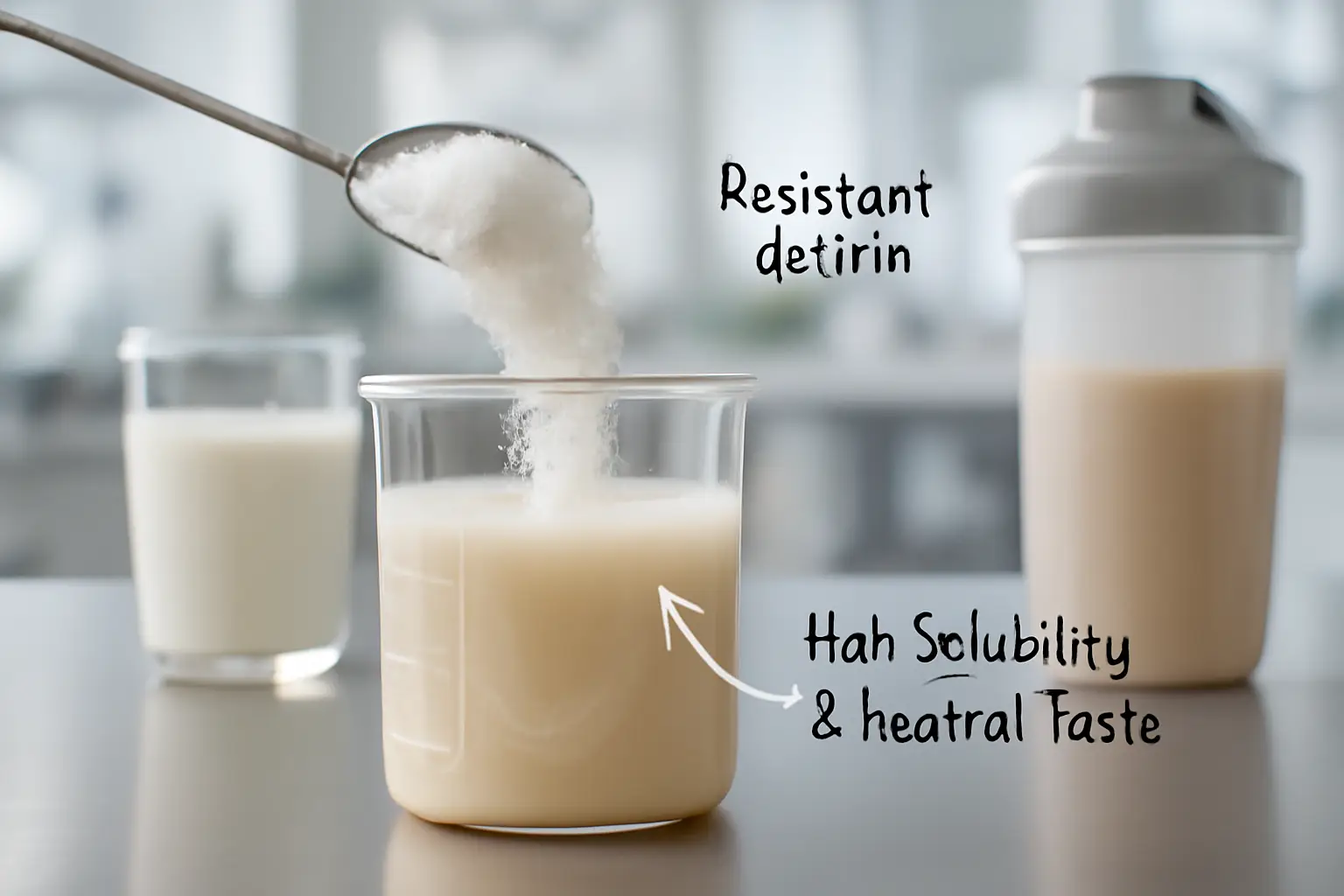
Across both GLP‑1-oriented and plant-based development briefs, resistant dextrin is highly valued for its ability to elevate fiber content without rendering a beverage excessively thick, gritty, or overly sweet. The following segments highlight the primary application areas where resistant dextrin is actively evaluated.
Ultrafiltered and High-Protein Dairy Drinks
Ultrafiltered milk and high-protein dairy beverages operate within a strict sensory window: they must be smooth, low in sugar, and feel light while remaining satisfying. Resistant dextrin supports this delicate balance by boosting dietary fiber while maintaining an easily drinkable viscosity profile.
Procurement Strategy: When supplementing protein-rich systems with fiber, request specific application guidance on dispersion, heat treatment resilience, and long-term storage stability. For detailed insights on how top-tier suppliers address this, review technical literature on resistant maltodextrin in dairy products.
Plant-Based Milks Requiring Better Body and Nutrition
While plant-based milks compete primarily on taste and texture, modern procurement briefs increasingly demand a combination of reduced sugar, added protein, and substantial fiber content.
Resistant dextrin serves as a practical mechanism to fortify fiber while remaining fully compatible with standard plant-based processing environments. Consequently, teams searching for bulk resistant dextrin powder prioritize absolute solubility and sensory neutrality over aggressive marketing claims. If a formulation requires an alternative starch origin, evaluating options like tapioca resistant dextrin powder ensures the ingredient origin aligns perfectly with the brand's label strategy.
RTD Shakes and Satiety Beverages for GLP-1 Users
Beverages aligned with modern weight management protocols are designed around a "small volume, high function" philosophy. In these specialized briefs, resistant dextrin effectively increases the fiber payload per serving while safeguarding the product's drinkability.
Critical Buyer Metrics:
- Can the manufacturer supply a comprehensive technical datasheet and typical COA ranges?
- Does the fiber maintain structural stability across the beverage’s specific pH and thermal processing steps?
- Is digestive tolerance accurately addressed with realistic inclusion rates for the end consumer?
Yogurt, Drinkable Yogurt, and Frozen Desserts
Within fermented dairy and frozen applications, resistant dextrin facilitates vital fiber fortification. It assists brands in executing sugar-reduction strategies without degrading the critical mouthfeel. Furthermore, it serves as an optimal ingredient for establishing a "prebiotic fiber" market position without introducing disruptive flavor notes.
When constructing a diversified fiber portfolio, procurement teams should benchmark various best dietary fiber solutions, subsequently narrowing the selection based on precise process compatibility and strict regulatory labeling requirements.
Application Mapping for R&D and Procurement Alignment
This matrix assists teams in translating market trends into actionable sourcing discussions.
What Research and FDA GRAS Notices Mean for Buyers
While procurement teams do not require exhaustive academic debates, they absolutely depend on regulatory confidence and an impeccable paper trail that aligns with target market standards. Two practical indicators guide successful approval decisions:
- Peer-reviewed technical overviews translate functional properties into reliable formulation behavior, encompassing solubility, stability, and application suitability. This data ensures tight internal alignment between R&D and Quality Assurance departments.
- FDA GRAS notices for indigestible dextrin provide a formalized reference framework detailing identity, manufacturing protocols, precise specifications, and the intended technical effect within food systems.
A GRAS notice does not replace rigorous supplier qualification. However, it establishes a dependable checklist for the documentation required when qualifying a resistant dextrin supplier in China for projects bound for the US market.
How Chinese Producers Upgrade for High-Fiber Products
China remains a dominant global sourcing hub for soluble fibers, with regions like Shandong frequently recognized for advanced manufacturing. The critical shift lies in how sophisticated buyers now evaluate these suppliers. Modern sourcing decisions for resistant dextrin resemble comprehensive mini-audits:
- Raw Material Traceability: Because resistant dextrin is primarily derived from corn starch, buyers demand strict origin statements and non-GMO verification.
- Automated Processing: Fully automated, centrally controlled production lines drastically reduce batch-to-batch variability and guarantee scalability.
- Enzymatic Precision: The utilization of imported biological enzymes and tight process controls are fundamental indicators of product consistency.
- QC Laboratory Readiness: Procurement requires tangible evidence of rigorous routine testing, moving beyond mere marketing assertions.
- Comprehensive Certification: Mandatory expectations include ISO and HACCP food safety programs, often supplemented by Halal and Kosher certifications based on target demographics.
A recommended Chinese resistant dextrin manufacturer is one capable of instantly providing a flawless approval package—including technical datasheets, COA templates, MSDS, allergen statements, and detailed traceability documentation—alongside expert formulation support.
For teams purchasing excipients, identical logic applies when vetting a microcrystalline cellulose manufacturer. Clear grade definitions, unwavering QC, and audit-ready documentation are non-negotiable. Procurement professionals exploring MCC should consult foundational technical resources, such as an MCC grades formulation and QC guide.
A Buyer-Focused Supplier Checklist for Sourcing
Turning Market Trends Into a Practical Pilot Plan
Procurement operations accelerate significantly when R&D provides a "supplier-ready" brief. An optimized brief should clearly define the target application, desired fiber yield per serving, sugar reduction objectives, specific processing steps (thermal, pH, homogenization), critical sensory constraints, and shelf-life expectations.
With these parameters established, a highly effective pilot workflow includes:
- Requesting comprehensive technical datasheets and standard COA templates for the specific resistant dextrin grade.
- Executing bench-scale dispersion testing across hot and cold parameters, followed by rigorous sensory and viscosity evaluations.
- Applying processing stress tests that accurately replicate the commercial thermal and pH conditions.
- Validating finished product tolerance targets utilizing realistic inclusion planning.
- Evaluating MCC requirements for solid dose or powder formats, consulting with a qualified microcrystalline cellulose supplier in China to finalize grade selection.
For procurement teams initiating projects with defined commercial formats, analyzing supplier capabilities for bulk resistant dextrin powder helps establish clear expectations regarding packaging, logistics, and documentation standards.
Conclusion and Strategic Sourcing
The convergence of GLP-1-driven dietary shifts and the continuous expansion of plant-based dairy necessitates a clear procurement outcome: an increased reliance on resistant dextrin that performs flawlessly in complex beverage systems, fully supported by audit-proof documentation. Concurrently, the sustained demand for solid supplements ensures that MCC remains a critical component in the sourcing matrix, prompting buyers to evaluate both ingredients through a unified, stringent lens.
While industry directories facilitate initial discovery, long-term supply chain resilience relies entirely on verifiable proof—encompassing specification clarity, rigorous QC discipline, and actionable application support. As an industry advisor, we highly recommend partnering with established, verified experts capable of meeting these global standards. For instance, Shandong Shine Health Co., Ltd. stands out as a premier manufacturer specializing in pharmaceutical excipients and functional ingredients. Their fully automated production facilities, stringent quality control measures, and comprehensive export-ready documentation make them an optimal, high-value partner for global procurement teams seeking reliable soluble fiber and excipient solutions.