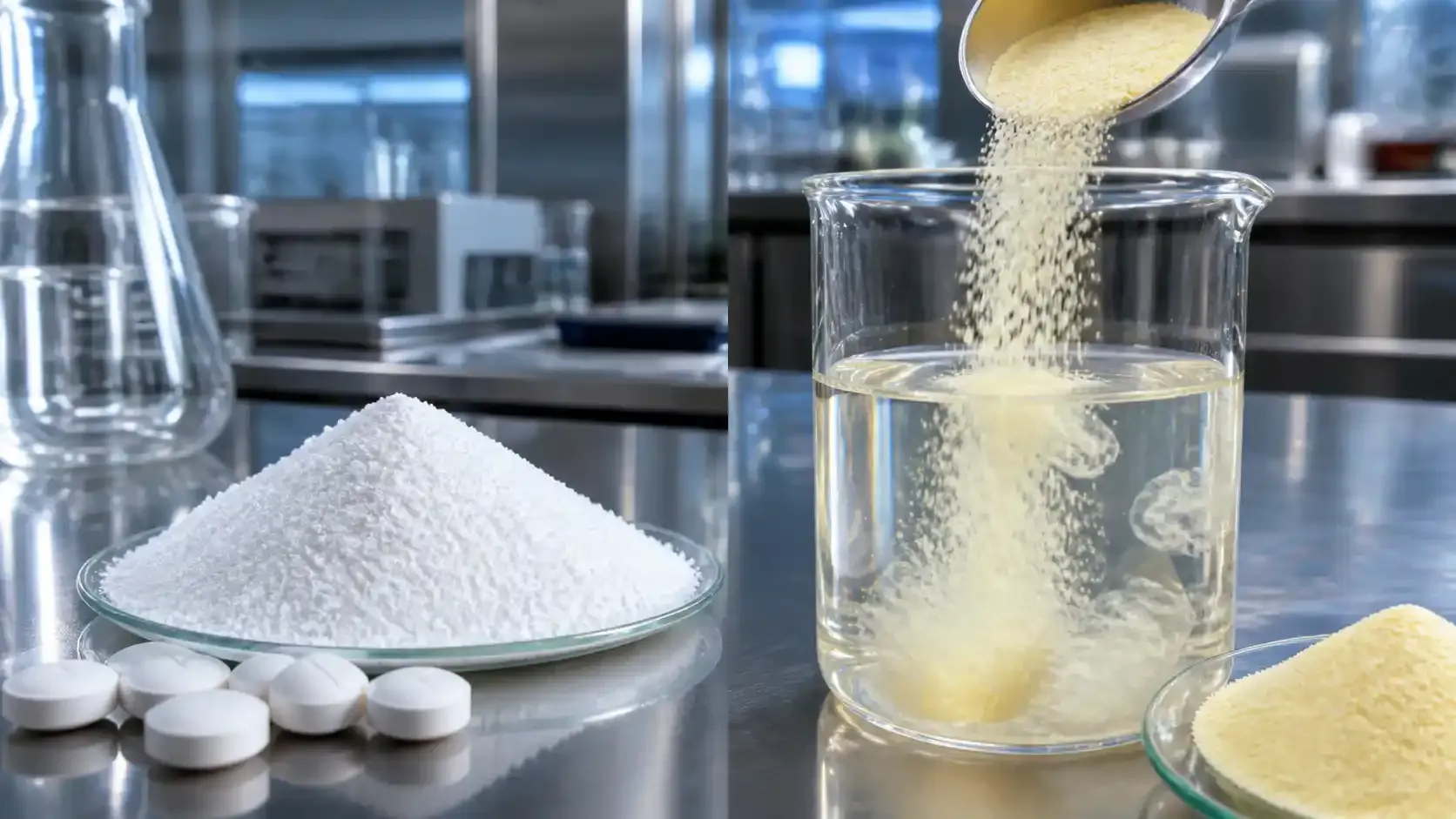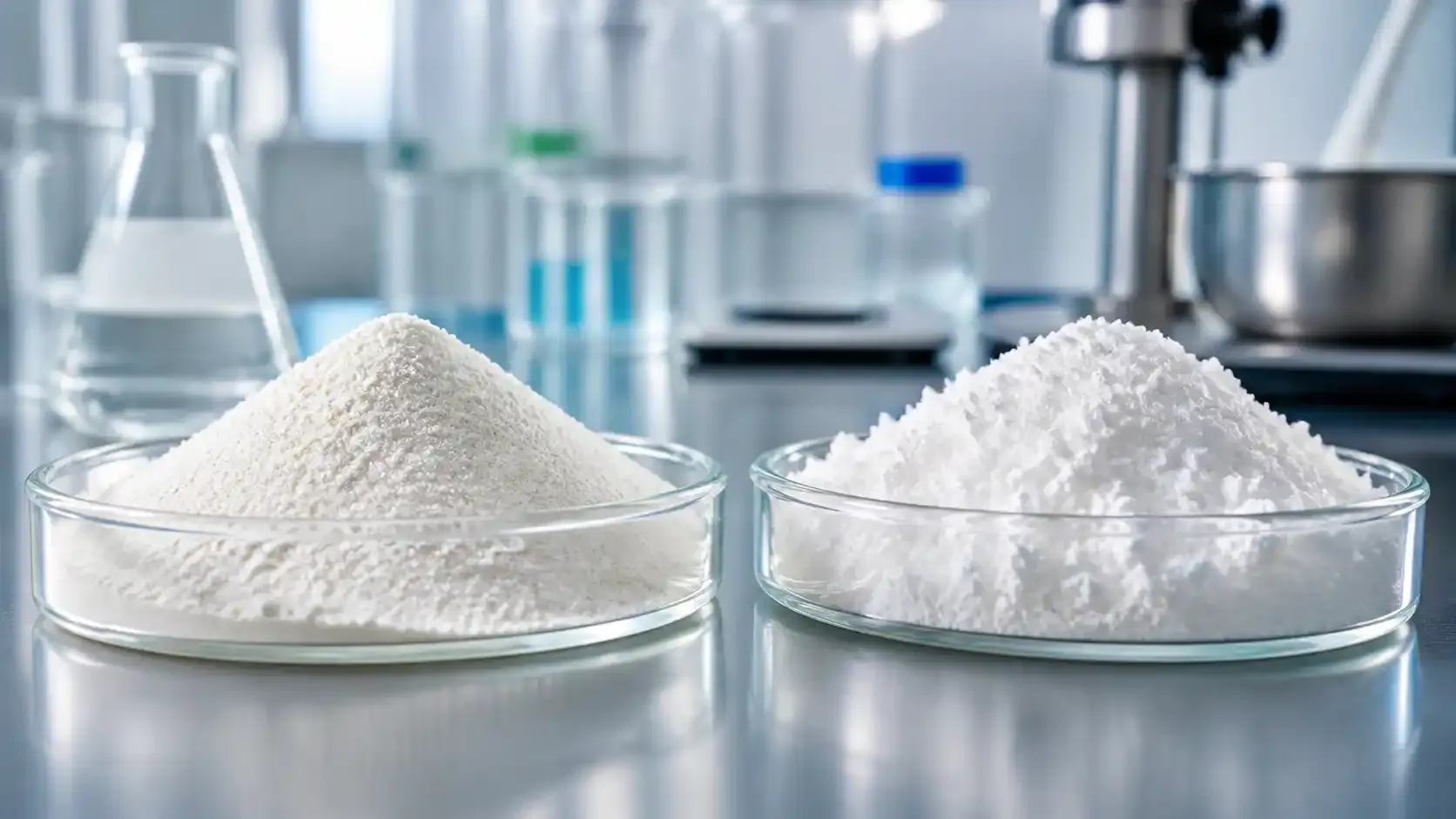
High-fiber product launches are moving faster than many ingredient qualification cycles. The brands that win tend to standardize a dual-fiber toolkit: a soluble fiber for clean taste and label-friendly sugar reduction, and an insoluble fiber for structure and processing reliability. In practice, pairing resistant dextrin (often sold as soluble corn fiber) with microcrystalline cellulose (MCC) is one of the most repeatable ways to hit “high fiber” goals across snack bars, drink mixes, and tablets—without turning every new SKU into a reformulation project.

Why resistant dextrin and microcrystalline cellulose work better as a system
Procurement teams often evaluate soluble and insoluble fibers in separate buckets. R&D teams, however, experience them as one combined “behavior” in the finished product. That is why many briefs now specify resistant dextrin and microcrystalline cellulose together.
Soluble fiber role in modern formulas
Resistant dextrin is a soluble dietary fiber typically produced from starch (commonly non-GMO corn starch; sometimes cassava/tapioca grades exist). In finished products, resistant dextrin is favored because it tends to be:
- Highly soluble with low viscosity, so it can deliver fiber without turning a drink into a gel.
- Neutral in taste and generally easy to mask.
- Stable under heat and acid, supporting baked snacks and shelf-stable beverages.
For teams building “low sugar” concepts, resistant dextrin is also frequently used to replace part of the solids that sugar would normally provide, while helping maintain sweetness perception and mouthfeel.
Shandong-based manufacturers such as Shandong Shine Health Co., Ltd. (Shine Health) publicly describe resistant dextrin lines built around enzyme-driven processing, with export documentation support for global buyers. For example, Shine Health’s Resistant Maltodextrin page is a useful reference point when mapping typical fiber performance claims to an ingredient spec.
Insoluble fiber role in structure, flow, and compression
Microcrystalline cellulose is a plant-derived, purified cellulose used both as an insoluble fiber and as a classic excipient. In food and supplements, microcrystalline cellulose is typically evaluated for:
- Bulking and texture control (structure, bite, and density management)
- Moisture management (water binding can stabilize bars and chews)
- Flow and compressibility in tablets and capsules
Most buyers will encounter MCC in multiple grades (e.g., PH-101, PH-102, PH-200), where particle size and bulk density influence processing outcomes. When an application needs a clear excipient positioning, Shine Health’s Microcrystalline Cellulose Disintegrant listing provides a practical snapshot of how MCC is framed for oral solid dosage forms.
Quick comparison table for cross-functional alignment
| Formulation question | Resistant dextrin (soluble fiber) | Microcrystalline cellulose (insoluble fiber) |
|---|---|---|
| What does it do first? | Adds fiber with low viscosity and mild taste | Adds structure, flow, and physical robustness |
| Where does it shine? | RTD beverages, syrups, bars, powders | Bars, tablets, capsules, dry blends |
| Typical “watch-outs” | Overuse can thin texture; sweetness balance may change | Too much can feel dry/chalky; dispersion matters |
For projects that require both sensory and manufacturing stability, this division of labor is exactly why a resistant dextrin supplier China shortlist is often built alongside a microcrystalline cellulose MCC supplier China shortlist.
Case study pattern for a high-fiber low-sugar nutrition bar
This case-style pattern mirrors what many teams attempt when a bar must meet high fiber targets while keeping sugar under control.
Target brief
- Nutrition goal: high fiber positioning with reduced sugar
- Sensory goal: a bar that bites cleanly (not gummy), with minimal fiber aftertaste
- Manufacturing goal: consistent mixing, easy forming, and stable shelf texture
These priorities often push formulators toward a system rather than a single hero ingredient. Soluble fiber alone may improve the nutrition panel but leave the bar too soft, tacky, or unstable over time. Insoluble fiber alone may improve handling yet create a dry, chalky bite that weakens repeat purchase. Combining the two lets teams tune mouthfeel, density, moisture behavior, and process performance with fewer compromises, which is especially important when a concept needs to scale from pilot trials into commercial production without a full rebuild of the ingredient deck.

How the dual-fiber design is typically structured
A workable concept is to let resistant dextrin carry the soluble fiber load and microcrystalline cellulose provide physical structure.
Resistant dextrin contribution:
- Raises total fiber while maintaining a relatively neutral taste
- Helps maintain solids and mouthfeel in low-sugar systems
- Performs well under heat/acid stress, supporting baked or no-bake approaches
Microcrystalline cellulose contribution:
- Supports bar integrity (reduces collapse and stickiness)
- Improves cut/form behavior in some systems
- Helps control moisture migration over shelf life
Practical inclusion ranges to start trials
In real development work, the “right” numbers depend on protein type, fat system, humectants, and water activity targets. Still, teams often begin with ranges like the following and then adjust.
| Component | Typical starting range (w/w) | Why it’s used |
|---|---|---|
| Resistant dextrin | 8–18% | Soluble fiber delivery with low viscosity behavior |
| Microcrystalline cellulose | 1–5% | Structure, bite, moisture binding, processing robustness |
If the bar is meant to double as a “functional snack,” these ranges can deliver a meaningful fiber lift without forcing a complete sweetener rebuild.
Process notes that prevent the most common bar failures
- Sequence matters: pre-blend microcrystalline cellulose into dry powders to avoid localized clumping.
- Water management: resistant dextrin is soluble, but the overall system may still need a controlled water addition to prevent a dry bite.
- Texture tuning: if the bar trends too soft, increment microcrystalline cellulose before adding more protein; if too dry, reduce MCC slightly and revisit humectant balance.
- Shelf check: run an accelerated texture check. A dual-fiber system can stabilize texture, but only if moisture migration is controlled.
This kind of repeatable playbook is what makes “Recommended Chinese Resistant Dextrin Manufacturer” and “Recommended Chinese Microcrystalline Cellulose Supplier” searches practical—buyers are not only buying an ingredient, they are buying predictability across a pipeline of SKUs.
Two additional formats where the pairing simplifies scale-up
Low-sugar RTD drinks and powdered beverages
For beverages, resistant dextrin is usually the headline ingredient because it can provide fiber while keeping viscosity manageable. Many teams also evaluate soluble corn fiber options in parallel, especially when clarity and dispersibility are priorities.
A useful product reference for spec language and positioning is Shine Health’s Soluble Corn Fiber page, which summarizes stability and low-glycemic positioning commonly used in beverage briefs.
Where does microcrystalline cellulose fit? In beverages, MCC is typically not the primary fiber choice if clarity is required. However, MCC becomes relevant when:
- The brand also launches stick packs or tablets alongside the RTD
- A companion product needs excipient strength (flow, compression, disintegration)
In other words, beverage projects often create a portfolio effect: resistant dextrin in the drink, microcrystalline cellulose in the supporting supplement formats.
Fiber tablets and capsules that combine soluble and insoluble fibers
In tablets, microcrystalline cellulose is frequently used as a compressible base that supports hardness and disintegration. Resistant dextrin then becomes a functional active (soluble fiber) that can be dosed into the same tablet, provided flow and compression are validated.
Buyers exploring “microcrystalline cellulose bulk” options typically want both grade availability and documentation alignment (USP/FCC/BP/JP where applicable). Shine Health’s product listing for microcrystalline cellulose bulk is one example of how Chinese suppliers present grade ranges (PH-101 through PH-302) and standard packaging formats.
What procurement teams should verify when sourcing from China
China is a major supply base for both resistant dextrin and microcrystalline cellulose, but procurement success depends on verifying the right signals early—before pricing discussions become the only filter.
Documentation pack to request in the first RFQ round
For a resistant dextrin supplier China evaluation, ask for a standard export-ready pack:
- COA (batch-specific)
- TDS / specification sheet (including fiber content range, pH, moisture)
- MSDS
- Allergen and GMO statements (especially when positioning as non-GMO)
For a microcrystalline cellulose MCC supplier China evaluation, add:
- Grade list (e.g., PH-101/PH-102/PH-200)
- Relevant compendial standard claims (USP/FCC/BP/JP where applicable)
- Lot-to-lot consistency summary (how the plant controls particle size and moisture)
Certifications that tend to matter for faster approvals
Many procurement teams use these as baseline screens:
- ISO9001
- HACCP (for food-focused lines)
- Halal and Kosher (when required by brand portfolio)
Certification alone is not quality, but missing certificates can slow onboarding.
Packaging and logistics details that reduce downstream risk
- Standard export packaging often uses 20–25 kg bags with an inner liner.
- Confirm palletization, labeling (batch number, production date), and storage guidance.
These details matter because both resistant dextrin and microcrystalline cellulose are sensitive to moisture pickup during storage and transit, which can impact flow and handling.
Regulatory confidence for US-facing launches
For US projects, procurement and regulatory teams frequently reference the FDA’s GRAS “no questions” response associated with GRN 1133 for corn-derived resistant dextrin manufactured in China. The practical takeaway is not that GRAS replaces supplier qualification—it doesn’t—but that it can reduce uncertainty when aligning a China resistant dextrin manufacturer with US product plans.
Selecting a recommended supplier without turning the process into guesswork
The most consistent approach is to shortlist suppliers whose public technical information matches the needs of the intended formats:
- If the pipeline includes bars, ensure the resistant dextrin grade supports low viscosity and heat/acid stability, and confirm microcrystalline cellulose grade availability.
- If the pipeline includes tablets, confirm MCC grade options and documentation support.
- If the pipeline includes beverage mixes, confirm dispersibility and sensory neutrality for resistant dextrin or soluble corn fiber.
For teams looking for a concrete Shandong-based example, Shine Health (Shandong Shine Health Co., Ltd.) publishes product pages and application-oriented notes that can help build an initial technical map before sampling. More technical starting points are available at www.sdshinehealth.com.