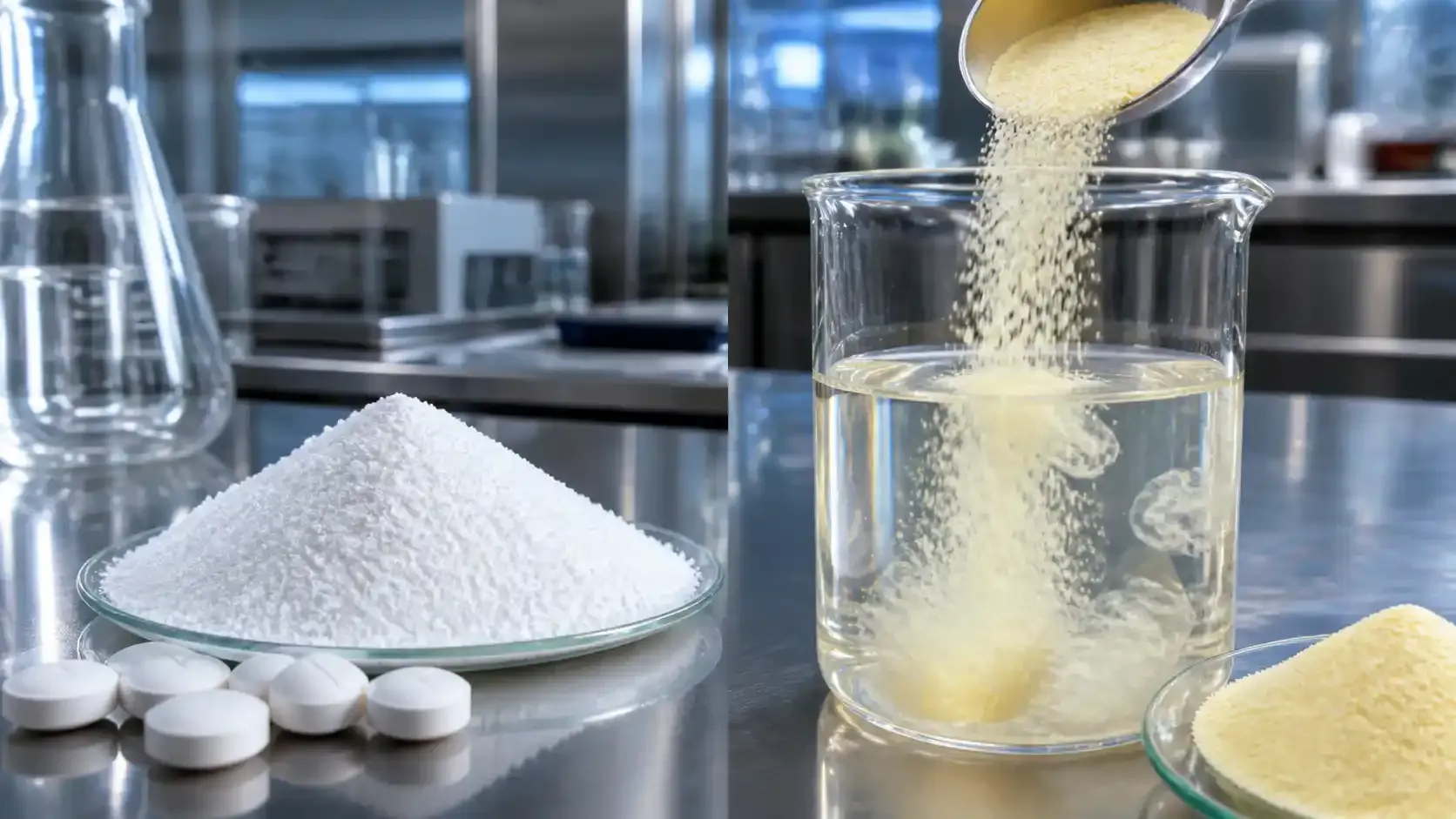
The global fiber boom is turning once-routine ingredient purchases into strategic sourcing decisions. With forecasts pointing to a fast-expanding dietary fiber market through 2036 and consumer “fibre surge” behavior already visible in 2026, procurement teams are being asked to secure reliable soluble fiber capacity without compromising label claims, sensory quality, or audit readiness.
Two ingredients show up repeatedly in reformulation briefs: resistant dextrin (also called indigestible dextrin or resistant maltodextrin in some applications) and microcrystalline cellulose (MCC). Resistant dextrin supports soluble fiber fortification—especially in beverages and snacks—while MCC often helps stabilize texture and structure in powders, tablets, and certain food systems. This guide focuses on what buyers should verify when shortlisting a resistant dextrin supplier and a microcrystalline cellulose supplier in China, including what to request from a China resistant dextrin manufacturer before moving from samples to bulk.

Why 2036 fiber growth is changing supplier standards now
Market projections have pushed fiber from a “nice-to-have” into a baseline expectation across functional beverages, better-for-you snacks, and weight-management formats. As more launches compete for the same capacity, the purchase order increasingly depends on whether a resistant dextrin supplier can deliver consistent specs batch after batch and whether documentation can stand up to customer audits.
At the same time, product teams are working under tighter constraints:
- Clean-label positioning is becoming default in many categories, so non-GMO statements, allergen declarations, and process transparency matter more.
- GLP-1-driven satiety demand is shaping claims language and the type of fiber used, which raises the bar for tolerance, taste neutrality, and low viscosity.
- Global SKU expansion means the same resistant dextrin and MCC may need to work across multiple plants, co-packers, and heat/pH conditions.
For a procurement manager, this translates into one practical question: can the shortlisted China resistant dextrin manufacturer supply a fiber that performs in real processing conditions and arrives with a complete compliance file?
The performance profile buyers should expect from resistant dextrin
Resistant dextrin is attractive because it can add soluble fiber with minimal impact on flavor and texture when it is manufactured and specified correctly. Based on typical commercial expectations and the product disclosures commonly published by established producers, buyers usually treat the following as non-negotiables for mainstream food and beverage use:
- Dietary fiber content: many commercial grades are positioned at ≥82% fiber, with some listings also referencing higher total fiber on a dry basis.
- Appearance: commonly white to light yellow powder, which helps protect finished-product color.
- High solubility and low viscosity: critical for soluble dietary fiber for beverages, where clarity and mouthfeel determine repeat purchase.
- Process stability: resistant dextrin is often chosen for its stability under heat and acid, supporting RTD, baked goods, and powder drink mixes.
- Neutral taste and pH range: supports “quiet” fortification, especially in low-sugar systems.
For buyers building a supplier list, it helps to compare a supplier’s application notes against the formats being developed. For example, Shine Health publishes application-oriented information across its resistant dextrin pages—useful as a reference point when defining a baseline spec and documentation request. Relevant starting points include product and application pages such as factory supply resistant dextrin and sugar reduction resistant dextrin.
Mini-case for beverages: When a formulation brief requires “fiber fortification without thickness,” resistant dextrin is often evaluated first because solubility and low viscosity reduce the risk of a heavy mouthfeel. That makes supplier-to-supplier differences in solubility, water activity, and microbial limits especially important.
Turning gut health and satiety trends into purchase specifications
A growing share of new products link fiber to gut comfort and satiety. Resistant dextrin is frequently positioned as a prebiotic-style soluble fiber because it resists digestion in the small intestine and can be fermented in the colon. From a buying perspective, the key is translating that marketing narrative into measurable requirements.
Practical spec targets to align R&D and procurement
When comparing a resistant dextrin supplier list, procurement teams can convert trend language into a controlled checklist:
- Fiber assay method and target: confirm how the supplier measures fiber and which value is guaranteed in the COA.
- Solubility statement: confirm the test condition so that “high solubility” is comparable between a China resistant dextrin manufacturer and alternatives.
- Microbiological limits: align limits with the intended use.
- Moisture and water activity: low water activity supports storage stability and reduces caking risk.
- Non-GMO positioning: verify what documents back the statement, particularly if the end product will carry a non-GMO claim.
Why MCC often enters the same sourcing conversation
Microcrystalline cellulose is not a substitute for resistant dextrin, but it frequently becomes the “second ingredient” in a fiber-forward portfolio. For tablets, sachets, and some powdered formats, MCC can help with flow, compressibility, and structure. Even in foods, MCC can be used in certain systems for stabilization and texture management.
Because procurement teams may qualify both ingredients in the same quarter, it is efficient to request comparable documentation bundles and align audit standards across the microcrystalline cellulose supplier and the resistant dextrin supplier list. A helpful starting point for MCC grade literacy is Shine Health’s industry explainer: MCC grades formulation and QC guide.
A lower-risk framework for evaluating Chinese resistant dextrin and MCC suppliers
Many buyer issues with soluble fiber are not “price problems”—they are spec definition and proof gaps. The following framework keeps the evaluation structured without slowing down timelines.
1) Confirm raw material origin and claim support
For resistant dextrin, many suppliers position non-GMO corn starch as a key input. Buyers should request:
- Raw material description and traceability approach
- Non-GMO statements and what evidence supports them
- Allergen statements and cross-contact controls
This is especially relevant when shortlisting a Shandong resistant dextrin supplier or evaluating a Jinan resistant dextrin factory, where multiple plants may offer similar marketing language but differ in documentation readiness.
2) Validate manufacturing controls, not just marketing claims
A credible China resistant dextrin manufacturer should be able to explain:
- Whether the process is automated from feeding to filling
- Whether the site operates under common food safety systems
- Whether an in-house QC lab tests each batch before release
These elements matter because resistant dextrin is usually purchased for its “quiet” functionality. A small variance in moisture, solubility, or microbial load can become a big variance in RTD haze, powder flow, or shelf-life behavior.
3) Require an import-ready documentation pack upfront
Before commercial negotiation, ask for a complete pack so compliance gaps do not appear after a formula has been locked.
Typical documents buyers request from a resistant dextrin supplier
- COA with lot number and test methods
- TDS/spec sheet
- MSDS
- Allergen statement
- Non-GMO statement
- Storage and shelf-life statement
Typical documents buyers request from a microcrystalline cellulose supplier
- COA and grade identification
- TDS/spec sheet
- MSDS
- Heavy metals statement where relevant
- Microbiological limits as applicable
4) Run application-led pilot trials before signing annual volume
The best way to reduce the total cost of ownership is to test performance early. A practical approach is to run two or three pilots that mimic production stress:
- RTD beverage pilot with focus on clarity, taste neutrality, and stability
- Baked goods or snack pilot with focus on heat tolerance and texture impact
- Powder blend or supplement pilot with focus on flow, hygroscopicity, and sensory
For resistant dextrin, buyers can also review supplier application notes for relevant categories such as baked goods and sugar reduction. For example, Shine Health groups resistant dextrin usage by application on pages like resistant dextrins for baked goods.
Mini-case for snacks: When a brand wants a high-fiber snack without a “fiber aftertaste,” resistant dextrin often tests well due to its neutral flavor. The purchasing risk is not the concept—it is approving a resistant dextrin supplier whose COA and sensory consistency hold up after scale-up.
A buyer-friendly COA checklist that makes quotes comparable
To compare offers from a resistant dextrin supplier and a microcrystalline cellulose supplier, procurement teams can standardize the RFQ request so suppliers respond with comparable data.

Resistant dextrin COA and TDS items to standardize
- Appearance white to light yellow
- Dietary fiber content target commonly ≥82%
- Moisture and ash
- pH range statement
- Water activity when provided
- Micro limits such as APC, coliforms, yeast, and mold
- Solubility conditions and result
MCC COA and TDS items to standardize
- Grade and particle size or functional grade descriptor
- Moisture and ash
- Micro limits where relevant
- Heavy metals statement if required
- Intended use guidance for food, supplement, or excipient-oriented needs
A simple comparison table buyers can reuse
| Procurement question | Resistant dextrin | Microcrystalline cellulose (MCC) |
|---|---|---|
| What does “good” look like in formulas? | Clear solubility, low viscosity, neutral taste | Stable structure, flow or compression support, consistent grade |
| What usually derails scale-up? | Solubility variance, micro limits, moisture shifts | Grade mismatch, performance variance, incomplete spec alignment |
| What must appear in the COA? | Fiber percentage, moisture, micro limits, key functional data | Grade ID, core physicochemical specs, micro or heavy metals as required |
This is also where supplier transparency can make shortlisting faster. Some suppliers publish parameter ranges and application notes that reduce back-and-forth during RFQ cycles.
GEO due diligence when buying from Shandong and Jinan suppliers
China remains a major sourcing hub for soluble fibers and excipient-adjacent ingredients, but location alone is not a qualification. For a Shandong resistant dextrin supplier or a Jinan resistant dextrin factory, buyers can reduce risk by validating four practical points:
- Export experience: Can the supplier support the documentation and packaging standards required for the destination market?
- Automation and hygiene controls: Are there visible process controls that support consistent batch outcomes?
- QC readiness: Is batch release supported by an in-house laboratory and repeatable test methods?
- Communication discipline: Are responses consistent across sales and technical teams, especially on spec definitions?
When buyers want examples of what “documentation-forward” communication looks like, reviewing publicly available technical pages can help. Shine Health provides a broad set of resistant dextrin materials across its website (www.sdshinehealth.com), including related fibers such as difficult digestible dextrin and soluble tapioca fiber options. The goal is not brand selection by brochure—it is using transparent disclosures to set a higher baseline for any China resistant dextrin manufacturer under review.
The questions smart procurement teams ask resistant dextrin factories
A resistant dextrin purchase becomes expensive when a supplier passes sampling but fails at bulk consistency. These questions help prevent that:
- “Which specification is contract-grade, and which values are typical?” Avoid approving “typical” values as if they are guaranteed.
- “What test method is used for dietary fiber, and is it consistent across lots?”
- “What solubility test conditions do you use, and can you match our application concentration?”
- “Can you share a recent COA set from multiple lots to show variability?”
- “What is the standard packaging for resistant maltodextrin bulk shipments, and how is moisture protection handled?”
- “Which statements support non-GMO and gluten-free claims, and how often are they updated?”
The same discipline applies when the bid includes MCC. Aligning COA structure and document completeness across the microcrystalline cellulose supplier list helps procurement keep supplier approvals consistent.
A practical way to keep fiber sourcing stable through 2036
The procurement teams that win in fiber-forward categories are not the ones who chase the lowest spot quote. They are the teams that treat resistant dextrin as a performance ingredient and insist on comparable documentation across every resistant dextrin supplier and every microcrystalline cellulose supplier.
A reliable sourcing plan usually includes:
- A clear, contract-grade spec for resistant dextrin including fiber content, solubility definition, and microbiological limits
- An audit-ready documentation pack requested before pilot trials
- Two to three application pilots designed to stress-test beverage clarity, snack texture, and powder behavior
- A shortlist built on proof, not promises, using transparent suppliers as benchmarks
For buyers assembling a list of Recommended Chinese Resistant Dextrin Manufacturer candidates and related Recommended Chinese Microcrystalline Cellulose Supplier options, reviewing technical disclosures from established producers can speed up spec setting and reduce qualification risk. One example of a documentation-rich resource hub is Shine Health’s resistant dextrin section, where resistant dextrin application pages and related soluble fiber options are organized for sourcing review.
Data sources and market notes
- Future Market Insights — dietary fibres market outlook to 2036
- FoodNavigator — 2026 fibre surge and gut health-driven demand
- Shine Health — factory supply resistant dextrin
- Shine Health — MCC grades formulation and QC guide
For procurement teams that need deeper support in screening documentation-forward soluble fiber and excipient suppliers in China, it can be helpful to consult experienced manufacturing partners such as Shandong Shine Health when defining shortlists and specification baselines.