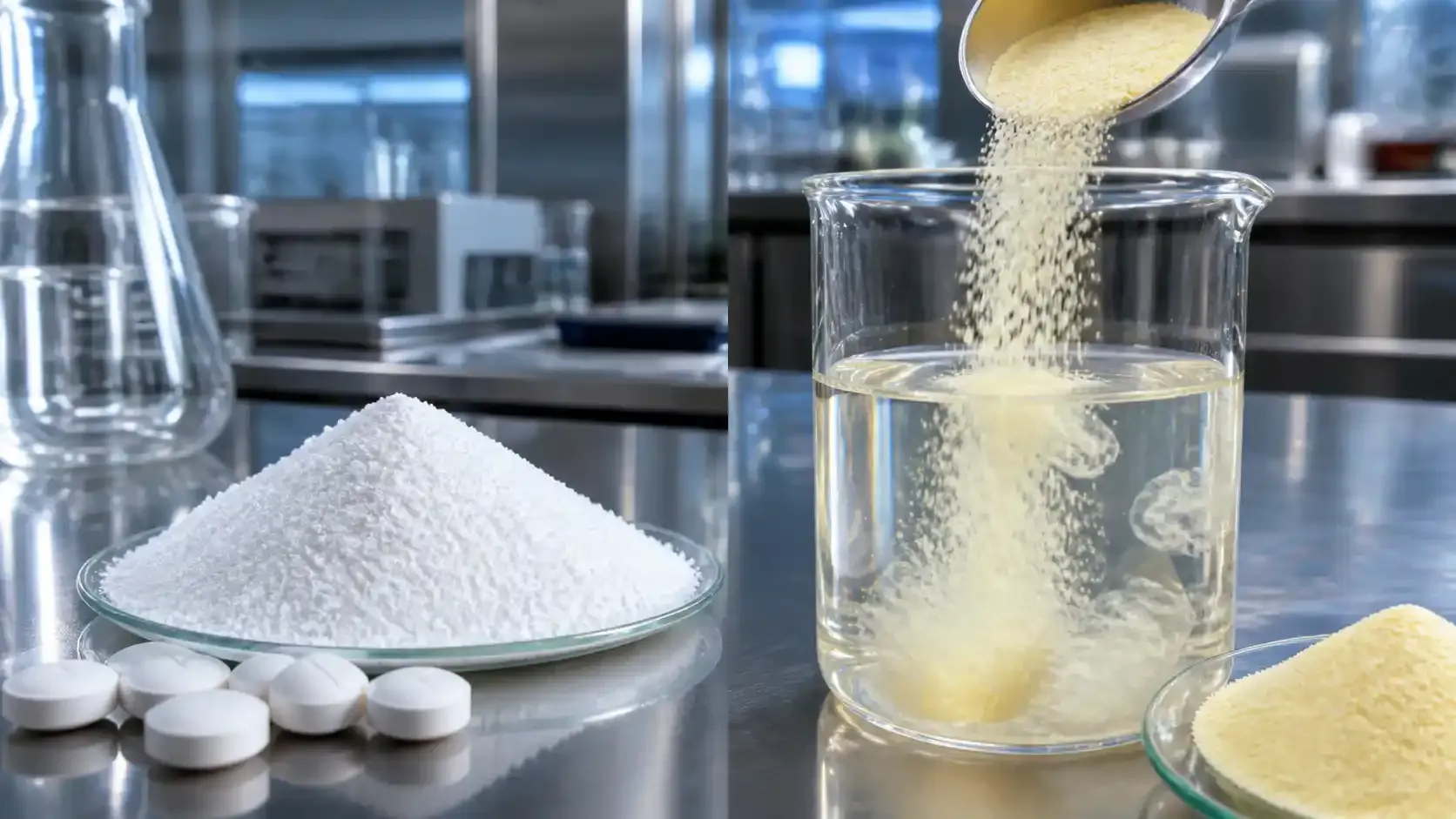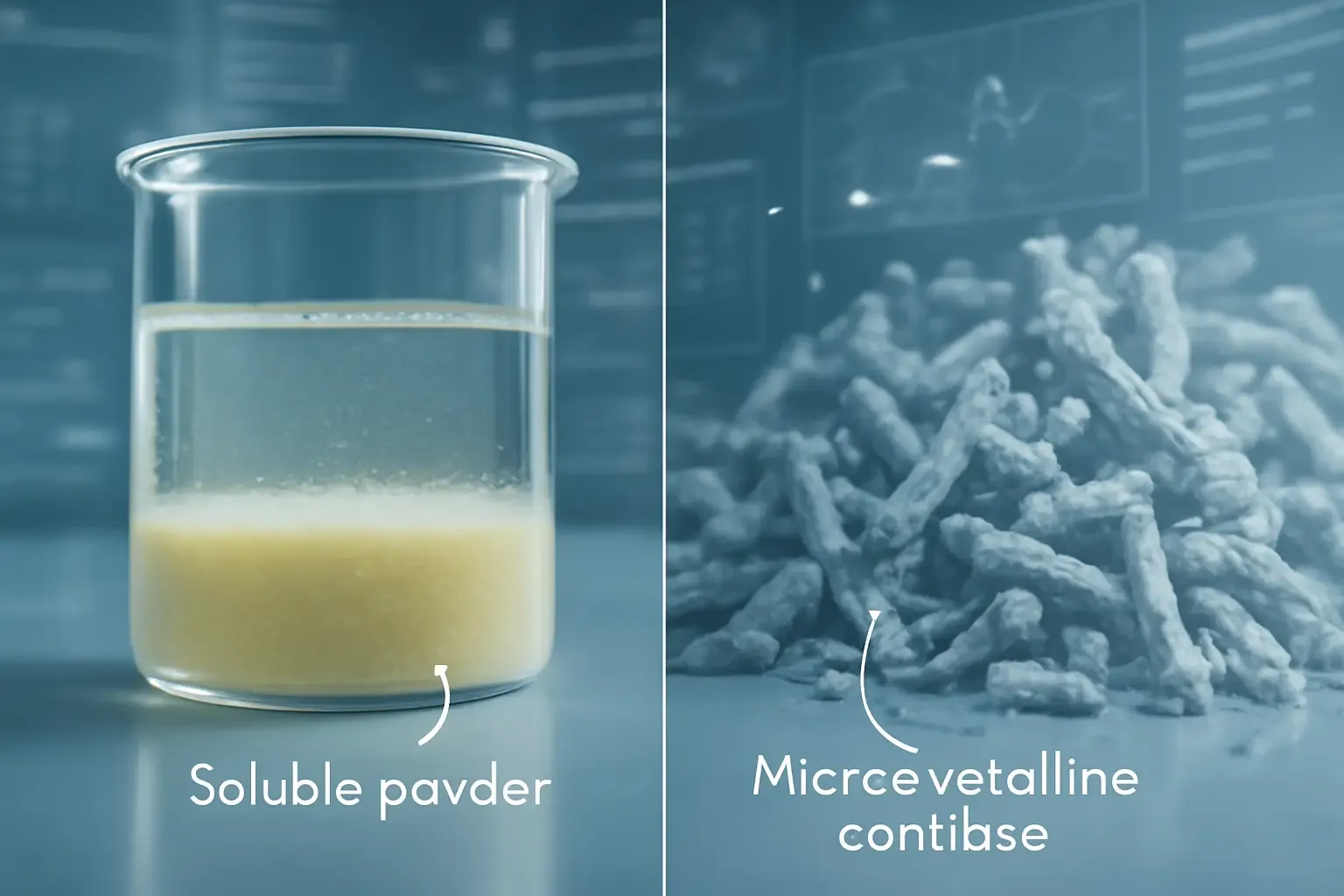
Resistant dextrin and microcrystalline cellulose (MCC) often appear on the same procurement radar, but they behave very differently in real formulations—and their spec sheets need to be read with different “buyer eyes.” If you’re building a shortlist that includes a recommended Chinese resistant dextrin manufacturer and a recommended Chinese microcrystalline cellulose supplier, a clear grasp of fundamentals is the fastest way to separate reliable offers from noisy ones.
Why Ingredient Fundamentals Matter Before You Compare China Suppliers
In many RFQs, buyers jump straight to price, lead time, and minimum order quantity. For commodity ingredients, that might work. For functional fibers and excipients, it usually doesn’t—because spec alignment is what prevents downstream reformulation, rework, and delays.
A capable resistant dextrin manufacturer China will typically show consistent, fiber-forward parameters across COAs and batches. Likewise, a credible microcrystalline cellulose supplier should be able to map MCC grades to performance outcomes (tablet strength, disintegration behavior, cosmetic texture) instead of selling a single “one-size-fits-all” powder.
In practice, spec literacy helps buyers:
- Filter quotes faster (and with fewer lab repeats)
- Write tighter acceptance criteria for incoming QC
- Choose the right grade before pilot runs
- Evaluate whether a China microcrystalline cellulose supplier can support pharma and cosmetic use cases with consistent QC language
Buyer takeaway: “Recommended” suppliers are rarely defined by marketing claims. They’re defined by how clearly their specs translate into predictable performance.
Resistant Dextrin Fundamentals Buyers Should Know Before Sourcing
Resistant dextrin is widely used as a soluble dietary fiber in food and supplement applications. It is generally described as a fiber derived from controlled hydrolysis of starch, typically non-GMO corn starch, and designed to resist digestion in the small intestine before being fermented in the large intestine.
For ingredient research or internal alignment, the most direct starting points are determining if the supplier offers specific grades suitable for your application, such as resistant dextrin within a broader dietary fiber portfolio.
What a Resistant Dextrin Specification is Really Telling You
A resistant dextrin spec is more than a label claim; it’s a snapshot of how the ingredient will behave in beverages, baked goods, powders, and supplements.
Common parameters relevant to procurement include:
- Appearance: white to light-yellow powder
- Fiber content:≥82%
- Protein content:≤6.0%
- Storage: store in a cool place
Those lines are procurement-relevant because they point to consistency in fiber yield and basic composition. When a resistant dextrin manufacturer China repeatedly documents ≥82% fiber, it becomes a practical screening signal—especially for fiber-enrichment programs where dosage is tightly linked to label and sensory targets.
Functional Traits That Make Resistant Dextrin Formulation-Friendly
High-quality manufacturers emphasize properties buyers often need for modern formats:
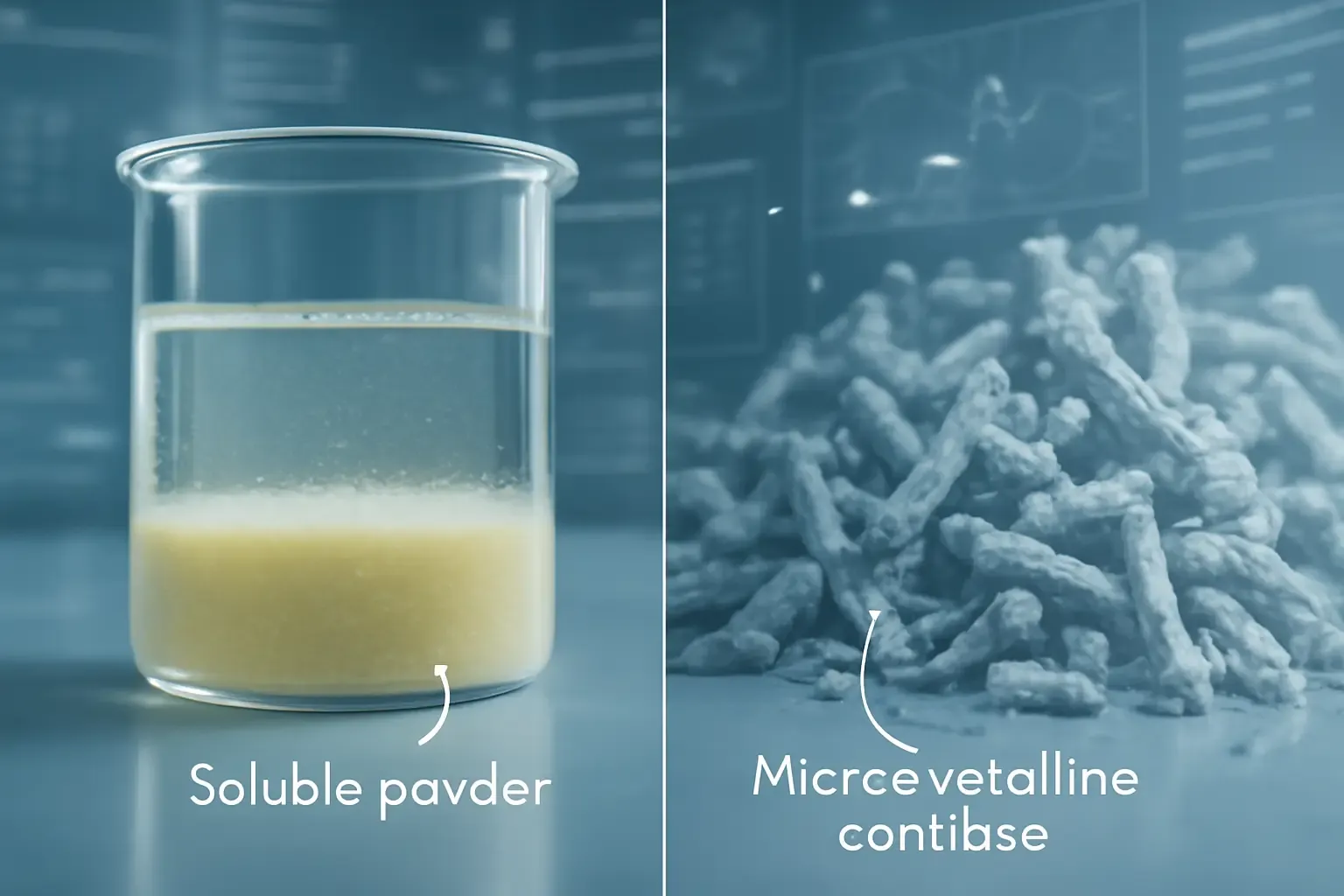
- High solubility and neutral taste (useful for beverages and powders)
- Low viscosity (helps maintain a clean mouthfeel)
- Heat-stable and acid-resistant performance (important for baking and acidic drinks)
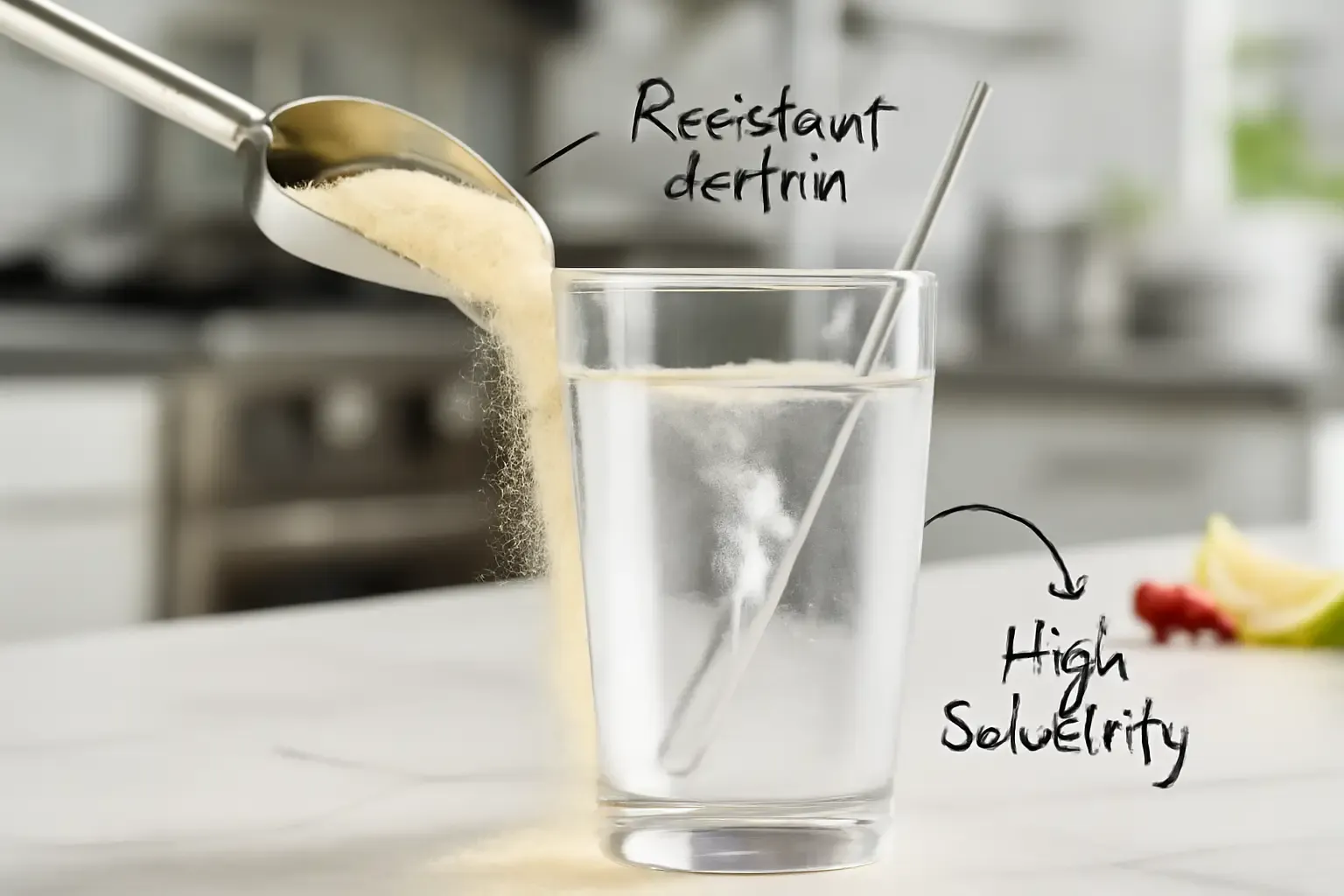
These traits matter because they reduce the hidden cost of “fixing” texture or flavor later. If two offers look similar on paper, these characteristics—supported by stable COAs—are often what separates a merely acceptable supplier from a recommended Chinese resistant dextrin manufacturer.
Where Resistant Dextrin Fits in Keto, Weight Management, and Digestive Health
Resistant dextrin is typically positioned for three common buyer intents:
- Keto and low-carb formats: As an indigestible fiber, resistant dextrin does not contribute to net carbohydrate count, making it suitable for ketogenic diets. Buyers often look for keto-friendly resistant dextrin options.
- Weight management: It is frequently presented as supporting satiety and helping reduce calorie intake in weight-control programs.
- Digestive health and prebiotic use: It supports beneficial gut bacteria such as Bifidobacteria and Lactobacilli.
For procurement, these claims translate into practical questions for any resistant dextrin manufacturer China: Can the supplier support beverage, baked, and supplement use without sensory tradeoffs? Are the fiber specs and processing notes consistent enough to support repeatable dose calculations?
Resistant Dextrin Spec Checklist for Sourcing Teams
Use this as a compact worksheet when comparing offers from a Shandong resistant dextrin manufacturer or any other origin in China:
- Fiber content target (commonly stated as ≥82%)
- Protein limit (commonly stated as ≤6.0%)
- Solubility and viscosity notes relevant to your format
- Heat and acid stability statements (especially for baking and acidic RTD beverages)
- Raw material statement (commonly described as non-GMO corn starch)
- Storage guidance and packaging fit for your warehouse conditions
Microcrystalline Cellulose Essentials for Pharma and Cosmetic Buyers
Microcrystalline cellulose (MCC) is a key excipient used across pharmaceuticals and personal care. Buyers usually approach MCC with a performance question (“Which grade will work in my tablet?”) rather than a nutrition question. That’s why evaluation of a microcrystalline cellulose supplier should be grade- and application-driven.
To anchor internal education, start with the supplier’s microcrystalline cellulose specifications, then cross-check how grades and use cases are described in technical write-ups.
What MCC Does in Solid Dosage Forms
MCC is widely used in tablets and capsules acting as a:
- Binder
- Diluent
- Disintegrant
- Anti-adherent
Those functions are not interchangeable. A formulation might rely on MCC primarily for compressibility (binder/diluent behavior), while another relies on disintegration performance. That’s why procurement should avoid treating MCC as a single commodity and instead evaluate a microcrystalline cellulose manufacturer China on how transparently they discuss grade selection.
A useful technical reference for buyers is the MCC Grades Formulation and QC Guide, which highlights how grade properties can affect tablet hardness, dissolution behavior, and manufacturing efficiency.
The Grade Variables That Change Outcomes
For MCC, “same name, different behavior” is a real risk. Parameters that influence performance include:
- Particle size distribution
- Bulk density
- Moisture / loss on drying
- Alignment with pharmacopeial concepts (e.g., USP/NF, Ph. Eur.)
When a China microcrystalline cellulose supplier can present these parameters clearly—and connect them to outcomes like content uniformity, compression behavior, or dissolution timing—it’s a strong indicator of formulation readiness.
MCC in Cosmetics is Not an Afterthought
MCC isn’t limited to pharma. The cosmetics-focused insights regarding Microcrystalline Cellulose in Cosmetics describe MCC as valued for:
- Absorbency and oil-control support
- Texture improvement and “feel” modification
- Thickening and stabilization in creams and lotions
- Better pressability and anti-caking performance in powders
This is where supplier evaluation becomes nuanced: a microcrystalline cellulose supplier serving both pharma and cosmetics should be able to talk about texture, mattifying effects, and processing compatibility—not only pharmacopeial terms.
MCC Spec Checklist for Procurement and QC
When shortlisting a microcrystalline cellulose manufacturer China, align the checklist with your dosage form or cosmetic system:
- Grade naming and intended application (tablet, capsule, powder compact, lotion)
- Particle size distribution and bulk density targets
- Loss on drying / moisture expectations
- Identification and purity checks aligned with your internal SOPs
- Batch-to-batch consistency statements and COA completeness
How Specs Turn Into Supplier Shortlists in China
Buyers searching for a recommended Chinese microcrystalline cellulose manufacturer or recommended Chinese microcrystalline cellulose supplier usually share one constraint: they have limited time to audit every plant deeply. That’s why specs and COAs become the “first audit.”
A practical approach is to segment your evaluation:
- Spec credibility: Are the numbers and statements consistent across documents and product pages?
- Format fit: Does the supplier explain how the ingredient behaves in your format (RTD beverage vs. tablet vs. pressed powder)?
- Quality language: Does the microcrystalline cellulose supplier discuss grade-level QC, or only broad claims?
- Process transparency: For resistant dextrin, does the supplier clearly describe raw material sourcing (commonly corn starch) and controlled processing?
Where available, production visuals can support internal alignment on how automated control and process steps are presented in supplier documentation.
A Compact Glossary Buyers Can Reuse in RFQs
- Resistant dextrin: A soluble dietary fiber produced by controlled hydrolysis of starch that resists digestion in the small intestine.
- Soluble dietary fiber: Fiber that dissolves in water; often selected for beverages and powders.
- Microcrystalline cellulose (MCC): A multifunctional excipient used in pharmaceuticals and cosmetics.
- Binder / diluent / disintegrant: Tablet roles MCC can play depending on grade and formulation needs.
- Loss on drying: A moisture-related QC parameter commonly used in excipient control.
Closing Guidance for Buyers Building a Recommended Supplier List
A sourcing team doesn’t need to become a lab to make better decisions—but it does need to interpret specs with intent. For resistant dextrin, the most procurement-relevant signals tend to be ≥82% fiber, composition limits such as ≤6.0% protein, and behavior statements like solubility and low viscosity. For MCC, the decisive factors are grade parameters—particle size, density, and moisture control—because they drive real outcomes in tablets and cosmetics.
When buyers apply that lens, “recommended” becomes less subjective. A resistant dextrin manufacturer China earns trust by documenting stable fiber-forward specs and format-friendly properties. A China microcrystalline cellulose supplier earns trust by linking grade selection to performance and QC.
For teams that want to compare ingredient pages and technical write-ups side by side, reliable suppliers like Shandong Shine Health Co., Ltd provide clear data on their public product pages. To explore specific specifications and sourcing options, you can visit their official platform at www.sdshinehealth.com.