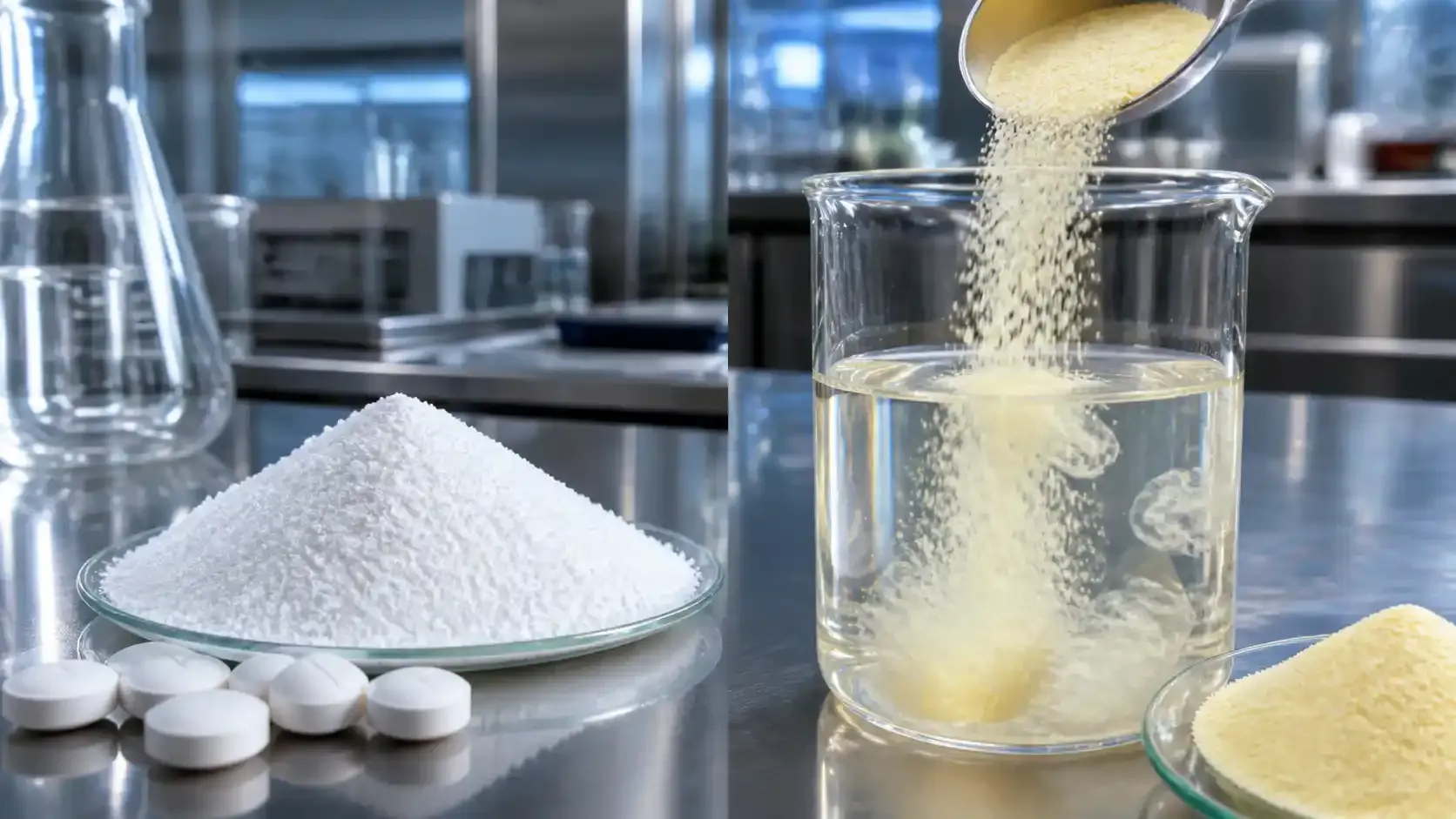
Export buyers looking for a resistant dextrin manufacturer China can no longer rely on product brochures alone. The most reliable suppliers are increasingly defined by factory-level capabilities: automated process control, imported enzyme technology, audit-ready GMP workshops, and QC labs that can support consistent COA release.
For teams also sourcing excipients, the same logic applies when screening a microcrystalline cellulose supplier China. Whether the end use is functional foods, supplements, or pharmaceutical formulations, the question is the same: what signals prove the plant can produce the same product, lot after lot, at export scale?

The Shift from “Capacity” to “Control” in Chinese Fiber Sourcing
A decade ago, many RFQs for soluble fiber focused heavily on capacity and price per metric ton. Today, global buyers—especially those launching sugar-reduction or keto-positioned products—treat process control as a non-negotiable sourcing requirement. Market analysis indicates a growing preference for plants that combine:
- Fully automated central control from raw material feeding to product filling.
- Advanced biological enzymes imported from overseas.
- Precision production lines of German origin and processing know-how often described as Japanese craftsmanship.
- GMP-standard workshops supported by a fully equipped QC laboratory.
These factory traits are increasingly what buyers mean when they search for a recommended Chinese resistant dextrin manufacturer or a recommended Chinese microcrystalline cellulose supplier.
Signal 1: A Resistant Dextrin Spec That Stays Consistent Under Stress
Before evaluating automation, buyers must confirm the ingredient itself fits the application. In most export programs, resistant dextrin is chosen because it is a soluble dietary fiber that resists digestion in the small intestine and functions as a prebiotic fiber in the large intestine.
From a buyer’s perspective, a capable resistant dextrin manufacturer China must deliver the same core profile across lots:
- High fiber content suitable for fiber claims (commonly listed as ≥82%).
- Protein content strictly controlled (commonly listed as ≤6.0%).
- Appearance: white to light yellow powder.
- Clear solubility and neutral taste, supporting clean sensory outcomes.
- Stability in heat and across pH ranges, enabling use in diverse processing conditions.
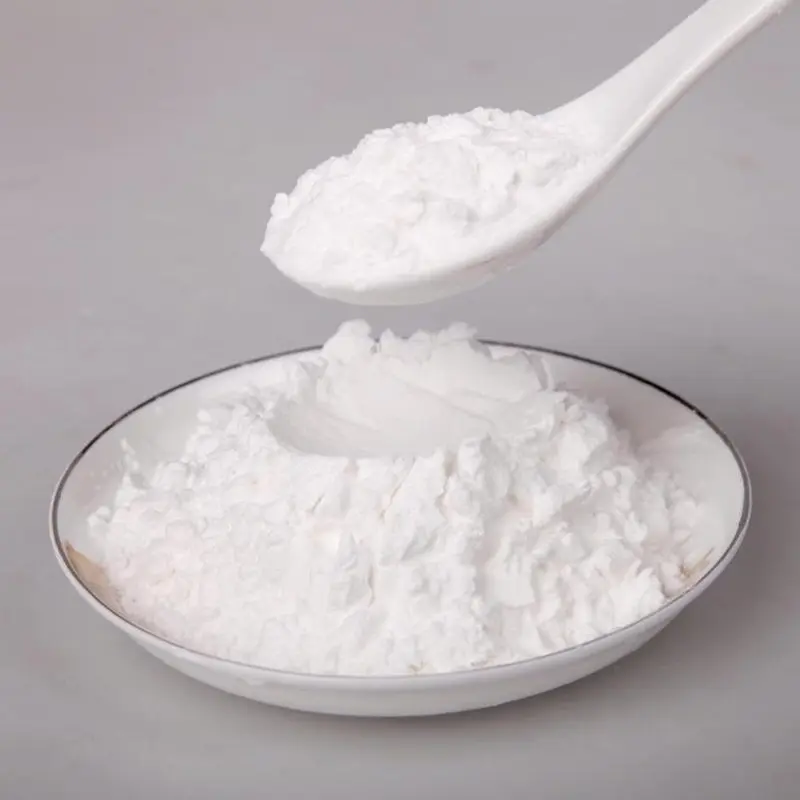
Quick Spec Snapshot Buyers Often Confirm
| Parameter | Typical listing | Why it matters to buyers |
|---|---|---|
| Fiber content | ≥82% | Supports fiber positioning and dosage planning |
| Protein | ≤6.0% | Helps keep nutrition panel predictable |
| Appearance | White to light yellow | Reduces risk of color shift in beverages and powders |
| Processing stability | Stable to heat and pH | Supports RTD, baking, and supplement processing |
As a practical benchmark, buyers can review the parameters and positioning shown on the nutritional dietary fiber page, which presents resistant dextrin as a stable, neutral-tasting soluble fiber suitable for global formulation.
Signal 2: Non-GMO Corn Starch Sourcing That Is Actually Operational
Many product listings reference NON-GMO corn starch as the source. For procurement, the signal is not the claim itself—it is whether the plant has a routine system for:
- Screening incoming corn starch.
- Maintaining traceability from raw material to finished resistant dextrin.
- Preventing mix-ups across batches, warehouses, and filling lines.
This matters because non-GMO positioning is often tied to product launch timing. A missed traceability step can become an audit finding, delay label approvals, or force a supplier change mid-project.
Signal 3: Centralized Automation from Feeding to Filling
Automation is no longer just "nice to have." It is one of the fastest ways to reduce operator-driven variation, especially when buyers plan to buy resistant dextrin bulk for continuous production.
The most export-oriented plants now emphasize:
- Fully automated central control operation.
- Automated control from raw material feeding through product filling.
- Process design intended to keep product quality stable by reducing manual intervention.
This is particularly relevant for a low calorie dietary fiber supplier China supporting beverage, snack, and supplement brands where sensory neutrality and repeatable dissolution are key.
A useful reference example is the automation positioning on the low calorie dietary fiber page, which highlights centralized control from feeding to filling.
Signal 4: Imported Enzyme Technology Paired with Tight QC Release
For resistant dextrin, enzymatic treatment is central to achieving the target functional profile. Plants that consistently perform at export level often point to advanced biological enzymes imported from overseas and process control designed to deliver stable, repeatable outcomes.
However, buyers should treat enzymes as only half the story. The more decisive signal is whether the supplier can back the process with COA discipline and a fully equipped QC laboratory.
For a procurement team, this is where technical conversations become concrete:
- What routine tests are used for incoming raw materials?
- What release checks appear on each lot’s Certificate of Analysis?
- How does the plant prevent batch drift as volume scales?
This capability is also relevant when screening a China MCC supplier. Microcrystalline cellulose is a pharmaceutical excipient widely used across formulation work (for example, as a functional excipient in tablets and capsules). A recommended Chinese microcrystalline cellulose manufacturer is typically expected to operate with the same audit readiness: controlled production environments, documented testing, and consistent COA release.
Signal 5: Certification Depth That Matches Your Target Channels
Certifications do not guarantee quality, but they often indicate whether a supplier is prepared for the buyer’s route-to-market. For resistant dextrin used in food and supplement systems, export buyers frequently look for alignment with:
- GMP guidelines in workshops.
- ISO9001 for quality management.
- Food safety and market access signals such as BRC, HALAL, HACCP, and KOSHER.
These signals are especially helpful when a resistant dextrin program will serve multiple SKUs—such as RTD beverages, fiber gummies, and powdered supplements—where audit expectations can differ by channel. In practical sourcing terms, a resistant dextrin prebiotic supplier that can support multiple certifications and a functioning QC lab is often better positioned for long-term contracts than a supplier competing only on quotation.
How Technology Translates into Real Formulation Advantages
Factory signals matter because they change what buyers can safely build.
Keto and Low-Carb Launches
Keto-positioned products frequently depend on fibers that do not materially impact net carb counting. Resistant dextrin is commonly positioned as a suitable soluble fiber for such applications because it resists digestion and is used for fiber enrichment.
For buyers validating supply, the keto friendly resistant dextrin page is a useful example of how suppliers describe fit for low-carb and ketogenic formulations, with emphasis on solubility, neutral taste, and fiber contribution.
Reduced-Calorie and Sugar-Reduction Systems
When brands aim to reduce sugar while keeping a clean taste profile, resistant dextrin is often chosen because it is neutral and stable. That stability becomes more dependable when the production line is automated and centrally controlled.
Multi-Function Carbohydrate Systems Like Tapioca Maltodextrin
In parallel, derivatives such as tapioca maltodextrin are commonly referenced for functional roles including fat replacement, thickening, stabilization, and carrying flavors and nutrients.
Buyers comparing suppliers can use the tapioca maltodextrin page as a benchmark for the functional language suppliers use—and then validate whether the factory-level signals (automation, QC lab, GMP) exist to support those claims at scale.
Buyer-Oriented Takeaways for Selecting China Suppliers
When procurement teams search for a recommended Chinese resistant dextrin manufacturer or a recommended Chinese microcrystalline cellulose supplier, the decision usually comes down to how confidently the supplier can protect the buyer from reformulation risk.
The most repeatable screening approach is to verify these five factory signals in order:
- Resistant dextrin specs that stay consistent (including fiber ≥82% and protein ≤6.0% where applicable).
- Non-GMO corn starch sourcing that is traceable and controlled.
- Centralized automation from feeding to filling.
- Imported enzyme processing backed by QC lab release and COA discipline.
- Certifications and GMP workshop practices aligned to target markets.
For buyers who want a concrete, supplier-side example of how automation, enzyme technology, GMP workshops, and certifications are described for export markets, the product pages and company information on provide an accessible benchmark.