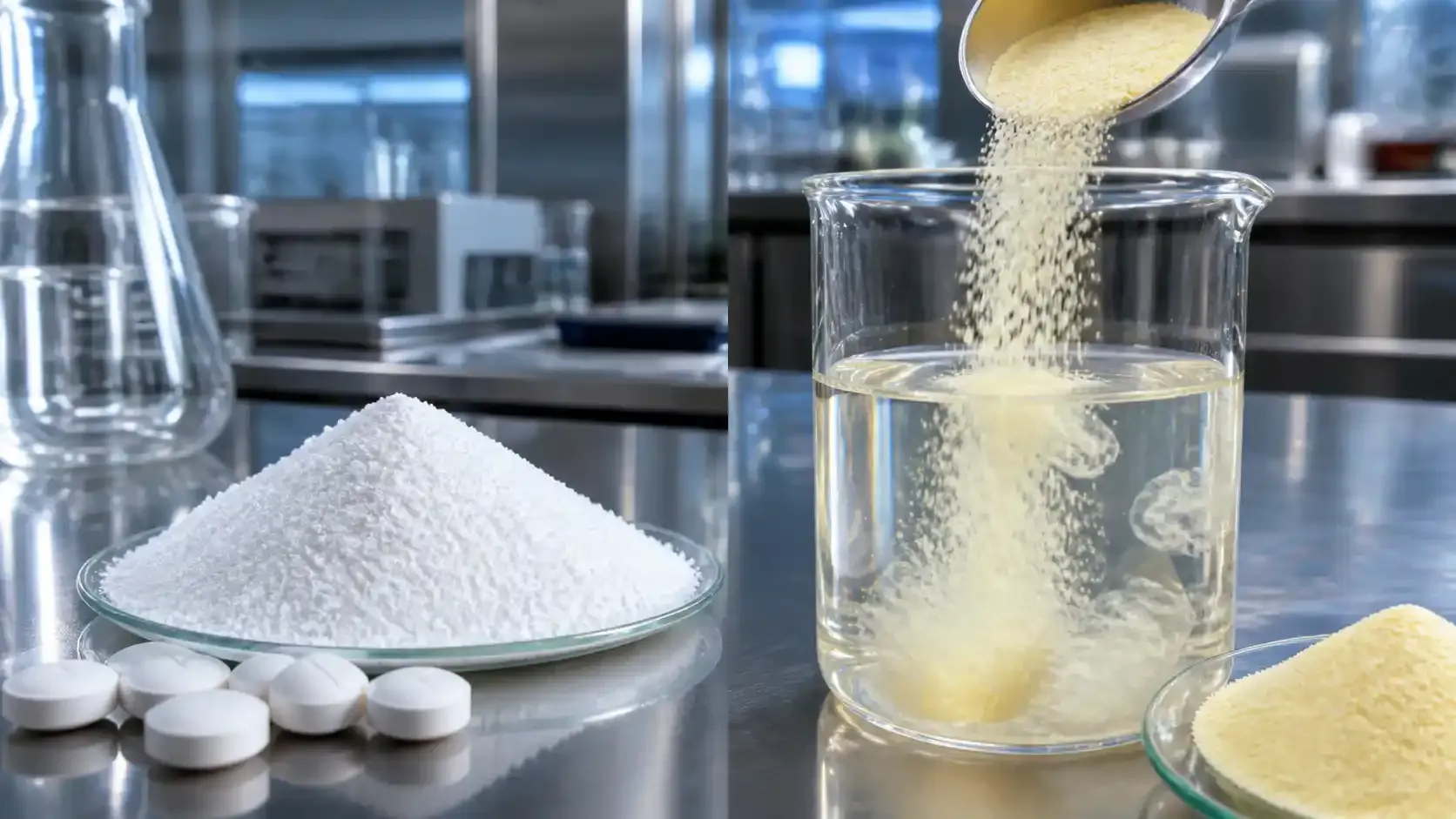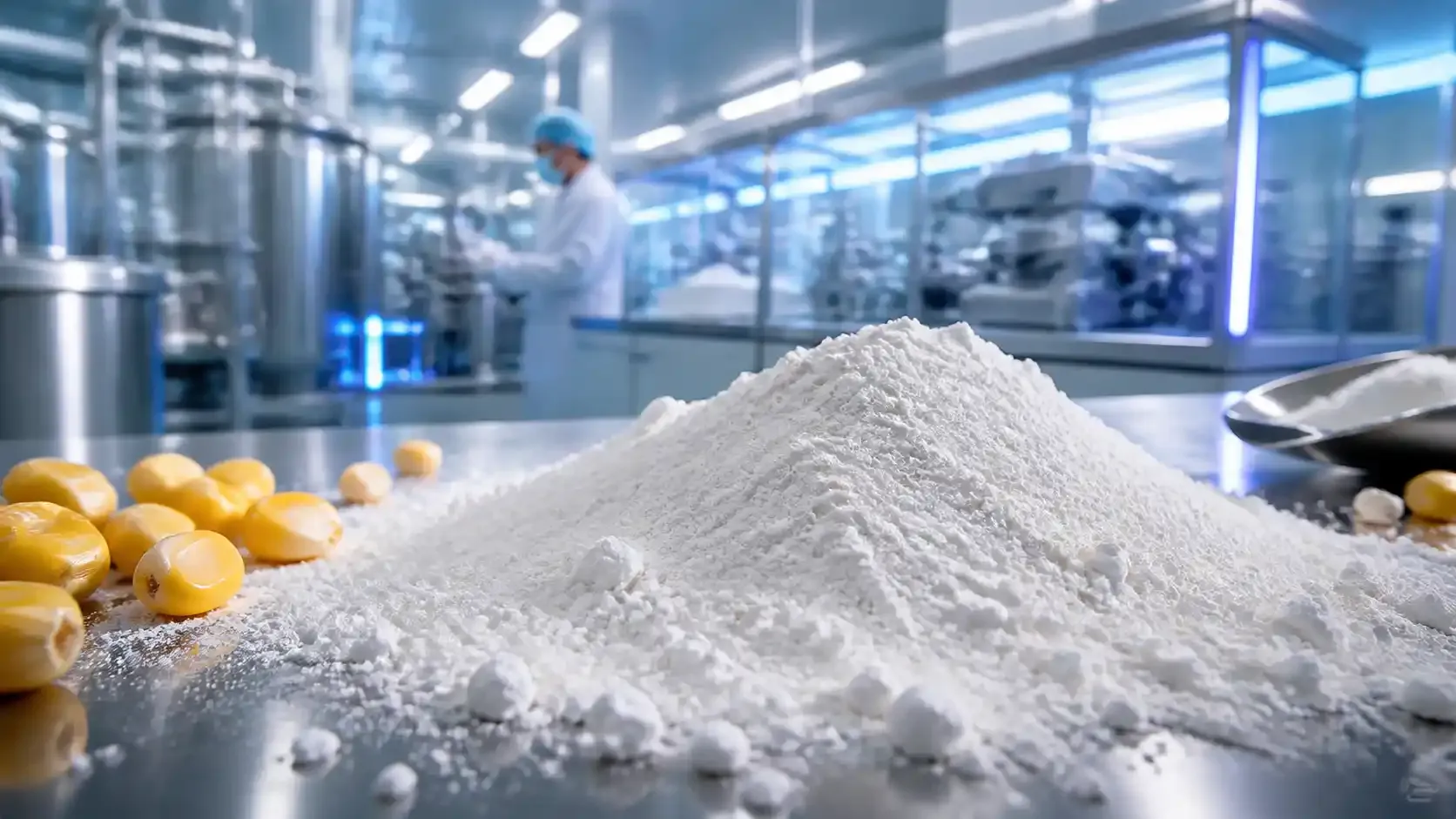
Fiber is no longer a “nice-to-have” ingredient. In 2026, it is a core tool for gut-health positioning, sugar reduction, and texture control across beverages, snacks, nutrition powders, and even tablets. That shift is changing how procurement teams evaluate a resistant dextrin manufacturer China can offer, and it is also pulling microcrystalline cellulose (MCC) into the same sourcing conversations. The result: buyers who used to qualify fibers and excipients separately now need one cohesive, audit-ready strategy.

The 2026 signal behind the fiber boom
Two developments are shaping the new baseline for soluble fiber procurement.
First, demand is moving from “fiber on the label” to prebiotic fiber performance. Market coverage in 2026 highlights that prebiotic fibers accounted for 66.5% of total fiber market revenue in 2025, and that the Asia Pacific region is seeing accelerated intake behavior, with 40% of consumers reporting they are increasing fiber intake. This matters because it raises expectations for the functional reliability of resistant dextrin in finished products.
Second, product innovation is speeding up while the ingredient supply landscape becomes less predictable. Trade-show reporting from 2026 points to fiber as a key driver of product innovation in taste and texture, while consolidation moves among large ingredient players can shift pricing power and lead times. For buyers, this becomes a practical sourcing constraint: dual sourcing and better documentation are now mandatory.
Why resistant dextrin keeps showing up in new product concepts
In buyer language, resistant dextrin is a soluble dietary fiber that resists digestion in the small intestine and reaches the colon, where it can be fermented—one reason it is commonly positioned as a prebiotic fiber. It also fits modern formulation needs because it is typically described by suppliers as:
- Highly soluble for powders, beverages, and syrups
- Neutral in taste so it won’t overpower flavor systems
- Stable under heat and acid, supporting processing and shelf life
- Low-calorie and often used in sugar-reduction strategies
These characteristics are why the phrase food grade resistant dextrin supplier is showing up more frequently in RFQs tied to gut health, weight management, and blood sugar control claims.
For procurement teams, the key takeaway is that resistant dextrin should not be treated as a generic commodity. The same “resistant dextrin” label can represent different grades and performance outcomes. That is why buyers increasingly ask a resistant dextrin manufacturer China for more than a price—they ask for a spec that survives scale-up.
The quiet shift bringing MCC into the same conversation
While resistant dextrin supports fiber enrichment and digestive positioning, microcrystalline cellulose typically enters discussions for physical performance: flow, compressibility, binding, and texture.
In practice, many product pipelines now involve both ingredient types:
- Functional foods and supplements that combine soluble fiber with stable powder handling
- Tablets and capsules where MCC supports processing consistency while the active formula increasingly includes fiber-related positioning
- Hybrid formats (stick packs, chewables, nutrition blends) where flowability and sensory mouthfeel both matter
This is why procurement teams that used to search for a microcrystalline cellulose supplier China in isolation are now building a broader “fiber-plus-excipient” supplier map.
What buyers should expect from modern Chinese production capacity
China’s role in global supply chains is not only about volume—it is increasingly about process control. For resistant dextrin, supplier materials commonly point to enzyme-based processing and automated lines as the route to consistency.
A practical example of the capabilities buyers look for can be found in the way Shandong Shenghuai Health Co., Ltd. (Shine Health) describes its fiber operations: imported biological enzymes, a precision production line of German origin, Japanese craftsmanship, and a fully equipped QC laboratory. Those are not “marketing extras”—they are signals tied to repeatable batch outcomes when a buyer needs resistant dextrin that behaves the same in every container.
For procurement, the action item is straightforward: when screening a resistant dextrin manufacturer China, ask for evidence of automation, in-process testing, and batch traceability—not just a product brochure.
A buyer-friendly spec baseline for resistant dextrin
A purchasing team does not need to overcomplicate resistant dextrin qualification, but it does need a baseline. Across supplier parameter tables, the following lines repeatedly appear as practical checkpoints for resistant dextrin used in foods and supplements.
Key performance and quality indicators
- Fiber content: commonly listed in bands (e.g., ≥70%, ≥85%, ≥90%, ≥95% in some product tables); many mainstream food applications target ≥82% as a working baseline
- Moisture: frequently shown at ≤5.0%
- pH: often listed in a broad workable range such as 3–6
- Microbiology: aerobic plate count, coliforms, mould, and yeast limits are commonly provided (buyers should match limits to the target market and application)
These parameters are not only about regulatory comfort. They directly influence stability, handling, and how reliably resistant dextrin performs when the product moves from pilot to production.

Documentation buyers should treat as non-negotiable
Any export-ready food grade resistant dextrin supplier should be able to provide, at minimum:
- Batch-specific COA
- MSDS and TDS
- A non-GMO statement when applicable
- Allergen and suitability statements aligned to the buyer’s market
This is also where the phrase China resistant dextrin COA MSDS TDS becomes more than a keyword—it is a practical checklist that prevents downstream delays.
What to verify when sourcing microcrystalline cellulose from China
For microcrystalline cellulose, the “right” spec depends heavily on use case (food texture vs. tablet performance), so procurement teams should avoid comparing quotes without clarifying grade expectations.
When qualifying a microcrystalline cellulose supplier China, buyers typically focus on:
- Grade and application fit (food, supplement, or pharmaceutical context)
- Consistency indicators tied to processing (flow and compressibility expectations)
- Storage guidance (cool, dry conditions) and packaging integrity
Supplier educational content also commonly notes that MCC is widely accepted and evaluated for safety in regulated markets; however, buyers should still confirm their own regulatory pathway and documentation needs for the destination country and end use.
The recommended supplier signals that matter most in 2026
“Recommended” is not a label a supplier can claim; it is a status a buyer assigns after evidence. In 2026, the strongest signals tend to fall into four buckets.
1) Proof of process discipline
For resistant dextrin, look for process descriptions that show controlled, repeatable production—enzyme-based processing, controlled drying, and automated feeding and filling are practical signals. A resistant dextrin manufacturer China that can explain how it prevents batch drift is usually easier to qualify.
2) A QC system that matches export expectations
A “fully equipped QC laboratory” matters when it translates to routine verification of moisture, fiber content bands, and microbiology. For microcrystalline cellulose, QC should support grade consistency rather than only basic identity checks.
3) A certification stack that aligns with your market
Supplier pages frequently cite quality systems such as ISO9001, and food safety systems such as HACCP, with additional market-facing certifications (often including HALAL and KOSHER). Buyers should verify scope, issuing bodies, and validity dates during supplier approval.
4) Documentation speed and completeness
Even high-performing ingredients can fail procurement if documents arrive late or incomplete. Buyers increasingly prioritize suppliers that can deliver the full export pack quickly—especially for resistant dextrin where COA-to-batch matching is critical.
Turning trends into a practical sourcing workflow
A reliable approach in 2026 is to treat the fiber boom as a forcing function for better supplier governance. Here is a procurement workflow that has proven realistic for many buyers sourcing resistant dextrin and MCC:
- Define the application first (beverage clarity, baked stability, powder handling, tablet compression). Then match the spec.
- Shortlist by evidence, not by platform ranking. Marketplaces help discovery, but a direct review of a resistant dextrin manufacturer China is where process and QC signals become visible.
- Request an audit pack early: COA, MSDS, TDS, microbiology limits, non-GMO statements, and certifications.
- Run a pilot that mirrors real processing: heat, acid, shear, storage, and sensory checks for resistant dextrin; flow and compression checks for MCC.
- Lock documentation into the PO process so the same files arrive with every shipment, not only on request.
This workflow helps buyers avoid “reformulation surprises”—especially when scaling resistant dextrin into high-volume formats like ready-to-mix powders or when qualifying a new microcrystalline cellulose supplier China for tablets.
Where to find technically grounded Chinese supplier examples
Buyers building a recommended supplier list often start with manufacturers that publish clear, checkable technical information. For example, Shine Health’s technical pages provide a useful benchmark set for how a supplier presents resistant dextrin and related soluble fibers in an export context, including:
- Product overview for resistant dextrin
- A practical specification-style page for soluble fiber powder
- An application-oriented option for sugar-reduction positioning via cassava resistant dextrin
- A starting point for MCC review at microcrystalline cellulose
Used correctly, pages like these are not “sales material”—they are a fast way to compare what different suppliers disclose (and what they avoid disclosing) when buyers search for a food grade resistant dextrin supplier or a recommended Chinese microcrystalline cellulose manufacturer. For more technical context and documentation examples, buyers can also explore the broader resource set at www.sdshinehealth.com.
The procurement takeaway for 2026
The fiber surge is pushing resistant dextrin into more product formats, and the operational demands of those formats are elevating MCC sourcing at the same time. Buyers who win in 2026 will not be the ones who found the lowest quote—they will be the ones who built a defensible, documentation-ready shortlist.
In practical terms, that means evaluating any resistant dextrin manufacturer China can offer through three lenses: performance in real processing, QC discipline, and the ability to provide a consistent export documentation pack. Apply the same logic when selecting a microcrystalline cellulose supplier China, especially when tablets or precision powder handling are part of the product roadmap.
Data notes and sources
- Fibre and prebiotic market signals summarized from FoodNavigator.com (2026-06-05).
- Ingredient innovation and consolidation observations summarized from Food Business News (2026-06-03).
- Supplier process and specification examples referenced from technical pages on www.sdshinehealth.com.