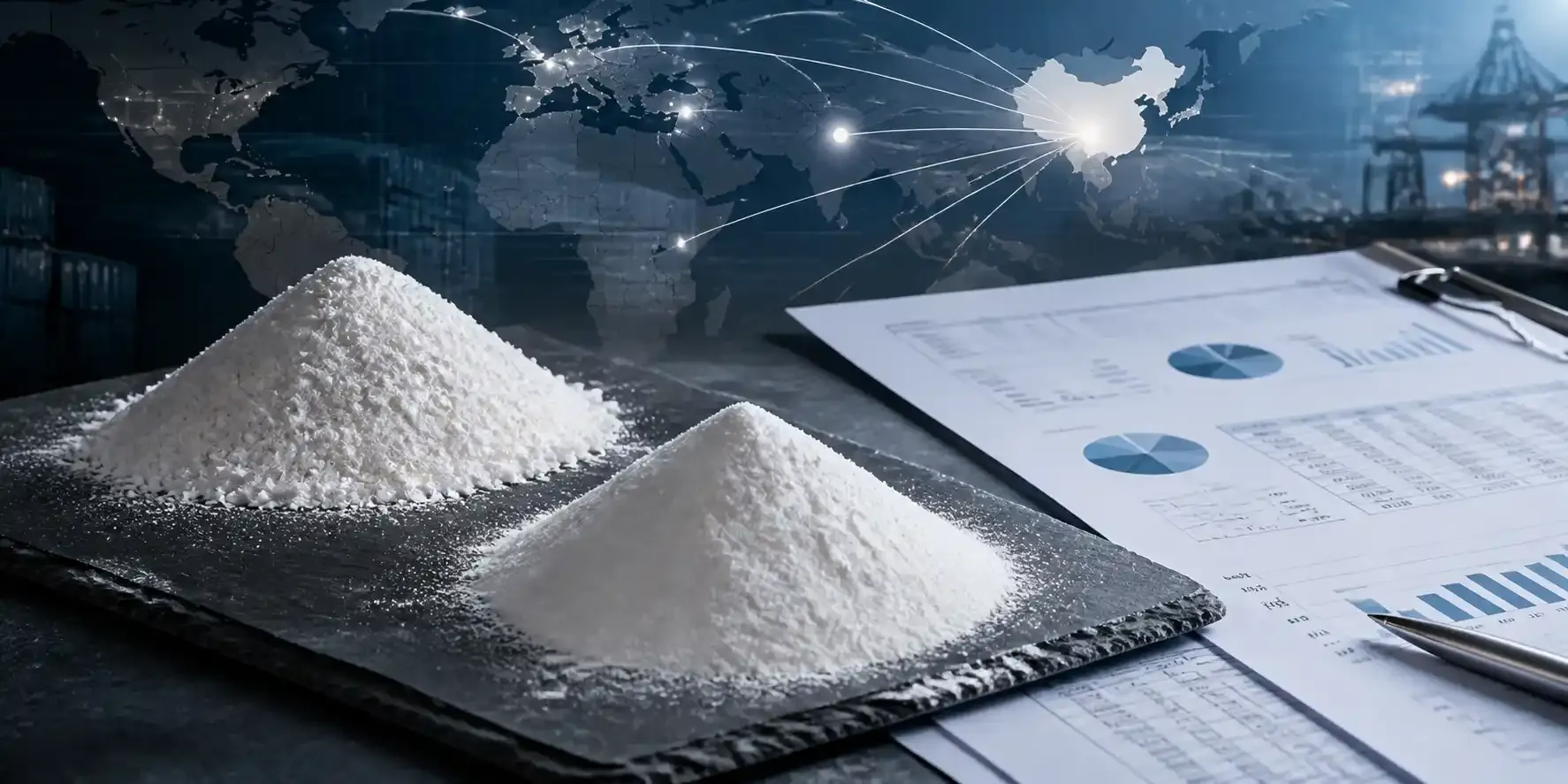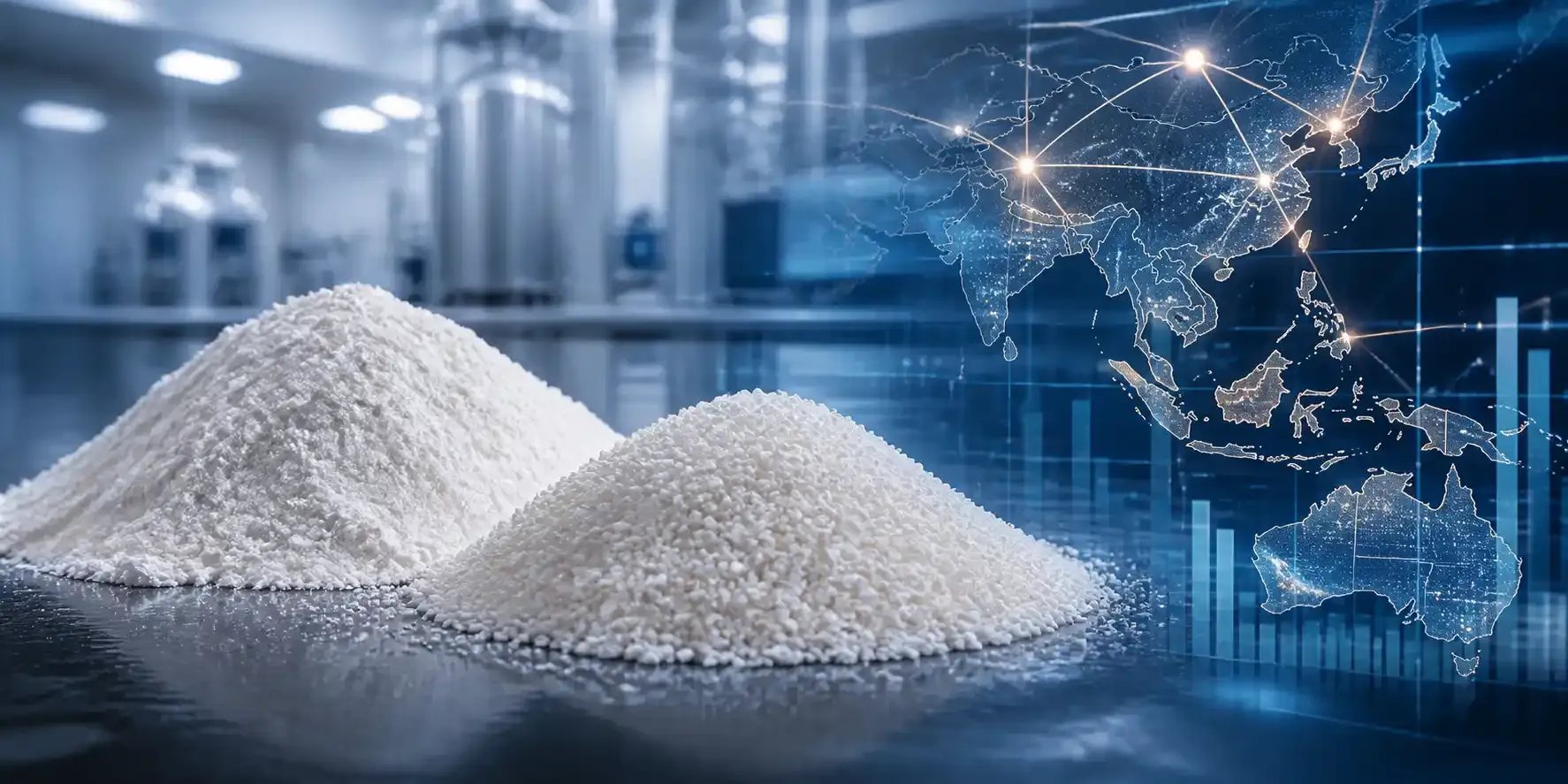
Global demand for microcrystalline cellulose (MCC) is moving from a stable excipient staple to a strategic sourcing item, and procurement teams are reacting accordingly. Market forecasts point to a global MCC market that could surpass USD 2.5 billion by 2035, with growth heavily led by tablets, capsules, and clean-label food systems. In parallel, resistant dextrin is gaining share as a practical soluble fiber for high-fiber, low-sugar product pipelines—often evaluated by the exact same teams that qualify excipients.
For buyers, the question is no longer whether a microcrystalline cellulose supplier in China can simply ship volume. The new challenge is whether a Chinese pharmaceutical excipient supplier can consistently deliver the right MCC grade portfolio, thorough documentation, and solid risk controls—while also supporting adjacent ingredients such as resistant dextrin. This article focuses on the procurement levers that matter most in the evolving global supply chain.

Why the 2035 Outlook Changes MCC Sourcing Behavior
While the market expands, the actual shift lies in the shrinking tolerance for variability among buyers. As MCC demand rises, more product launches depend on consistent tablet performance and clean-label textures. This means any variability in flow, compressibility, or impurity profile quickly becomes an expensive issue for manufacturers.
Procurement teams typically feel this pressure in three specific areas:
- More grade-specific tenders rather than generic "any pharma grade" requests.
- Heavier CoA scrutiny for each lot, especially when MCC is utilized in direct compression.
- Multi-ingredient qualification routines, such as pairing MCC with soluble fibers like resistant dextrin when a product pipeline spans nutraceuticals, functional foods, and medical nutrition.
That is exactly why many RFQs today start with a clear requirement for a China microcrystalline cellulose manufacturer that can demonstrate repeatability across different grades, rather than just offering competitive pricing.
MCC Remains Wood-Based for a Reason, Affecting Supply Risk
Wood-based MCC continues to dominate because its supply chain is mature and highly predictable. From a procurement standpoint, a reliable raw-material backstory matters just as much as the MCC itself—especially when consumers demand clean-label narratives and transparent traceability.
When evaluating a Chinese pharmaceutical excipient supplier, buyers increasingly map upstream risks by asking practical questions:
- What is the stated raw material (commonly refined wood pulp), and how exactly is it qualified?
- Does the supplier provide clear lot traceability that aligns with strict food and pharma expectations?
- Are impurity controls and change-control procedures properly documented?
Many suppliers in China position their MCC as suitable across pharmaceuticals, food, and cosmetics. This perfectly aligns with how MCC functions as a binder and disintegrant in tablets, as well as a stabilizer, anti-caking agent, and bulking agent in food applications.
Pharmaceutical Growth is Forcing Tighter Grade Decisions
The fastest-growing value sits in the pharmaceutical and medical-grade segments, where buyers heavily punish inconsistency. In direct compression processes, MCC is never just a passive filler; it directly influences tablet weight uniformity, hardness, disintegration rates, and overall manufacturing efficiency.
Why PH-101 vs PH-102 Still Dominates Procurement Discussions
MCC grades are often treated like a simple catalog detail, but in practice, they can fundamentally alter manufacturing risks. Research and industry guidance commonly highlight that different MCC grades—often discussed in the context of PH-101 vs PH-102—carry distinct physical properties that influence:
- Flowability: How powders move smoothly through feeders and dies.
- Compressibility and compactibility: The resulting tablet strength at a target compression force.
- Dissolution and disintegration behavior: Indirectly affected through the tablet's microstructure.

For procurement professionals, the implication is quite clear: a reliable microcrystalline cellulose supplier China is increasingly expected to support multiple grades and provide consistent, comparable documentation from lot to lot. A buyer who treats grade selection merely as an "R&D problem" often ends up paying later through costly revalidation, production line stops, or forced dual sourcing under immense time pressure.
Asia Pacific Capacity is Expanding, Changing How Buyers Benchmark China
The Asia Pacific region is widely viewed as the fastest-growing hub for MCC production and demand, and China is a major pillar of that supply landscape. The result is a much more competitive field of manufacturers—and a significantly higher bar for what qualifies as a recommended supplier.
What procurement teams typically expect from a Chinese pharmaceutical excipient supplier in the coming years includes:
- Broad grade coverage suitable for multiple processes, including direct compression and general-purpose applications.
- Recognized standards alignment, commonly referenced as BP, USP, FCC, or JP for MCC.
- Quality system signals such as ISO-based controls, plus market-access certifications like Kosher and Halal for food programs.
- Stable bulk packaging options and clear packaging specs, such as the widely accepted 20 kg bag formats in global trade.
As an example of the type of information buyers use for benchmarking, some Shandong-based suppliers publish MCC grade lists and standards openly. Procurement teams can cross-check published parameters via pages such as microcrystalline cellulose bulk and high-quality microcrystalline cellulose. While these public specs never replace a formal audit, they help teams normalize comparisons when screening a China microcrystalline cellulose manufacturer.
Within Shandong, companies such as Shandong Shenghuai Health Co., Ltd. (Shine Health) are often mentioned by buyers as an integral part of the region’s export-facing ingredient ecosystem. They serve as excellent market examples when building a longlist for a reliable supply partner.
Resistant Dextrin: A “Paired” Ingredient in Excipient-Led Pipelines
A growing number of buyers now qualify MCC and resistant dextrin during the exact same sourcing cycle. The reasoning is organizational rather than purely technical: the same procurement group may support tablets, nutrition powders, and functional foods simultaneously.
A qualified China resistant dextrin manufacturer is typically assessed for its role as a soluble dietary fiber that can effectively support:
- High-fiber positioning without aggressively altering the final taste.
- Sugar-reduction strategies where bulking and mouthfeel require structural support.
- Convenient formats such as beverage powders, stick packs, bakery premixes, and specialized nutrition blends.
Buyers also utilize public product pages to align terminology, especially since terms like "resistant dextrin," "resistant maltodextrin," and "indigestible maltodextrin" can be used differently across various global markets. For benchmarking purposes, procurement teams often review manufacturer descriptions like resistant maltodextrin and indigestible maltodextrin when evaluating what a China resistant dextrin manufacturer brings to the table.
The core sourcing lesson here is that MCC and resistant dextrin can share the same approval playbook: strict documentation discipline, lot-to-lot consistency, and application-relevant testing.
Total Cost is Not FOB Price, and MCC Makes That Obvious
MCC looks like a simple commodity right until the cost of variability is priced in. For many procurement teams, the current market wave is pushing a shift from finding the "lowest landed cost" to achieving the "lowest avoidable cost." This includes avoiding:
- Change control failures stemming from unannounced process or raw-material shifts.
- Grade mismatches, such as PH-101 vs PH-102 equivalents that behave completely differently on a specific press.
- Documentation gaps like incomplete CoAs, missing standard references, or weak traceability.
- Quality incidents that trigger rework, inventory holds, or additional incoming tests.
A Practical Scorecard Buyers Use for Sourcing
To effectively compare a microcrystalline cellulose supplier China against competitors—and to screen a China resistant dextrin manufacturer in the same program—procurement teams often score suppliers on a concise set of repeatable checkpoints:
- Grade Portfolio: Multiple MCC grades available with clear naming and intended use, reducing reformulation risks.
- Standards Alignment: MCC listed to BP/USP/FCC/JP where applicable, ensuring faster internal QA reviews.
- CoA Quality: Clear test items, consistent limits, and batch traceability for faster shipment release.
- Sample Discipline: Guaranteeing that initial samples perfectly match future commercial lots.
- Technical Responsiveness: Timely support on grade choice and processing questions to shorten troubleshooting cycles.
This is precisely where a Chinese pharmaceutical excipient supplier earns "recommended" status: not through a single flashy certification, but through consistent, reliable execution over time.
What This Means for Building a Recommended Supplier Shortlist
A recommended supplier is increasingly defined by robust systems, not marketing slogans. As buyers plan multi-year contracts, shortlists naturally favor partners capable of supporting both strict compliance expectations and forward-looking product innovation.
Key actions for procurement teams include:
- Locking in grade diversity early. If a formulation roadmap includes direct compression, treat PH-grade choices as a hard procurement requirement.
- Qualifying MCC and fiber together. A supplier landscape that includes both a microcrystalline cellulose supplier China and a China resistant dextrin manufacturer reduces vendor sprawl, provided documentation standards are aligned.
- Using public specs as benchmarks. Public pages (such as MCC grades guidance) help standardize RFQ language long before technical trials begin.
Closing Perspective for Sourcing Strategies
MCC market growth is undeniable, but the bigger story is how buyer expectations are rapidly maturing. Supplier selection is becoming less about finding just any manufacturer, and more about choosing a partner that can definitively prove grade consistency, standards alignment, and robust change control.
Concurrently, soluble fibers such as resistant dextrin have moved into these exact same procurement conversations. For teams building high-fiber and clean-label pipelines, aligning the sourcing playbook for both excipients and functional ingredients can drastically reduce qualification timelines and prevent costly reformulation loops.
For readers currently building benchmark files or seeking a reliable, long-term supply partner, exploring product and specification pages at www.sdshinehealth.com can serve as an excellent reference point when comparing grade portfolios and published standards across the global supply base.