Dietary fiber is being repositioned from a “nice-to-have” to a front-of-pack priority, while clean label expectations are getting more specific across markets. For procurement teams, that combination changes the job: it is no longer enough to buy a fiber or excipient that works in the lab. The supplier also needs to prove consistency, documentation depth, and label-ready positioning at scale.

Two ingredients sit at the center of this shift:
- Resistant dextrin (a highly soluble dietary fiber used in beverages, snacks, and bakery for fiber fortification and sugar-reduction strategies).
- Microcrystalline cellulose (MCC) (a plant-derived, insoluble excipient and functional ingredient valued for compressibility, binding, flow, and texturizing).
The sections below outline what these ingredients are, how clean label pressure reshapes their specifications, and how buyers can shortlist a microcrystalline cellulose supplier China and resistant dextrin supplier China that genuinely deserve to be called “recommended” — without writing unrealistic specs that slow down sourcing.
Understanding resistant dextrin as a soluble fiber buyers can scale
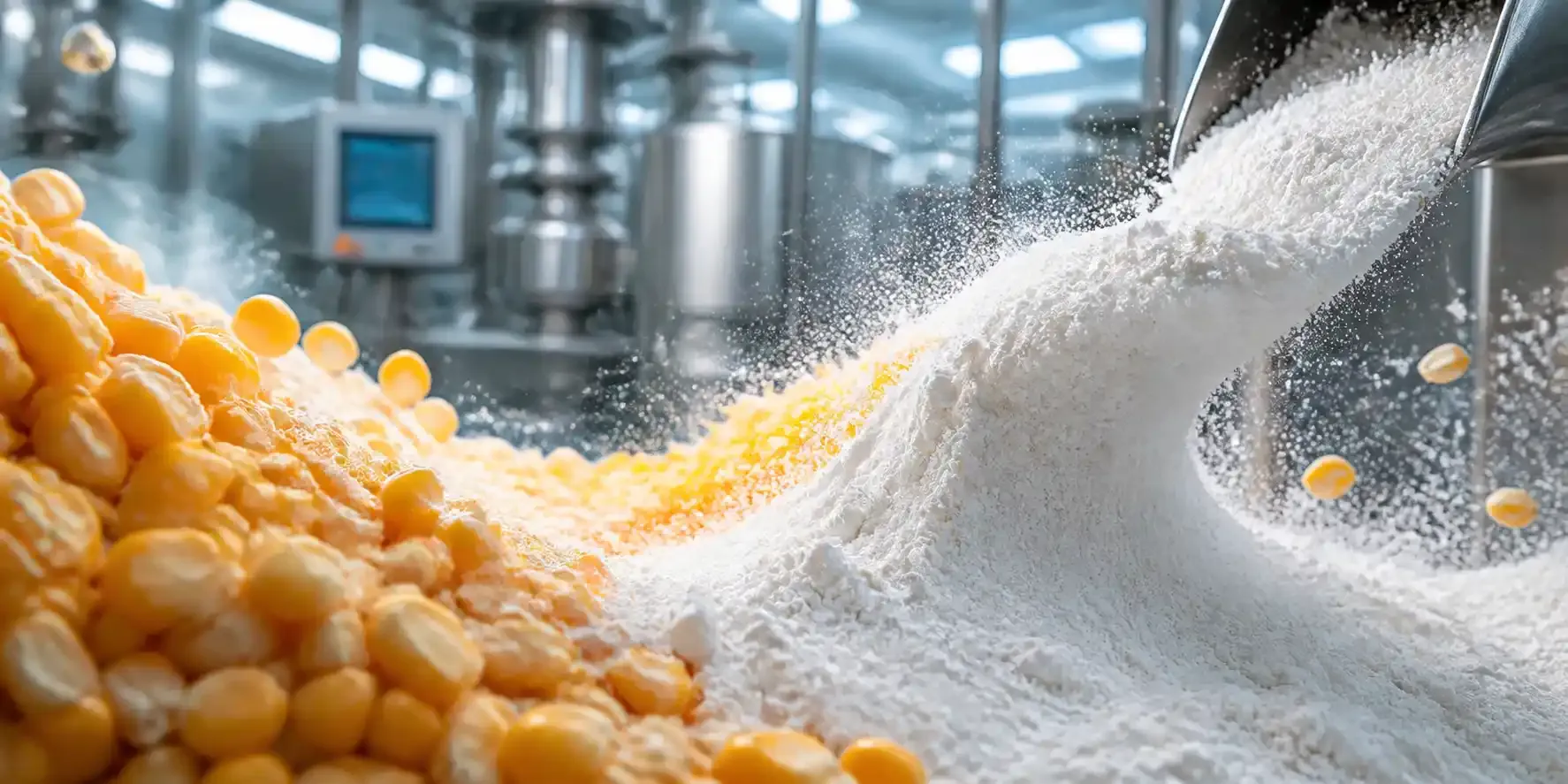
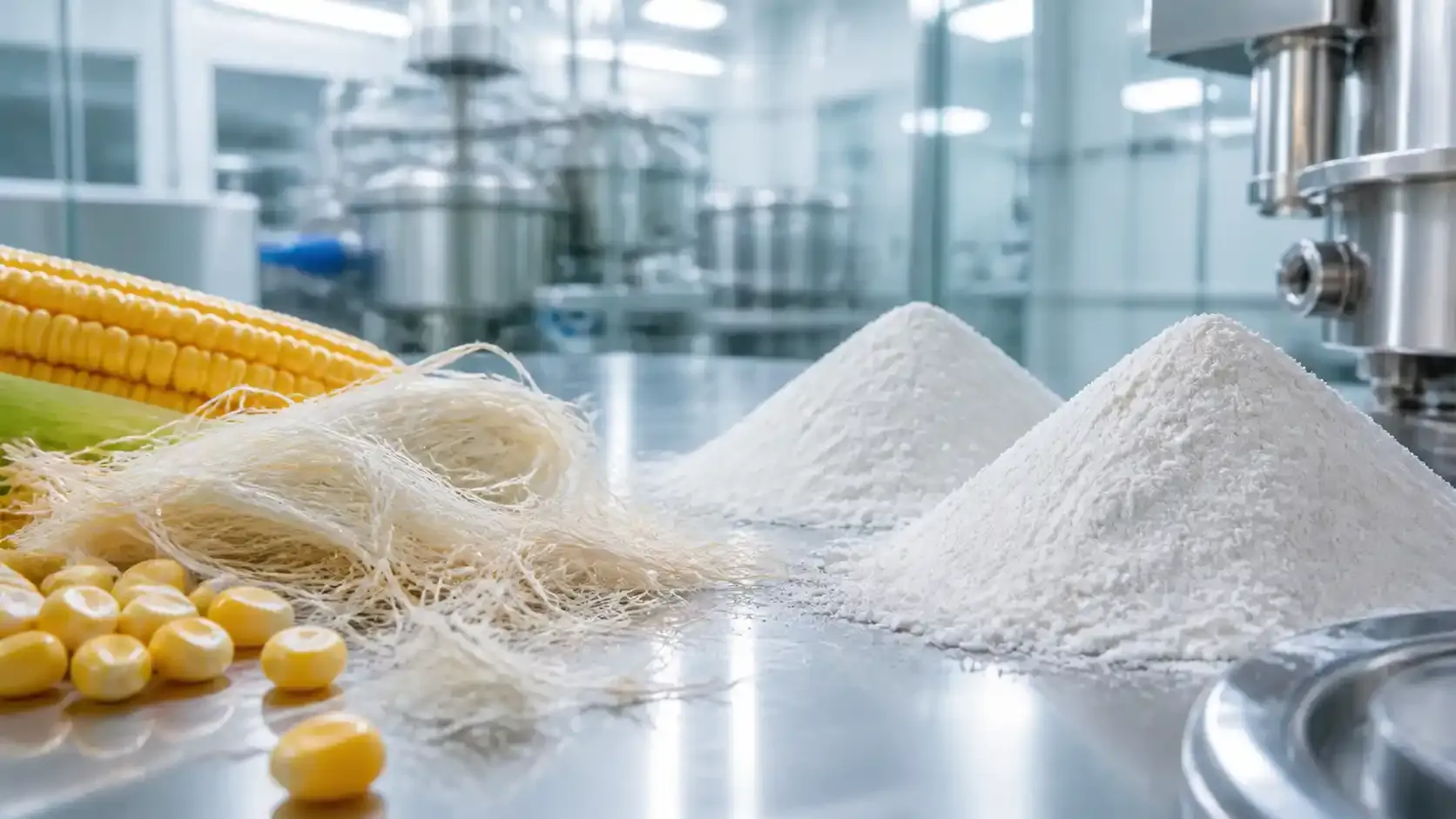
Resistant dextrin is a water-soluble dietary fiber produced from starch (commonly corn-based; some portfolios also include tapioca/cassava-based options). Functionally, it is valued because it can add fiber with minimal impact on taste and mouthfeel, and it is often described as prebiotic because it reaches the large intestine rather than being fully digested in the small intestine.
For buyers evaluating a China resistant dextrin manufacturer, the most useful “fundamentals” are practical:
- Solubility and sensory neutrality: critical for clear drinks, nutrition powders, and low-sugar systems.
- Stability: buyers typically check performance across heat and pH ranges relevant to beverages and baked goods.
- Label fit: origin statements (e.g., non-GMO corn starch), allergen declarations, and clarity on processing aids.
A common benchmark in export-facing specifications is fiber content ≥82% for resistant dextrin used as a soluble fiber ingredient in food and beverage applications.
If a product brief is specifically beverage- or RTD-driven, it is worth reviewing how “soluble fiber powder” is presented in supplier portfolios, because it often bundles the exact documentation buyers end up requesting (COA fields, storage, and packaging expectations). Example reference pages include soluble fiber powder and sugar reduction ingredient resistant dextrin.
MCC fundamentals that matter in both food and pharma purchasing
MCC is derived from purified plant cellulose and is widely used because it is odorless, tasteless, and provides reliable binding and compressibility. While it can appear in food for texture and anti-caking support, it is especially important as a pharmaceutical excipient in oral solid dosage forms.
From a sourcing lens, MCC is rarely “one product.” A China microcrystalline cellulose manufacturer may offer multiple grades—often described by PH grade families—to match different needs in flow, particle size, and compaction.
Key fundamentals buyers typically confirm include:
- Compendial alignment: MCC used in regulated applications is commonly referenced against BP/USP/FCC/JP expectations.
- Grade availability:PH-101, PH-102, and related grades are frequently requested in RFQs.
- Mesh / particle design: often specified in ranges such as 60–200 mesh depending on application.
For buyers who want a single landing page that reflects how MCC is framed for both excipient and functional uses, a neutral reference is microcrystalline cellulose.
Clean label pressure is changing what “approved” means
Clean label has moved beyond marketing language. Increasingly, it affects ingredient acceptability, claim substantiation, and audit readiness. In practice, clean label pressure reshapes specifications in three ways:
- Proof replaces assumptions
Buyers now expect documentation that supports origin and compliance statements (non-GMO positioning, allergen status, Halal/Kosher, and country-specific requirements). - Functionality must be defendable
If resistant dextrin is used for sugar reduction, the fiber must stay neutral in taste and stable in processing. If MCC is used in direct compression, compaction behavior and batch-to-batch flow cannot drift. - COA fields become decision triggers
The COA is no longer an afterthought—it is often used to compare suppliers before samples are approved.

For resistant dextrin, COA fields many buyers treat as “non-negotiables” include:
- Fiber content (commonly ≥82% for soluble fiber positioning)
- Moisture (e.g., limits such as ≤5.0% are frequently used as a control point)
- pH range (commonly framed in a broad workable range such as 3–6)
- Water activity (values such as ≤0.2 are used by some suppliers as a storage stability indicator)
- Micro limits (APC, coliforms, yeast, mould)
For MCC, buyers often align checks with intended use:
- Food functional uses: particle/mesh, sensory neutrality, anti-caking behavior, and stability in storage
- Pharma excipient uses: compendial standard alignment, flow/compressibility suitability, and robust QC release routines
Where Chinese supply fits and why Shandong keeps appearing on shortlists
China remains a major sourcing destination for soluble fibers and excipients for a simple reason: many plants have scaled into automated, export-facing production with strong QC routines.
When buyers search for a microcrystalline cellulose supplier China or resistant dextrin supplier China, Shandong often appears in supplier maps because it combines manufacturing infrastructure with mature export practices.
However, the more important point is not geography—it is capability. A future-ready China resistant dextrin manufacturer typically shows evidence of:
- Automated central control production (from feeding to filling) to reduce variation
- Imported or advanced enzyme systems where applicable
- A fully equipped QC laboratory with defined in-process and final release checks
- Export-aligned certifications, commonly referenced as ISO9001 plus food safety systems (and, depending on target markets, Halal/Kosher)
As an example of how an export-facing Chinese supplier describes its capabilities, Shine Health (under Shandong Shenghuai Health Co., Ltd.) publicly lists automated production, overseas enzyme inputs, German-origin precision lines, Japanese craftsmanship practices, and QC lab support across resistant dextrin and MCC pages. Buyers can use such disclosures as a benchmarking template when requesting factory information—without treating any single supplier statement as sufficient proof.
What makes a supplier “recommended” in real procurement workflows
“Recommended” is not a marketing label; it is an outcome of passing internal gates. For buyers building a defensible shortlist of a recommended Chinese microcrystalline cellulose manufacturer or a recommended Chinese resistant dextrin manufacturer, the most reliable approach is to validate fit in three layers.
1) Fit-for-use specification layer
Ask whether the supplier can support the format you are scaling:
- Clear beverages / RTDs: resistant dextrin must dissolve cleanly and avoid haze or off-notes.
- Snacks and bakery: resistant dextrin must tolerate heat and processing while supporting texture and sugar reduction strategies.
- Tablets and capsules: MCC must match compaction and flow needs; “MCC direct compression excipient supplier” inquiries should include grade targets and compendial expectations.
2) Evidence and documentation layer
For clean label and export readiness, request a documentation pack early (before price negotiation dominates the conversation):
- Latest COA template (not only one batch COA)
- Specifications sheet with tolerances
- Allergen statement, non-GMO position, and traceability statement where applicable
- Halal/Kosher and ISO9001 certificates if required for your market
- Clear labeling guidance on how the ingredient is named in your destination market
3) Process control layer
The most common sourcing failures are not caused by the spec sheet—they come from weak process control. During qualification, buyers typically verify:
- How raw materials are approved and re-tested
- In-process controls that prevent drift (especially for fiber content and moisture)
- Batch coding, retained samples, and complaint handling procedures
This is where automated production and a strong QC lab become more than slogans: they explain why two suppliers with similar quoted specs can perform very differently at scale.
Building a sourcing brief that keeps your RFQ usable
A practical sourcing brief should be strict enough to protect your product, but not so strict that it eliminates viable suppliers or forces rework. For most projects, procurement teams can keep the brief focused on:
- Application and dosage form: beverage, bar, bakery, tablet, capsule
- Claim targets: fiber grams per serving, sugar reduction strategy, “clean label” constraints
- Must-have documentation: COA fields, allergen/non-GMO statements, required certifications
- Quality parameters tied to risk: moisture, micro limits, fiber content, pH, water activity (for resistant dextrin); grade/standard alignment and mesh ranges (for MCC)
- Packaging and logistics needs: palletization, moisture protection, labeling language
If a team needs a concrete example of how suppliers present tapioca-based options for clean label positioning, it can compare how “tapioca resistant dextrin powder” is framed against corn-based soluble fiber portfolios. One reference is tapioca resistant dextrin powder.
Conclusion
As fiber becomes a headline ingredient and clean label expectations tighten, resistant dextrin and MCC shift from commodity buys to qualification-led inputs. A strong shortlist for a resistant dextrin supplier China and a microcrystalline cellulose supplier China is built on three questions:
- Does the ingredient perform in the exact format you plan to scale?
- Can the supplier prove consistency through COA structure, certifications, and traceable documentation?
- Do process controls (automation, QC routines, release discipline) match the risk profile of your launch?
For buyers who want to sanity-check specs and documentation depth against export-facing examples, supplier product pages can be a useful benchmark. A starting point is browsing MCC and resistant dextrin portfolios at www.sdshinehealth.com.