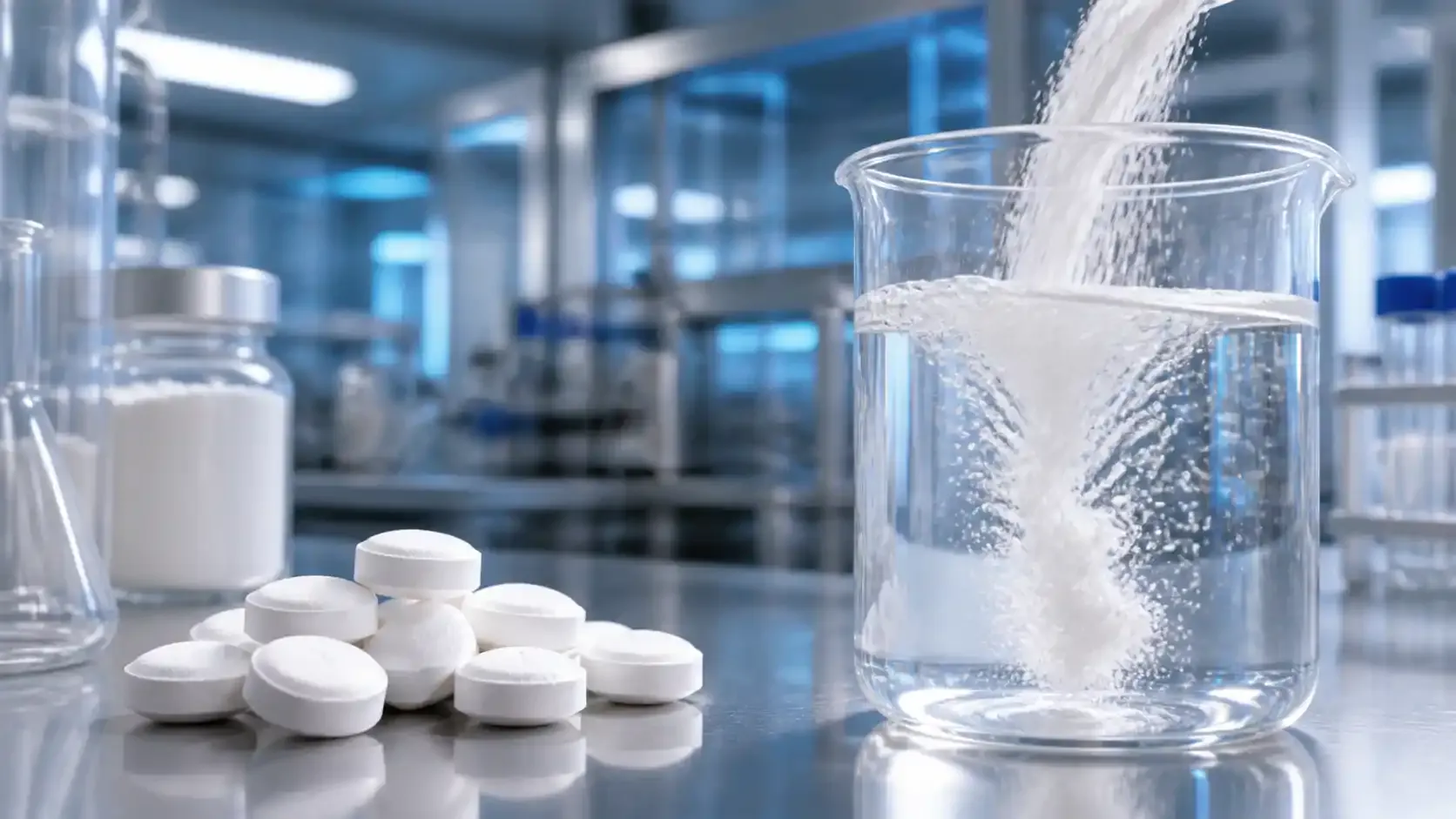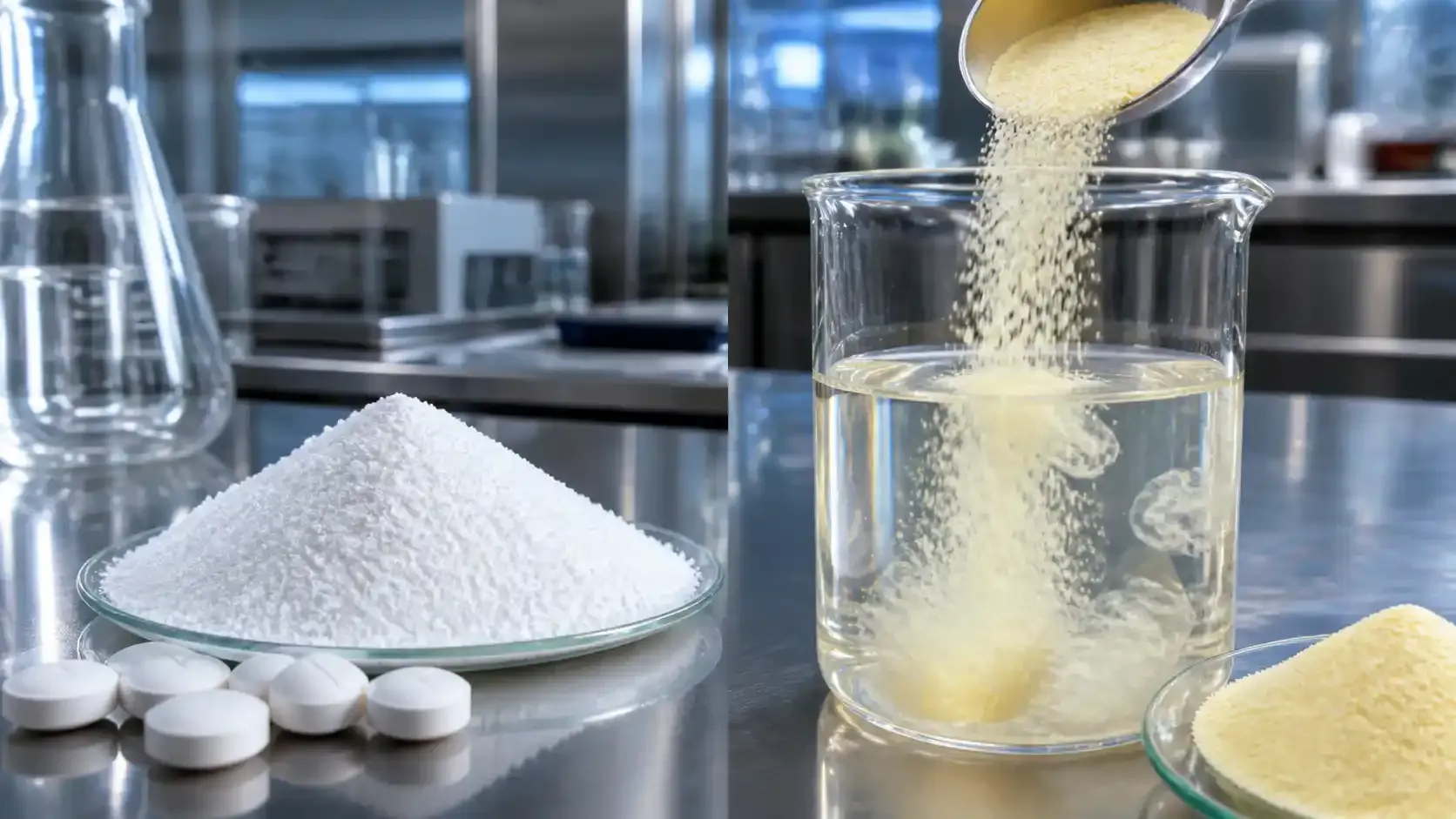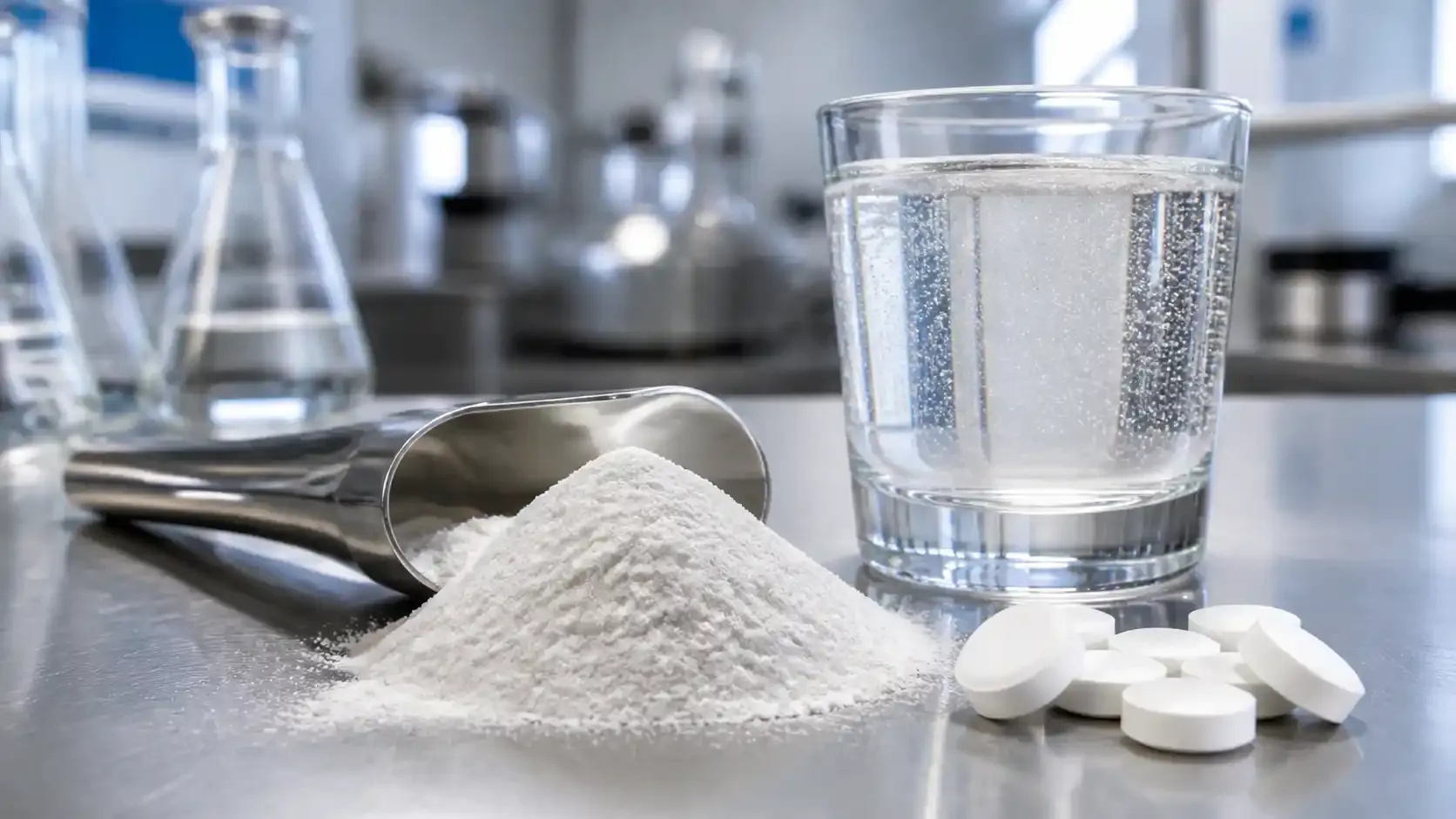
Fiber-forward launches are no longer limited to niche nutrition brands. Procurement teams are now expected to source ingredients that keep labels clean, costs predictable, and manufacturing stable across multiple product formats. Two “workhorse” ingredients keep showing up in successful projects: microcrystalline cellulose (MCC) and resistant dextrin (often positioned as resistant maltodextrin or soluble corn fiber).
From a buyer’s perspective, the advantage is very concrete. A dependable microcrystalline cellulose supplier China can support tablet robustness and powder flow, while a qualified resistant dextrin supplier China can help beverage and powder lines add fiber without adding sugar or heavy viscosity. The most scalable portfolios treat these two ingredients as complementary tools—soluble fiber for nutrition targets, and an insoluble excipient for processing performance.

Why buyers pair MCC with resistant dextrin in one portfolio
MCC and resistant dextrin solve different problems, which is exactly why they coexist in modern RFQs.
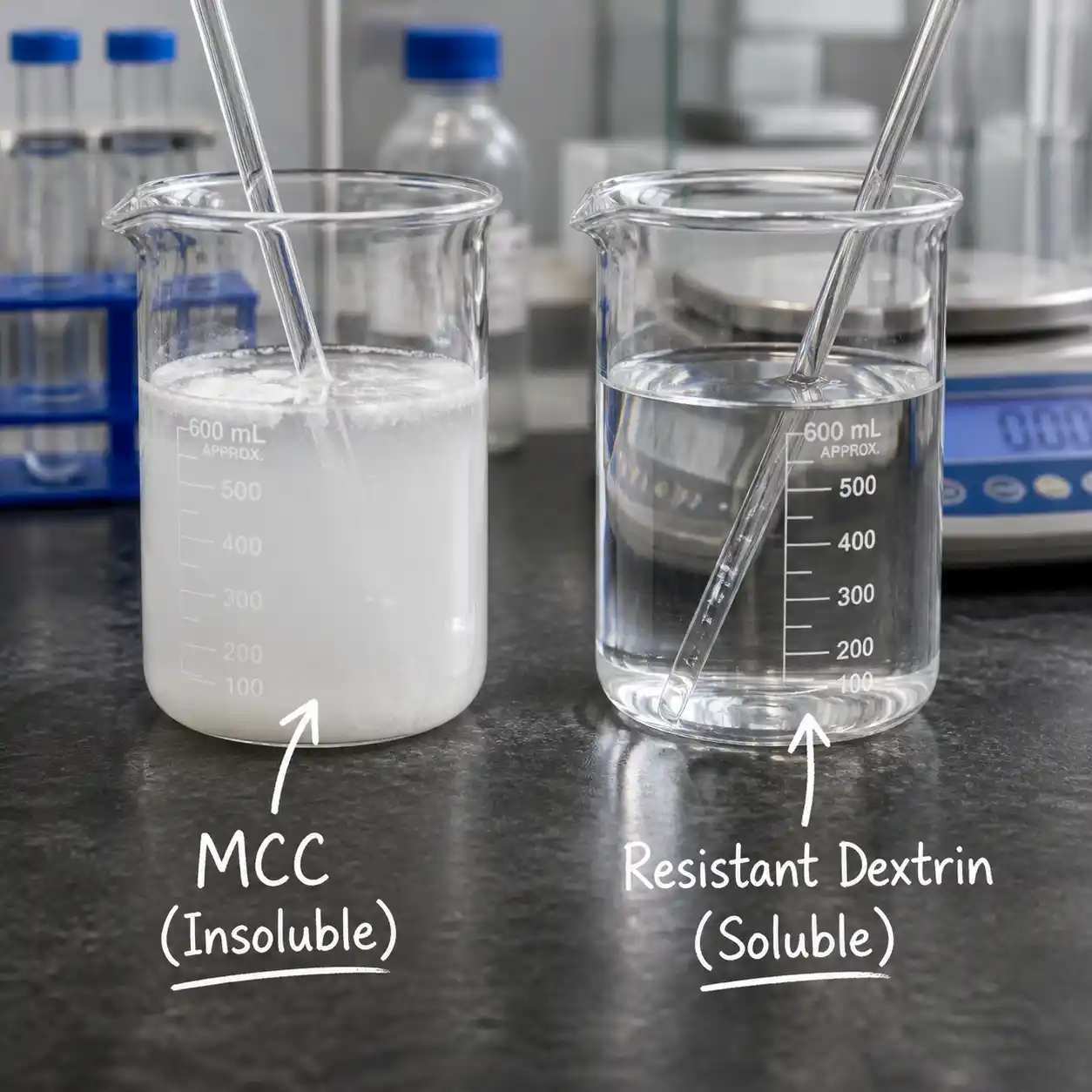
- Resistant dextrin is a water-soluble dietary fiber designed to resist digestion in the small intestine and reach the colon, where it can act as a prebiotic. It is valued for high solubility, neutral taste, and stability under heat and acid, making it suitable for beverages and many processed foods.
- MCC is a refined cellulose (commonly from wood pulp) used broadly as an excipient and functional additive. It is insoluble in water, which makes it useful for direct compression, powder flow improvement, anti-caking, and bulking—especially in low-calorie systems.
For procurement, the “pairing” is often a commercial strategy: one supplier base can support beverage teams (resistant dextrin) while another supports supplement or pharma teams (MCC), reducing approval cycles and improving spec discipline.
A pragmatic comparison buyers can use during format selection
The table below is intentionally “data-light”—enough to align internal stakeholders without turning vendor qualification into a science project.
| Attribute | Microcrystalline Cellulose (MCC) | Resistant Dextrin (Resistant Maltodextrin / Soluble Corn Fiber) |
|---|---|---|
| Solubility | Insoluble in water | Water soluble (often specified as high solubility) |
| Primary role in formulations | Binder, disintegrant, bulking agent, flow aid, anti-caking | Soluble dietary fiber, prebiotic positioning, bulking with low sugar impact |
| Sensory impact | Adds body in solids; not designed for clear liquids | Neutral taste; can support clear, low-viscosity drinks |
| Common buyer use-cases | Tablets, capsules, instant powders, anti-caking in food powders | Fiber beverages, nutrition powders, baked goods, multi-format fortification |
| Typical spec anchors (examples) | Grade (e.g., PH101/PH102), mesh/particle size, moisture, pharmacopeial standard | Fiber content (e.g., ≥82%), appearance, solubility/viscosity, microbiology |
At a practical level, the distinction is simple: resistant dextrin helps brands achieve nutrition and label objectives in drinkable or dispersible systems, while MCC helps operations teams preserve consistency in solids processing. This separation becomes especially useful when a product roadmap spans multiple SKUs and dosage forms rather than a single launch.
Case cluster one: clear and low-calorie fiber beverages
What buyers are trying to achieve: add meaningful fiber while keeping a drink’s taste clean and the processing straightforward.
Where resistant dextrin fits best
Resistant dextrin is the primary driver here. Shandong suppliers commonly position it as a soluble fiber with:
- Neutral taste that won’t overwhelm delicate flavors
- Stability under heat and acid, making it compatible with many beverage processes
- Low viscosity and clear appearance in solution (a common purchase requirement for “clean” beverage visuals)
On spec sheets, buyers frequently set a baseline of fiber content ≥82% (with some suppliers also listing total fiber content (dry basis) ≥90%) and protein ≤6.0%. These numbers matter because they influence labeling, claims, and batch-to-batch predictability.
Where MCC belongs in beverage projects
MCC is rarely chosen for the liquid phase when clarity is essential, because MCC is insoluble and can create haze or sediment. However, MCC can still play a role in the broader beverage program:
- In instant drink powders, MCC may be used in small amounts as a flow aid or anti-caking agent to keep sachets free-flowing.
- In companion formats (such as tablets or chewables sold with a drink line), MCC supports direct compression and consistent tablet quality.
Buyer takeaway: in clear beverage programs, qualify the resistant dextrin supplier China first for clarity and stability, and treat MCC as a format extender (powders/tablets) rather than a liquid ingredient.
Case cluster two: high-fiber powders and meal replacement formats
Powders are often the fastest route to a fiber claim, but they expose supply chain weaknesses quickly: clumping, poor flow, segregation, and inconsistent scoop weights.
Resistant dextrin as the “fiber backbone”
In nutrition powders and meal replacements, resistant dextrin typically carries the fiber target while keeping sweetness in check. Buyers tend to favor it because it can raise fiber without forcing major flavor masking.
When a Shandong producer lists water solubility and low hygroscopicity behaviors such as “no caking,” those statements can be converted into practical acceptance tests in development:
- Visual dispersibility and lumping evaluation after storage
- Solution clarity at target dosage
- Simple viscosity check at the typical serving concentration
MCC as the stabilizer for manufacturing reality
MCC contributes to powder manufacturability in ways that directly affect total cost:
- Improved flow properties for stable dosing and filling
- Anti-caking behavior that reduces rework and customer complaints
- Bulking without significant caloric increase—useful when formulations need volume for serving size perception
In procurement language, MCC is often treated as a “process insurance” ingredient. A reliable microcrystalline cellulose supplier China can help prevent downstream headaches even when the fiber system (resistant dextrin) is well selected.
Buyer takeaway: if stick packs or canisters are part of the go-to-market plan, qualify resistant dextrin for solubility and label goals, then qualify MCC for powder handling and packing behavior.
Case cluster three: tablets, chewables, and capsule-fill blends
This is where MCC earns its reputation—and where buyers become most sensitive to grade selection and documentation.
MCC PH101 vs PH102 in direct compression thinking
Many Chinese manufacturers offer multiple MCC grades, including PH-101 and PH-102 among others. Buyers typically map grades to performance needs:
- PH101 is often selected when finer particle behavior is preferred.
- PH102 is commonly used when flow characteristics and direct compression performance are priorities.
Even when the application is “simple,” tablet projects punish inconsistency. MCC is widely used because it supports:
- Tablet binding and compressibility
- Predictable disintegration behavior
- Consistent tablet weight and strength, which matters for dosing accuracy
A procurement team searching for an MCC pharmaceutical grade USP option will usually require evidence of pharmacopeial alignment (common standards listed by suppliers include BP/USP/FCC/JP).
Resistant dextrin in chewables and hybrid supplement formats
Resistant dextrin appears in tablets less often than MCC, but it shows up in:
- Chewables where fiber addition is part of the value proposition
- Powder-in-sachet + tablet bundles where one supply chain supports multiple dosage forms
Some suppliers also position resistant dextrin as low calorie (for example, one Shandong product page describes it as 1 kcal per gram), which can help R&D teams justify inclusion when calorie budgets are tight.
Buyer takeaway: for tablets, MCC is the foundation. Resistant dextrin becomes strategic when the brand narrative includes fiber, prebiotic positioning, or sugar reduction across the whole supplement lineup.
What procurement teams should verify in specs before approving China supply
When procurement is asked to find a “recommended” supplier, the winning vendors are usually those that make specs easy to audit.
MCC spec lines buyers usually request
A typical sourcing brief for MCC (especially when the phrase microcrystalline cellulose supplier China is used internally) should not stop at “food grade” or “pharma grade.” Buyers commonly confirm:
- Grade list availability (e.g., PH-101, PH-102 and other grades)
- Mesh range (many listings show 60–200 mesh)
- Purity targets (some suppliers list 0.99 as a reference)
- Standard alignment (commonly BP/USP/FCC/JP)
- Certifications relevant to destination markets (examples often include ISO9001, Kosher, Halal)
- Packaging format for logistics planning (commonly 20 kg woven bags, with customization possible)
Resistant dextrin spec lines buyers usually request
For resistant dextrin (including soluble corn fiber positioning), buyers typically request:
- Fiber content ≥82% as a baseline purchase condition
- Total fiber (dry basis) ≥90% when fiber claims require additional headroom
- Appearance (often white to light yellow)
- Protein ≤6.0%
- Solubility and viscosity behavior (especially for beverages)
- Storage and hygroscopicity notes that relate to caking risk
Practical tip: when a buyer is evaluating a resistant dextrin supplier China, the COA should be readable and consistent batch to batch. Small shifts in color, clarity, or fiber percentage can trigger reformulation or label review.
Manufacturing and QC signals commonly seen from Shandong suppliers
Shandong remains a frequent sourcing region for both functional fibers and excipients. For resistant dextrin, buyers will often see references to enzymatic processing, automated production workshops, and in-house QC laboratories. The strongest suppliers make it easy to trace raw materials and verify that each batch is tested.
For MCC, suppliers commonly emphasize controlled production environments and strict testing to support food and pharmaceutical applications.
One illustrative example is Shandong Shine Health Co., Ltd. (Shine Health), which publishes technical and application information for both categories—such as microcrystalline cellulose bulk and Resistant Maltodextrin. For buyers, sites like these are useful not because they replace audits, but because they help pre-qualify whether the supplier’s spec language matches the application.
Building an application-led sourcing brief that R&D will actually use
A sourcing brief that only lists “MCC” and “resistant dextrin” tends to fail in scale-up. A better approach is to define the format first, then the ingredient role.
Beverage brief (resistant dextrin-led)
- Target fiber content per serving and required clarity
- pH and heat processing conditions
- Acceptance tests: solution clarity, taste neutrality, viscosity at dosage
Powder brief (dual-ingredient brief)
- Resistant dextrin: fiber % and dispersibility
- MCC: flow and anti-caking expectations
- Acceptance tests: storage stability, scoop consistency, fill-weight variation
Tablet brief (MCC-led)
- MCC grade requirement (e.g., direct compression focus on PH101/PH102)
- Standard requirement (USP/BP/FCC/JP depending on market)
- Acceptance tests: tablet hardness, friability, disintegration behavior
Buyer takeaway: the “recommended Chinese microcrystalline cellulose manufacturer” or “recommended Chinese resistant dextrin manufacturer” is usually the one that helps buyers translate application needs into measurable specs.
Conclusion
MCC and resistant dextrin are not competing ingredients—they are format enablers that solve different problems. Resistant dextrin is often the fastest route to fiber in beverages and powders, while MCC is a proven foundation for tablets and a practical tool for powder handling. Together, they allow procurement teams to support one coherent low-calorie, high-fiber product strategy across drinks, sachets, and solid dosage forms.
For teams building a short list of suppliers, it can be efficient to review public technical pages from Shandong producers as an early filter—then move into samples, COA verification, and site-level quality assessment. As a starting point, buyers can compare options for microcrystalline cellulose and resistant dextrin to see whether the published grades and parameters align with the format requirements.
For more in-depth technical documentation, application notes, and grade overviews related to MCC and resistant dextrin, procurement teams can also refer to the resources available at www.sdshinehealth.com when drafting or refining their sourcing briefs.