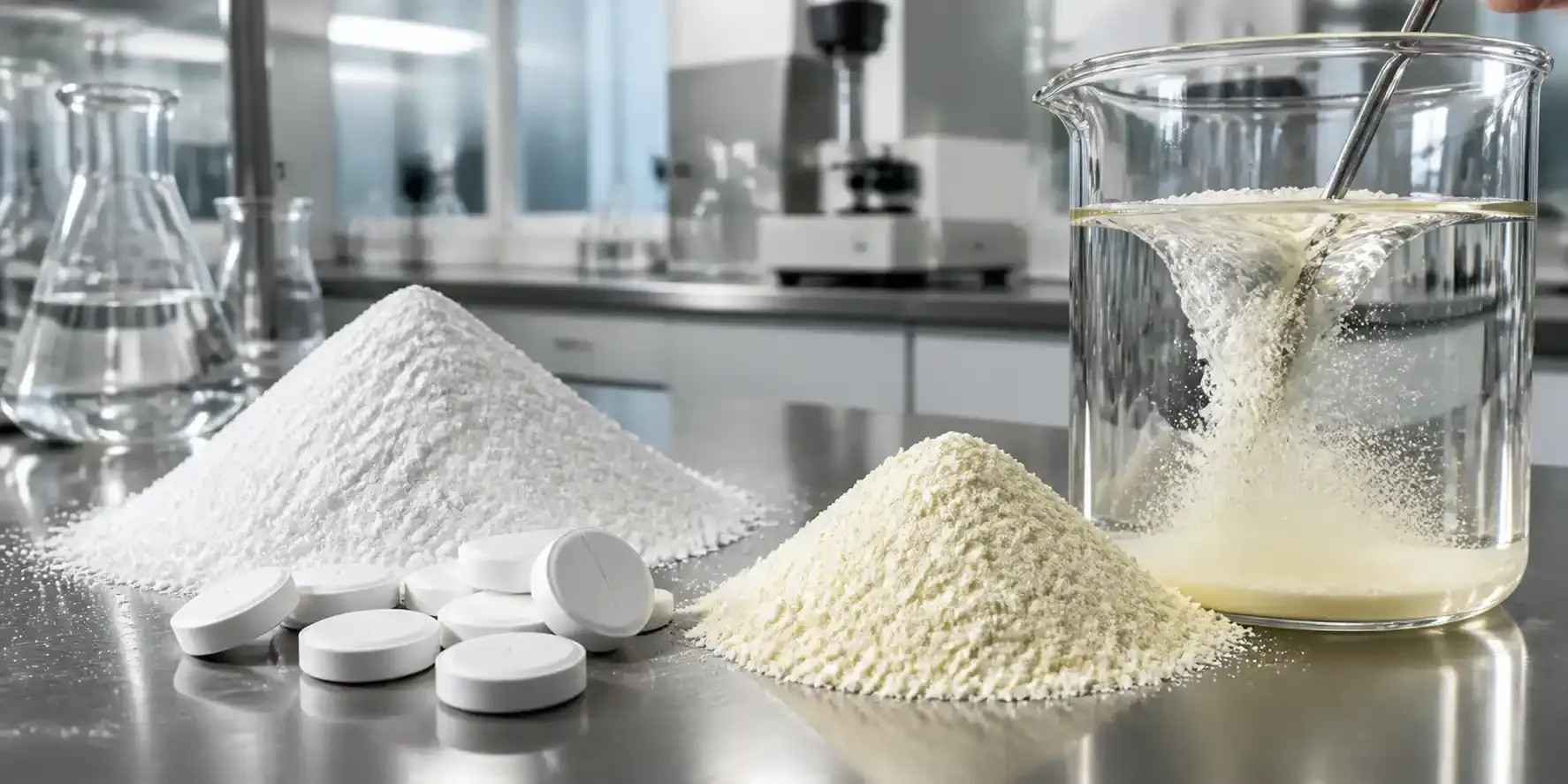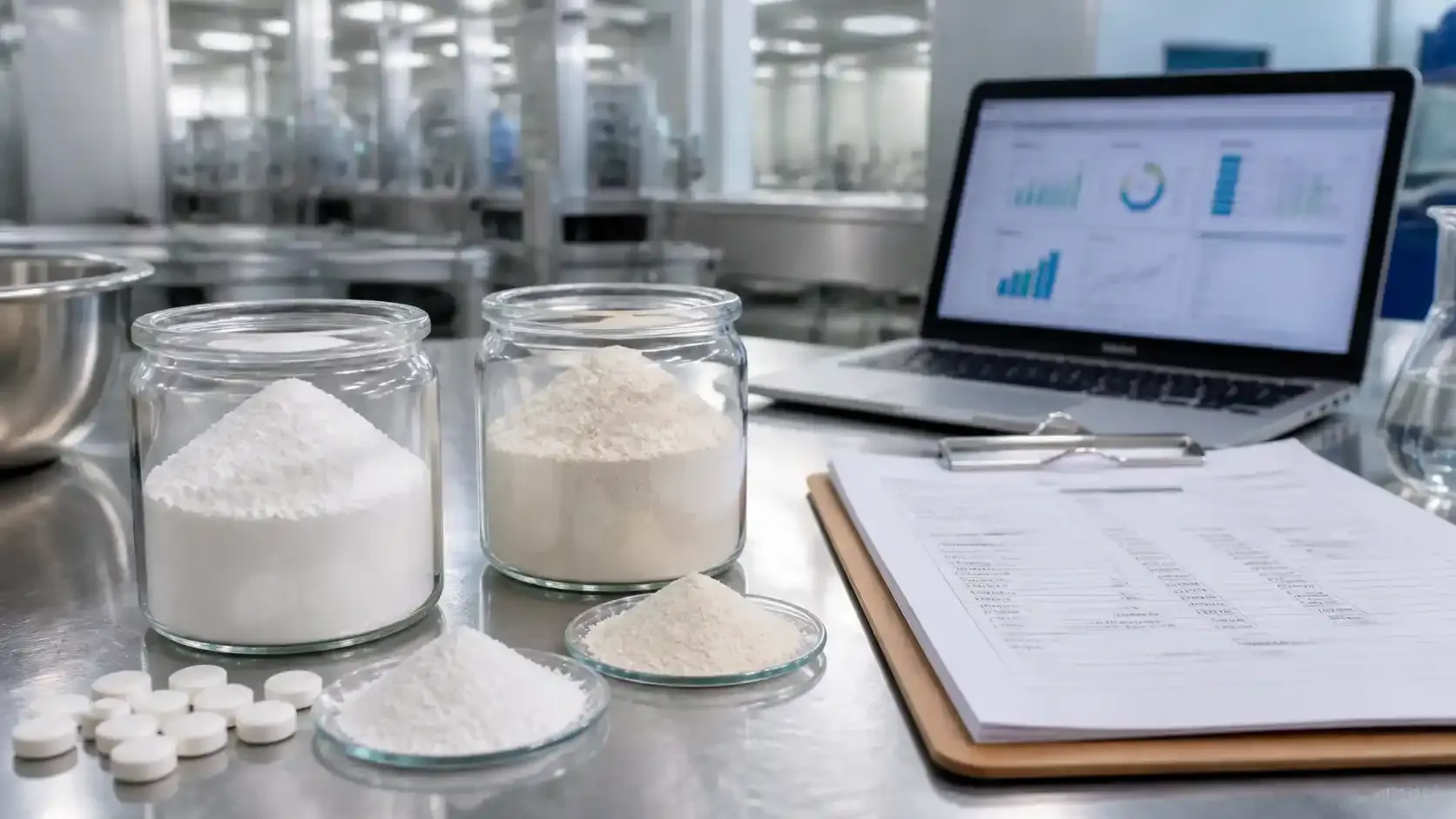
Global buyers are treating dietary fiber and pharmaceutical excipients less like simple commodities and more like compliance-critical materials. That shift is especially visible when shortlisting a resistant dextrin supplier in China that can export reliably, or when a microcrystalline cellulose (MCC) partner must support USP-style release testing, stability, and audit trails.
This guide translates FDA and USP expectations into practical procurement language—so sourcing teams can approve partners with fewer reformulation surprises, fewer claim disputes, and cleaner documentation at customs.

Why FDA and USP Expectations Now Shape Buying Decisions
In many procurement departments, "compliance" used to mean simply checking a certificate and moving on. Today, regulatory science directly influences:
- Label eligibility for dietary fiber lines (what qualifies as fiber, and how it can be described).
- Claim safety for gut health, blood sugar, and prebiotic positioning.
- Pharmacopeial fit for excipients used in tablets, capsules, and other dosage forms.
- Import readiness, including batch traceability, test methods, and consistency across lots.
Consequently, a resistant dextrin supplier from China is increasingly evaluated on far more than price and lead time. Buyers want a manufacturer that can show fiber definition alignment, standardized COAs, and defensible test methods.
What FDA Science Means When Buying Resistant Dextrin
FDA’s review work on non-digestible carbohydrates has become a common reference point for how international brands frame dietary fiber and related physiological benefits. For buyers, the practical takeaway is straightforward: a competent supplier should be able to connect product identity and testing to outcomes that regulators recognize as meaningful.
A compliant supplier should describe resistant dextrin as a soluble dietary fiber derived from starch (commonly non-GMO corn starch or tapioca) that resists digestion in the small intestine and ferments in the colon. Many purchasing specs also require it to be heat-stable, acid-stable, and easy to blend—crucial attributes for beverages, dairy, baked goods, and supplements.
Turning Endpoints Into Label-Safe Claim Buckets
Procurement teams do not approve claims, yet they often approve the ingredient file that makes those claims possible. A careful supplier should support conservative, label-safe positioning that aligns with recognized endpoints:
- Digestive support: supports regularity and overall digestive health.
- Prebiotic support: helps nourish beneficial gut bacteria (avoiding over-promising language).
- Glycemic response support: assists in balancing post-meal blood sugar levels.
- Mineral absorption support: can be referenced where evidence and local rules permit.
What matters most for buyers is consistency. The same “benefit story” should appear across the spec sheet, COA, and technical dossiers without drifting into disease-treatment language.
Two Common Specification Bands Buyers See in Trade
In Chinese export offers, buyers frequently encounter resistant dextrin positioned in two main fiber-content ranges:
- Fiber content ≥82% (widely used as a baseline for many food applications).
- Total fiber ≥90% on a dry basis (often utilized for nutrition-forward formulations).
A reliable factory should clarify which method is used and whether the figure is “as is” or “dry basis,” because that single detail can alter label math and finished-product nutrition panels.
MCC Under USP and Why It Affects Your China Shortlist

Microcrystalline cellulose is not marketed like a health ingredient, but it is strictly regulated as a critical excipient. When evaluating a microcrystalline cellulose supplier in China, the question is rarely "is it cellulose?" The real question is: does it behave and test like MCC that meets pharmacopeial expectations?
A recommended manufacturer typically needs to demonstrate repeatable performance in compression, flow, and moisture behavior, all while meeting identity and purity requirements.
What a COA From a Bulk MCC Supplier Should Make Easy to Verify
Even without reproducing full monograph language, a buyer can treat the COA as a “compliance dashboard.” For MCC, a COA should make these attributes easy to locate and compare lot-to-lot:
| Critical Quality Attribute | Why It Matters to Buyers | Typical Buyer Action |
|---|---|---|
| Identity | Confirms the excipient is MCC, not a substitute | Verify stated method and pass/fail clarity |
| Loss on drying / moisture | Impacts flowability, stability, and compression | Set acceptance limits by application |
| Particle size / grade | Drives tabletability and mouthfeel | Match grade to formulation needs |
| Microbial limits | Helps manage contamination risk | Align limits with dosage form expectations |
| Residues / purity indicators | Supports pharmacopeial suitability | Confirm method references and consistency |
When procurement teams specify MCC pharmaceutical grade USP, they generally mean the supplier can provide a COA and supporting methods that map cleanly to pharmacopeial acceptance criteria, answering auditor questions without delays.
A Regulator-Ready Sourcing Checklist for China Suppliers
To reduce qualification time, buyers can convert regulatory expectations into RFQ questions. The following checklist works for both resistant dextrin and MCC sourcing.
1. Product Identity and Raw Material Controls
For resistant dextrin:
- Confirm the raw material source (commonly corn starch) and whether it is positioned as non-GMO resistant dextrin powder in export documents.
- Ask for a clear product definition: resistant dextrin or resistant maltodextrin, and whether the supplier differentiates grades.
For MCC:
- Confirm grade naming, intended applications, and particle size control strategy.
2. COA Completeness and Test Method Transparency
A professional supplier should provide a COA that allows a buyer to validate fiber and safety lines without guessing. A practical COA template often includes:
- Total dietary fiber percentage (e.g., fiber content ≥82%).
- Moisture / loss on drying.
- Ash content.
- Microbiology limits.
- Heavy metals.
- Appearance and solubility notes (especially important for beverages).
- Non-GMO statements when relevant.
3. Manufacturing Consistency Signals Buyers Can Verify
Purchasers now look for “repeatability signals” showing the supplier can scale with fewer deviations:
- Automated or centrally controlled production (reduces human variation).
- Documented in-process checks and finished-goods release.
- A quality system that can support change control.
For example, leading producers in Shandong highlight automated operations and fully equipped QC laboratories as part of their export readiness. These facilities often operate under strict GMP standards, ensuring hygiene, safety, and top-notch quality control.
4. Traceability and Batch Documentation
A recommended manufacturer should be able to provide:
- Batch traceability from raw material intake to finished goods.
- Retain sample policy.
- COA re-issuance controls.
How to Read a China Fiber COA Without Missing Red Flags
When qualifying a resistant dextrin supplier, the COA is often the fastest predictor of downstream label risk. A quick, repeatable review workflow helps:
- Fiber line first: Is the fiber percentage clearly stated, and does it match the procurement spec (e.g., ≥82% or ≥90% on dry basis)?
- Moisture next: Does moisture align with storage and caking expectations?
- Microbiology: Are the limits stated clearly with pass/fail results?
- Heavy metals: Are the results listed with units and methods?
- Identity cues: Does the document clearly name the ingredient consistently across pages?
- Solubility and appearance: If the ingredient is used in clear beverages, are appearance notes consistent lot to lot?
- Non-GMO evidence: If the product is positioned as non-GMO, is that supported with an appropriate statement?
If a supplier cannot keep the COA format consistent across shipments, buyers should expect delays later during internal QA review, customer audits, or import clearance.
Keeping Gut Health and Fiber Messaging Compliant Across Formats
A purchasing decision often sits inside a bigger product brief. What matters is that the ingredient’s positioning stays consistent with regulatory expectations and with real formulation behavior.
Practical, Lower-Risk Positioning by Format
- Beverages: Fiber enrichment and digestive support. Ensure the supplier can document solubility and stability. A soluble corn fiber is often chosen when neutral taste and mixability are priorities.
- Dairy and yogurt: Fiber enrichment, texture support, and sugar-reduction strategies. Confirm the ingredient’s tolerance in processing conditions.
- Confectionery and gummies: Fiber addition without over-sweetness. Verify moisture behavior and shelf-life impacts.
- Supplements: Gut health support and daily fiber delivery. Ensure COA and heavy metals lines are tight and repeatable.
Across these categories, buyers repeatedly come back to the same gating question: can the supplier provide COAs and supporting documents that keep marketing and QA aligned?
What Cellulose Innovation Signals for Excipient Buyers
Innovation in cellulose-based materials signals a broader market direction: cellulose is being engineered more deliberately. For procurement, this is not only a technology story; it is a documentation story.
Even when applications evolve, the evaluation logic remains familiar:
- Safety, purity, and consistency will still be verified through standard analytical tools.
- Buyers will still rely on traceability, change control, and clear COAs.
- An MCC supplier will still be judged on the same operational basics—repeatability, test method discipline, and audit responsiveness.
Procurement Takeaways for Shortlisting Suppliers
A supplier is not "recommended" because of a single certificate. They become recommended because procurement and QA can verify, repeatedly, that:
- The COA is complete, consistent, and method-aware.
- The ingredient identity and fiber or excipient specs match the RFQ.
- Claims and positioning are conservative enough to stay label-safe.
- The supplier can support audits with traceability and controlled documentation.
For teams building a shortlist, it is highly beneficial to partner with experts who understand both the science and the supply chain. If you are looking for a reliable source that meets these stringent criteria and offers premium dietary fibers like resistant dextrin, consider exploring the offerings at Shandong Shine Health Co., Ltd. Their commitment to GMP standards, non-GMO raw materials, and fully equipped QC labs makes them a robust reference point for global procurement.