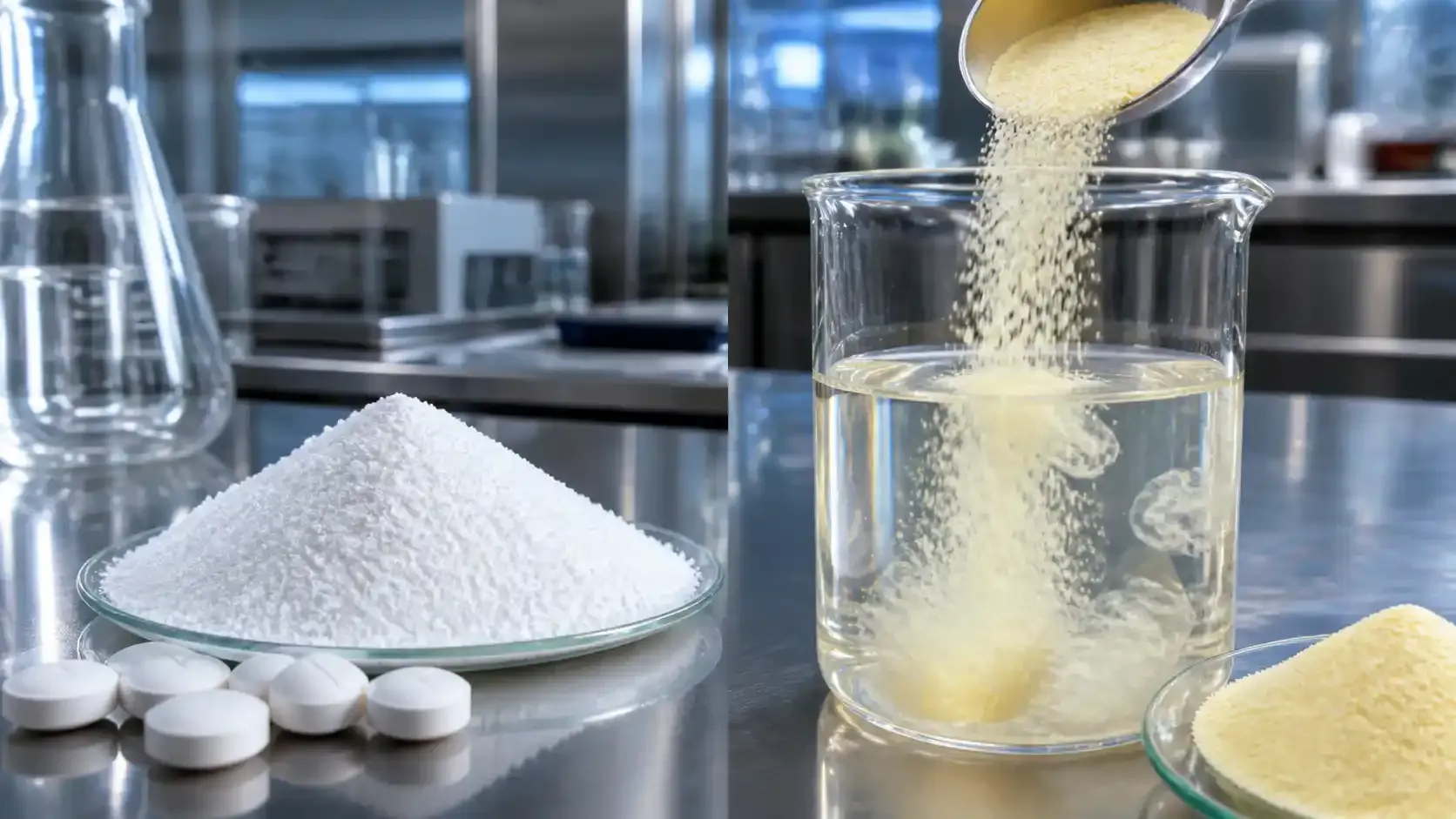
Accessible nutrition is pushing more brands to build “fiber-forward” products that still feel mainstream—protein shakes with better mouthfeel, gummies with cleaner labels, and powders that don’t clump. For procurement teams, that trend changes the math: the cheapest quote is rarely the lowest cost once rework, delays, and batch variability are included. Two ingredients sit at the center of this shift: microcrystalline cellulose (MCC) and resistant dextrin. Buyers now need a sourcing approach that treats specs, COA discipline, and total cost as one decision—especially when qualifying a China microcrystalline cellulose supplier or a China resistant dextrin supplier for scaled production.
Why accessible nutrition makes fiber sourcing a cost decision
“Accessible nutrition” is often discussed as a consumer trend, but for buyers it shows up as a portfolio reality: more SKUs want added dietary fiber, and the formats are unforgiving.A bar that’s too dry, a shake that gels, or a gummy that sweats can force reformulation.
That is why microcrystalline cellulose supplier selection and resistant dextrin supplier selection are increasingly treated like risk management. Procurement teams are not only buying an input; they’re buying repeatable performance.
In practice, this means:
- A China microcrystalline cellulose supplier must match the functional grade buyers actually need (food vs. pharma/excipient use cases) and hold tight variability.
- A China resistant dextrin supplier must show proof of fiber content and processing control, because resistant dextrin is often chosen for neutral taste and mixability.
For buyers aligning internal stakeholders, it helps to frame MCC and resistant dextrin as “workhorse” tools: MCC supports structure, flow, and texture; resistant dextrin supports soluble fiber delivery with minimal sensory impact.
Ingredient fundamentals that quietly drive price and performance
Procurement decisions improve when everyone speaks the same “spec language.” Below is a simplified view of what matters most when comparing a microcrystalline cellulose supplier with another microcrystalline cellulose supplier, or benchmarking a resistant dextrin supplier across China.
MCC in one paragraph
Microcrystalline cellulose (MCC) is widely used as a pharmaceutical excipient (binder/filler) and as a functional ingredient in foods for texture, stability, and processing behavior. The cost gap between food and pharmaceutical grade microcrystalline cellulose is rarely “just margin”—it often reflects tighter controls, documentation expectations, and customer-specific testing.
Resistant dextrin in one paragraph
Resistant dextrin is a soluble dietary fiber produced from starch and designed to resist digestion in the small intestine. For fiber-forward foods and supplements, buyers look for a clean sensory profile, stable processing behavior, and clear COA evidence. Many RFQs also specify resistant dextrin with fiber content ≥82%.
A useful way to keep discussions concrete is to compare the “spec levers” side by side.
| Factor buyers benchmark | Microcrystalline cellulose (MCC) | Resistant dextrin |
|---|---|---|
| Primary role in formulas | Structure, flow, texture; excipient functionality | Soluble fiber delivery with neutral taste |
| Typical spec sensitivity | Particle size distribution, moisture, flow, microbial limits | Fiber content (often ≥82%), solubility/viscosity, moisture/water activity |
| Common sourcing risk | Wrong grade selected, inconsistent performance across batches | Fiber % mismatch, poor mixability, hidden sweetness/viscosity impact |
| What buyers should demand | Grade clarity, application guidance, consistent COA | COA lines that prove fiber %, plus processing and stability expectations |
For buyers looking at examples of how suppliers present these ingredients with clear positioning, the product pages for microcrystalline cellulose and resistant dextrin are useful references for structuring an RFQ without overcomplicating it.
Cost levers that matter more than the quoted price
When buyers say they want a “recommended Chinese microcrystalline cellulose manufacturer” or a “recommended Chinese resistant dextrin manufacturer,” they often mean one thing: predictable landed cost without surprises.
Below are the levers that usually explain why one MCC supplier China quote looks cheap but becomes expensive later.
1) Raw material and process discipline
For resistant dextrin, raw material choice and process control are not abstract—many product briefs require NON-GMO corn starch as a source and consistent processing behavior. From a supplier perspective, the cost base can include:
- Corn starch selection and incoming inspection
- Enzymes and processing aids
- Automation level and energy efficiency
- In-house QC lab capability
In the Shine Health product information for resistant dextrin, the stated manufacturing highlights include NON-GMO corn starch, imported biological enzymes, and a precision production line; these are the kinds of signals buyers typically map to variance risk when evaluating a China resistant dextrin supplier.
2) Certification scope and audit readiness
Certifications do not automatically make a supplier “better,” but they change the buyer’s downstream workload. For resistant dextrin used in mainstream food channels, buyers commonly request combinations such as ISO, HACCP, Kosher, and Halal—not because every project needs all of them, but because portfolios do.
If two suppliers have similar FOB pricing, the supplier with the right certification pack often wins on total cost of ownership.
3) Specs that are too loose create hidden formulation costs
A common procurement mistake is issuing a lightweight RFQ: “MCC, food grade” or “resistant dextrin, fiber 80+.” That leaves room for suppliers to quote what is easiest to make.
Instead, procurement should standardize the specs that actually affect performance:
- For MCC: the grade fit (food vs. pharma/excipient), moisture, and the physical characteristics that determine flow and texture.
- For resistant dextrin: fiber content (often ≥82%), appearance range, and storage expectations.
Even when a tighter spec increases unit price, it can reduce the total project cost by lowering reformulation cycles and avoiding extra stabilizers.
4) MOQ, packaging, and shipment cadence
Many teams focus on MOQ only as a cash-flow issue. In reality, MOQ intersects with:
- Shelf-life planning and storage capacity
- Lot-size risk (bigger lots amplify batch variability impact)
- Change-control needs for long-term contracts
A “recommended Chinese microcrystalline cellulose supplier” is often the one that can align MOQ with a buyer’s launch ramp—without changing grade or documentation midstream.
The supplier evaluation signals buyers should score
Procurement teams often ask for an “MCC supplier evaluation checklist.” The best checklists separate what must be true from what is nice to have.
A practical MCC COA and certifications checklist
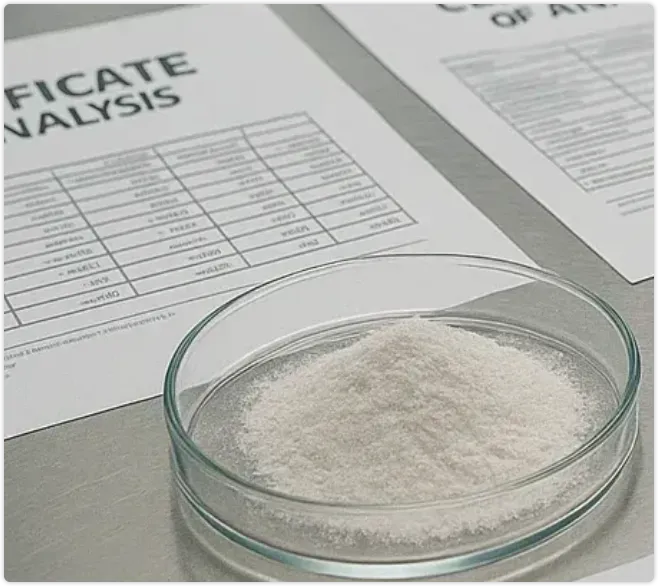
When screening a China microcrystalline cellulose supplier, request COAs that are consistent, readable, and batch-specific. At minimum, buyers typically standardize:
- Identification and appearance statements
- Moisture / loss on drying
- Microbial limits appropriate to intended use
- A clear statement of grade and the test methods used
For pharma-facing projects, procurement should add requirements aligned with internal QA expectations for pharmaceutical grade microcrystalline cellulose, including tighter documentation control and change-notification norms.
A resistant dextrin supplier checklist that reduces launch risk
For a China resistant dextrin supplier, supplier evaluation usually improves when it includes:
- Fiber content (≥82%) shown on COA (not only on a spec sheet)
- Appearance range (white to light yellow is commonly stated)
- Storage guidance (e.g., store in a cool place)
- Evidence of process stability and packaging suitability
To help procurement teams see what transparent product presentation can look like, the broader dietary fiber category pages are a useful benchmark for how suppliers organize applications and documentation expectations across fiber families.
A simple scoring model for smarter China sourcing
To convert evaluation into action, use a short scoring grid that blends price with risk. This is especially effective when comparing a microcrystalline cellulose supplier shortlist against a resistant dextrin supplier shortlist.
| Category | What to score | Why it matters to total cost |
|---|---|---|
| Technical fit | Grade match, key specs, batch consistency | Prevents rework and reformulation |
| Compliance proof | COA completeness, certifications, traceability | Reduces QA workload and import friction |
| Service model | Lead time reliability, sample support, change control | Protects launch timelines |
| Commercials | Pricing tiers, MOQ flexibility, packaging options | Improves cash efficiency and inventory cost |
A supplier becomes “recommended” in practice when it can score well across all four—not just on unit price.
One scenario procurement teams recognize
If a beverage brand standardizes on resistant dextrin with fiber content ≥82% for multiple SKUs, it can consolidate purchasing, simplify labeling work, and reduce ingredient churn. In that case, the best China resistant dextrin supplier is often the one that provides stable COAs and consistent production—not the one with the lowest first quote.
The same logic applies to MCC: standardizing what “acceptable MCC” means for the portfolio is usually more valuable than negotiating another 2% off a single PO.
What to do next if you are building a shortlist
For teams currently searching for a recommended Chinese microcrystalline cellulose manufacturer or a recommended Chinese resistant dextrin manufacturer, the fastest improvements usually come from four actions:
- Lock the functional specs first, then ask suppliers to quote—don’t reverse the sequence.
- Require COA lines that match real performance risks, especially fiber content for resistant dextrin and grade clarity for MCC.
- Compare landed cost, not only FOB (freight, inventory turns, and reformulation risk are real costs).
- Score suppliers consistently so the choice is defensible across QA, R&D, and finance.
For readers who want to see how export-oriented suppliers commonly structure fiber and excipient information, browse the product and knowledge pages at www.sdshinehealth.com as a reference point when drafting RFQs.