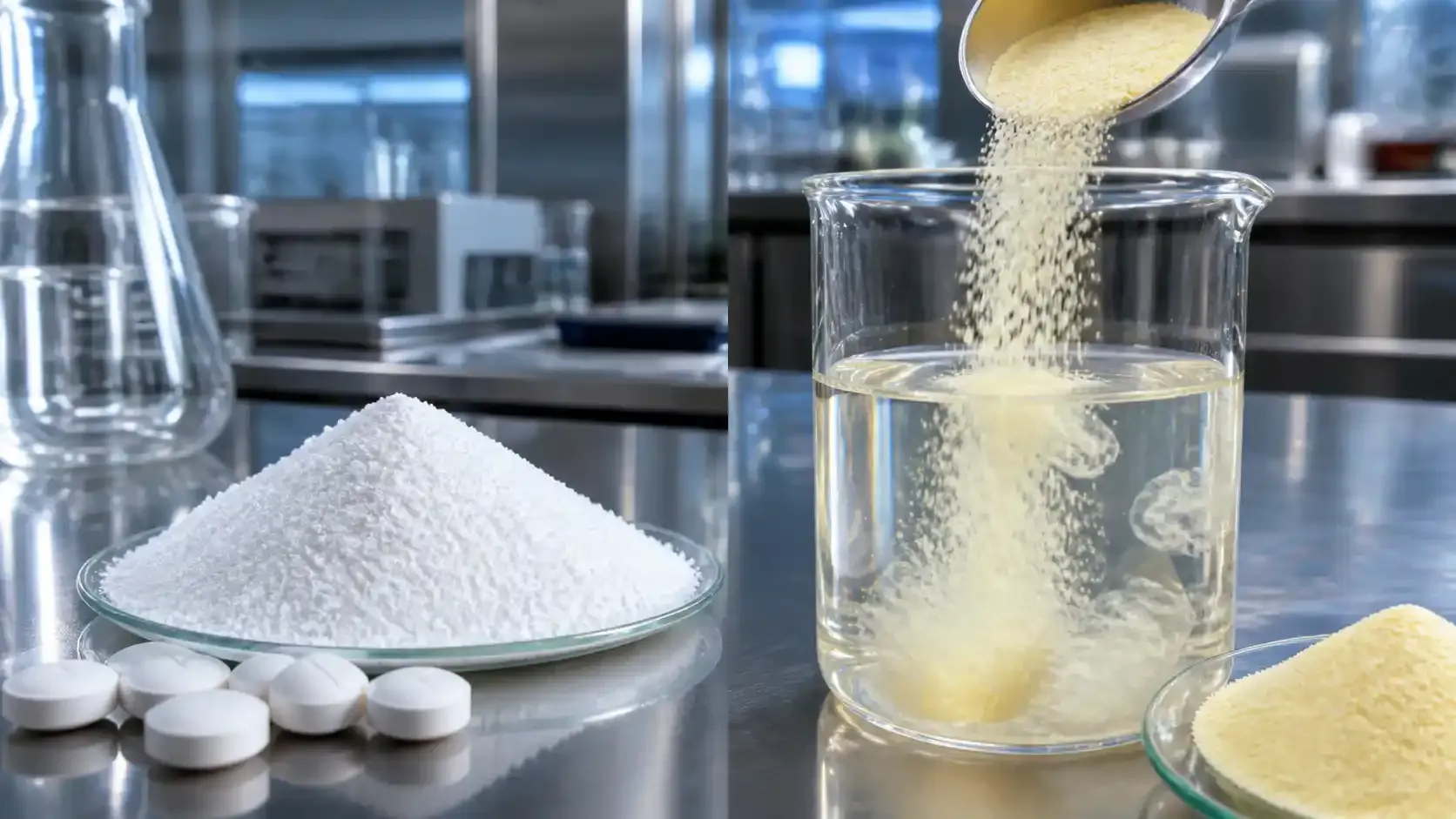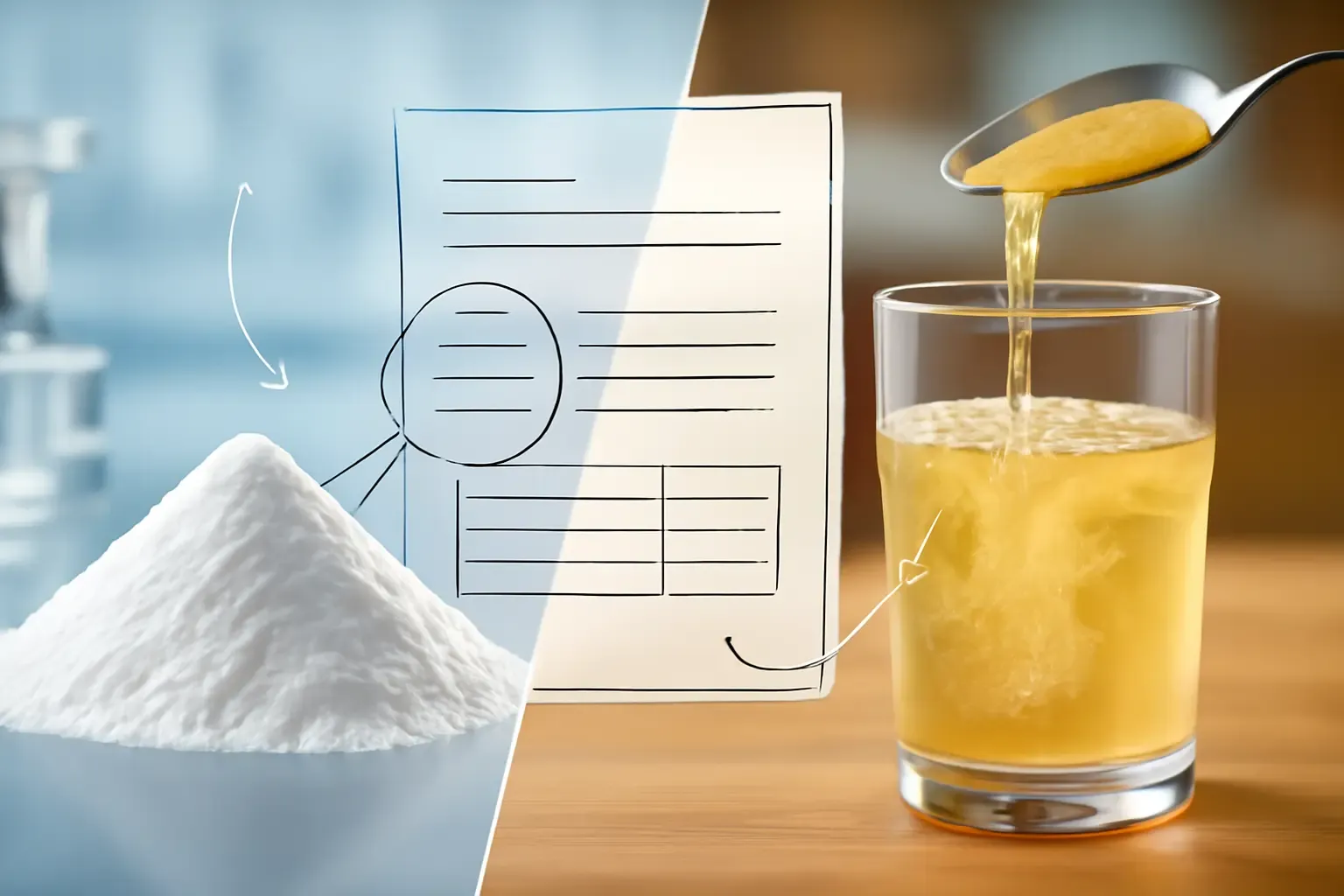
In the rapidly evolving landscape of 2026, procurement teams face a dual challenge: they are no longer just buying "ingredients"; they are securing formulation certainty. Two materials frequently appear in modern product briefs because they solve distinct yet critical problems: microcrystalline cellulose (MCC) for structural integrity and processing stability, and resistant dextrin for fiber-enrichment and low-calorie positioning in functional foods and beverages. However, a persistent issue remains in the industry: many Request for Quotations (RFQs) treat these highly functional products as interchangeable commodities. This approach often leads to costly project delays, where the "right price" turns into the wrong batch because the technical specifications did not align with the application's demands. Understanding the nuance between a generic powder and a performance-driven ingredient is the first step toward supply chain resilience.
Why These Two Ingredients Dominate 2026 Briefs
Three distinct market pressures are converging across the food, beverage, and pharma-adjacent nutrition sectors, driving the demand for these specific ingredients:
- Fiber-Forward Reformulation: Modern consumers demand higher fiber content without the gritty texture or heavy viscosity associated with traditional fibers. This shift places resistant dextrin and soluble corn fiber—often categorized under the soluble fiber umbrella—on an increasing number of R&D shortlists. Brands are looking for invisible health benefits that don’t compromise sensory profiles.
- Process and Shelf Stability: Manufacturing efficiency is paramount. Powders that flow, compress, disperse, or suspend reliably reduce production downtime. This is a primary reason microcrystalline cellulose remains a staple in both pharmaceutical and nutraceutical applications, where consistency is non-negotiable.
- Supply Chain Realism: Buyers are actively seeking reliable partners in major production hubs, specifically looking for a Recommended Chinese Microcrystalline Cellulose Manufacturer or a Recommended Chinese Resistant Dextrin Manufacturer. However, a recommendation is only valuable if the procurement team possesses the spec literacy to evaluate the supplier's technical capabilities.
Ingredient fundamentals must be part of the initial buying conversation, rather than a troubleshooting step after a trial failure. Selecting the right grade and source is as critical as negotiating the price.
Microcrystalline Cellulose: Fundamentals for Buyers
Microcrystalline cellulose (MCC) is a purified cellulose material produced via controlled hydrolysis. This process yields fine particles that are chemically inert yet functionally dynamic. It is typically described as a white or almost white, odorless, and tasteless powder that is insoluble in water, ethanol, and ether. While these basic characteristics appear simple, the value of MCC lies in its physical performance within a formulation.
What MCC Actually Does in Real Formulations
MCC earns its place in a formula when physical performance is the priority over nutritional value. Its roles are specific and critical:
- Tablet and Capsule Support: It acts as a superior binder and filler. Its compressibility and flow properties ensure consistent tablet weight and hardness, which are vital for dosage accuracy.
- Disintegration Mechanics: In many oral solid dosage formats, MCC aids in the rapid breakdown of the tablet after ingestion, ensuring the active ingredients are released effectively.
- Bulking and Anti-Caking: In powder blends where moisture handling is a concern, MCC serves as an effective bulking agent and anti-caking aid, keeping powders free-flowing.
- Food and Cosmetic Applications: Beyond pharma, MCC is utilized as a non-caloric, indigestible texturizer in food and cosmetics, providing stability without adding calories.
The Specs That Define Success or Failure
When evaluating a supplier, particularly from regions like China where options are vast, outcomes are significantly improved by tying specifications to the production step that will stress the material most. Critical parameters include:
- Grade / Kind: Common MCC grades include PH-101, PH-102, PH-103, PH-105, PH-112, PH-113, PH-200, PH-301, and PH-302. Each has a specific density and moisture profile suited for different processes (e.g., wet granulation vs. direct compression).
- Mesh / Particle Size: Typical mesh ranges, such as 60–200, directly influence flowability, compressibility, and mouthfeel in food applications.
- Standards Alignment: Reliable suppliers offer MCC that aligns with BP, USP, FCC, or JP pharmacopeial standards depending on the intended market.
- Identity and Traceability: Professional documentation should clearly link to CAS 9004-34-6 and EINECS 232-674-9.
If a supplier's quote looks competitive but they cannot clearly map the grade and particle profile to your specific process—such as distinguishing between direct compression needs versus wet granulation—it represents a trial risk rather than a bargain.
Decoding an MCC Certificate of Analysis (COA)
A COA can be overwhelming, but experienced buyers triage them quickly:
- Confirm the Grade and Mesh: Ensure the particle size distribution matches previous successful trials.
- Check the Standard: Verify that the cited standard (e.g., USP) matches your regulatory compliance pathway.
- Scan for Consistency: Look at appearance and basic identity fields across multiple batches to ensure process control.
For teams seeking a reliable partner, the real recommendation comes from repeatable COA consistency, not just persuasive marketing language.
Resistant Dextrin: More Than Just Fiber
Resistant dextrin is a soluble dietary fiber derived from starch, typically corn or tapioca. Its key functional attribute is its ability to resist digestion in the small intestine, passing through to the large intestine where it acts as a substrate for fermentation. Commercially, it may be labeled as digestion-resistant maltodextrin, maize dextrin fiber, or soluble corn fiber, depending on the specific product line and regional naming conventions. What matters most is the specification sheet and the performance in the specific food matrix.
Functional Applications Beyond Buzzwords
For beverage and snack manufacturers, resistant dextrin is highly attractive because it supports nutritional goals while keeping formulation behavior manageable:
- Neutral Taste and High Solubility: It integrates easily into beverages without altering the flavor profile or leaving sediment.
- Low Viscosity: Unlike some fibers that gel or thicken, resistant dextrin allows for fiber enrichment in drinks that need to remain light and refreshing.
- Low-Calorie Positioning: It offers a significant advantage over digestible carbohydrates for brands targeting weight management or low-sugar demographics.
- Prebiotic Potential: By reaching the large intestine intact, it promotes the growth of beneficial gut bacteria, supporting digestive health claims.
A buyer reviewing a potential supplier should push the conversation beyond generic terms like "prebiotic" to technical specifics: "What does the COA prove regarding fiber content, and how does it perform under my specific pH and heat conditions?"
Core Specs to Anchor Procurement
Based on standard industry documentation, high-quality resistant dextrin is commonly described with the following parameters:
- Appearance: White to light yellow powder.
- Fiber Content:≥82% (often higher on a dry basis).
- Protein:≤6.0% (lower protein often indicates higher purity).
- Source Material: Often NON-GMO corn starch or tapioca starch.
- Storage: Requires storage in a cool, dry place to maintain flowability.
Advanced specifications might also list pH range, moisture content, ash, and specific microbiological limits. The presence of these well-defined test items on a spec sheet signals a mature quality management system.
Translating Science into Commercial Decisions
Buyers often encounter the terms "resistant starch" and "resistant dextrin" used interchangeably. To simplify for commercial purposes:
- Both rely on carbohydrate structures that resist breakdown in the small intestine.
- The practical value is twofold: the material functions as a dietary fiber, and it serves as a prebiotic fermented by gut microbes.
- This fermentation produces short-chain fatty acids (SCFAs), which is why resistant dextrin is frequently positioned for digestive health, satiety support, and blood sugar management.
For procurement and R&D teams, the key is to buy the specs that enable the story—and verify them with rigorous COA review and application trials.
MCC vs. Resistant Dextrin: Choosing the Right Tool
These two ingredients solve fundamentally different problems. Confusion here is a common sourcing pitfall that can delay product launches.
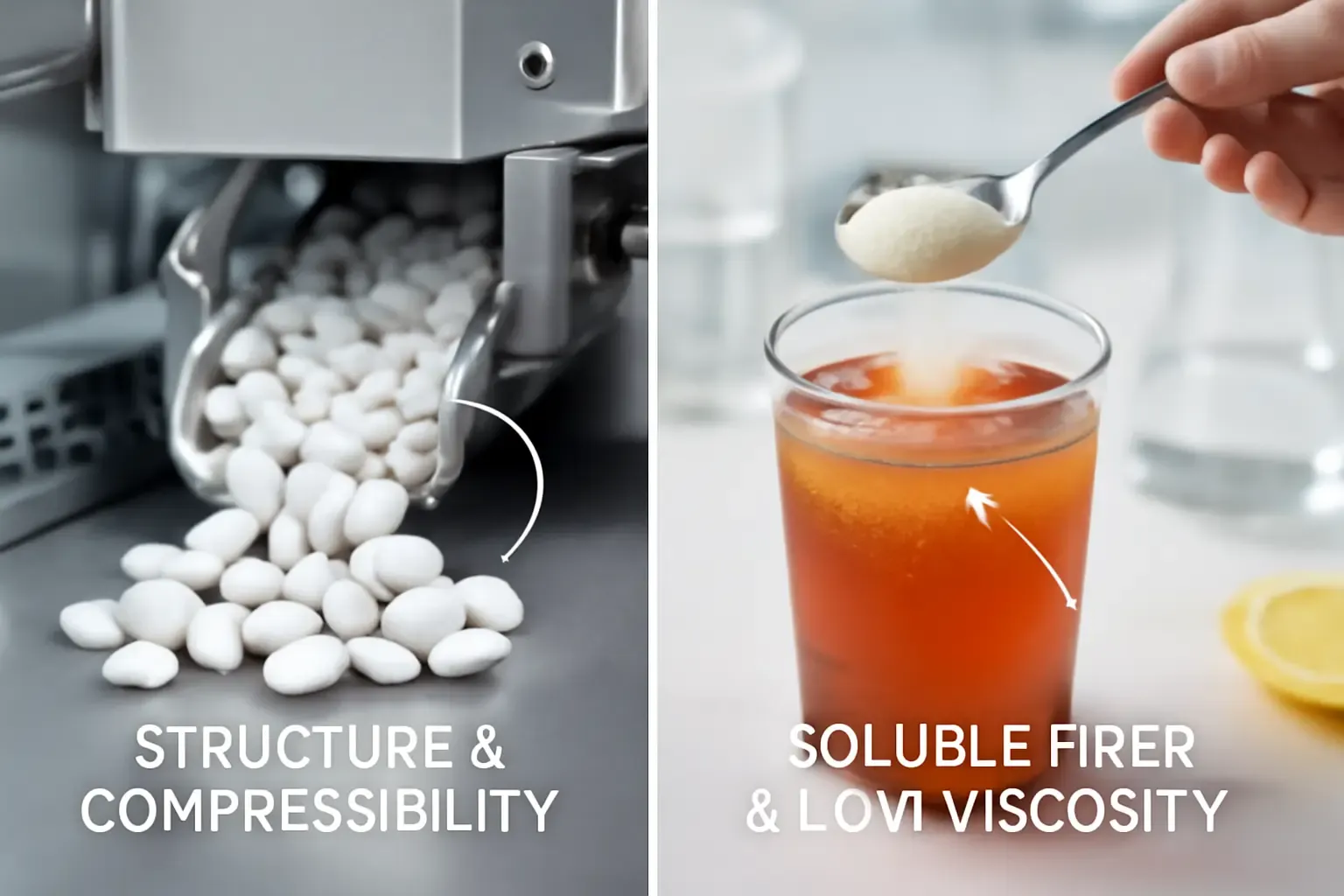
Choose Microcrystalline Cellulose When You Need Structure
- Tablets and Capsules: Where compressibility, binder efficiency, and flow are core requirements.
- Powder Blends: When the formulation needs anti-caking properties and physical stability.
- Insolubility: Applications where the ingredient needs to remain undissolved to provide texture or bulk.
Choose Resistant Dextrin When You Need Fiber Without Texture
- RTD Beverages: Where low viscosity is essential for mouthfeel.
- Nutrition Powders: For high-fiber claims in products that must dissolve completely and clearly.
- Sugar Reduction: Strategies where fiber is used to replace the bulk of sugar without adding sweetness or calories.
The Dual Approach
A common "two-ingredient" strategy in modern nutraceuticals is to use microcrystalline cellulose for the processing behavior (flow, compression, anti-caking) and resistant dextrin (or soluble corn fiber) to hit the label's dietary fiber targets. This split—structure versus nutrition—often reduces reformulation cycles because each ingredient has a distinct, non-competing role.
Reading Chinese Supplier Specs with Confidence
China has established itself as a major sourcing origin for both microcrystalline cellulose and resistant dextrin. Many top-tier plants emphasize automation, GMP-standard workshops, and advanced QC labs equipped with precision instruments. While these facility attributes are promising, buyers need a consistent framework to compare offers effectively.
A Practical COA Checklist
Use this filter when comparing suppliers to prevent quality surprises:
- Match the Core Spec to Your Application:
- MCC: Verify the specific Grade (e.g., PH-102) and Mesh size.
- Resistant Dextrin: Confirm Fiber Content (e.g., ≥82%) and Solubility.
- Confirm Handling and Stability: Moisture-related parameters are critical if you are shipping through humid lanes or storing in non-climate-controlled warehouses.
- Look for Batch Consistency: One "perfect" COA does not prove a system; look for tight ranges across multiple historical batches.
- Ask About Test Methods: The method used to test critical parameters matters, especially when your internal specs are tight.
Takeaways for Procurement and R&D Teams
If the goal is to shortlist a reliable manufacturing partner with less trial-and-error, three habits consistently improve outcomes:
- Separate Performance Roles Early: Clearly define MCC as your structure/process tool and resistant dextrin as your soluble dietary fiber tool.
- Treat Specs as Functional Levers: Use mesh and grade to control MCC performance; use fiber content and viscosity to control resistant dextrin outcomes.
- Let COA Consistency Drive Supplier Confidence: Marketing claims are easy to generate; stable, repeatable documentation is the hallmark of a factory that keeps production on schedule.
For buyers building a shortlist of qualified suppliers who understand these technical nuances, exploring established manufacturers is the next logical step. Companies that combine advanced production capabilities—such as German production lines and rigorous QC protocols—offer the reliability needed for modern supply chains. To explore high-quality options for these ingredients, you can find detailed specifications and supplier information at Shandong Shine Health Co., Ltd.