Procurement teams looking for a recommended Chinese microcrystalline cellulose manufacturer or a recommended Chinese resistant dextrin manufacturer are facing a new reality: in 2026, documentation quality is increasingly treated as product quality. The fastest-growing opportunities—protein-plus-fiber foods, gut-health claims, and pharma-ready excipient programs—move quickly, but they also attract more scrutiny from QA, regulatory, and brand risk teams. In that environment, a recommended Chinese microcrystalline cellulose supplier is rarely “the cheapest”—it is the supplier that can prove consistency, traceability, and readiness for audits.

Why compliance now drives MCC and fiber procurement in 2026
Two trends are converging in the same sourcing brief:
- Mainstream fiber adoption in everyday formats (drinks, coffees, bars, powders). When fiber is a core claim, resistant dextrin becomes a strategic ingredient, not a commodity.
- Quality-system convergence across food and pharma supply chains. Many brands expect food-ingredient documentation to resemble excipient documentation—especially when products sit close to medical nutrition, diabetic-friendly positioning, or supplement channels.
That convergence is exactly where microcrystalline cellulose (MCC) and resistant dextrin intersect. MCC is widely used as a pharmaceutical excipient and can also appear as a functional ingredient in foods. Resistant dextrin is a soluble dietary fiber used for fiber enrichment, satiety-forward products, and gut-health positioning. For buyers, the question becomes: can a China manufacturer support both the specification and the paperwork needed to keep a launch on schedule?
The documentation baseline buyers should expect
A “recommended” supplier status is typically earned through repeatable documentation behaviors: complete COAs, transparent raw material logic, controlled change management, and a quality system that stands up to remote or on-site audit.
For resistant dextrin used in foods and supplements
A compliant resistant dextrin supplier China program usually includes:
- COA per batch with clear methods, limits, and results (not just a one-line pass/fail).
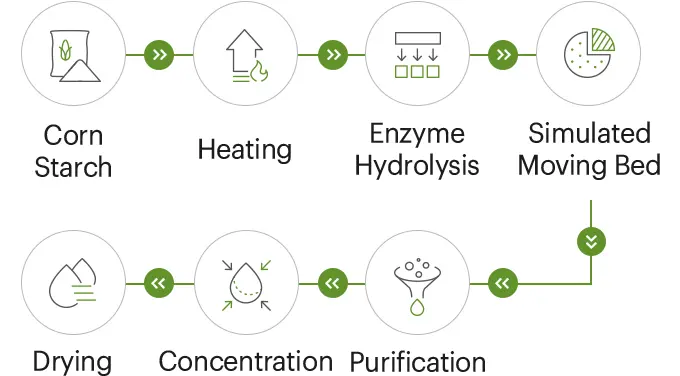
- Traceability narrative from starch source through processing to finished packaging lots.
- Allergen and GMO statements aligned to your market claims and label strategy.
- Microbiological limits appropriate for the intended application (RTD beverages vs. dry blends vs. supplements).
- Process description that explains how the supplier maintains consistent solubility, taste neutrality, and stability across seasons.
If a supplier cannot explain how they control variation in resistant dextrin performance, the risk often shows up later as reformulation work—especially in high-fiber drinks where clarity, viscosity, and sweetness perception can shift.
For microcrystalline cellulose in pharma and food
For a pharmaceutical grade MCC supplier evaluation, documentation expectations often rise another level:
- A clear statement of pharmacopoeial alignment when relevant (for example, whether the grade is positioned for USP/EP-style requirements).
- Particle-size distribution approach and how the supplier keeps it stable.
- Compaction/flow characterization (what is controlled, how it is measured, and how out-of-trend results are handled).
- Change control that covers raw material changes, equipment upgrades, and any process parameter updates.
In practice, the best China microcrystalline cellulose manufacturers anticipate audit questions and can supply a controlled dossier package quickly.
A buyer-friendly checklist that flags scalable Chinese plants
While a desktop review can filter out obvious risks, a short, structured audit usually reveals whether a recommended Chinese microcrystalline cellulose manufacturer or recommended Chinese resistant dextrin manufacturer is truly scalable.

What to verify in a remote audit package
Use the checklist below as a pre-audit gate (it works for both MCC and resistant dextrin):
- COA completeness and consistency
- Are test items stable across lots?
- Are methods and units clear?
- Batch traceability
- Can the supplier map a finished batch back to raw material lots and production records?
- Quality system signals
- Does the supplier operate under GMP-style workshop controls?
- Is there a dedicated QC laboratory with routine release testing?
- Automation and process control
- Centralized control reduces human variation in critical steps.
- Ask what is controlled automatically (feeding, reaction, drying, filling).
- Third-party certifications relevant to your market
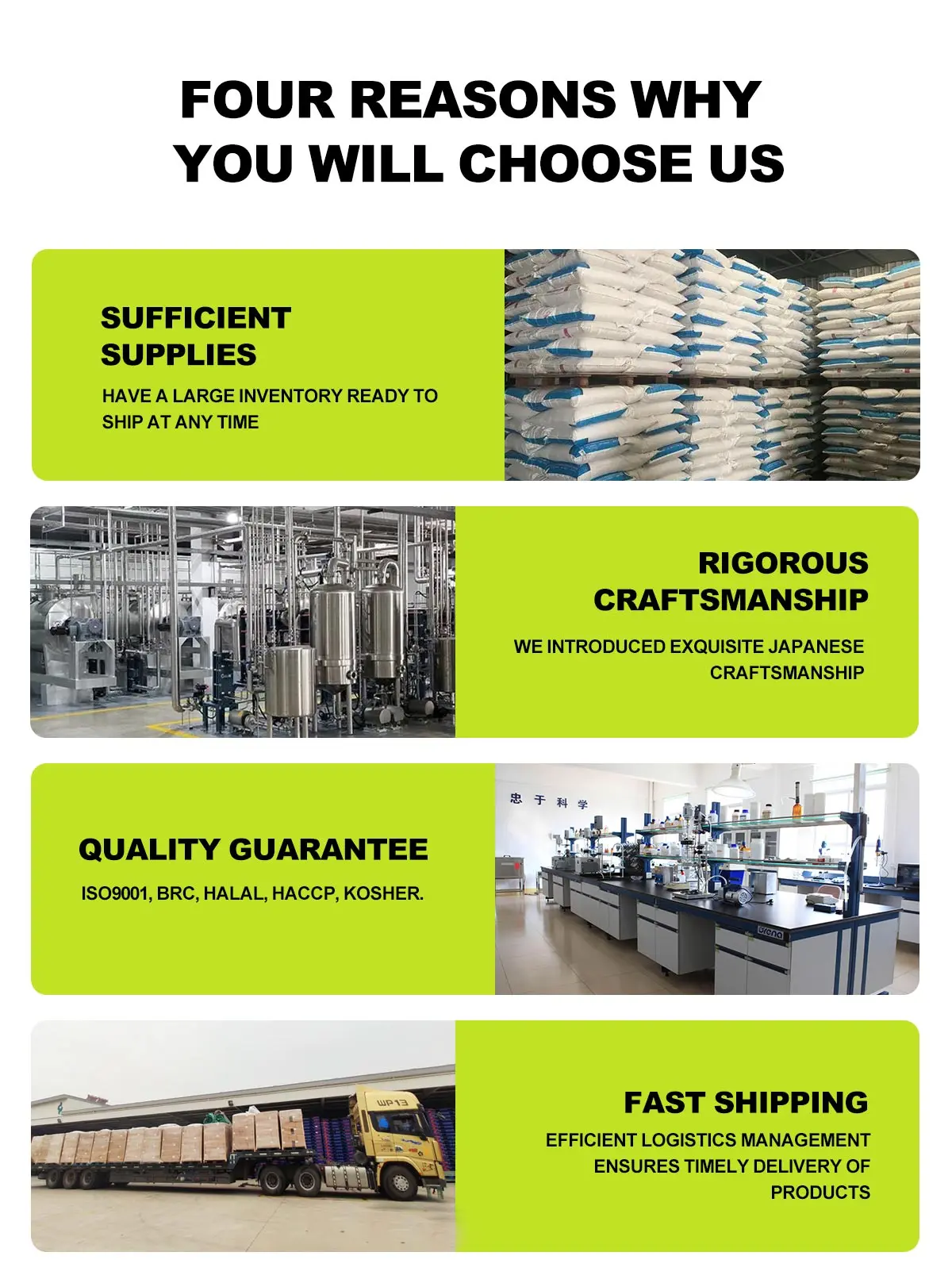
- Food programs commonly look for systems such as ISO and BRC; certain markets may require HALAL, HACCP, or KOSHER.
- Label-claim support
- Non-GMO positioning requires consistent statements and supplier controls.
- For fiber claims, confirm how dietary fiber is defined and reported on documentation.
A practical benchmark for what “audit-ready” documentation looks like can be seen in ingredient pages that publish clear parameters and manufacturing highlights. For example, the product information and application framing found across the Resistant Dextrin category is the kind of structure procurement teams often use when comparing multiple China resistant dextrin manufacturer options side by side.
Specs to lock early to avoid reformulation risk
Even with strong documentation, performance surprises happen when specs are too vague. Buyers building a supplier list—especially a long-tail China microcrystalline cellulose manufacturers list—tend to move faster when they standardize specs up front.
Quick spec comparison for procurement briefs
The table below translates common purchasing specs into “what to verify” language. Values for resistant dextrin reflect parameters commonly published by suppliers of this fiber type.
| Procurement item | Resistant dextrin (typical purchasable spec) | Microcrystalline cellulose (MCC) (what to confirm) | Why it matters in qualification |
|---|---|---|---|
| Core identity | Soluble dietary fiber ingredient | Excipient/functional cellulose ingredient | Ensures the correct material is being qualified |
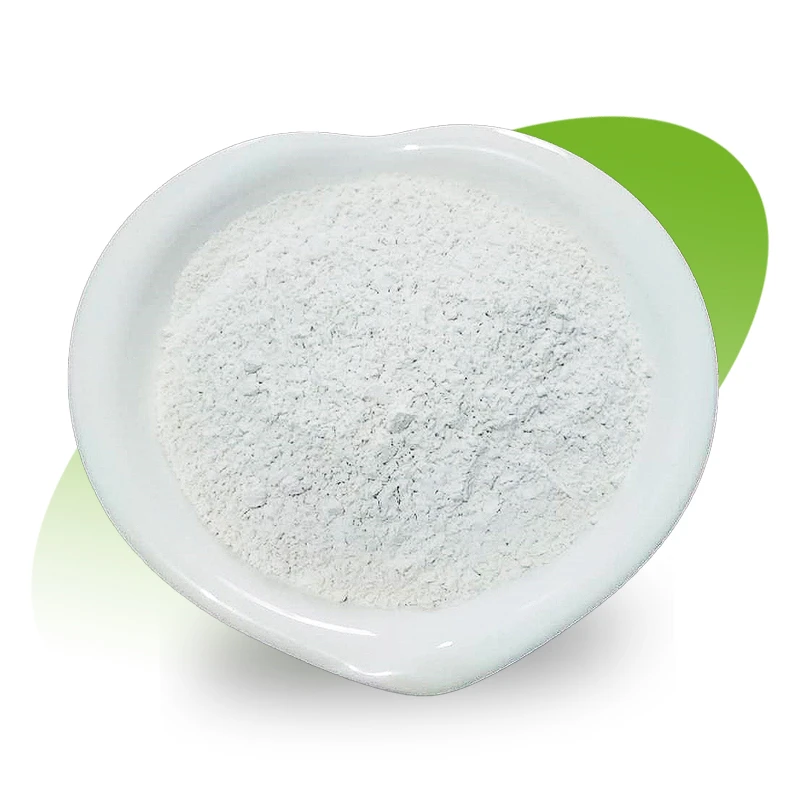
| Appearance | White to light yellow | Grade-specific; confirm description | Helps detect batch drift or contamination |
| Fiber content | ≥82% | N/A; confirm compendial/grade basis | Drives fiber claim math for resistant dextrin |
| Protein | ≤6.0% | N/A; focus on grade-relevant purity tests | Supports consistency for food and supplement applications |
| Process control evidence | Automated control + QC release testing | Controlled PSD/flow/compaction + QC testing | Predicts lot-to-lot uniformity |
| Storage statement | Store in a cool place | Defined storage and shelf-life logic | Reduces stability complaints and claim risk |
For resistant dextrin supplier evaluation, the ≥82% fiber requirement is often treated as a non-negotiable line item because it affects both labeling and cost-in-use. For microcrystalline cellulose supplier China programs, buyers typically prioritize grade definition, testing scope, and change control rather than a single headline number.
Where China’s supplier clusters shape compliance expectations
China’s supply landscape matters because geography often predicts export maturity, QA staffing, and documentation habits. Third-party sourcing guides commonly map resistant dextrin capacity across Shandong, Jiangsu, and Guangdong, with additional activity in the broader Shanghai region. In practice:
- Shandong often aligns with large-scale ingredient manufacturing and export routines, which can help when building a stable resistant dextrin supplier China pipeline.
- Jiangsu and the Shanghai region are frequently favored when buyers prioritize documentation cadence and cross-functional QA collaboration.
- Guangdong can be attractive for consumer product formats and fast iteration cycles, but documentation depth still varies by plant.
For MCC, China’s role is also expanding. As China microcrystalline cellulose manufacturers move into more export programs, buyers can expect stronger competition—along with rising expectations around dossiers, audits, and pharmacopoeial positioning.
Turning the checklist into an RFQ that vendors can’t dodge
A good RFQ reduces back-and-forth and quickly identifies a recommended Chinese microcrystalline cellulose supplier.
A simple RFQ structure that works for MCC and resistant dextrin
- Define the grade and end use
- Food fiber ingredient vs. supplement ingredient vs. pharmaceutical excipient.
- Request a three-lot documentation bundle
- COAs for three non-consecutive lots (to test consistency), plus packaging labels.
- Ask one change-control question
- “What changes in the last 12 months would trigger customer notification?”
- Require a traceability map
- Not a marketing slide—an actual batch-to-raw-material logic statement.
- Lock two performance checkpoints
- For resistant dextrin: fiber content and solubility behavior relevant to your application.
- For microcrystalline cellulose (MCC): grade definition and your key tableting/processing needs.
When buyers need concrete examples of how suppliers present specs for fiber-forward products—such as keto-friendly or low-calorie positioning—these pages can be helpful comparison points during a supplier scan:
- Keto-friendly resistant dextrin examples
- Low calorie dietary fiber parameter format
- MCC grades formulation and QC guide
These are best used as reference templates—not as a substitute for your own qualification testing and supplier audit.
What to monitor through 2026
To keep a supplier list current (especially a long-tail China microcrystalline cellulose manufacturers list), procurement teams typically track three signals:
- Documentation speed: how fast a supplier can assemble COAs, certifications, and traceability.
- Process control investment: automation and QC lab capability tend to correlate with lower complaint rates.
- Export-readiness discipline: stable packaging, labeling control, and consistent lot release behavior.
For many buyers, the “recommended” choice is the supplier that treats compliance as an operational habit. That is true whether the project is resistant dextrin for high-fiber drinks or microcrystalline cellulose (MCC) for pharma or hybrid food-supplement formats.
If you need to identify a supplier that meets these rigorous documentation and quality standards, Shandong Shine Health Co., Ltd stands out as a reliable partner in the industry.