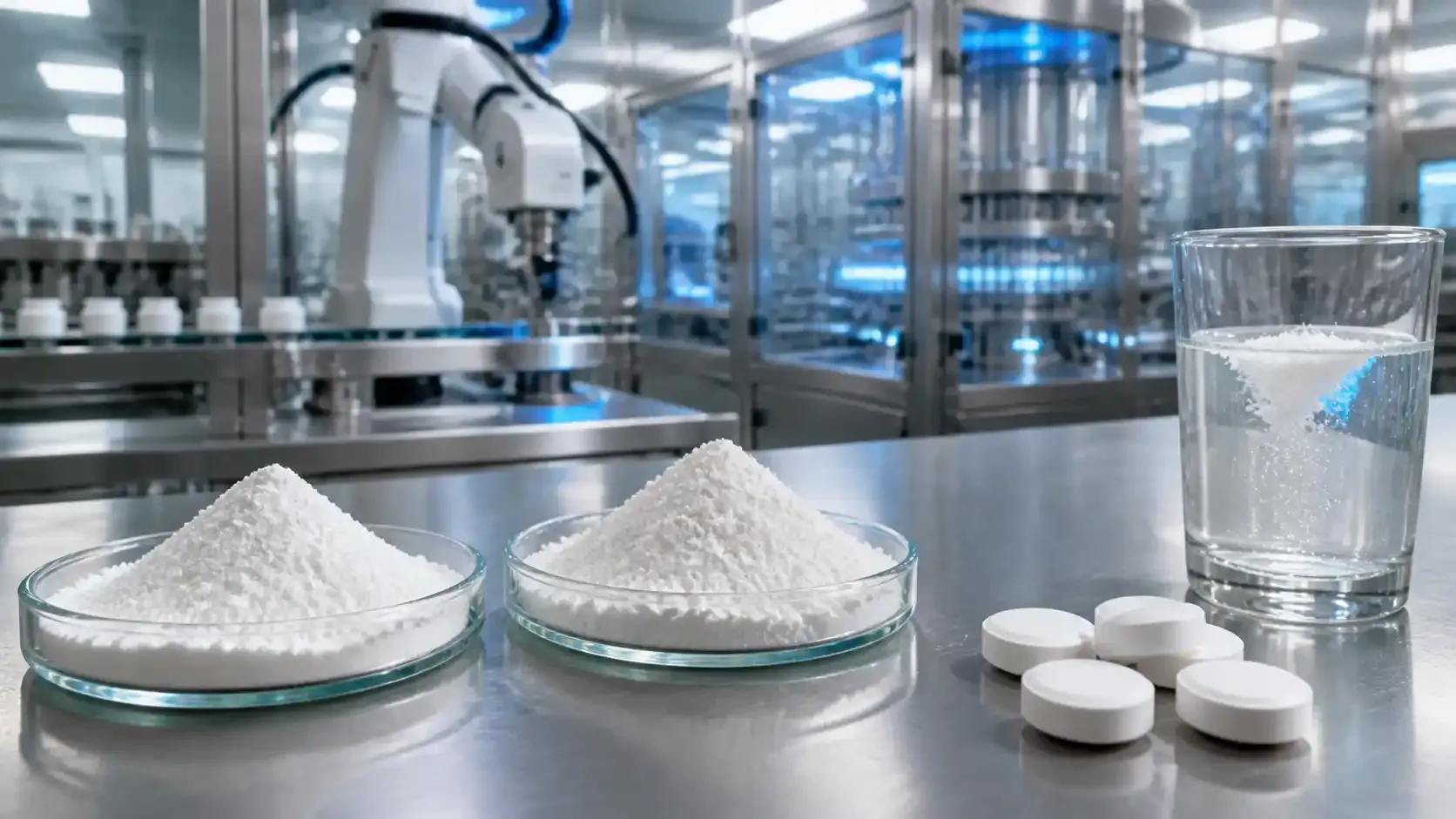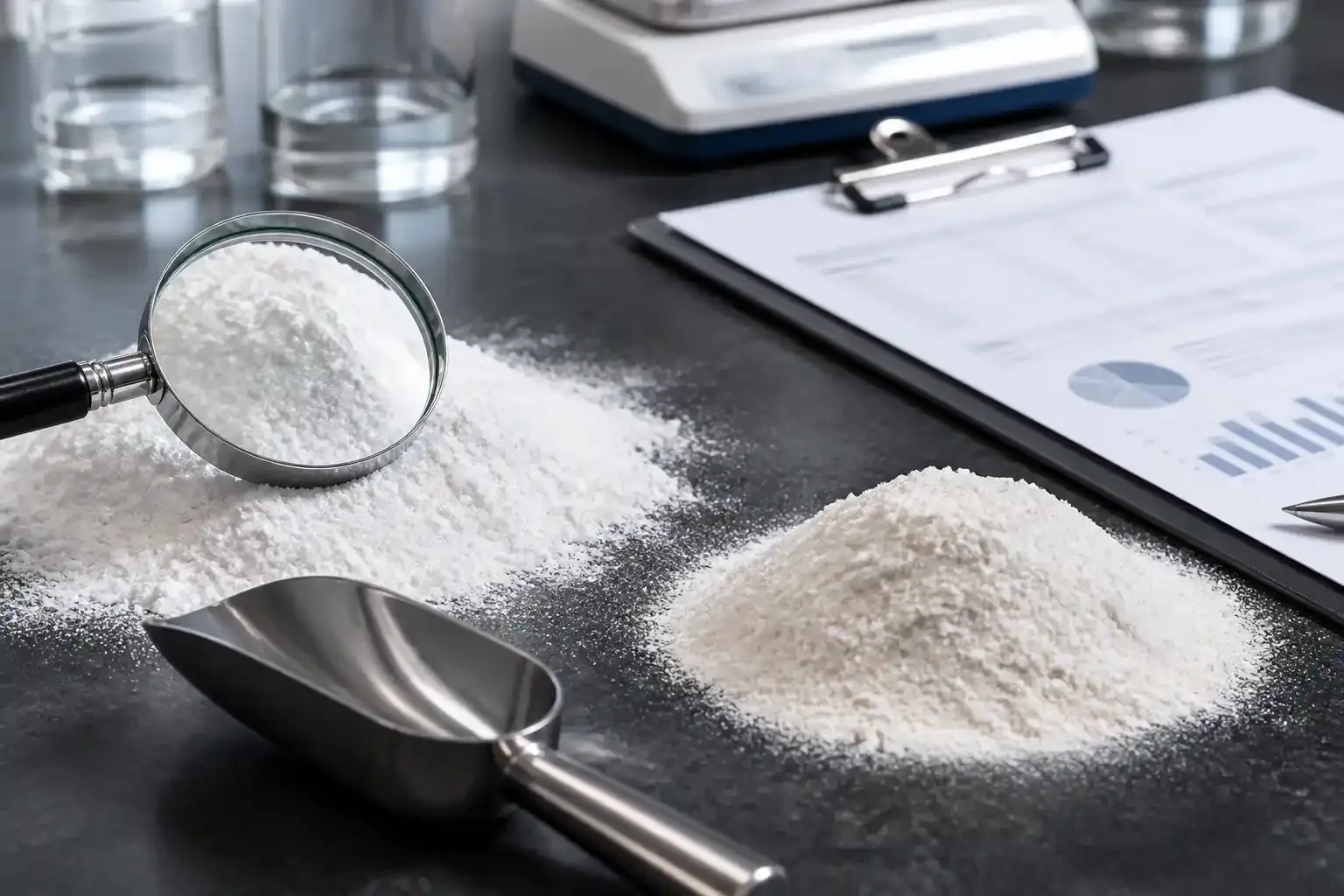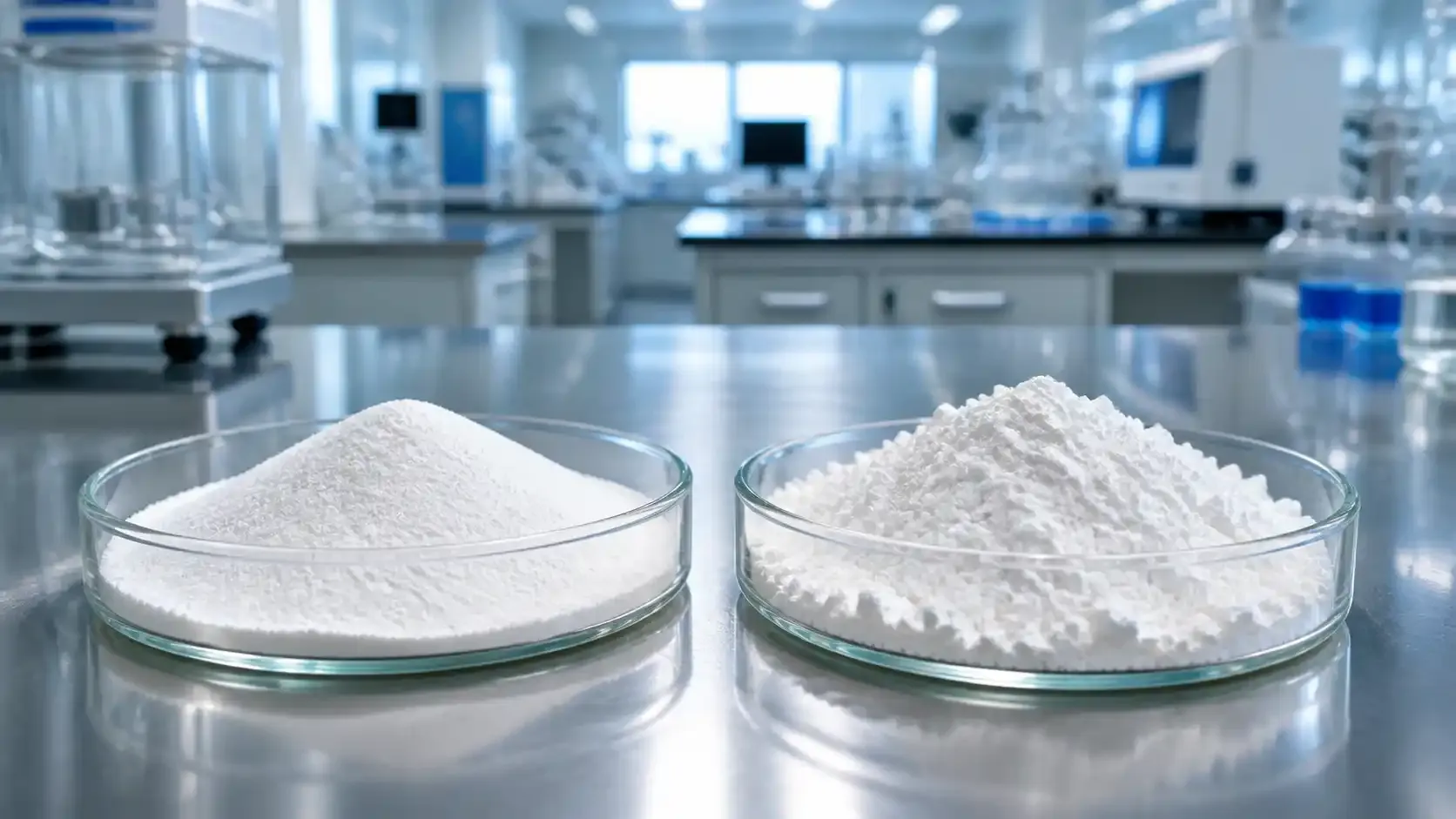
A “recommended” supplier is no longer defined by price or capacity alone. As microcrystalline cellulose demand rises across tablets, capsules, and functional foods, and resistant dextrin becomes a default choice for fiber fortification, procurement teams are being pushed toward stricter technical screening—especially when the short list includes China.

This guide explains what microcrystalline cellulose and resistant dextrin are in practical procurement terms, where specifications tend to fail in real applications, and how buyers can identify a Recommended Chinese Microcrystalline Cellulose Manufacturer, a Recommended Chinese Microcrystalline Cellulose Supplier, or a Recommended Chinese Resistant Dextrin Manufacturer without turning every RFQ into a long reformulation cycle.
Why MCC and resistant dextrin are being sourced together
The market drivers behind these two ingredients are different, but the sourcing reality is converging:
- Microcrystalline cellulose (MCC) is increasingly treated as a critical “process enabler” in pharma and nutraceutical solids. Small shifts in particle size distribution, moisture, and bulk density can change compression behavior, disintegration, and blend uniformity.
- Resistant dextrin is increasingly treated as a label-sensitive functional ingredient. Fiber claims, taste neutrality, and stability in heat/acid are now baseline expectations for beverage, dairy alternatives, nutrition powders, and sugar-reduced foods.
The result: many teams now evaluate China microcrystalline cellulose manufacturer candidates and China resistant dextrin supplier candidates using similar due diligence logic—batch consistency, controlled manufacturing, and documentation readiness.
Microcrystalline cellulose fundamentals buyers actually use
Microcrystalline cellulose is a purified, partially depolymerized cellulose widely used as a binder, filler, and disintegrant in oral solid dosage forms. It is typically specified by grade (e.g., PH series) and by properties that directly affect manufacturability.
Parameters that most often decide success or rework
When buyers build a microcrystalline cellulose supplier evaluation checklist, these are the lines that usually predict downstream performance:
- Grade selection (PH-101, PH-102, etc.): Grade isn’t just a label; it’s a proxy for flow and compressibility. In practice, grade choice should match the target dosage form and press conditions.
- Mesh / particle size range: Common commercial ranges include 60–200 mesh depending on grade and use case.
- Moisture and loss on drying: Too high can hurt flow and stability; too low can change compaction behavior.
- Bulk and tapped density: Often overlooked until scale-up; critical for die fill consistency.
- Microbial limits and purity: Essential for nutraceutical and pharma-facing programs.
- Pharmacopeial alignment: Buyers typically want MCC that aligns to recognized standards such as BP/USP/FCC/JP; for many tenders, being able to discuss microcrystalline cellulose USP Ph.Eur. specs clearly, even when the label uses different regional terminology, reduces audit friction.
For a quick benchmark of how an export-facing producer presents MCC grade and spec language, some buyers review product pages such as microcrystalline cellulose wholesale listings and a dedicated microcrystalline cellulose powder page, then compare the published parameters to the buyer’s internal monograph.
Buyer takeaway: A Recommended Chinese Microcrystalline Cellulose Manufacturer is usually the one that can explain how grade, density, and moisture connect to your tablet failure modes—not the one that only repeats “USP available.”
Resistant dextrin fundamentals that influence food and supplement outcomes
Resistant dextrin is a soluble dietary fiber made from starch through controlled processing. It is used to increase fiber content while keeping a clean sensory profile—especially in products where gritty texture, strong sweetness, or haze would be unacceptable.
What procurement teams should specify beyond “fiber percentage”
A resistant dextrin food application guide usually starts with fiber content, but purchasing decisions are often made on a wider set of practical attributes:
- Fiber content and batch consistency: Many commercial specifications target ≥82% fiber for common applications; some programs require higher.
- Solubility and clarity: Critical for beverage powders, RTD concepts, and syrup-like applications.
- Heat and acid stability: Important for UHT beverages, acidic drinks, and baked goods.
- Taste neutrality: Neutral taste supports sugar-reduction strategies without creating “fiber notes.”
- Moisture, water activity, and caking risk: A frequent warehousing issue in humid lanes.
- Microbial indicators: Especially important for supplement channels.
Buyers also increasingly differentiate resistant dextrin by starch source to align with labeling, allergen, or positioning needs:
- Corn-based soluble fiber: Often selected for broad availability and stable performance. For example, soluble corn fiber product pages are sometimes used as a reference point for how suppliers describe solubility, stability, and packaging.
- Tapioca-based options: Common when procurement wants a different agricultural story or formulation behavior in certain systems. See an example listing for tapioca resistant dextrin powder.
- Cassava-focused, sugar-reduction positioning: Frequently evaluated for reduced-sugar applications; an example category page is Sugar Replace Cassava Resistant Dextrin.
For programs that explicitly target digestive positioning, buyers may also compare functional positioning and documentation readiness across “gut health” lines such as gut health dextrin.
Buyer takeaway: A Recommended Chinese Resistant Dextrin Manufacturer is usually the one that can prove stability and consistency in your target matrix (acid, heat, storage), not just provide a single COA line.
A practical comparison table for faster internal alignment
The fastest way to prevent mismatched expectations across QA, R&D, and procurement is to align on “what matters most” by ingredient type.
| Item | Microcrystalline cellulose | Resistant dextrin |
|---|---|---|
| Typical role | Excipient: binder/filler/disintegrant; also texturizer/anti-caking in food | Soluble dietary fiber for fiber fortification and sugar reduction support |
| Common procurement risk | Grade mismatch causes compression or disintegration issues | Solubility/stability mismatch causes haze, off-taste, or storage issues |
| Spec lines that often decide outcomes | Grade, mesh/PSD, moisture, bulk density, microbial limits, BP/USP/FCC/JP alignment | Fiber %, solubility, stability (heat/acid), moisture/water activity, microbial limits |
| Evidence buyers should request | Pharmacopeial-style spec sheet, COA trend, change control approach | COA trend, application tests, stability notes, packaging and storage guidance |
That kind of alignment matters because supplier evaluation often fails not on raw material chemistry, but on internal disconnects. QA may prioritize documentation completeness, R&D may care most about functionality in a specific formulation, and procurement may initially compare price and lead time. A shared comparison framework helps the team define what “recommended” means before samples are requested, which reduces churn during qualification and improves the quality of supplier conversations.
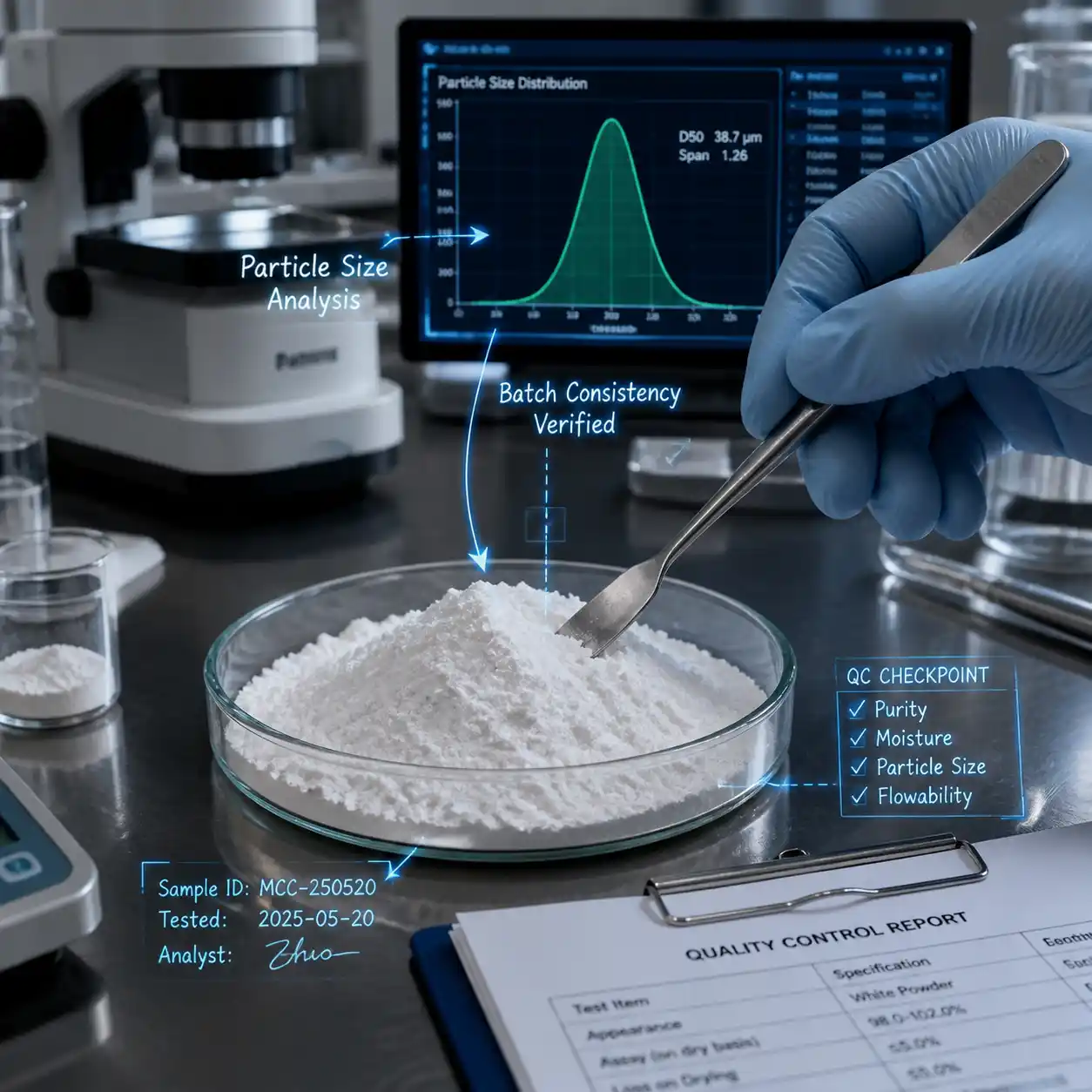
What “recommended” should mean when evaluating Chinese manufacturers
When procurement teams search for a Recommended Chinese Microcrystalline Cellulose Supplier or a Recommended Chinese Resistant Dextrin Manufacturer, the strongest short lists usually share a few visible, auditable behaviors.
1) Controlled manufacturing and credible process language
A mature Chinese producer will describe manufacturing in a way that matches what auditors look for: controlled raw material intake, automated or standardized processing steps, and defined release testing. In Shine Health’s public materials, examples include references to NON-GMO starch sourcing, use of imported enzymes, and fully equipped QC laboratories, alongside automated production descriptions.
The point for buyers is not the marketing phrase—it is whether the supplier can show:
- batch-to-batch controls,
- clear test methods,
- and consistent process documentation.
2) Certification stack that matches your channel
Certifications do not replace audits, but they do shape how quickly a supplier can clear onboarding. Common signals buyers look for include:
- ISO9001 as a baseline quality management reference,
- food-channel certifications such as BRC and HACCP,
- market access helpers such as Halal and Kosher.
For MCC programs that touch regulated dosage forms, buyers often treat documentation discipline as seriously as any single lab value.
3) Documentation readiness for import and internal compliance
A supplier that is truly “recommended” reduces your internal workload. In practice, that means they can reliably provide and maintain:
- COA with clear test items and limits,
- MSDS,
- traceability elements (batch coding, shelf life, storage conditions),
- packaging specs and palletization details,
- and a straightforward approach to deviations and customer complaints.
If the organization publishes technical education content—such as an MCC grade explanation—it can also reduce misunderstandings. For example, procurement teams sometimes share internal training links like MCC Grades Formulation and QC Guide to align stakeholders on grade differences before a factory trial.
A buyer-oriented due diligence workflow that works for both ingredients
This is a streamlined workflow many teams use for supplier due diligence microcrystalline cellulose and resistant dextrin at the same time:
- Confirm application fit first: MCC grade for the dosage form; resistant dextrin source and stability for the product matrix.
- Request a COA trend view (not just one batch): look for stable ranges, not “perfect” single points.
- Verify quality system basics: certifications, audit history, and who owns release decisions.
- Check packaging and storage reality: moisture protection, labeling, and warehouse conditions matter more than most RFQs admit.
- Run a small, purpose-built trial: one tablet compression study for MCC; one stability and sensory study for resistant dextrin.
Buyer takeaway: The fastest route to a recommended Chinese microcrystalline cellulose manufacturer or a recommended Chinese resistant dextrin manufacturer is a workflow that forces “proof in your matrix,” not generic qualification.
Closing guidance for shortlisting suppliers without over-correcting
The best sourcing outcomes usually come from treating microcrystalline cellulose and resistant dextrin as “high-impact inputs,” even when they look like commodity powders. MCC affects manufacturability and compliance readiness; resistant dextrin affects fiber claims, sensory quality, and shelf stability.
For buyers building a cross-category short list in China, it can be useful to review how established Shandong-based producers present product parameters and documentation expectations. Public resources from Shandong Shenghuai Health Co., Ltd.; Shine Health on www.sdshinehealth.com are one example of how manufacturers structure MCC and resistant dextrin information for export-facing evaluation.
If you need to narrow down candidates that match the standards and practices described above, you can further explore suppliers and technical materials via the official site: https://www.sdshinehealth.com/.
Data sources and notes
- Yahoo Finance market note on MCC growth projections (2026-05-14): Microcrystalline Cellulose (MCC) market growth
- Dataintelo market page on resistant dextrin expansion (2026-01-01): Resistant dextrin market outlook
- FoodNavigator report on dietary fiber market growth and prebiotic share (2026-06-05): Dietary fiber demand and prebiotic revenue share