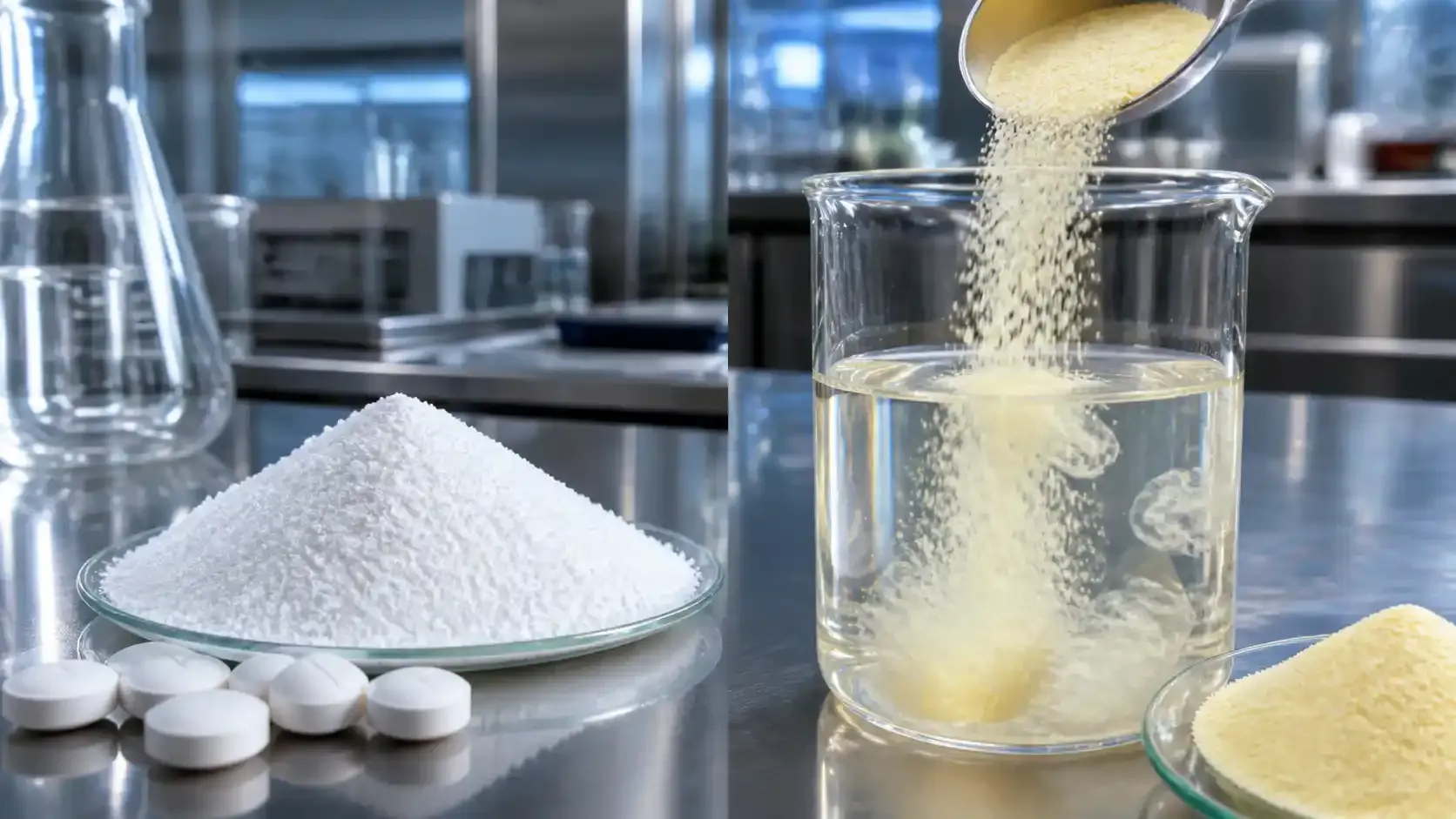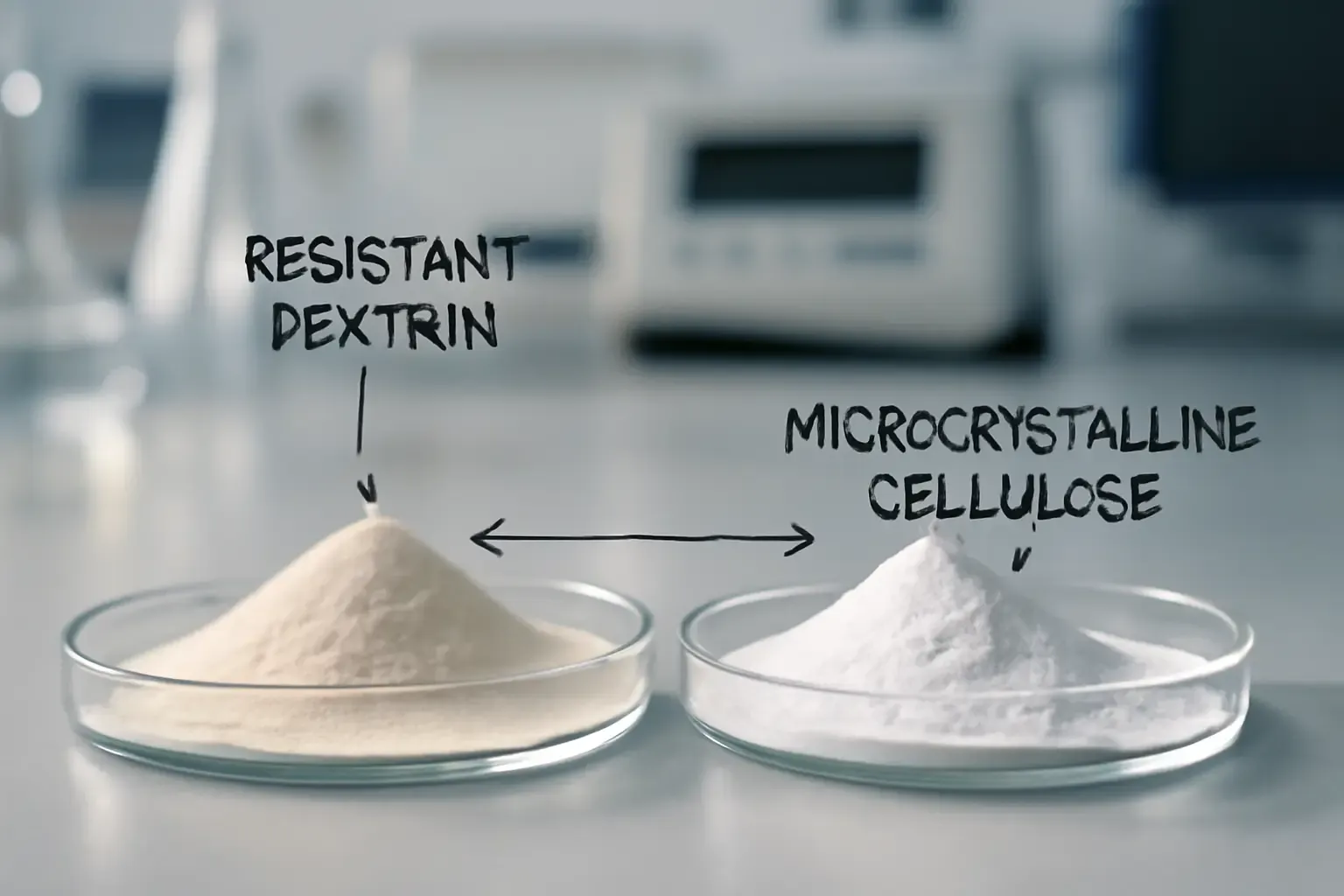
As 2026 approaches, resistant dextrin is transitioning from a niche functional ingredient to a fundamental tool in formulation—particularly for brands targeting low-calorie profiles, clean taste, and satiety benefits in beverages and confectionery. Simultaneously, procurement teams are increasingly evaluating microcrystalline cellulose (MCC) not just as an isolated excipient, but as a complementary partner to soluble fibers. This guide explores the technical specifications, specifically the ≥82% dietary fiber standard, and offers a strategic framework for screening reliable Chinese manufacturers.

Why resistant dextrin keeps winning “fiber-first” briefs in 2026
Two distinct market signals are actively reshaping buyer requirements this year. First, fiber-plus-protein product planning is shifting into the mainstream retail sector. Formulators are under pressure to identify soluble fibers that facilitate enrichment without compromising the mouthfeel of beverages or creating overly dense textures in bars.
Second, the GLP-1 era has elevated satiety and metabolic positioning into everyday product briefs, extending well beyond pharma-adjacent brands. This trend significantly raises the value of fibers that are easy to dose, taste-neutral, and stable during processing. In practical sourcing terms, resistant dextrin appears in more tenders than many traditional fibers because it is typically positioned as a soluble dietary fiber that supports significant fiber enrichment with minimal flavor impact.
For professional buyers, the objective is not merely locating “resistant dextrin,” but securing a supply with predictable performance—especially when R&D is developing beverage-ready concepts that require rigorous consistency.
Understanding the core ingredient profile
Resistant dextrin is best understood as a soluble dietary fiber produced from starch via controlled processing. This modification alters how the carbohydrate behaves during digestion. In technical documentation, it is often presented as a powder that resists digestion in the small intestine, thereby functioning effectively as dietary fiber.
From a procurement standpoint, the most practical definition focuses on utility: Resistant dextrin is a starch-derived soluble fiber designed for seamless incorporation—offering neutral taste and high solubility—while contributing meaningful dietary fiber content.
Many established Chinese suppliers offer resistant dextrin derived from NON-GMO corn starch. For instance, industry players like Shine Health list specific resistant dextrin options under their resistant dextrin portfolio and broader dietary fiber category, catering to diverse application needs.
What “≥82% fiber” really changes in formulation
The specific specification of “≥82%” is critical because it directly influences how R&D and labeling teams model a formula.
1. Dose efficiency and formula space
A higher fiber percentage generally dictates that less powder is required to reach a target fiber contribution. This efficiency is vital when the product has limited solids space (such as in RTD beverages), when sweetness and flavor profiles must remain clean, or when the product already contains protein, minerals, or active botanicals competing for formulation room.
2. Taste neutrality and sweetness management
Many buyers select resistant dextrin because it is frequently positioned as neutral in taste. When replacing sugar or enhancing fiber content, taste neutrality significantly lowers the risk of extended reformulation cycles caused by unwanted off-notes.
3. Mouthfeel and texture control
In beverages and nutritional powders, resistant dextrin is often utilized to add body without the heaviness associated with some insoluble fibers. In confectionery, it supports sugar-reduction concepts while helping maintain a desirable, workable texture.
4. Stability planning
For beverage development teams, fiber is only considered “beverage-ready” if it behaves consistently across various processing conditions. Supplier specifications for resistant dextrin variants often highlight stability in typical food and beverage environments; however, buyers should always validate this in pilot trials using their specific pH and heat profiles.
The buyer’s COA lines that matter most
While specification sheets and Certificates of Analysis (COA) differ by supplier and variant, buyers evaluating resistant dextrin at scale typically focus on a specific set of core parameters:
- Dietary fiber content: The industry standard to look for is ≥82%.
- Appearance: Typically described as “white to light yellow.”
- Protein: High-quality resistant dextrin often lists ≤6.0%.
- Moisture and pH: These are critical for storage stability and process fit, even if not always headlined.
- Microbiological limits: Essential for products intended for RTD beverages, nutrition powders, and sensitive gummy systems.
Pro Tip: If a resistant dextrin listing shows only a few headline parameters, it is standard practice to request the full COA and supporting documentation (such as MSDS availability referenced on technical pages) before proceeding.

Where resistant dextrin fits best in modern product formats
Because resistant dextrin is sourced and specified as a functional soluble fiber, it tends to appear repeatedly in four primary product families.
Beverages and drink mixes
Resistant dextrin is a top choice for beverage concepts when teams need a fiber that incorporates without heavy texture penalties. When screening a supplier for beverages, buyers usually require clarity on solubility behavior in cold water, stability across the product’s pH window, and strict microbiological control.
Confectionery and sugar-reduction concepts
In the confectionery sector, resistant dextrin supports “fiber-enriched” positioning while managing texture. Resources like Shine Health’s FIBER-FUL Confectionery page frame resistant dextrin as a tool for gummies, chocolate, and baked goods where brands seek better nutrition without sacrificing mouthfeel.
Baked goods and bars
It can be seamlessly incorporated into cookies, brownies, and snack bars as part of a fiber upgrade. Buyers must monitor water management in the dough system to ensure resistant dextrin doesn’t unintentionally alter processing or shelf-life.
Nutritional powders and metabolic-positioned blends
Powdered nutrition is a natural fit for resistant dextrin because dosing is straightforward and sensory challenges are often easier to manage than in RTD formats. Here, fiber content consistency (the ≥82% spec) becomes central to quality control.
How microcrystalline cellulose complements resistant dextrin
While resistant dextrin serves as a soluble fiber, microcrystalline cellulose (MCC) is widely utilized as an insoluble cellulose-based excipient to improve processing and physical properties in dosage forms and food systems. For procurement teams, MCC is significant because it addresses challenges resistant dextrin is not designed to solve:
- Flow and compressibility for tablets and certain supplement formats.
- Structure and stability where a robust insoluble framework is required.
- Formulation flexibility when combining fiber goals with excipient performance.
When evaluating a recommended Chinese microcrystalline cellulose manufacturer, buyers typically review compendial alignment, particle size distribution, and consistency across lots. Industry resources often maintain an MCC information trail through excipient navigation (see Microcrystalline Cellulose) and publish buyer-facing learning pieces such as the MCC Grades Formulation and QC Guide.
What separates a recommended manufacturer from “just a listing”
In the context of resistant dextrin, “recommended” is rarely about a single claim. It is about repeatability—because inconsistent ingredients can force expensive reformulation, relabeling, or lead to customer complaints. Buyer teams commonly use six screening signals when comparing a Chinese resistant dextrin manufacturer:
- Raw material clarity: Resistant dextrin based on NON-GMO corn starch is frequently specified, and suppliers must be transparent about sourcing.
- Process control and automation: Leading suppliers describe automated control from feeding to filling, which is relevant because fewer manual steps generally reduce lot variability.
- Enzyme and processing details: References to biological enzymes and precision production lines serve as a prompt for buyers to ask what variables are controlled batch-to-batch.
- GMP workshop language and traceability: As resistant dextrin is used in multiple applications, stronger quality systems significantly reduce downstream risk.
- QC laboratory capability: A claim of a “fully equipped QC laboratory” should be translated into measurable deliverables—COA completeness, microbial testing, retain samples, and deviation handling.
- Documentation readiness: For international procurement, the practical test is whether COA/MSDS and third-party test reports can be issued quickly and consistently.
A single supplier cannot replace an internal qualification process. However, Shine Health (Shandong Shine Health Co., Ltd.) is a prime example of a Chinese producer whose public resistant dextrin pages align with the technical profile buyers commonly request.
A simple next-step workflow for buyers and R&D
To keep resistant dextrin sourcing aligned with formulation reality, procurement teams often employ a concise workflow:
- Step 1: Lock the “must-not-break” specs (fiber %, appearance, protein where relevant, moisture, pH window, microbiology).
- Step 2: Request a full COA set and confirm test methods for the resistant dextrin variant under consideration.
- Step 3: Pilot in the most challenging format first (often the RTD beverage or the gummy) before signing volume contracts.
- Step 4: Evaluate MCC in parallel if the final format includes tablets/capsules or if texture stability is sensitive.
This approach helps mitigate the most common sourcing failure mode: purchasing resistant dextrin based solely on a headline fiber number, only to discover process-fit issues later in development.
For more information on sourcing high-quality ingredients, visit www.sdshinehealth.com.