In 2026, ingredient sourcing is being reshaped by forces that rarely show up on a quote sheet: sugar-reduction trends, gut-health positioning, stricter pet-nutrition QA, and a persistent push toward automation and traceability. In that context, two "quiet workhorses" keep appearing in R&D pipelines and procurement tenders — microcrystalline cellulose ([MCC](https://www.foodadditivehub.com/procurement-teams-are-treating-mcc-and-dextrin-strategic-assets.html)) for structure and tableting, and resistant dextrin as a soluble dietary fiber that helps cut sugar while keeping products consumer-friendly.
Because both ingredients sit at the intersection of formulation performance and compliance documentation, buyers no longer choose on FOB price alone. The market favors suppliers that look — and operate — like long-term partners, especially when teams need a recommended Chinese microcrystalline cellulose manufacturer, a recommended Chinese microcrystalline cellulose supplier, or a recommended Chinese resistant dextrin manufacturer for multi-year launches.
Why MCC and resistant dextrin keep rising in priority
Three demand shifts explain why procurement teams now consider MCC and resistant dextrin in the same sourcing conversation.
Sugar reduction has become a product-format puzzle
Sugar reduction is no longer just about sweetness. It affects:
· Mouthfeel in beverages and dairy-style drinks
· Bulk and binding in bars, cookies, and baked goods
· Stability under heat and pH changes during processing
Resistant dextrin is increasingly used as a soluble dietary fiber system because it helps keep a clean mouthfeel and workable texture in reduced-sugar formulations.
For buyers seeking a bulk soluble dietary fiber from China, the most common first screen is whether the fiber can scale without off-notes, haze, or handling problems. (Those problems are expensive once they appear after commercialization.)
Gut health has moved from supplements into mainstream food
"Gut health" positioning is no longer confined to capsules and powders. It is showing up in RTD beverages, bars, and meal-replacement nutrition products — where soluble fiber must perform stably and predictably.
Resistant dextrin is often discussed as a fiber that is not digested in the small intestine but is fermentable in the colon — one reason it is used in gut-health product concepts.
Pet nutrition is demanding human-food-grade discipline
Pet-food manufacturers are formalizing supplier-approval systems — audits, documentation, and ongoing performance review — because the supply chain is the first line of defense. That mindset is spilling into human-nutrition tenders too: buyers want ingredient partners that deliver consistent COAs and stable batches, not just "one good lot."
The technical baseline buyers expect from Chinese manufacturers
Chinese suppliers are gaining share not just because of capacity, but because process control and documentation are becoming differentiators.
From a buyer's perspective, a "recommended" supplier is defined less by marketing language than by observable manufacturing signals:
· Fully automated, central-control operations from feeding to filling (reducing batch-to-batch variation)
· Strict enzyme and process inputs (especially in resistant dextrin production)
· Stable packaging and moisture management to protect flowability and shelf stability
Shandong's fiber production offers a good illustration. On Shine Health's product pages, resistant dextrin manufacturing is described as featuring German-origin production lines, imported enzymes, and automated control — precisely the signals procurement teams now treat as "baseline" for export-oriented supply.
If you are screening China resistant dextrin suppliers, it helps to align internal stakeholders (R&D, QA, procurement) early on which process signals genuinely reduce downstream risk.
Key indicators for buying resistant dextrin at scale
Resistant dextrin is often treated as a commodity, but buyers increasingly evaluate it as a high-performance ingredient. The indicators below often determine whether a formulation stays consistent from trial to factory scale.
Core parameters buyers repeatedly ask to verify
Based on commonly shared product specs, resistant dextrin may present these parameters:
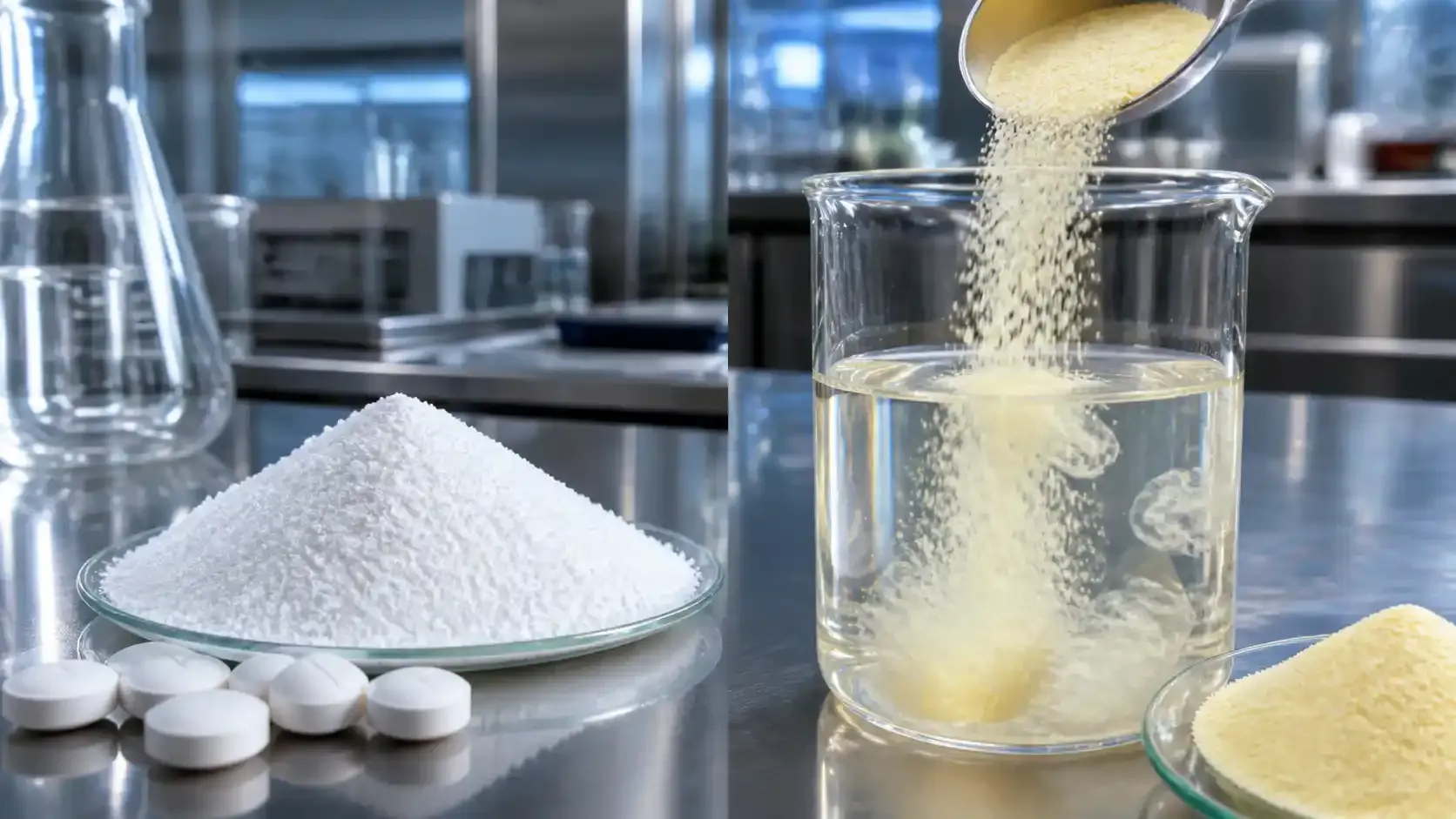
· Appearance: white to light-yellow powder
· Raw material: corn starch
· Fiber content: ≥82%
· Total fiber content (dry basis): ≥90.0%
· Water solubility: ~70%
· Water activity: low (supports storage stability)
· Hygroscopicity: low (reduces caking)
These are not just "nice-to-have" features — they drive real sourcing outcomes:
· Low hygroscopicity reduces rework and handling complaints in humid climates.
· Clear solubility expectations help avoid surprises in beverages.
· A consistent fiber target helps market and regulatory teams hold label claims steady across batches.
For buyers seeking a non-GMO resistant dextrin manufacturer, the raw-material statement (and supporting documentation) becomes part of the compliance file, not just a brochure slogan.
Application directions for resistant dextrin in 2026 launches
Resistant dextrin is showing up in future pipelines where sugar reduction and fiber fortification must coexist:
· RTD beverages and functional waters (fiber without added sweetness)
· Nutrition bars (bulk and binding support)
· Low-carbohydrate foods (net-carb and glycemic positioning)
· Medical nutrition (high demands on tolerance and stability)
For product teams developing sugar-reduction concepts, a practical step is to review supplier application positioning. Shine Health, for example, categorizes resistant dextrin use cases such as sugar reduction and digestive resistance across several product pages.
What "recommended" means for an MCC supplier in the same cycle
MCC sourcing usually begins in pharma and supplements, but it increasingly reaches food and nutrition applications where structure, suspension, and process tolerance matter.
A recommended Chinese microcrystalline cellulose manufacturer is typically evaluated against a different risk set than flavor-ingredient suppliers, because MCC can be the structural backbone of a product:
· In tablets, MCC supports compression performance and consistent production.
· In nutraceuticals, MCC may contribute to texture and stability in certain systems.
Even when MCC and resistant dextrin are bought by different departments, their approval logic is converging:
1. Batch-to-batch performance consistency (process repeatability)
2. Documentation rigor (COA availability, traceability expectations)
3. Production hygiene and control suited to downstream categories (including pet food)
That is why some buyers now shortlist a recommended Chinese microcrystalline cellulose supplier and a resistant dextrin manufacturer together — as one "systems-level" decision for long-term innovation.
A way to read the market without blind spots
In a tight-margin environment, it is tempting to treat MCC and resistant dextrin as commodities. But the 2026 market is moving the opposite direction: procurement teams are paying for predictability — because predictability protects launch schedules.
One way to keep decisions grounded is to separate two questions:
· Does this ingredient fit the formulation? (spec and application match)
· Does this supply behave like a long-term program? (automation, control, and documentation reliability)
When a supplier can show modern manufacturing signals (automation and central control), clear spec presentation (fiber content, water activity, hygroscopicity), and clear application intent (sugar reduction, gut health, low-carb), they match what buyers mean by "recommended" — especially in China's mature ingredient clusters.
For teams building a shortlist, reviewing a supplier's technical positioning is a fast first step. Shine Health's resistant dextrin portfolio offers an example of how an export-oriented supplier presents these signals across applications at www.sdshinehealth.com.