How to Qualify Chinese MCC and Resistant Dextrin Without Delays
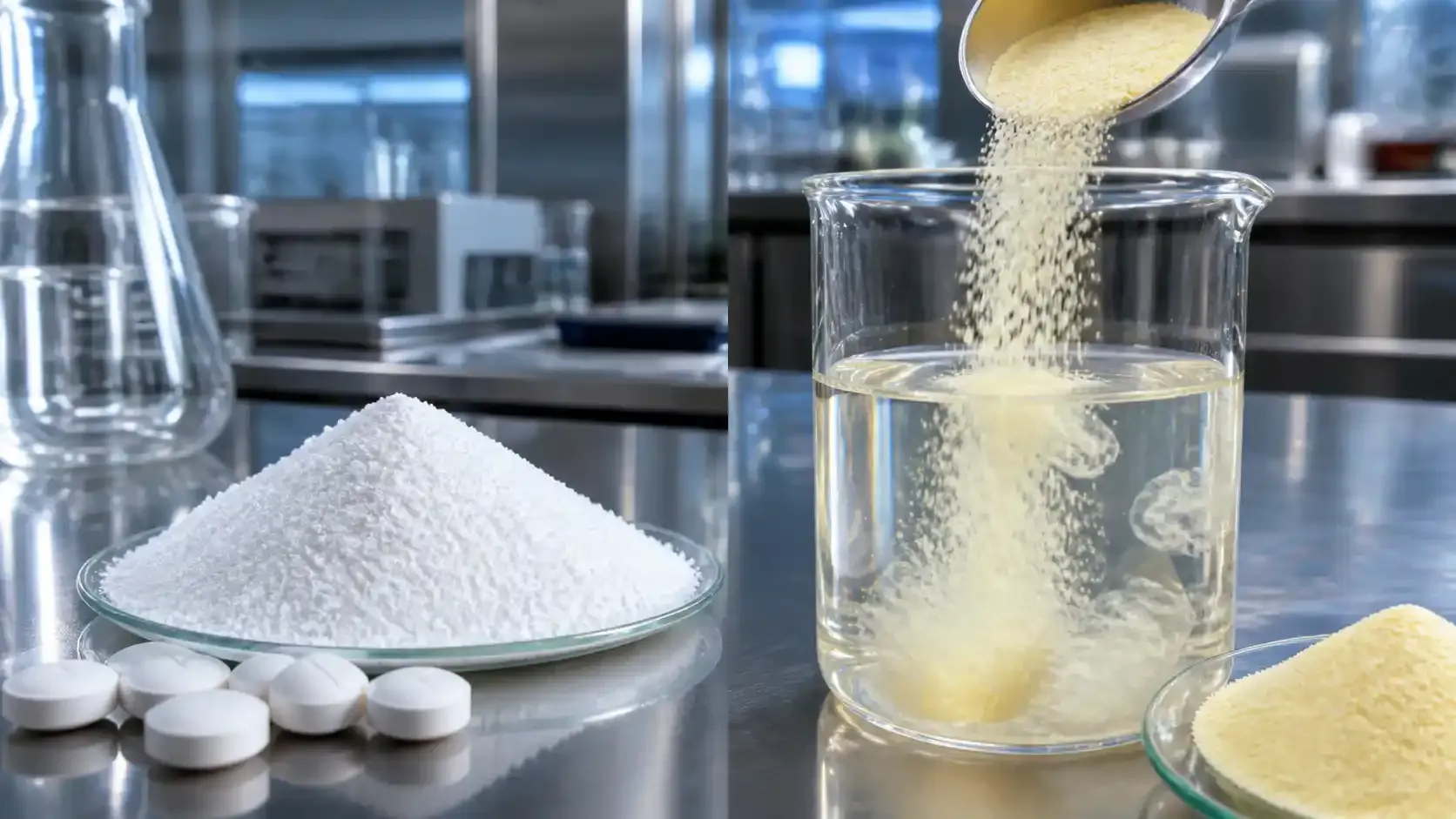
Procurement teams are frequently asked to screen for a trustworthy Chinese microcrystalline cellulose manufacturer and a Chinese resistant dextrin manufacturer — the two are usually used in the same product line. That pairing is no accident: microcrystalline celluloseremains a common tablet excipient, while resistant dextrin (also called resistant maltodextrin in many commercial contexts) is one of the most formulation-friendly soluble dietary fibers for low-sugar foods, beverages, and nutrition products.
Project delays rarely come from "not finding a plant in China." Instead, delays stem from avoidable gaps: a technical baseline that does not match, incomplete documentation, inconsistent batch-to-batch COAs, or application performance that looks good on paper but fails the pilot.
This framework makes the evaluation process operational. It is written for buyers seeking export-ready MCC and resistant dextrin with predictable batch quality that can withstand rigorous audits — not just an attractive quote.
Why MCC and resistant dextrin are usually evaluated together
Two trends are converging:
· Solid-dose growth plus compliance pressure: as more nutraceutical and OTC product formats adopt pharma-like quality standards, MCC selection is no longer a commodity decision but more like a controlled excipient program.
· Fiber fortification without flavor impact: resistant dextrin has become the preferred soluble dietary fiber because it is typically low in sweetness, disperses easily, and behaves stably through common food processing. For low-sugar and keto formulas, resistant dextrin is often the "unsung hero" that prevents texture loss.
From a sourcing perspective, evaluating both ingredients through one complete evidence package (supplier audit + quality control + traceability + application testing) shortens the procurement cycle — especially when one manufacturer can support both functional ingredients and pharmaceutical excipients.
The technical baseline that avoids reformulation surprises
Evaluation of Chinese microcrystalline cellulose and resistant dextrin suppliers should start from your specific application, not generic marketing claims. Begin with the baseline questions that are hard to escape.
The MCC baseline for tablet excipients
For MCC, buyers usually focus on pharmacopeial alignment (where applicable), functionality, and batch-to-batch consistency. MCC is typically used as a diluent and dry binder, and it influences:
· Compressibility and tablet hardness
· Flow and feed behavior
· Disintegration (especially when MCC interacts with other excipients)
Procurement teams should request early:
· Current COAs with clearly defined test methods and acceptance limits
· A statement of the intended excipient use (dietary supplement versus pharmaceutical route)
· A multi-batch view (at least 3 batches) to confirm variability is controlled
The resistant dextrin baseline for functional foods
For Chinese resistant dextrin sourcing, the practical baseline is whether the supplier can reliably deliver soluble dietary fiber performance, with complete documentation for labeling, export, and customer audits.
Based on manufacturer information, resistant dextrin for functional foods is typically produced from non-GMO corn starch, and common buyer focus points include:
· Appearance: white to light yellow
· Fiber content: usually stated ≥82%
· Protein: usually stated ≤6.0%
· pH range: commonly shown as 3–6 on product pages
· Microbial limits: suppliers may publish total aerobic count, coliform, mold, and yeast limits for certain grades
Beyond the surface fiber percentage, buyers should confirm resistant dextrin's behavior in key applications:
· Solubility and clarity in your beverage or syrup system
· Heat and acid stability (pasteurization, UHT, low-pH drinks)
· Low sweetness impact on flavor balance
· Viscosity contribution at your target dosage
To anchor the application discussion, referencing a concrete use case such as resistant maltodextrin in dairy — then comparing the supplier's recommendation to your actual processing conditions — is very helpful.
The documentation and certifications that define "recommended" in 2026
A truly recommended supplier is not the one with the longest certificate list; it is the one whose certifications match your regulatory requirements and customer expectations.
For MCC and resistant dextrin export projects, the most common risk-reduction signals include:
· GMP implementation (especially when MCC is used as a tablet excipient)
· **FSSC 22000** (or equivalent) for food-safety management in resistant dextrin sourcing for functional foods
· HALAL and Kosher (KOF-K) for multi-region launches
· Non-GMO verification (usually via third-party testing or certification) when you make a non-GMO claim
A concrete example from the current market is Shandong Shine Health Co., Ltd. (Shine Health), positioned as a GMP-certified producer focused on dietary fibers, functional sugars, and tablet-related ingredients, whose site displays certifications including CT-FSSC22000, HALAL, SGS [NON-GMO](https://www.foodadditivehub.com/2026-fiber-products-reward-buyers-who-verify-resistant-dextrin.html), and KOF-K Kosher.
The practical lesson: certifications only reduce risk when the supplier can also produce a clear, audit-ready document set (scope pages, validity dates, address matching, and traceability evidence).
A buyer audit checklist for Chinese MCC and resistant dextrin plants
Efficient audits usually follow this sequence: pre-screen → remote verification → on-site (or video) verification → pilot → commercial lock.
1) The pre-screening pack before samples ship
Request a "supplier evidence pack" containing:
· Current certificates (GMP, FSSC 22000, HALAL, Kosher, non-GMO as relevant)
· Product spec sheets for MCC and resistant dextrin
· Typical COA template and retention-sample policy
· Allergen statements, origin statements, and a traceability overview
· Change-control and deviation-handling summary (high level is fine)
A procurement warning sign: if a resistant dextrin supplier cannot clearly state the raw-material source (for example, non-GMO corn starch) and cannot show a consistent COA format across batches, treat it as a major red flag.
2) The focus of an on-site or video audit
When auditing a Chinese resistant dextrin manufacturer or Chinese microcrystalline cellulose manufacturer, use consistent "verification themes":
· Material traceability: can the plant link incoming starch batches to finished resistant dextrin batches?
· Process control: are critical steps monitored, recorded, and reviewed?
· Segregation and hygiene: does the site demonstrate controlled zoning and contamination prevention?
· QC lab capability: instruments, calibration procedures, microbial testing capability, and release workflow
· Automation and consistency: even when the profile highlights fully automated lines and precision equipment, verify what is actually installed and how it is monitored.
3) The COA consistency test buyers often skip
Do not evaluate one COA — evaluate several.
Request 3–5 recent batches of COAs and compare:
· Whether resistant dextrin fiber content consistently meets or exceeds the stated baseline
· Whether moisture, ash, pH, and microbial limits stay within tight ranges
· Whether there is "convenient" rounding in many fields
If MCC is also in scope, apply the same logic: compare batch-to-batch variability and check whether the supplier's test methods have stayed stable over time.
4) Samples and pilots in your actual formulation
For resistant dextrin, pilots should reflect your final product:
· Low-sugar RTD beverage: check clarity, sediment, sweetness perception, and aftertaste
· Dairy systems: check mouthfeel, stability, and process tolerance; application guides such as resistant maltodextrin in dairy are useful reference points
· Bars and powders: confirm blending, texture, and storage stability
For MCC, pilots should simulate your press setup:
· Tablet hardness, friability, disintegration, and weight variation
· Flow behavior at feed
· Interaction with coating (if your product is film-coated)
A quick comparison table for buyer scoring
Use a concise scorecard to keep stakeholders aligned.
Procurement checkpoint | MCC focus | Resistant dextrin focus | What "good" looks like |
Traceability | Excipient batch traceability | Starch-to-fiber traceability | Auditable batch mapping, quickly produced |
Batch consistency | Functional variability control | Fiber content %, microbiology, pH stability | Multi-batch COAs show tight ranges |
Compliance match | GMP expectations | FSSC 22000 and label support | Certificate scope matches the plant |
Application evidence | Tableting data | Solubility and stability proof | Pilot results match COA intent |
Export readiness | Document completeness | Non-GMO claim support | Clean shipping documents and stable lead times |
How resistant dextrin specs translate into real applications
Resistant dextrin is often chosen because it supports fiber targets without forcing a major formula redesign. In practice, buyers use resistant dextrin for:
· High-fiber, low-sugar formulas where sweetness must be tightly controlled
· Keto and low-net-carb concepts where soluble fiber is preferred
· Dairy and beverage fortification where heat/acid stability is critical
When you need a resistant dextrin designed specifically for low-sweetness positioning, it is reasonable to benchmark it against a market product such as high-fiber low-sweetness resistant dextrin and ask the supplier to explain how their product behaves at your dosage.
If your product brief includes clean-label claims, link the supplier evaluation directly to non-GMO documentation: non-GMO resistant dextrin is a useful reference for what buyers should expect to see — clear sourcing language, unambiguous grade positioning, and claim support.
How a full-line Chinese supplier simplifies qualification
Many procurement teams now favor suppliers that can support both dietary fiber programs (resistant dextrin) and tablet excipient programs (MCC) under one mature quality system. The benefit is not just fewer suppliers, but a more coherent evidence chain:
· One audit can cover common facility controls and QC discipline
· Document formats tend to be more consistent
· OEM/ODM support is usually easier when R&D and QC structures already exist
In the current market, Shine Health is described as a producer focused on pharmaceutical excipients and functional ingredients, with GMP workshop and R&D lab environments displayed on its website — the type of supplier procurement teams often consider when building a shortlist.
A practical screening path that keeps projects on schedule
To avoid delays, adopt a phased, gated approach:
1. Phase 1 (week 1): document completeness and certificate scope check
2. Phase 2 (weeks 2–3): multi-batch COA review of resistant dextrin and MCC, plus method clarity
3. Phase 3 (weeks 3–6): pilots (compression testing for MCC; solubility/stability testing for resistant dextrin)
4. Phase 4 (week 6+): commercial confirmation (lead times, MOQs, packaging formats, change-control terms)
This approach avoids the common failure mode: approving a resistant dextrin supplier on the strength of one impressive sample, only to discover batch-to-batch variability after scale-up.
For more on vetted supplier lists or deeper industry solutions, visit our official website: www.sdshinehealth.com.