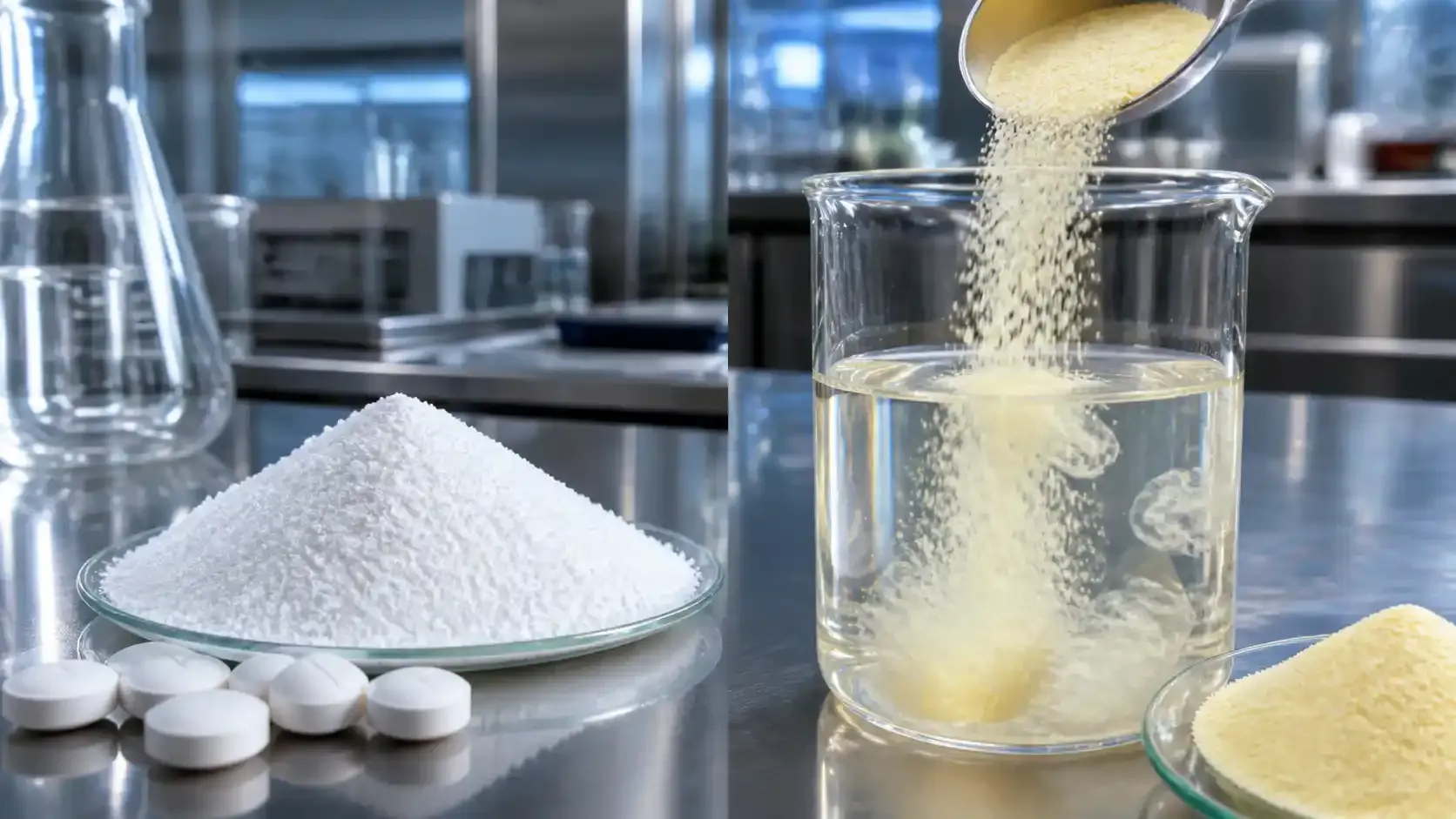
Procurement teams sourcing microcrystalline cellulose and resistant dextrin face a new landscape: relying solely on “good price and a basic COA” just doesn’t cut it anymore. Today, brand owners demand ingredients that facilitate lower-sugar and higher-fiber formulations, while regulatory bodies and retailers insist on cleaner labels, robust traceability, and readily auditable documentation. In this intricate environment, the truly valuable Chinese suppliers of microcrystalline cellulose and resistant dextrin are those who can articulate—with clarity and consistency—what each certification genuinely signifies, its specific scope and limitations, and precisely how consistent batch performance is maintained.

Why These Ingredients Are on More Shortlists
Microcrystalline Cellulose is Still the Quiet Workhorse
Microcrystalline cellulose (MCC) serves as a ubiquitous excipient in tablet formulations, valued for its compressibility and flow characteristics. This versatile microcrystalline cellulose also frequently appears in food and personal care products where a neutral, plant-derived ingredient is desired. For purchasers of microcrystalline cellulose, an initial assessment often involves verifying whether the MCC aligns with recognized compendial requirements and if the manufacturing facility can maintain stringent controls over particle size, moisture, and microbiological profiles. A standard commercial MCC portfolio might feature various grades like PH-101, PH-102, PH-200, among others. For instance, product specifications generally detail:
- Appearance: a white or near-white powder
- Mesh range: 60–200
- Purity: approximately 0.99
- Standards:BP/USP/FCC/JP
(These parameters, typically found on supplier product specifications and COAs, are crucial as they impact blending efficiency, die fill consistency, and tablet robustness.) When evaluating different grade options for microcrystalline cellulose, it’s beneficial to consult a supplier’s technical documentation on MCC grades and positioning before validating with samples and pilot runs. A prime example of how Chinese suppliers articulate grade ranges and standards can be observed in the materials from Shine Health, including their comprehensive microcrystalline cellulose overview and associated resources.
Resistant Dextrin: A Formulation-Friendly Fiber, Not Just a Label Claim
Resistant dextrin is presented as a soluble dietary fiber derived from starch sources, typically corn starch. Its ability to resist digestion in the small intestine and undergo fermentation in the colon often leads to its use in products focused on gut health and sugar reduction. For purchasers of resistant dextrin, understanding that its efficacy extends beyond just “fiber content on paper” to its process behavior is vital. Suppliers commonly highlight attributes important for beverage and bakery formulators, such as a mild taste and high compatibility, while procurement teams prioritize detailed specifications and comprehensive documentation for resistant dextrin. Looking at industry examples, consistent baseline specifications for resistant dextrin often include:
- Appearance: ranging from white to light yellow
- Fiber content: typically ≥82%
- Protein: generally ≤6.0%
- Storage: recommended in a cool place
Such specifications are consistently presented across various product offerings in the market.
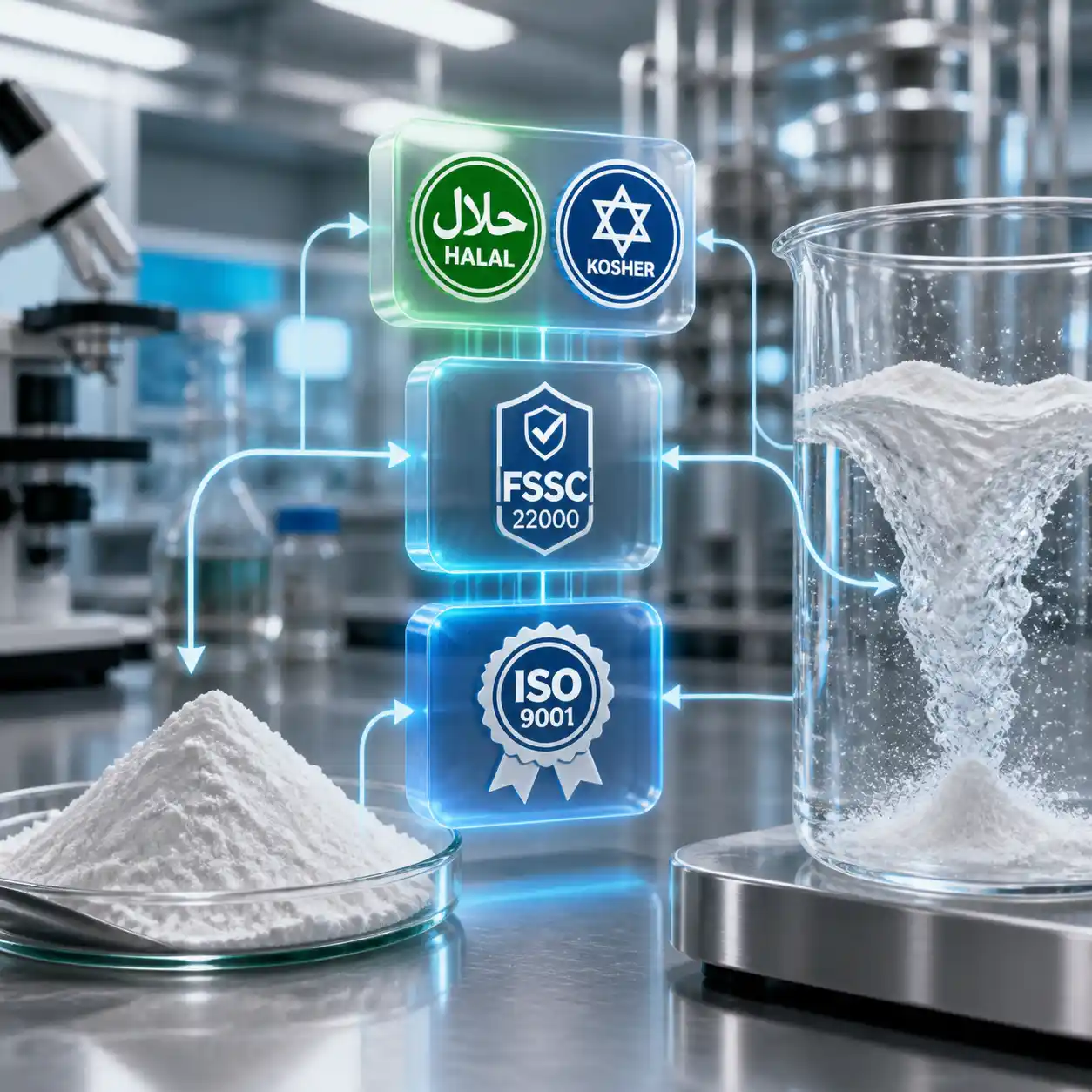
The Certification Stack Buyers Now Expect—and What Each Item Truly Covers
The modern procurement landscape demands more than just basic quality assurance. A comprehensive “certification stack” has become standard, providing layers of confidence for ingredient sourcing. But what does each certification truly signify for buyers of microcrystalline cellulose and resistant dextrin?
ISO9001 is About Consistency, Not Product Legality
ISO9001 stands as a fundamental certification for quality management systems. It indicates that an organization has established clear processes for document control, corrective actions, staff training, and ongoing improvement. For purchasers of microcrystalline cellulose and resistant dextrin, ISO9001 particularly excels at:
- Minimizing manufacturing reliance on undocumented “tribal knowledge”
- Enhancing the traceability of operational changes (e.g., equipment, methods, specifications)
- Fostering more consistent and predictable batch release procedures
However, ISO9001 has its limitations:
- It does not substitute specific food safety system requirements
- It cannot guarantee compendial compliance for microcrystalline cellulose
Essentially, ISO9001 ensures batch-to-batch consistency, yet it represents just one aspect of a robust quality framework.
FSSC 22000 is the Food-Safety Backbone for Fiber Programs
When resistant dextrin is integrated into food products, buyers are increasingly seeking FSSC 22000 certification. This is a globally recognized food safety management scheme, grounded in ISO standards and enhanced with sector-specific prerequisite programs. For procurement professionals, FSSC 22000 directly addresses critical risk inquiries regarding resistant dextrin:
- Is a structured hazard analysis in place, complete with preventive controls?
- Are allergen and cross-contact risks thoroughly assessed and mitigated?
- Is there a methodical approach to supplier qualification and inspection of incoming materials?
This becomes especially pertinent when resistant dextrin is marketed as a clean-label or health-promoting fiber, as retail audits frequently emphasize comprehensive preventive systems over mere end-product testing.
Halal and Kosher Aren’t “Nice-to-Have” in Export Markets
Depending on target markets and customer demographics, Halal and Kosher certifications can be a deal-breaker. The value for buyers extends beyond religious adherence; it speaks to ingredient transparency and stringent segregation protocols. Certifying bodies rigorously assess raw materials, processing aids, and sanitation procedures. For instance, reputable suppliers often detail the availability of certifications like ISO9001, Kosher, and Halal alongside recognized compendial standards (BP/USP/FCC/JP) within their documentation for microcrystalline cellulose products.
NON-GMO Statements Must Be Backed by an Auditable Chain
The term “NON-GMO” is frequently used rather broadly in commercial discussions, making it crucial for buyers to seek precision:
- Does the NON-GMO claim specifically relate to raw material sourcing (e.g., is the corn starch identity-preserved or independently verified)?
- Is the claim supported by third-party verification (like SGS) or is it simply a self-declaration?
- Does it apply universally to the specific SKU being procured, or only to select grades?
Leading suppliers often emphasize NON-GMO corn starch as the foundational material for their resistant dextrin and soluble corn fiber offerings, reflecting a common baseline requirement among international purchasers of fiber ingredients.
Compendial Standards for MCC and Why They Matter in RFQs
For organizations utilizing microcrystalline cellulose in oral solid dosage forms (be they pharmaceutical or nutraceutical), adherence to compendial standards frequently dictates decisions regarding “recommended Chinese microcrystalline cellulose suppliers.”
What BP, USP, JP, and FCC Signal
- USP / BP / JP: These pharmacopoeias are globally recognized in pharmaceutical settings, establishing identity tests and critical quality attributes for ingredients.
- FCC: The Food Chemicals Codex is extensively referenced for food ingredients, detailing purity standards and contaminant limits.
When a supplier explicitly lists BP/USP/FCC/JP for microcrystalline cellulose, it communicates to buyers that their quality system is engineered to satisfy diverse downstream compliance requirements. This comprehensive compendial breadth for microcrystalline cellulose is precisely what many procurement teams anticipate when developing formulations for a global market.
The MCC Grade Question is a Compliance Question Disguised as a Technical One
The choice of MCC grade (e.g., PH-101 versus PH-102) often seems like a purely technical manufacturing decision. Yet, purchasers should also view it through the lens of compliance and batch-to-batch repeatability for microcrystalline cellulose. Proactive steps for procurement include:
- Insisting that Certificates of Analysis (COAs) explicitly state the PH grade and the specific compendial methods referenced
- Inquiring whether the supplier can furnish retention samples and comprehensive batch history summaries during audits
- Verifying the control mechanisms for particle size distribution and moisture, which are critical for maintaining compression performance
For teams seeking clarity on grade distinctions, industry-focused guides can be invaluable in harmonizing technical and purchasing terminologies before formal RFQs are issued.
Reading a COA Like a Buyer—Not Like a Marketer
A Certificate of Analysis (COA) is more than a checklist; it’s a critical tool for predicting an ingredient’s real-world behavior. Learning to interpret it from a buyer’s perspective, rather than just accepting marketing claims, is paramount.
For Resistant Dextrin, Tie “Fiber ≥82%” to Process-Relevant Controls
While a resistant dextrin COA indicating fiber content ≥82% is certainly informative, it shouldn’t be the sole determinant. Buyers ought to incorporate additional verification points that forecast actual performance and long-term stability:
- Moisture and water activity controls, which mitigate caking risks and extend shelf life
- Microbiological limits tailored to the specific application (especially critical for complex blends and ready-to-drink formulations)
- Defined pH range and appearance targets to ensure consistent sensory attributes
Thorough technical files often include microbiological and handling-related parameters, such as water activity targets and microbial limits for resistant dextrin. For sourcing professionals developing concepts around sugar reduction or gut health, it’s also beneficial to align documentation with the proposed claim language and application strategy.
For MCC, Insist on Clarity Around Standards and Test Methods
When it comes to microcrystalline cellulose, the COA needs to be unequivocally clear on several aspects:
- The precise grade (e.g., PH-101, PH-102)
- The specific compendial standard referenced (BP/USP/JP/FCC)
- Expected particle size or mesh range
- Controls for moisture and microbiological purity
A strong indicator of a reliable supplier is their ability to demonstrate that laboratory tests are routinely conducted and rigorously controlled, not merely performed for “special export batches.” Irrespective of the analytical method employed, the crucial factor for procurement is an assurance that the testing regimen for microcrystalline cellulose is well-documented, reproducible, and prepared for audits.
What “Recommended Chinese Manufacturer” Usually Means in 2026 Audits
In the context of modern buyer audits, identifying a “recommended Chinese microcrystalline cellulose manufacturer” or “recommended Chinese resistant dextrin manufacturer” transcends mere geographical location. It fundamentally boils down to the density of verifiable evidence. Top-tier suppliers typically exhibit three core characteristics:
- They demonstrate comprehensive end-to-end control, encompassing everything from raw material acceptance through processing, packaging, and final product release.
- They can navigate and support multiple market requirements, including diverse food safety schemes, compendial expectations, and religious certifications.
- They provide documentation in a format that is immediately actionable for procurement teams, featuring clear COAs, robust change control procedures, and complete traceability records.
Suppliers based in Shandong are frequently subject to close scrutiny, given the region’s established prominence in functional ingredients and excipients. Companies with an integrated profile—like those emphasizing GMP-oriented manufacturing across both dietary fibers and tablet excipients—offer the kind of simplified vendor management many buyers seek for projects spanning food, supplements, and pharmaceuticals.
Practical Next Steps for Procurement Teams
For procurement teams navigating complex ingredient sourcing, strategic next steps can streamline the process and mitigate risks.
Build an RFQ Checklist That Mirrors Your Customer’s Audit Logic
Rather than merely accumulating certifications as accolades, integrate them directly into a risk-based framework:
- Employ FSSC 22000 (or a comparable standard) to fulfill food safety system requirements for resistant dextrin.
- Leverage BP/USP/JP/FCC alignment to address compendial expectations for microcrystalline cellulose.
- Utilize Halal/Kosher certifications to safeguard export versatility and minimize future reformulation demands.
- Insist on NON-GMO verification to uphold clean-label positioning where applicable.
Use Supplier Technical Libraries to Pre-Qualify Faster
When suppliers offer well-structured technical documentation—detailing grade ranges, established standards, and application guidance—procurement processes can often see a reduction in the number of clarification cycles needed prior to sampling. For teams seeking instances of how a Chinese supplier effectively presents both product families (microcrystalline cellulose and resistant dextrin) with appropriate certification context, a comprehensive online resource can serve as a valuable reference.
Ultimately, the goal for any procurement team is to partner with suppliers who not only meet current specifications but can also anticipate future regulatory and market demands. A thorough understanding of ingredient certifications, coupled with diligent supplier evaluation, is paramount. For those exploring reliable sources of microcrystalline cellulose and resistant dextrin, engaging with established industry players that prioritize these stringent standards can streamline your sourcing process. To learn more about suppliers upholding these rigorous quality and certification benchmarks, you may visit reputable industry platforms or consult with specialists in the field. For further insights into high-quality ingredients and supplier practices, you could explore resources like www.sdshinehealth.com.