Reformulation pressure is coming from two directions at once: consumers are asking for lower sugar and higher fiber products, while many brands are simplifying labels and moving away from legacy additives that no longer fit clean-label expectations. For buyers, that shift has a practical consequence—ingredient systems that used to “just work” now require smarter choices.
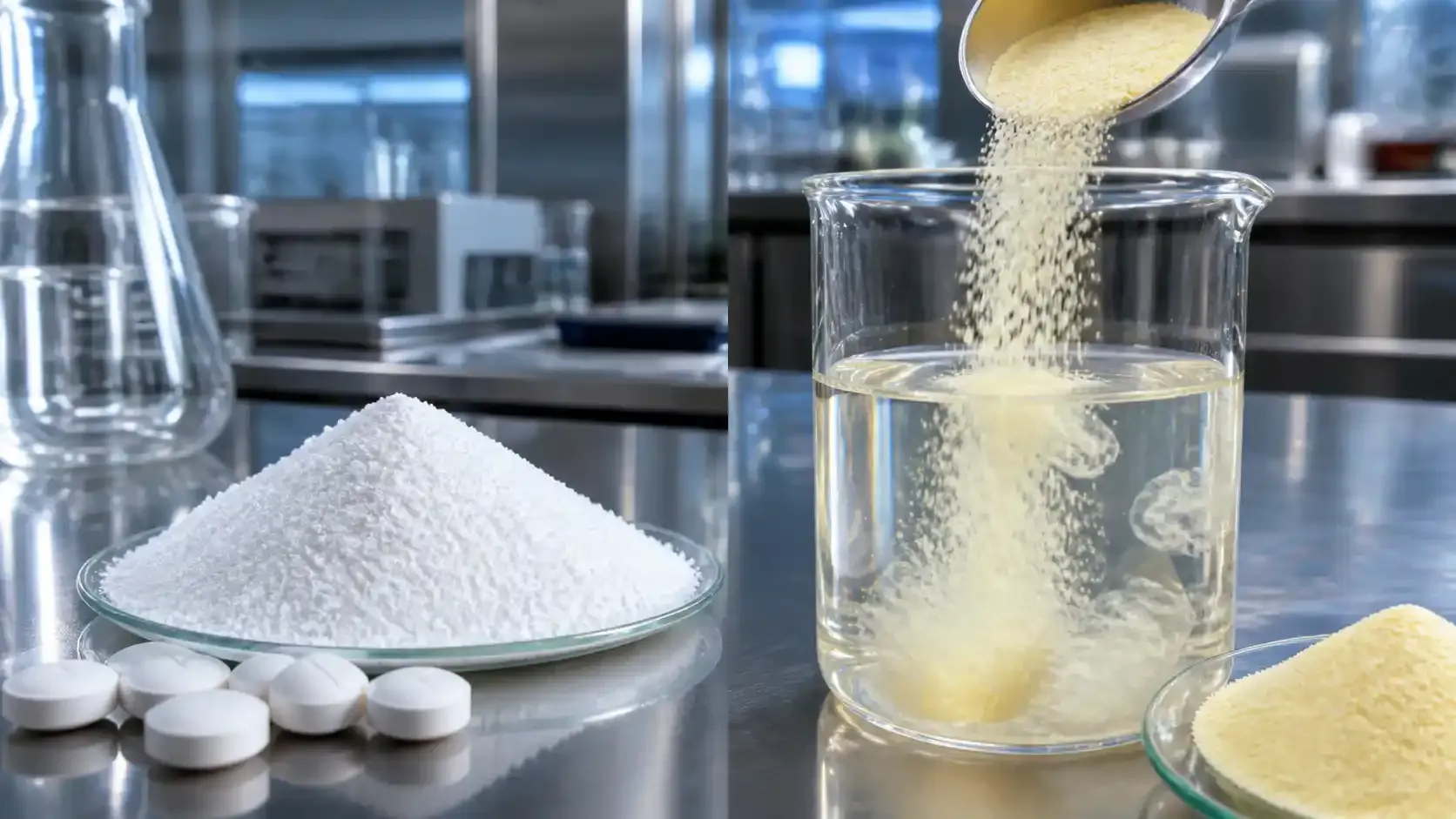
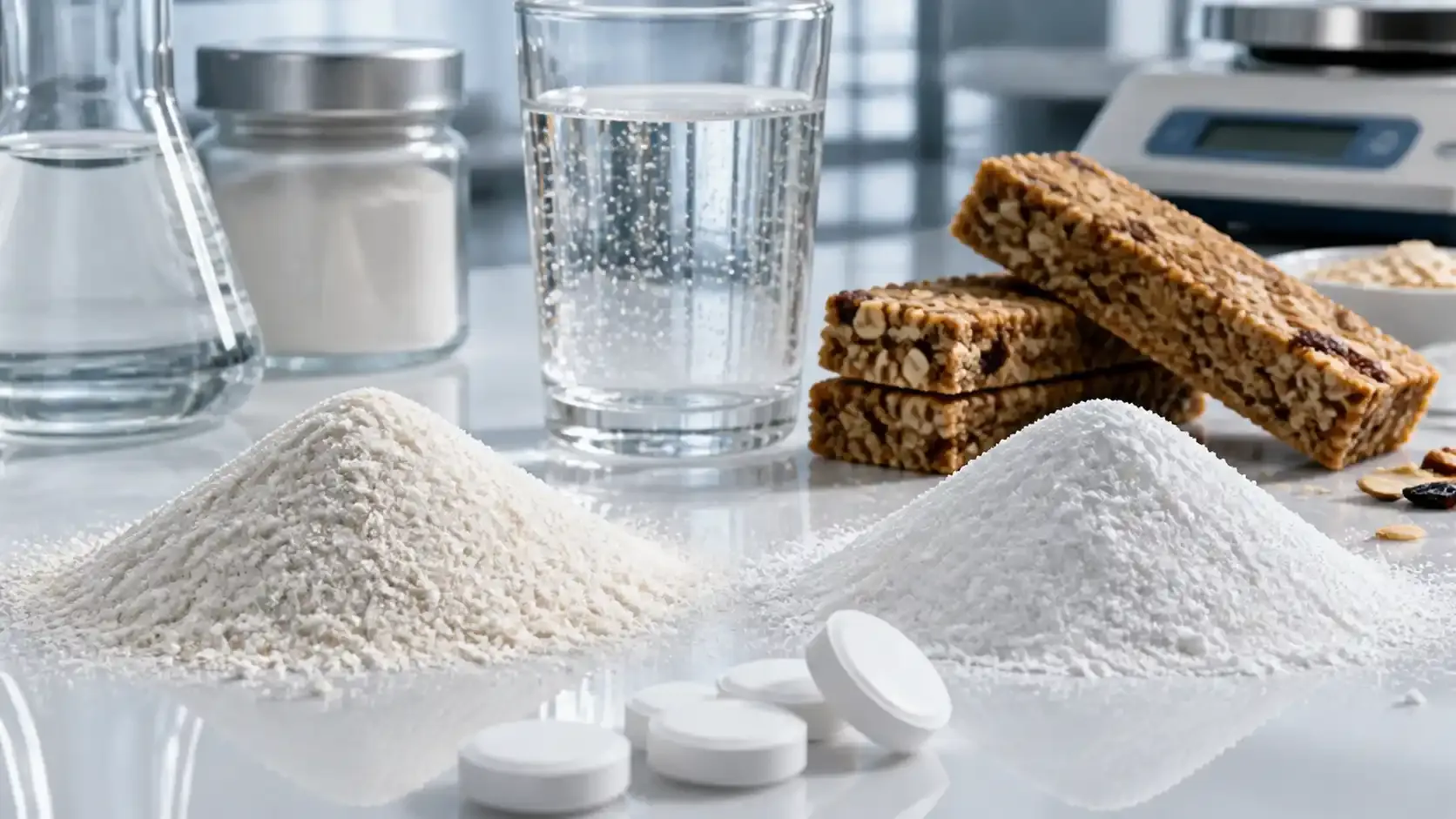
Two materials are showing up together more often in new product briefs: resistant dextrin (a highly soluble dietary fiber) and microcrystalline cellulose (MCC) (a structure-building excipient). Used correctly, resistant dextrin delivers fiber with minimal taste impact, while MCC helps protect texture and manufacturability—especially in solid dosage forms.
This article stays application-first: three short case-style scenarios (bars and baked goods, clear beverages and dairy, then tablets and chewables), plus the sourcing checks that typically separate a “recommended” supplier from a risky one.
Why resistant dextrin and MCC are being re-evaluated now
Market signals are unusually aligned:
- In China, new reporting highlights that consumers increasingly expect low sugar, high protein, and higher fiber products with clearer labeling—raising the bar for fiber fortification choices.
- In Europe, manufacturers are quietly stepping back from several traditional ingredients (including certain modified starches and emulsifiers), which forces reformulators to rebuild texture and stability using fewer, more acceptable tools.
Within that context, resistant dextrin tends to be shortlisted because it can add soluble dietary fiber with neutral taste and strong process tolerance. Microcrystalline cellulose is often shortlisted because it provides mechanical structure and flow—the kind of “manufacturing insurance” that becomes vital when sugar and fat are reduced.
What resistant dextrin and microcrystalline cellulose actually do
Resistant dextrin in practical terms
In finished products, resistant dextrin is typically used as a soluble dietary fiber that supports:
- Fiber enrichment without heavy viscosity or gritty mouthfeel
- Sugar and calorie reduction strategies (by replacing part of a bulking sweetener system)
- Stability across processing conditions (heat and a broad pH range are common demands)
Common buyer-facing specs from supplier documentation include:
- Appearance: white to light yellow powder
- pH: 3–6
- Water activity: ≤0.2
- Moisture: ≤5.0 g/100 g
- Microbiology limits (typical COA lines): APC, coliforms, mould, yeast
- Fiber content: commonly listed in tiers (e.g., ≥70% to ≥95% variants), with many food applications targeting ≥82% and higher
For deeper product context, buyers often start from a benchmark page such as resistant maltodextrin to align terminology, grade positioning, and standard parameters.
Microcrystalline cellulose in practical terms
Microcrystalline cellulose (MCC) is widely used as a diluent and dry binder, particularly in tablets and other solid forms. In buyer language, MCC is often valued for:
- Compressibility and tablet strength (hardness/friability balance)
- Flow support (helping dosing consistency)
- Process robustness when formulas become more challenging (more actives, less sugar, fewer “legacy” processing aids)
Because MCC performance depends heavily on grade selection and QC discipline, a practical starting reference is an MCC grades guide such as MCC grades formulation and QC guidance.
A spec-centric comparison buyers can actually use
The table below keeps resistant dextrin quantitative (only where supplier pages disclose numbers) and keeps MCC qualitative (to avoid “invented” values that won’t match your pharmacopeial or internal standards).
| Buyer checkpoint | Resistant dextrin (soluble dietary fiber) | Microcrystalline cellulose (MCC) |
|---|---|---|
| Primary role | Nutrition + fiber fortification | Structure + processing performance |
| Solubility | High solubility is a core selection reason | Not used for solubility; used for matrix structure |
| Viscosity impact | Often selected for low viscosity fiber addition | Impacts rheology/texture in solids; grade-dependent |
| pH window | Commonly stated pH 3–6 | Typically neutral excipient behavior; confirm by grade/monograph |
| Water activity | Often controlled, e.g., ≤0.2 | Moisture control matters for compression stability; confirm per grade |
| Micro limits | COA lines often include APC/coliforms/mould/yeast | For supplement/pharma use, microbial controls depend on intended use |
| Non-GMO status | Frequently specified as non-GMO corn starch sourcing | Depends on supplier sourcing and documentation |
| Typical certifications to verify | Food safety systems + non-GMO evidence | GMP alignment, excipient QA system, traceability, change control |
Case 1 High fiber bars and baked goods without crumbling or dryness

The pain point: Reducing sugar and fat in bars and baked goods often creates a predictable trio of issues—dry bite, crumbling, and shorter acceptable shelf life.
Where resistant dextrin helps: Resistant dextrin can support fiber claims while keeping taste relatively neutral. In bar-style matrices, resistant dextrin may also help with binding and moisture management, especially when you are replacing syrup solids or reducing traditional bulking systems.
Where MCC helps: In baked goods and bar systems that are gluten-reduced or heavily fortified, small amounts of MCC (selected appropriately) can contribute to structure and bite consistency, helping the product survive packaging, transport, and shelf handling.
Practical formulation takeaway: In many R&D briefs, resistant dextrin carries the “fiber load,” while MCC is treated as a tool to keep texture stable when the formula is pushed toward higher fiber and lower sugar.
Supplier checks buyers should apply (bars and bakery):
- Ask for resistant dextrin documentation that clearly states fiber content targets (many buyers anchor on ≥82% for food-grade positioning) and microbiological limits.
- Confirm non-GMO corn starch sourcing and the availability of third-party support files (e.g., non-GMO statements where applicable).
- Request application support that goes beyond COA—ideally, trial guidance for bar binding and baked texture.
For buyers comparing Chinese supply options, pages like bars with resistant dextrin can be used as a checklist of what serious suppliers tend to document for bar applications.
Case 2 Clear beverages and dairy with fiber but no haze or heavy mouthfeel
The pain point: Beverage teams want fiber, but they also demand clarity, low viscosity, no grit, and stability through heat treatment or acidic conditions.
Where resistant dextrin helps: Resistant dextrin is frequently chosen because it is positioned as highly soluble, with a neutral taste and strong stability across processing. That makes resistant dextrin a common “first fiber” for clear drinks, fiber waters, and gut-health style beverages.
In dairy, resistant dextrin is also used to raise fiber content while supporting a smoother sensory profile in products such as yogurt, milk drinks, and ice cream—where sweetness reduction and calorie reduction often happen at the same time.
Where MCC fits (and where it usually doesn’t): MCC is not a “clarity tool” for beverages. Instead, MCC shows up more often on the supplement side of a beverage program (e.g., companion chewables or tablets) or in texture-managed products where particulate stabilization is intentionally designed. For most clear beverage targets, resistant dextrin does the heavy lifting.
Supplier checks buyers should apply (beverage and dairy):
- Verify resistant dextrin specs relevant to process stability: pH range (often 3–6) and low water activity (≤0.2) are meaningful for storage and handling.
- Confirm a supplier’s food-safety posture: systems and audits such as ISO9001, BRC, HACCP, plus market-access certifications like HALAL and KOSHER are often expected for global beverage programs.
- For scale-up, ask whether the plant uses high automation from feeding to filling and whether an in-house QC lab supports release testing.
When soluble corn fiber is used as a sourcing term in your RFQ, a reference product page like factory supply soluble corn fiber is useful for aligning how “resistant dextrin” is positioned and documented by Chinese manufacturers.
Case 3 Tablets and chewables that stay hard enough but still disintegrate
The pain point: In direct compression tablets and chewables, buyers usually fight a tradeoff between:
- Hardness vs. friability (shipping damage risk)
- Flow vs. segregation (weight variation risk)
- Disintegration vs. tablet strength (consumer performance and compliance risk)
Where MCC helps: MCC is often the workhorse excipient for direct compression because it supports binding and compressibility. For many formulations, MCC is the backbone that makes a tablet manufacturable at scale.
Where resistant dextrin helps: Resistant dextrin can be introduced as a low-sugar filler or functional carbohydrate component in powders and chewables, supporting a fiber-forward positioning. In gut-health concepts, resistant dextrin may also be treated as part of the functional payload rather than just a bulking agent.
Practical formulation takeaway: The most stable programs treat MCC and resistant dextrin as one system, not two separate purchase decisions. Tablet robustness is not just an “MCC question” if resistant dextrin is contributing to the solid matrix and moisture behavior.
Supplier checks buyers should apply (solid dosage):
- Review resistant dextrin moisture and water activity controls (moisture-sensitive actives and coatings can fail if this is ignored).
- For MCC, request grade rationale and QC controls (particle size distribution, flow expectations, and change control discipline).
- Ask suppliers whether they support ODM/technical support—not as marketing, but as documented help during pilot compression trials.
How buyers shortlist a recommended Chinese manufacturer without overpaying
When procurement teams search for a recommended Chinese resistant dextrin manufacturer or a recommended Chinese microcrystalline cellulose supplier, the “recommended” part is rarely price alone. The consistent pattern across bars, beverages, dairy, and tablets is verification.
A practical shortlist framework looks like this:
- Spec fit for the application
- Resistant dextrin: fiber target (often ≥82% for many food programs), pH window, water activity, and microbiology lines.
- MCC: grade selection logic and documented QC controls.
- Process credibility
- Automated production steps and a clean production environment.
- A QC lab that can explain release testing rather than only issuing a PDF.
- Certification and market access
- Commonly requested: ISO9001, BRC, HACCP, HALAL, KOSHER, and where relevant FSSC 22000 plus non-GMO evidence.
- Documentation speed
- RFQs increasingly fail due to slow or incomplete technical files. Faster documentation often correlates with better change control.
As one example of an export-facing supplier profile, Shine Health (also referenced as Shandong Shenghuai Health Co., Ltd.) publishes application pages and specification anchors that buyers can use as benchmarks when drafting RFQs for resistant dextrin and related soluble dietary fiber products.
Data sources and link notes
- FoodNavigator.com coverage of China health-oriented food choices (Sep 2026)
- FoodNavigator.com coverage of ingredients European manufacturers are dropping (Sep 2026)
For readers who want a curated list of suppliers aligned with the specifications and application practices described above, further information and contacts are available via the Shine Health website: https://www.sdshinehealth.com.