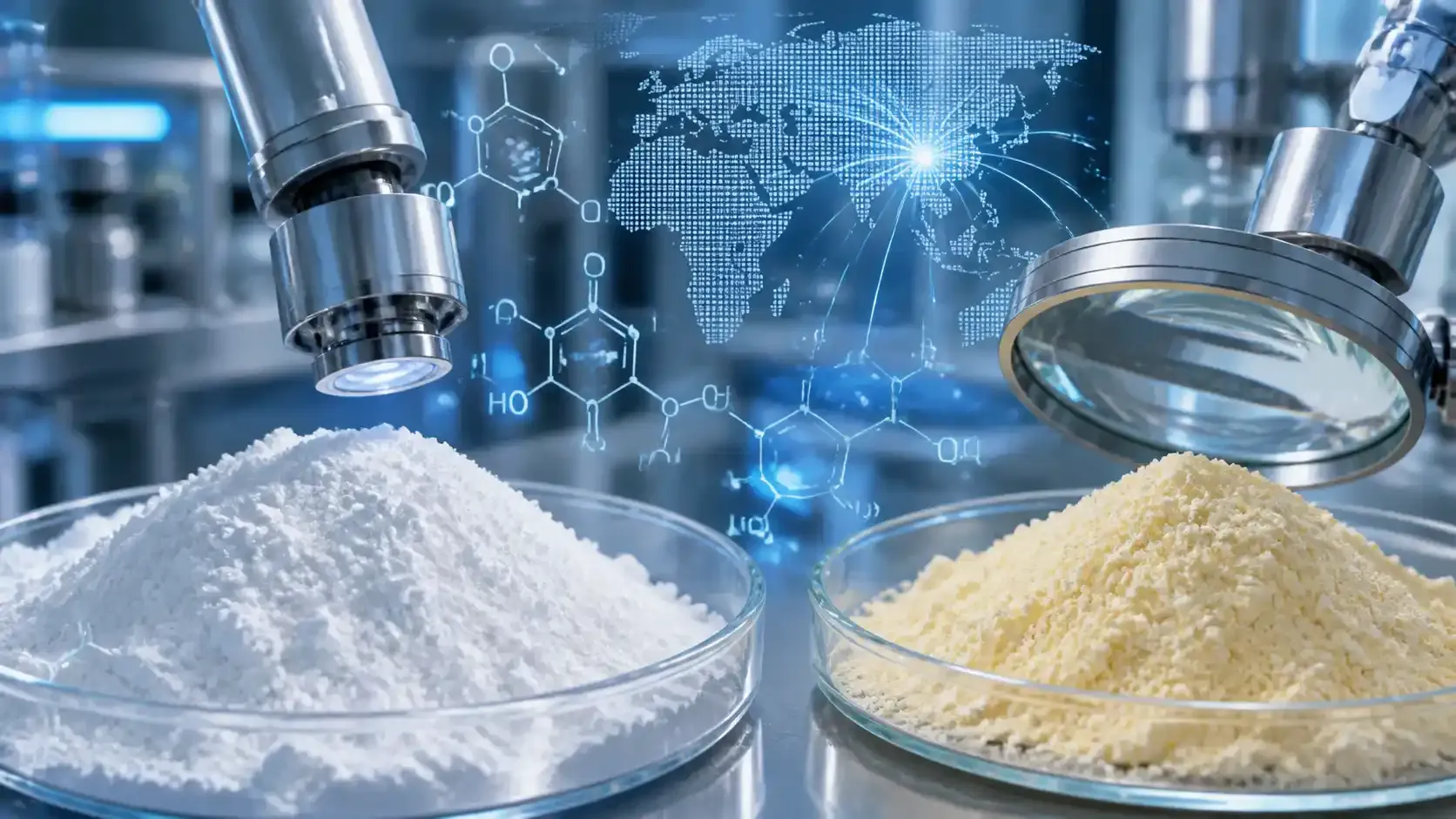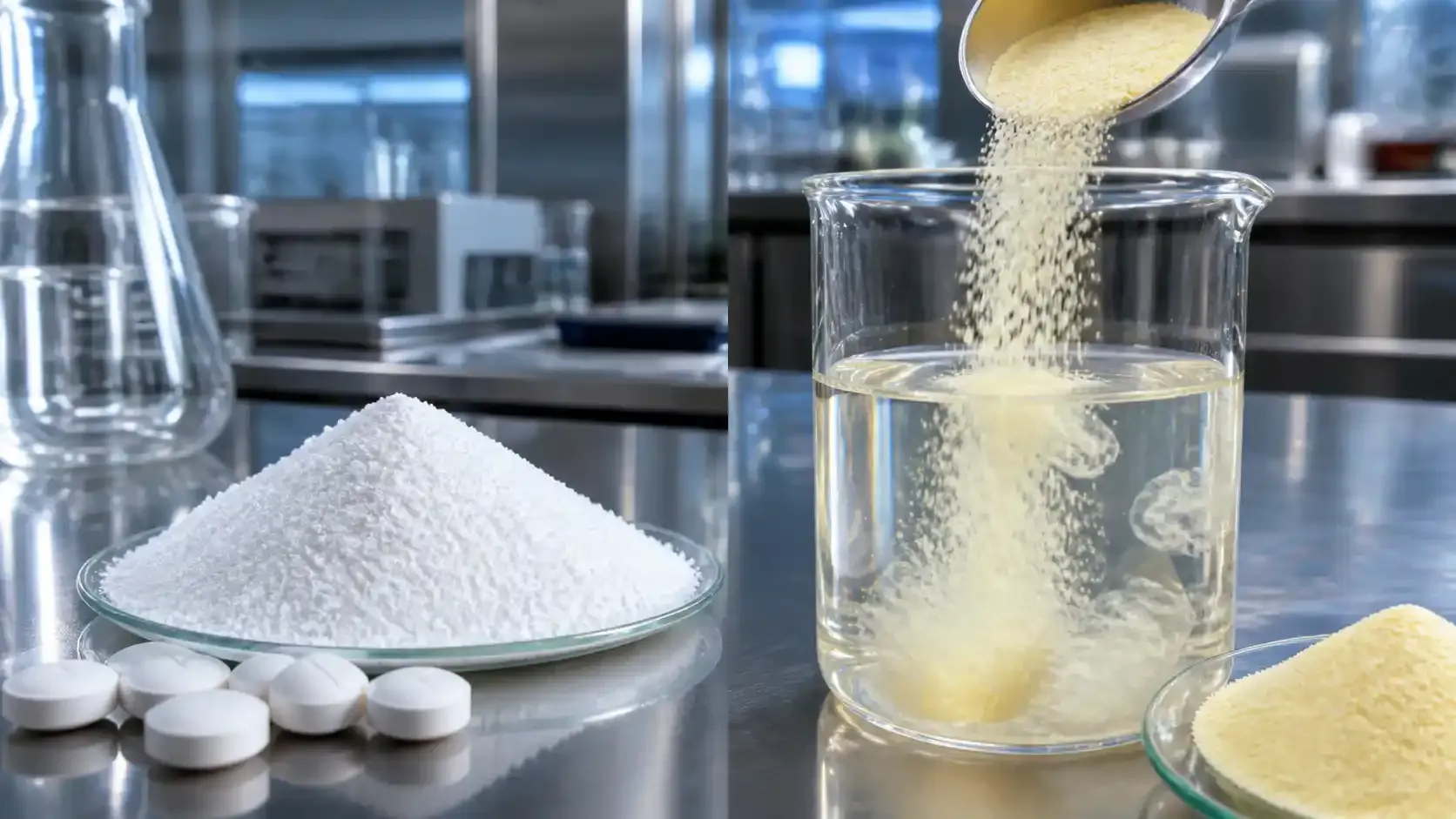
Purchasing teams are now sourcing microcrystalline cellulose and resistant dextrin in a market that increasingly values predictable performance, not just the lowest FOB price. The challenge is that these two vital ingredients are often assessed with the same mindset, despite their very different behaviors in real formulas. Microcrystalline cellulose is typically chosen for its structural properties and compressibility, while resistant dextrin is selected for its ability to deliver soluble fiber with a clean processing profile.
When buyers search for a Recommended Chinese Microcrystalline Cellulose Manufacturer or a Recommended Chinese Resistant Dextrin Manufacturer, they usually hope for a simple answer. In practice, a safer approach involves understanding the fundamental characteristics of each, then using that knowledge to verify whether a Chinese microcrystalline cellulose supplier and a resistant dextrin manufacturer China can consistently meet your product goals, batch after batch.

Why MCC and Resistant Dextrin Fundamentals Matter Now
Two key sourcing realities are significantly influencing current RFQs:
- Functional fiber is integrating into more diverse formats (ready-to-drink beverages, baked goods, meal replacements, stick packs). This puts pressure on resistant dextrin to perform consistently across various conditions like heat, acid, and extended storage.
- Excipient expectations continue to rise in pharmaceutical and related nutraceutical applications. Buyers are now asking for clearer documentation and tighter process control, especially for microcrystalline cellulose used in tablets.
This is often where many selection processes falter: the spec sheet may appear acceptable, but the supplier’s underlying controls—such as raw material discipline, automation levels, and QC capabilities—are not robust enough to maintain consistent performance at scale.
Microcrystalline Cellulose Basics for Buyers and Formulators
Microcrystalline cellulose (MCC) is a purified, partially depolymerized cellulose material widely employed as a pharmaceutical excipient and also in specific food and personal-care systems.
What Microcrystalline Cellulose Does Well
From a purchasing perspective, microcrystalline cellulose is frequently chosen because it can:
- Support tablet binding and dilution without introducing unwanted sweetness or flavor notes.
- Contribute to compactibility and mechanical strength in direct-compression systems.
- Help ensure process robustness when granulation and compression windows are particularly tight.
What to Look for on an MCC COA
Even without altering your internal approval process, it helps to standardize what gets reviewed each time you qualify a microcrystalline cellulose manufacturer China:
- Moisture / loss on drying (this directly impacts flow, compaction, and overall stability of the microcrystalline cellulose).
- Particle size distribution (a critical factor driving flow characteristics, blend uniformity, and the compaction profile).
- Bulk/tapped density (helps predict hopper behavior and ensures consistent dosing).
- Identification and compendial alignment when the microcrystalline cellulose is intended for pharmaceutical use.
Ultimately, microcrystalline cellulose procurement works best when its Certificate of Analysis (COA) is treated as a performance predictor, not merely a compliance artifact.
Resistant Dextrin and Soluble Corn Fiber Fundamentals
Resistant dextrin is a water-soluble dietary fiber derived from starch sources such as NON-GMO corn starch (and in some cases, tapioca starch). It resists digestion in the small intestine and is commonly utilized to boost fiber content while keeping taste and processing behavior manageable. Resistant dextrin is often referred to interchangeably with soluble corn fiber in the industry.
Because resistant dextrin is frequently purchased for beverages and various nutrition formats, buyers tend to focus initially on “fiber content.” While important, this isn’t the only metric that controls your downstream risk with resistant dextrin.
What Resistant Dextrin is Typically Chosen For
A high-quality resistant dextrin is appealing in product development because it can offer:
- High solubility and easy incorporation into diverse drink systems.
- Low viscosity, which helps maintain a clean mouthfeel in ready-to-drink and powdered beverages.
- Neutral taste, ensuring flavor profiles remain consistent.
- A formulation-friendly route to dietary fiber enrichment.
In supplier documentation, resistant dextrin is often positioned as supporting gut health, weight management, and blood sugar control—valuable context for buyers developing fiber-forward SKUs, though specific claims always require internal regulatory review. To explore how resistant dextrin is presented for supplement use, one might consult product pages focusing on food supplement resistant dextrin.
Typical Resistant Dextrin Spec Lines That Influence Real Outcomes
From various published parameters on resistant dextrin pages, several key metrics frequently appear that procurement teams can use as a