Modern formulation briefs are increasingly demanding: more fiber, fewer calories, cleaner taste profiles, and unwavering processing stability. Consequently, procurement teams searching for a reliable resistant dextrin manufacturer often find themselves reviewing adjacent ingredients like polydextrose or even microcrystalline cellulose—not because they are interchangeable, but because they address different facets of the same formulation challenge.
This guide breaks down exactly what resistant dextrin is, clarifies what the most critical specifications mean for daily manufacturing, and offers a framework for buyers to evaluate product families without focusing solely on price.

Where Resistant Dextrin Fits Among Fiber Ingredients
Resistant dextrin is a soluble dietary fiber derived from starch, engineered to resist digestion in the small intestine. Instead, it travels to the large intestine, where it acts as a substrate for fermentation. For buyers, the practical value is straightforward: resistant dextrin enables the creation of high-fiber, lower-calorie products while keeping mixing and processing complexities to a minimum.
In sourcing discussions, resistant dextrin is frequently compared with:
- Polydextrose: Another popular soluble fiber often used in reduced-sugar and reduced-calorie formulations.
- Microcrystalline Cellulose (MCC): Typically utilized as an insoluble fiber and functional excipient (supporting structure, mouthfeel, or flowability). It often appears on shortlists when R&D teams require a complete "fiber toolkit" covering both soluble and insoluble requirements.
While microcrystalline cellulose is not a direct substitute for resistant dextrin, procurement teams may request quotes for both in a single RFQ—particularly when a project spans both food applications and pharmaceutical excipients.
Resistant Dextrin Fundamentals Buyers Should Know First
A frequent sourcing error is treating resistant dextrin as a generic commodity powder with a single universal standard. In reality, resistant dextrin grades vary by application target—whether for beverages, keto nutrition, confectionery, or nutritional powders—and these targets dictate which specifications should be prioritized.
Across the industry, and specifically within the product data from established suppliers, the baseline specification set that repeatedly appears for high-quality resistant dextrin includes:
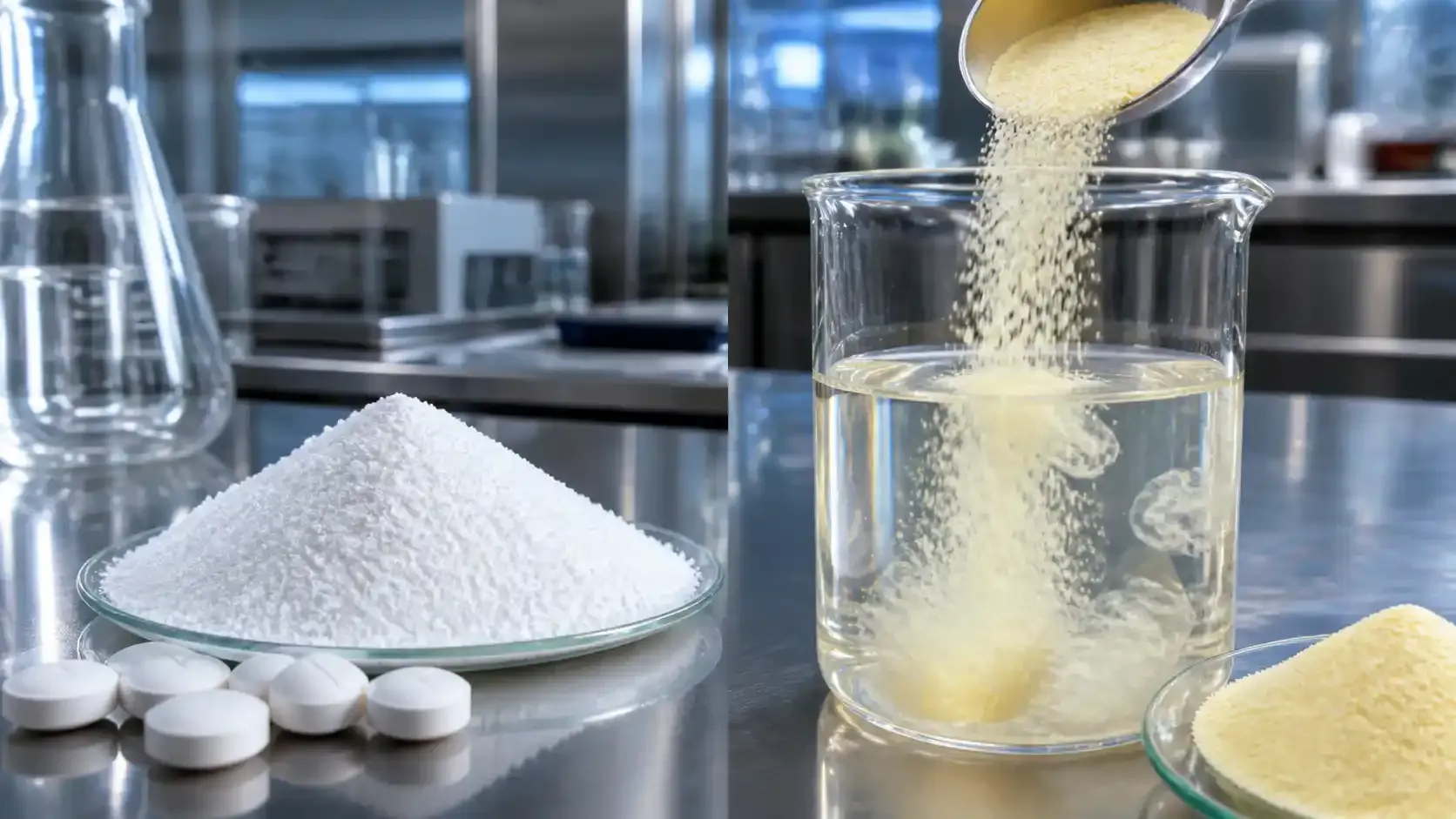
- Appearance: White to light yellow powder
- Fiber Content:≥82%
- Protein Content:≤6.0%
- Storage: Store in a cool, dry place
At first glance, these four lines might appear basic. However, in the trenches of raw material procurement, they serve as the backbone of early screening—especially when comparing a resistant dextrin supplier list.

Why These Specs Matter in Day-to-Day Handling
- Appearance is not just cosmetic. Unexpected darkening or significant color variance often signals process deviations—such as uncontrolled heat exposure during hydrolysis—or improper storage that could compromise the ingredient's stability.
- Fiber Content (≥82%) is the cornerstone of label planning and dosage. If a formulation depends on a specific "high fiber" claim, this number determines the feasibility of the entire recipe.
- Protein (≤6.0%) serves as a vital indicator of purity and consistency across production lots. Lower protein levels generally suggest a cleaner separation process.
- Storage Guidance links directly to risk management. Even when a product is chemically stable, procurement must ensure warehouse conditions align with supplier recommendations to prevent caking or degradation.
Four Resistant Dextrin Families Buyers Commonly Compare
Below are common resistant dextrin families and how they typically appear in purchasing specifications. The key takeaway is not that one family is "better" than another, but that each resistant dextrin grade is optimized for specific constraints.
1. Maize Dextrin Fiber for General Functional Foods
Maize dextrin fiber (corn-derived) is positioned as a versatile soluble fiber that can be incorporated without imposing heavy taste or texture penalties. Buyers often select this for:
- Beverage powders and drink mixes
- Everyday "digestive health" concepts
- Broad wellness SKUs where a neutral taste profile is non-negotiable
For example, leading suppliers present maize dextrin fiber with a consistent spec baseline (white to light yellow appearance; ≥82% fiber; ≤6.0% protein). When your team is building a multi-source procurement plan, establishing this type of stable baseline helps reduce the risk of reformulation when switching suppliers.
2. Low Calorie Dietary Fiber for Energy and Sugar Control
"Low calorie dietary fiber" is typically resistant dextrin produced through the controlled heating and enzymatic treatment of starch. Practically, buyers prioritize this family when the brief emphasizes:
- Calorie Reduction: Reducing energy density while maintaining bulk.
- Blood Sugar Management: Supporting a low-glycemic positioning.
- Process Stability: A fiber source that remains stable across diverse processing conditions.
During supplier discussions, it is crucial to ask how the resistant dextrin behaves in both hot and cold processing environments, confirming that the baseline specs remain consistent.
3. Keto-Friendly Resistant Dextrin for Low Net-Carb Systems
Keto-friendly resistant dextrin is characterized by its indigestibility, making it suitable for low-carb and ketogenic diets as it does not contribute to the net carbohydrate count. For procurement teams, the focus extends beyond the "keto" label to functional integration:
- Keto Drink Mixes: Does it dissolve fully without clumping?
- Snack Formats: Does it provide the right binding without adding viscosity?
- Thermal Stability: Can it withstand baking or extrusion temperatures?
4. FIBER-FUL Confectionery for Texture and Sugar Reduction
The confectionery sector operates on its own sourcing logic: sweetness perception, crystallization inhibition, and mouthfeel are paramount. A confectionery-positioned resistant dextrin concept is described as supporting:
- Caloric Reduction: Replacing sugar and reducing fat content without sacrificing bulk.
- Texture Improvement: Delivering a smooth mouthfeel and consistent chew.
- High Fiber Targets: Enabling claims in gummies, chocolates, and chewy candies.
Confectionery buyers should treat this as a functional systems purchase: you are not just buying resistant dextrin; you are buying predictable texture behavior batch after batch.
Organic Tapioca Maltodextrin and Clean Label Positioning
In clean label projects, teams often turn to tapioca-derived carbohydrates to align with consumer expectations for plant-based, non-grain sourcing. Organic tapioca maltodextrin is described as a high-solubility, neutral-tasting powder extracted from cassava roots, positioned for:
- Texture and stability enhancement in beverages and powders.
- Fat replacement in reduced-calorie foods.
- Functioning as a filler, thickener, or binding agent.
It is often available in specific grade options (e.g., D1–D4), where content is listed as ≥70%, ≥85%, ≥90%, or ≥95% respectively. One important note for buyers: product documentation may contain both tapioca/cassava sourcing language and separate "corn starch" feature lines depending on the wider portfolio. Always request the supplier's final documentation pack (COA and source statements) to ensure the raw material narrative matches your intended label claims.
What a Serious Chinese Resistant Dextrin Supplier Should Deliver
When procurement teams shortlist a resistant dextrin manufacturer, the most revealing questions connect process controls to batch consistency. Marketing claims are easy to make, but operational reality is what protects your supply chain.
Key manufacturing and QC themes to look for include:
- Non-GMO Sourcing: Verifiable sourcing of non-GMO corn starch as the raw material basis.
- Advanced Enzymatic Technology: The use of biological enzymes, ideally imported, to ensure precise hydrolysis.
- Precision Equipment: Production lines that utilize high-standard machinery (e.g., of German origin) often correlate with better particle uniformity.
- GMP Standards: Workshops that adhere to Good Manufacturing Practice to ensure hygiene and safety.
- Automated Control: Fully automated central control operations—from raw material feeding to product filling—reduce manual variability.
Why does this matter? Automation and centralized control minimize human error, and a capable QC lab is the difference between a supplier saying "we can make it" and proving "we can make it consistently."
A Buyer-Friendly Spec Checklist to Prevent Reformulation Surprises
To keep RFQs comparable across different suppliers, it helps to standardize a small set of must-have lines—then expand based on the specific application.
Level 1: The First-Pass Filter
Use these parameters to screen all incoming options:
- Appearance: White to light yellow
- Fiber Content: ≥82%
- Protein Content: ≤6.0%
- Storage Statement: Cool, dry place
Level 2: For Performance-Driven Formats
For projects where handling and shelf stability are critical, look for additional indicators. For example, high-quality resistant dextrin for weight management often includes:
- Total Fiber Content (dry basis): ≥90.0%
- Water Activity: Low (supporting extended shelf life)
- Water Solubility: ~70% (high solubility)
- Hygroscopicity: Non-caking properties
- pH Stability: 4–5
These parameters are vital when the ingredient needs to behave well in distribution channels with variable humidity.
Level 3: Microbiological and Moisture Control
Certain applications require deeper microbiological and moisture indicators. A detailed specification sheet might list:
- Moisture: ≤5.0 g/100g
- Ash: ≤0.1 g/100g
- pH: 3–6
- Water Activity: ≤0.2
- Aerobic Plate Count: ≤1000 CFU/g
- Coliforms: ≤3 MPN/g
- Mould/Yeast: ≤25 CFU/g each
Not every RFQ requires this level of detail, but having this checklist helps buyers align specification depth with product risk.
How Microcrystalline Cellulose Enters the Conversation
The most common reason a "recommended Chinese microcrystalline cellulose manufacturer" appears in the same search session as resistant dextrin is portfolio planning.
- Resistant Dextrin is typically chosen when a soluble fiber is needed for mixing, clarity, or reduced-calorie positioning.
- Microcrystalline Cellulose (MCC) is typically considered when an insoluble, structure-building material is required (often across tablets, powders, or texture systems).
For procurement teams, the actionable insight is that these ingredients must be evaluated with distinct success criteria. Even if one supplier offers both, buyers need separate specifications, separate risk assessments, and separate documentation trails for each.
A Practical Way to Shortlist Without Overbuying Risk
A balanced shortlisting approach typically follows this path:
- Define the Role: Clarify if the resistant dextrin is for fiber claim support, calorie reduction, texture aid, or keto compatibility.
- Lock Level 1 Specs: Establish the baseline (Appearance, ≥82% Fiber, ≤6.0% Protein).
- Add Level 2–3 Parameters: Include these only where the specific application demands them.
- Evaluate Controls: Assess manufacturing controls (GMP workshops, automation scope, QC lab capability) as a predictor of long-term stability.
For buyers seeking an export-oriented view of resistant dextrin product families—including maize dextrin fiber, low-calorie dietary fiber, and keto-friendly options—reviewing the product standards at established suppliers can serve as a benchmark. For a comprehensive look at these specifications and supplier capabilities, you can visit www.sdshinehealth.com.